
Understanding and Stopping Preheater False Air
False air leakage in a cement kiln preheater system severely disrupts thermal efficiency, increases induced draft fan power consumption, and destabilizes the entire pyroprocessing operation. Reducing this uncontrolled ambient air ingress requires a systematic approach encompassing process diagnostics, mechanical inspection, and rigorous maintenance protocols. The most effective method to reduce false air leakage involves establishing an accurate oxygen profile across the preheater tower to isolate ingress points, followed by targeted mechanical repairs on expansion joints, inspection doors, and cyclone flap valves. Addressing these leaks promptly optimizes the air to fuel ratio and stabilizes kiln operation.
Recognizing Process Symptoms and Mechanical Impacts
Before executing mechanical repairs, plant engineers must accurately distinguish the process symptoms of false air ingress from other mechanical or electrical faults. False air is uncontrolled ambient-air ingress into a section operating below atmospheric pressure. In the preheater and kiln exhaust path it increases gas volume, dilutes the process gas and adds cold mass that the system must move and heat, creating measurable process deviations.
First, operators will observe an abnormal increase in induced draft fan power consumption. As ambient air enters the preheater cyclones, the total gas volume increases, forcing the fan to work harder to maintain the required negative pressure at the kiln tail end. Second, false air reduces the cyclone separation efficiency. The localized turbulence caused by air rushing through leaky inspection doors or poorly sealed expansion joints disrupts the cyclonic gas flow, leading to higher dust circulation and increased top stage exit temperatures. Finally, specific fuel consumption rises because the main burner must consume additional thermal energy to heat this cold ambient air up to process temperatures. Identifying these systemic symptoms is the crucial first step before deploying a mechanical troubleshooting team.
Primary Causes and Common Leakage Locations
Understanding the physical sources of air ingress allows maintenance teams to prioritize their inspections. Due to the extreme thermal cycling and high negative pressure inherent in the cement manufacturing process, certain preheater components are highly susceptible to seal degradation.
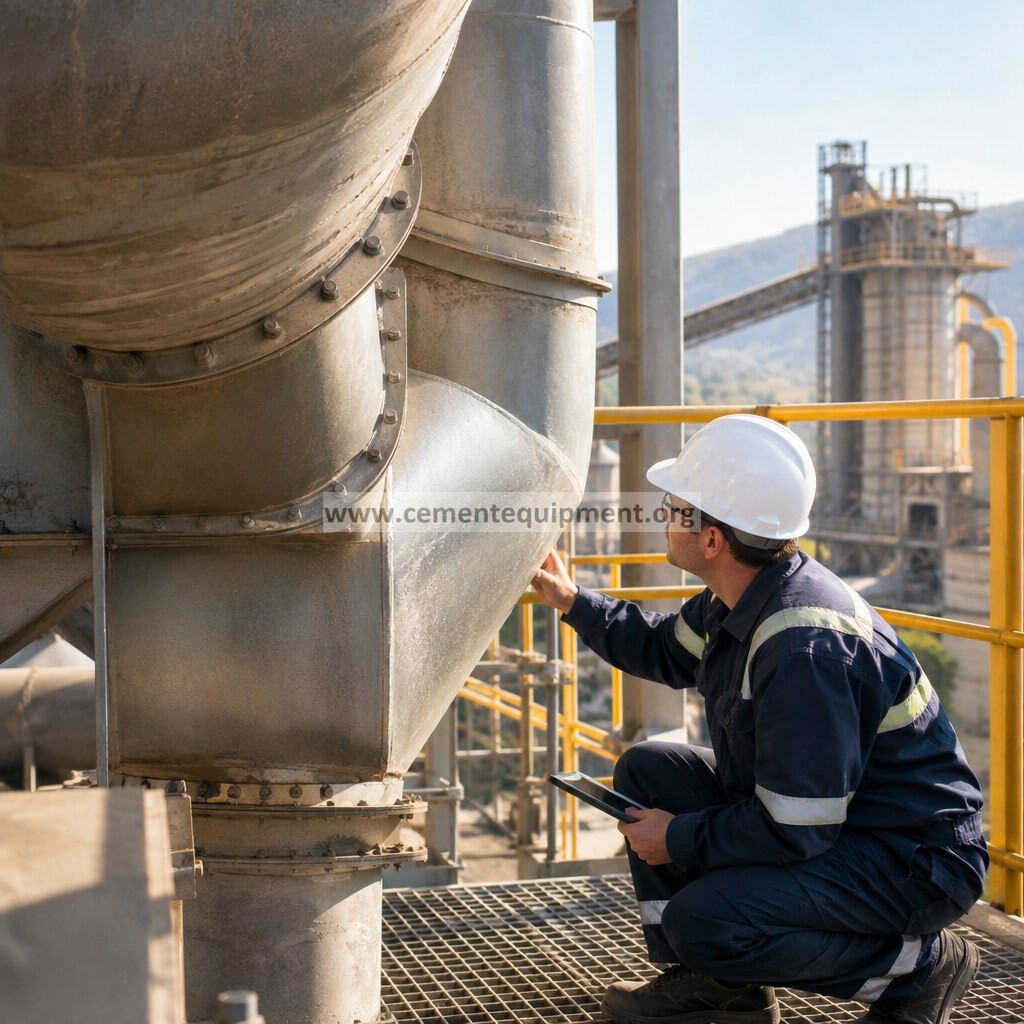
Expansion joints between cyclones and gas ducts are common potential leak locations and should be included in a systematic inspection. These fabric or metallic compensators absorb thermal expansion but eventually degrade due to continuous thermal stress and abrasive dust exposure. Inspection doors and poking holes also present significant risks. If these access points are left partially open, or if their asbestos free sealing gaskets deteriorate over time, the high negative pressure will continuously draw cold air into the system.
Another critical leakage zone includes the material flap valves or tipping valves located in the cyclone downcomer pipes. When counterweights are incorrectly adjusted, or when the flap valve plates suffer from severe abrasive wear, they fail to create a proper material seal. This failure allows gas to bypass the cyclones, severely compounding the false air issue and disrupting the counter current heat exchange process.
Diagnostic Testing and Measurement Protocols
Effectively locating the precise points of false air requires methodical diagnostic testing. The industry standard technique is conducting an oxygen profile measurement across the entire preheater tower. By measuring the oxygen concentration at the kiln inlet, the precalciner exit, and the gas outlets of each successive cyclone stage, process engineers can pinpoint exactly where the oxygen spikes. A repeatable increase in oxygen between two measurement points is a strong indicator of air ingress in the intervening section, but the result should be confirmed under comparable process conditions and with verified sampling/analyzer integrity before assigning the leak location.
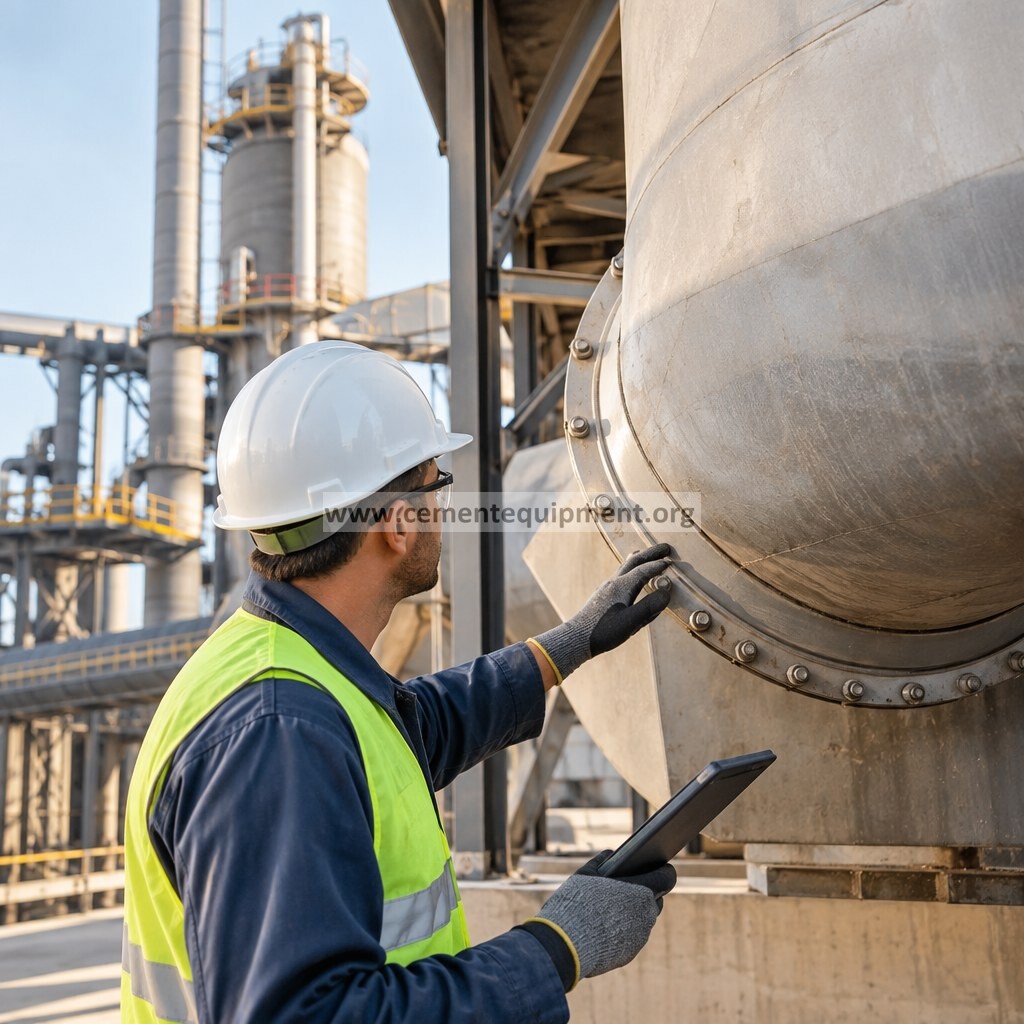
Acoustic testing and visual inspections complement the chemical analysis. Because the preheater operates under high negative pressure, large leaks often generate a distinct whistling noise that experienced operators can identify during routine plant walk arounds. Furthermore, technicians can utilize smoke sticks or ultrasonic leak detectors around suspect flanges, expansion joints, and inspection doors to visually or acoustically confirm the ingress of ambient air. Regular execution of these diagnostic tests ensures that maintenance efforts are strictly directed toward the most critical areas.
False Air Diagnostic Checklist
| Observation | Check | Action |
|---|---|---|
| Oxygen rises between two measurement points | Repeat the measurement under comparable kiln conditions and verify analyzer/sample integrity | Inspect joints, doors, flanges and other leak paths in that section |
| Whistling or visible inward air movement | Inspect the suspected seal from a safe location | Repair during an approved maintenance window using the specified sealing system |
| Unstable flap/tipping valve operation | Check wear, freedom of movement and the OEM counterweight setting | Restore the material seal to the equipment manufacturer’s specification |
Before declaring the repair successful
- Repeat the same oxygen-profile test under comparable production conditions.
- Compare ID-fan load, draft stability and temperature trends with the pre-repair baseline.
- Record the repaired location and inspection findings for the next shutdown.
Corrective Actions and Safe Maintenance Procedures
Executing mechanical repairs on a cement preheater requires strict adherence to site safety rules and original equipment manufacturer guidelines. Prior to any physical intervention, maintenance personnel must follow comprehensive lock out tag out procedures to secure all induced draft fans, material feed systems, and fuel supplies. Extreme caution is absolutely mandatory due to the severe risks of hot raw meal avalanches and toxic carbon monoxide gas exposure.
Once the system is safely secured, technicians can begin corrective actions. Degraded expansion joints must be completely replaced using high temperature, multi layer fabric seals that meet the exact thermal specifications of the affected cyclone stage. For leaking inspection doors, the corrective action involves cleaning the mating metal surfaces and installing new high temperature gaskets.
Optimize Your Pyroprocessing Equipment Today
Ready to improve your plant efficiency? Regular preventative maintenance minimizes false air, maximizes fuel savings, and boosts reliability. For expert guidance and highly specialized troubleshooting resources, visit our website and take control of your pyroprocessing operation today.
Use the diagnostic sequence above together with your plant procedures and OEM documentation.