
Diagnostics and Troubleshooting of High Vibration in Cement Kiln Induced Draft Fans
The cement kiln induced draft (ID) fan is vital, maintaining negative pressure to extract exhaust gases from the preheater tower and rotary kiln. When this critical equipment experiences high vibration, it can lead to catastrophic mechanical failure, severe production bottlenecks, and significant safety hazards. Effectively troubleshooting high vibration requires a systematic approach that accurately distinguishes process-induced symptoms from fundamental mechanical or electrical root causes. Because kiln ID fans operate under extreme temperatures, heavy dust loads, and continuous stress, diagnosing the exact point of failure demands precision.
Strict adherence to site safety rules is non-negotiable before any inspection. Always follow the plant’s Lockout/Tagout (LOTO) procedures for both electrical and mechanical systems. Since kiln drafts can cause the fan rotor to freewheel even when the motor is de-energized, the rotor must be mechanically secured. Furthermore, always consult the specific Original Equipment Manufacturer (OEM) manuals for baseline specifications, torque values, and acceptable tolerances. Using unverified vibration thresholds can lead to premature fan restarts, potentially endangering personnel during startup.
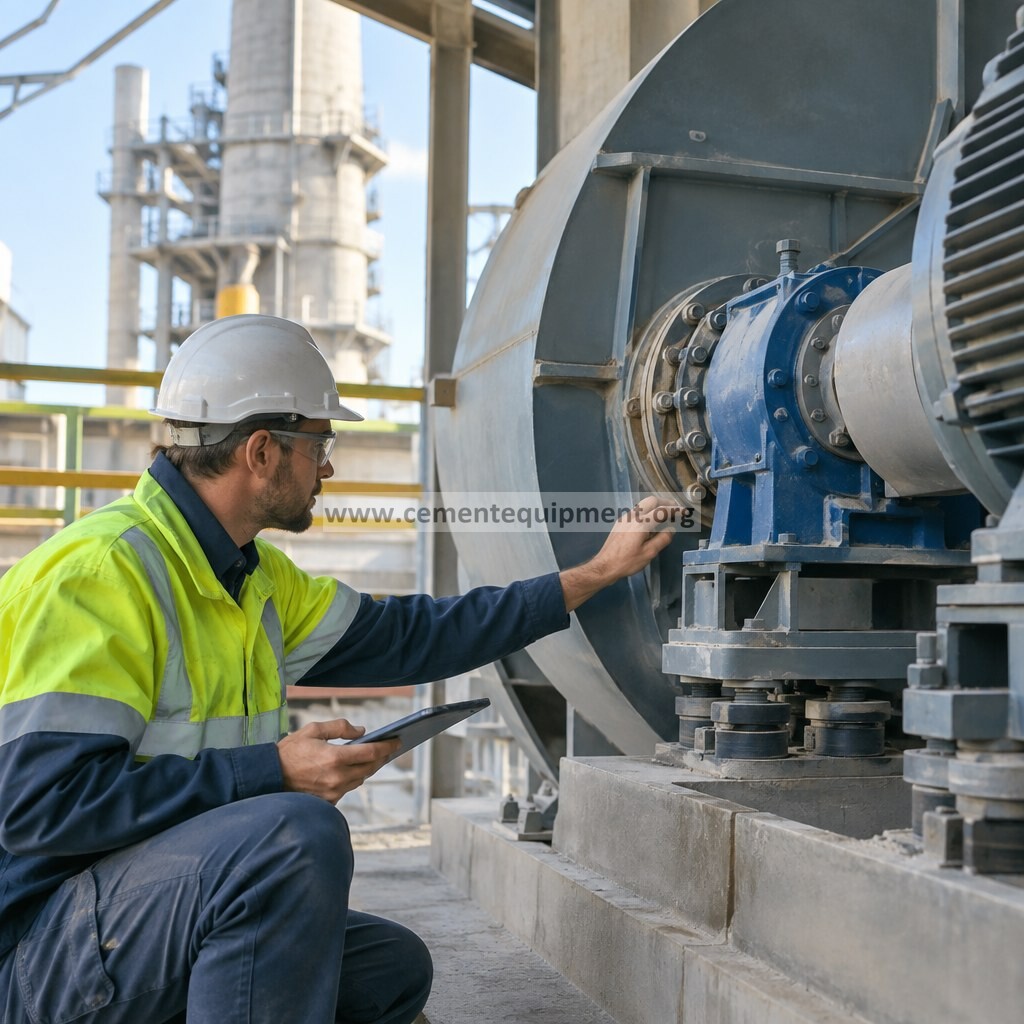
Identifying the Root Causes of Fan Vibration
Induced draft fans in cement plants are susceptible to a wide array of dynamic forces. Identifying the core issue begins with categorizing the symptoms. While a process operator might notice a sudden drop in draft pressure or irregular kiln temperatures, the maintenance team must translate these process symptoms into mechanical realities.
Rotor Imbalance
Uneven dust accumulation or moisture condensation on the impeller blades creates severe imbalance, typically dominating the 1X RPM vibration spectrum.
Shaft Misalignment
Thermal growth variations between the motor and fan foundation can cause parallel or angular misalignment, resulting in elevated axial vibration and 2X RPM peaks.
Mechanical Looseness
Deteriorating foundation concrete, cracked bearing pedestals, or loose anchor bolts often generate harmonic frequencies and a raised noise floor during spectrum analysis.
Thermal Distortion
Rapid temperature fluctuations in the kiln exhaust gases can temporarily bow the fan shaft, leading to sudden, non-repeatable vibration spikes during process upsets.
Step-by-Step Diagnostic Workflow
A methodical diagnostic flow prevents unnecessary parts replacement and minimizes kiln downtime. When the vibration alarm triggers in the control room, operators and maintenance engineers must isolate the variables by following a structured testing sequence. Start with vibration spectrum analysis to pinpoint the dominant frequencies, and strictly correlate this spectral data with recent process changes, like feed rate or fuel mix variations.
- Review Process Data: Analyze the preheater exit temperatures, gas volumes, and raw mill operational status. High moisture content from process upsets frequently leads to rapid sticky coating buildup on the fan rotor.
- Conduct Spectrum Analysis: Utilize advanced vibration analyzers to measure radial, vertical, and axial planes on all bearing housings. Check the phase angles across the coupling to confirm or rule out misalignment.
- Perform Visual Inspections: Safely inspect the fan casing for structural cracks. Check the bearing housings for proper lubrication levels, oil contamination, and cooling water flow. Assess the foundation for visible deterioration.
- Check Thermal Expansion: Measure the operational temperature of the bearing housings and the casing. Ensure the bearing expansion on the non-drive end is not physically restricted, which could cause extreme axial loading.

Corrective Actions and Maintenance Execution
Once the root cause is definitively identified, precise corrective actions must be executed. If dust buildup is confirmed, a thorough cleaning of the impeller is required. In severe cases of abrasive wear from clinker dust, the impeller may require hard-facing repairs or complete replacement. If balancing is necessary, use the fan OEM’s approved balancing procedure and qualified vibration personnel. Do not add, weld, grind, or remove balance weights unless the applicable OEM procedure, material requirements, inspection method, and site work controls explicitly permit it. Verify the impeller, shaft, casing, bearings, coupling, foundation, and any repaired areas before returning the fan to service.
| Identified Root Cause | Recommended Corrective Action |
|---|---|
| Material Buildup Causing Severe Imbalance | High-pressure water washing, acoustic cleaning, and dynamic balancing. |
| Thermal Motor Shaft Misalignment | Perform hot-alignment checks using laser alignment tools immediately after shutdown. |
| Bearing Degradation | Inspect rolling elements, verify bearing clearances, and replace contaminated lubricant. |
| Base or Foundation Looseness | Re-grout the base plate, repair concrete cracks, and torque anchor bolts to specification. |
Regular preventative maintenance is the ultimate defense against unexpected kiln ID fan vibration. Implement continuous online condition monitoring systems to track vibration trends over time. Early detection of rising vibration amplitudes allows maintenance planners to schedule targeted repairs during planned kiln outages, preventing mechanical failures and production losses. When repairing bearing anomalies, ensure all components withstand the intense operating temperatures.
Need Expert Diagnostics for Your ID Fan?
Ensure maximum kiln uptime with professional vibration analysis, premium replacement parts, and advanced troubleshooting support.
Use the diagnostic sequence above and your plant/OEM procedures before returning the fan to service.