Quick answer
When a bag filter shows a high differential pressure (ΔP) immediately after a new bag set is installed, the most common causes are improper bag seating, incorrect bag type, damage to the bag media, or a mismatch between the bag and the housing pressure‑drop rating. Verify that the bag is the correct OEM part, that it is fully seated and sealed, and that the upstream pre‑filter and air‑flow settings match the new bag’s design. Perform a systematic isolation, visual inspection, and functional test before re‑pressurising the system.
Problem / job
A cement plant’s bag filter bank has been re‑bagged during a scheduled maintenance shutdown. Within minutes of returning to service, the differential pressure gauge on the affected bank reads significantly higher than the baseline for that line. The plant is experiencing reduced airflow, higher fan power draw, and a risk of downstream dust carry‑over.
Evidence
- ΔP reading on the new bag bank is above the normal operating range recorded before the shutdown.
- All upstream fans and ductwork are operating at their set points; no change in fan speed or suction pressure.
- Visual inspection of the bag housing shows no obvious tears, but the bag appears to be slightly recessed from the sealing lip.
- Pre‑filter (if present) upstream of the bag bank shows no abnormal loading.
- Gauge calibration records indicate the differential pressure transmitter was last calibrated within the OEM‑recommended interval.
Decision
Proceed with a structured diagnostic workflow that isolates the bag bank, confirms correct bag selection and installation, checks for mechanical damage, validates gauge accuracy, and finally re‑establishes normal operating conditions only after all acceptance criteria are met.
7‑step diagnostic workflow
- Secure isolation and LOTO. Shut down the fan or blower feeding the bag bank. Depressurise the housing using the dedicated vent valve. Apply lock‑out/tag‑out devices to the fan drive and to the vent valve actuator. Verify zero pressure with a portable gauge before proceeding.
- Confirm bag part number and rating. Retrieve the bag tag or purchase order and compare it to the OEM part list for the specific housing. Verify that the bag’s pressure‑drop rating, temperature rating, and dust‑loading class match the operating conditions of the line. If any discrepancy exists, replace the bag with the correct type.
-
Inspect physical installation. Open the housing and examine the bag for:
- Full insertion of the bag’s lip into the sealing groove.
- Absence of twists, folds, or mis‑alignment that could create a bypass.
- Intact sealing gasket or O‑ring; replace if cracked or deformed.
- Any visible damage to the media (tears, punctures, or manufacturing defects).
Re‑seat the bag if any of the above conditions are observed. Close the housing and torque fasteners to the OEM‑specified values.
- Check upstream pre‑filter and ductwork. Verify that the pre‑filter (if installed) is clean and correctly positioned. Inspect duct elbows and bends for blockage or excessive dust accumulation that could increase upstream pressure and artificially raise ΔP across the bag.
- Validate differential pressure instrumentation. With the system still isolated, connect a calibrated portable pressure transducer across the bag housing. Compare its reading to the installed transmitter. If the portable gauge shows a normal ΔP while the installed transmitter reads high, schedule recalibration or replacement of the transmitter.
- Re‑pressurise and monitor. Remove LOTO devices, start the fan, and slowly open the vent valve to bring the housing to normal operating pressure. Observe the ΔP curve for the first 10‑15 minutes. A gradual rise to the expected range indicates a healthy bag; an immediate high reading suggests a hidden defect.
- Document findings and close the loop. Record the bag part number, inspection results, instrument comparison, and final ΔP values in the maintenance log. If the bag passes acceptance, return the line to normal production. If the issue persists, proceed to the next level of root‑cause analysis (e.g., bag material failure, fan performance, or system design review).
Diagnostic matrix
| Evidence observed | Likely direction of cause | Next check / action |
|---|---|---|
| Bag recessed from sealing lip | Mechanical installation error → increased bypass flow | Re‑seat bag, verify gasket condition, retorque housing bolts |
| Bag part number does not match OEM spec | Incorrect bag rating → higher intrinsic pressure drop | Replace with correct OEM‑approved bag, re‑run workflow |
| Visible tear or puncture in bag media | Media damage → localized high velocity zones, premature ΔP rise | Replace damaged bag, inspect adjacent bags for similar defects |
| Portable gauge reads normal ΔP, installed transmitter reads high | Instrumentation error → inaccurate alarm set‑point | Calibrate or replace differential pressure transmitter |
| Pre‑filter heavily loaded despite recent cleaning | Upstream restriction → increased inlet pressure | Clean or replace pre‑filter, verify duct cleanliness |
| Fan suction pressure higher than design value | Fan performance deviation → system‑wide ΔP increase | Check fan vibration, impeller condition, and control set‑points |
| No physical anomalies, ΔP remains high | Potential bag material incompatibility or design mismatch | Consult OEM for bag‑to‑process compatibility, consider alternative media |
Acceptance criteria
Before returning the bag filter bank to full production, verify each of the following measurable conditions. All values should be confirmed against the OEM‑specified baseline for the specific line.
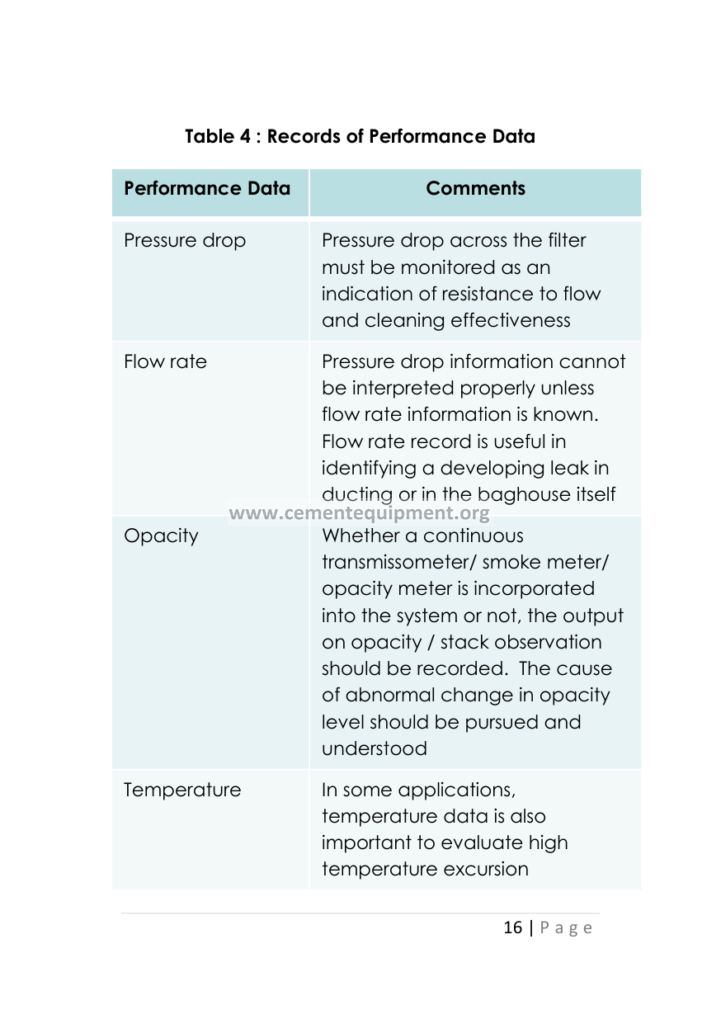
- Differential pressure stability: ΔP should settle within the normal operating band recorded before the bag change (typically ±10 % of the historical average). Record the pressure at 5, 10, and 15 minutes after start‑up.
- Airflow rate: Measured by the plant’s flow‑meter, the volumetric flow should be within the design range for the fan speed and duct configuration. Any deviation greater than 5 % warrants further investigation.
- Instrument agreement: The installed differential pressure transmitter must agree with a calibrated portable gauge within the instrument’s accuracy specification (usually ±0.5 % of full scale). Document both readings.
- Bag seating verification: Visual confirmation that the bag lip is fully seated and the sealing gasket is undamaged. Photograph the installed bag for the maintenance record.
- Safety confirmation: All LOTO devices removed, pressure relief valves functional, and emergency stop circuits tested.
Only when all criteria are met should the line be cleared for normal production. If any criterion fails, repeat the relevant workflow step or escalate to engineering for a design review.
Common mistakes and repeat‑failure traps
- Assuming the new bag is identical to the old one. Even bags from the same manufacturer can have different pressure‑drop ratings or media constructions. Always verify the exact part number and rating.
- Skipping the LOTO procedure. Working on a pressurised housing can cause sudden bag rupture, releasing dust and creating a hazardous environment.
- Neglecting gasket inspection. A hardened or torn gasket creates a bypass that mimics a high‑ΔP condition even with a correctly installed bag.
- Relying solely on the installed pressure gauge. Transmitter drift is common after maintenance shutdowns; a portable gauge provides an independent check.
- Over‑tightening housing bolts. Excessive torque can deform the sealing groove, preventing the bag from seating fully and causing premature pressure rise.
- Ignoring upstream pre‑filter condition. A clogged pre‑filter adds resistance that is transferred to the bag bank, leading to false‑positive bag‑failure diagnosis.
- Re‑installing the same bag after a failure. If a bag shows a defect, replace it with a new, verified unit rather than re‑using the suspect bag.
- Failing to document the inspection. Lack of records makes it difficult to track recurring issues and hinders root‑cause analysis in future shutdowns.
By systematically avoiding these pitfalls, maintenance teams reduce repeat failures, extend bag life, and maintain stable plant performance.
Related Infinity guides
Build a stronger cement maintenance library
The Infinity for Cement Organization technical package contains 900+ technical files. It is a one-time $249.99 purchase, with instant download immediately after payment and lifetime updates forever at no additional cost.