Innovations In Cement Manufacturing: Complete Guide & Downlo
Chapter 5.4 of the Innovations in Cement Manufacturing series discusses current and new techniques for automating various aspects of the cement-making process, and its governing principle is stated plainly: in all cases, automation is elected wherever cost and value benefits are anticipated to produce a consistent and predictable end product. Optimization is a control expectation to the extent possible when automation is implemented according to site, environmental, and plant production rating capacity, and the focus is on automating manufacturing process management, consistency of production, and the attainment of planned present and future objectives in the modern cement plant. This article expands the original chapter into a complete technical package covering the automation pyramid of the cement plant, the regulatory control layers that form its base, the advanced process control and expert systems that stabilize the kiln, cooler, and mills, the laboratory automation and quality systems that close the quality loops, the production management and reporting that link the process to the business, and the newest techniques, from machine learning to operator training simulators, that define the automation frontier.
The purpose of this article is to give the process engineer, the automation specialist, and the plant manager a complete working command of cement plant automation: why automation is justified, what each layer of the automation architecture does, how the kiln and the cooler are controlled by the expert and model-based systems, how the mills are automated to hold their products on specification, how the quality laboratory is automated into a nearly continuous service, how the production and energy reporting systems convert the process data into management information, and how the industry is applying the newest digital techniques without losing the discipline that makes automation trustworthy.
1. The Case for Automation: Cost, Value, and Consistent Product
The decision to automate any function of the cement plant rests on a calculable proposition: the cost of the automation, its hardware, its engineering, and its maintenance, must be repaid by the value of the improvements it delivers, and the improvement that the chapter places first is the consistency and predictability of the end product. The cement market is a market of standards: the concrete producer’s entire production depends on the cement behaving within its expected window, and the plant that ships a variable product pays for its variability in customer claims, in the strength margins it must carry, and in the price its product commands. Automation attacks precisely this variability.
The second value stream is the optimization of the process toward its targets: the fuel consumption per tonne, the electrical energy per tonne, the specific fineness cost, and the availability of the equipment. The automated systems hold the process at its optimum operating point instead of at the operator’s best approximation of it, and the difference between the two is the automation’s return. The third stream is the people economy: the automation replaces the repetitive attention of the control room operators, allowing the same workforce to supervise more equipment, more lines, and longer spans of the process, and it removes the dependence of the process on the individual skill of the operator.
The chapter’s qualifier is essential: automation is elected where the benefits are anticipated, according to the site, the environmental requirements, and the production capacity. The small plant with a simple process may find that the full automation suite costs more than the value it can capture, while the large, fuel-hungry, product-diverse plant finds the same suite indispensable. The practice of automation engineering is therefore a practice of economic analysis as much as of control theory, and every module, from the single loop to the expert system, is justified on its own return.
The development path of the automation layer also follows the chapter’s logic: automate first the functions whose value is largest and whose risk is smallest, the regulatory control, the interlocking, and the sequences, then the advanced control that stabilizes the quality, then the management and reporting that convert the data into decisions. The result is a plant whose automation grows organically, each layer built on the one below, and whose every layer is measured by the consistency it delivers.
2. The Automation Pyramid and the Regulatory Base
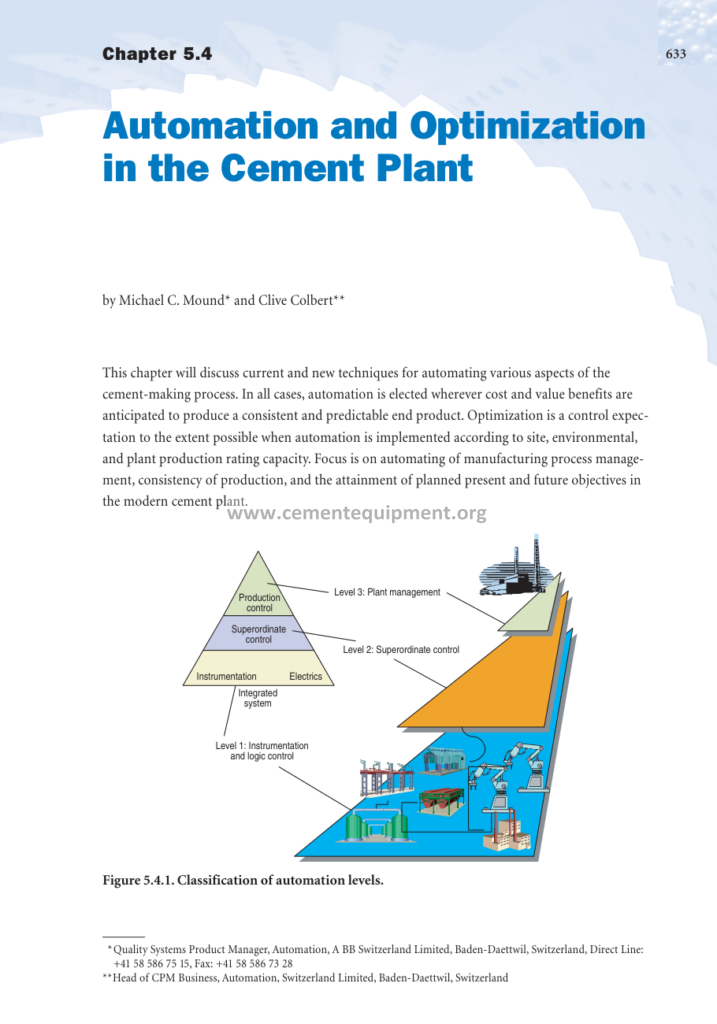
The architecture of the modern plant’s automation is customarily drawn as a pyramid, and the discipline of the pyramid is the discipline of the layers: each layer consumes the outputs of the layer below and serves the layer above, and no layer can skip the one beneath it. The base layer is the field instrumentation of the previous chapter, the sensors and the actuators that measure and move the process. The second layer is the control layer, the distributed control system with its regulatory loops, its interlocking, and its sequences. The third is the supervisory layer, the advanced process control, the laboratory systems, and the production reporting, and the fourth is the management layer, the enterprise systems that plan, cost, and schedule the plant.
The regulatory control layer is the load-bearing wall of the pyramid, and its engineering is the most traditional discipline of the industry. The regulatory loops hold the process variables at their setpoints through the classical feedback mathematics: the temperature of the calciner, the pressure of the preheater, the flow of the kiln feed, the level of the silos, and the thousands of subsidiary quantities are controlled by the proportional-integral-derivative controllers of the DCS, tuned against the process dynamics of each loop. The cascade, the feedforward, and the ratio structures are applied where the process demands them, the kiln feed to fuel ratio, the air to fuel ratio, and the mill feed to separator relationships.
The interlocking and the sequence layers protect and orchestrate the equipment. The interlocks enforce the order and the permissives of the machinery, the mill cannot start without its lubrication running, the kiln drive cannot run without its oil pressure, and the baghouse cannot be bypassed while the kiln is firing, and the sequence controls execute the complex operations, the start-up of the raw mill, the kiln line’s warm-up ramp, and the shutdown order of the finish circuit, as state-based procedures that never forget a step. The automation’s reliability, the freedom from the sequence failure that damages equipment, is set at this layer, and its discipline is absolute.
The pyramid’s base is completed by the human interface: the operator stations that present the process, the alarm systems that focus the attention, and the automatic documentation that records every action and every event. The modern operator station reflects the automation’s maturity: the graphics that are organized by function, the trends that are one click away, and the alarms that are prioritized and filtered, so that the operator supervises the automation rather than being buried under its data, exactly as the higher layers of the pyramid intend.
3. Advanced Process Control: The Supervisory Layer
Above the regulatory layer sits the advanced process control, the family of techniques that handles what the PID loops cannot: the multivariable, coupled, dead-time-dominated control problem of the kiln system. The cement kiln is a process whose key variables, the burning zone state, the free lime, the coating, the preheater stability, and the emissions, interact through long time constants and long dead times, and the classical single-loop controllers, tuned for stability, leave performance on the table. The advanced systems of the industry attack this in two schools: the rule-based expert systems and the model-based predictive controllers.
The expert systems, the pioneer school of the industry, encode the operating experience of the master burners in the form of rules: the system watches the process variables, the NOx, the kiln drive torque, the shell temperatures, and the gas temperatures, and applies the rule set that an expert would apply, adjusting the fuel, the feed, the kiln speed, and the fan settings step by step, holding the line in its stable window. The expert systems proved themselves in the hot, dusty reality of the kilns where the models had no data, and their descendants remain in service in many plants, valued for their transparency: the operators can see every rule the system applies.
The model-based predictive controllers, the newer school, compute the future behavior of the process from an internal model, solve the optimization of the manipulated variables over the prediction horizon, and apply the first step of the solution, repeating the calculation at every sampling instant. The MPC handles the coupling of the kiln variables explicitly, respecting the constraints, the maximum temperatures, the emission limits, and the equipment limits, and it pushes the process to its optimum systematically rather than heuristically. The modern lines, equipped with the fast analyzers of the measurement chapter, run the MPC layers that hold the kiln system closer to its design point than any manual operation ever did.
The advanced control layer of the modern plant combines both schools: the model-based core for the continuous optimization, the expert rules for the abnormal and the startup situations, and the regulatory layer beneath both, all orchestrated by the control system’s selection logic that hands the authority between the modes without a bump. The measured results of the layer, the reduced fuel per tonne, the stabilized free lime, the lower NOx, and the higher utilization, are the automation’s most visible return, and they are the subjects of the detailed sections that follow.
4. Automating the Kiln: Burning Zone Control and Stabilization
The automation of the kiln system concentrates on two problems: holding the burning zone in its operating window and managing the transition states. The burning zone state is not directly measurable, so the automation infers it from the available instruments: the nitrogen oxides, whose concentration correlates with the combustion temperature and the zone heat; the kiln drive torque and power, which respond to the material movement and the clinker viscosity in the zone; the shell temperatures from the scanner; the kiln exit gas temperatures; and the free lime of the produced clinker, measured in the laboratory and increasingly by on-line analyzers. The combination of these indicators forms the system’s picture of the burning state.
The manipulated variables answer the picture: the coal or fuel firing rate at the main burner, the raw meal feed rate, the kiln speed, the secondary and tertiary air, and the oxygen setpoint of the kiln gas. The systems act through the cascades into the regulatory layer, so the advanced control’s setpoint changes are executed by the base loops with their own fast dynamics, and the slow, integrated response of the kiln is steered by the supervisory decisions. The control action reflects the physics: an overheating zone is cooled by reducing the fuel, increasing the feed, or, in the emergency, raising the kiln speed; a cold zone is warmed by the opposite actions, with the system balancing the competing effects on the coating, the free lime, and the emissions.
The free lime control is the quality anchor of the kiln automation. The free lime of the clinker, the uncombined calcium oxide that must lie in its target band for the clinker to be usable, is the integration of the burning zone conditions over the preceding hours, and the automation’s task is to keep that integral in its band through the disturbances of the feed chemistry, the fuel quality, and the thermal environment. The modern systems close the loop on the measured free lime where the on-line analyzers exist, and they anticipate it where the models are accurate enough to predict the effect of the burning changes, and the result is the steady clinker quality that the cement’s strength consistency depends on.
The kiln automation also manages the transitions that the operators once handled by experience: the feed switches, the fuel changes, the start-up ramp, and the shutdown sequence. The sequence and the expert layers execute these transitions according to the engineered recipes, holding the thermal profile within its limits, protecting the refractory and the coating, and minimizing the lost production and the fuel of the transition period. The automation of the normal and the transition operation together is what makes the kiln line, in the words of the chapter, a consistent and predictable producer rather than a temperamental furnace.
5. Automating the Cooler and the Heat Recovery
The clinker cooler is the kiln system’s second control problem, and its automation has come into its own with the air-beam and cross-bar coolers of the modern lines. The cooler’s task is to quench the clinker from its leaving temperature to the temperature the downstream handling accepts, while recovering the maximum heat into the combustion air, and its control variables are the grate speed, the air distribution across the grate, the under-grate pressures, and the fan settings, all acting on a process whose material varies continuously in temperature, depth, and size.
The classic control scheme, refined by the modern systems, holds the clinker bed depth through the grate speed and the under-grate pressure, distributing the cooling air to the zones of the bed according to their heat load: the hot zones near the kiln discharge receive more air, the cooler zones less, through the damper settings of the under-grate compartments. The advanced systems of the modern coolers compute the air distribution from the temperature and the pressure measurements of the zones, holding the total air and its split against the secondary air demand of the kiln and the tertiary air demand of the calciner.
The bed evenness is the cooler’s stability issue: a bed with a blowhole admits the cooling air in a jet, starving the surrounding clinker and overheating the grate, while a choked bed distorts the pressure field. The modern instrumentation, the deep temperature sensing of the grate modules, detects the blowholes and the material surges, and the automation responds, adjusting the grate speed profile and the air distribution to restore the even bed, or alerting the maintenance to the damaged grate plates, whose failure is the cooler’s classic mode of deterioration.
The recovered heat is the measure of the cooler’s performance, and the automation’s objective is its maximization within the constraints: the higher the secondary and tertiary air temperatures, the lower the kiln fuel, and the lower the cooler exhaust temperature and its heat loss to the dedusting, the better the thermal economy. The heat recovery control of the modern systems sets the air flows and the grate speeds jointly with the kiln and the calciner control, so that the cooler is operated as the third combustion-air system of the line, which is exactly what it has become.
6. Automating the Mills: Load, Fineness, and Quality Loops
The automation of the grinding department closes the loops that the comminution chapter describes at the machinery level: the mill load, the product fineness, and the circuit stability. The ball mill’s load is sensed through the mill sound, the acoustic emission of the media on the shell, whose amplitude and pattern reveal the filling: a full mill is quiet, a half-empty mill clatters, and the modern systems use the digital audio analysis and the mill vibration sensors to estimate the load continuously, adjusting the feed rate to hold the optimum filling.
The roller mills and the presses use their own sensors: the vertical roller mill is controlled on the differential pressure across the mill, the table height and the hydraulic pressure, and the product residue of its classifier, and the high-pressure grinding roll on the hydraulic pressure, the rolls’ speed, and the feed conditions. The automation of the mill circuit coordinates the feed, the separator speed (or the classifier speed), the airflow, and the mill ventilation, holding the product fineness through the cascades into the regulatory layer, with the on-line fineness analyzers of the measurement chapter closing the outer loop.
The finish mill’s quality loop is the anchor of the cement product. The residue on the 45-micron sieve and the Blaine surface, the particle size distribution, and the water demand of the cement, are the instruments of the mill quality: the automation holds the production on the target distribution to the tolerance that the plant’s quality practice demands, and it adjusts the separator speed and the feed as the clinker grindability and the gypsum conditions vary. The closed loop, with its minutes of response through the on-line analyzer, replaces the half-hour laboratory cycle of the past with a control that the market’s consistency demands.
The mill automation also protects the circuit from its failure modes: the plugging of the mill, the overload of the classifier, the high temperature of the cement that would dehydrate the gypsum, and the vibration excursions of the roller mills are detected and countered by the automatic responses, and the sequences manage the mill starts, stops, and product switches without the operator’s constant attendance. The result is a grinding department whose throughput, stability, and product are all under the automatic regime, with the operators supervising the exceptions rather than steering the routine.
7. Laboratory Automation and the Quality Control System
The modern plant’s quality control is built on the automated laboratory that the automation chapter describes: the sample transport systems carry the material from the process points to the laboratory, the robotic sample preparation units divide, grind, and press the samples, and the X-ray spectrometers and the physical testing instruments measure them, all under the orchestration of the laboratory information system, so that the laboratory’s results arrive with the speed and the regularity that the online analyzers of the measurement chapter complement. The laboratory automation closes the quality loops whose variables the online instruments cannot measure.
The core of the quality system is the raw mix control: the X-ray analysis of the raw meal, blended with the online analyzer’s data, drives the mix proportioning toward the target moduli, as described in the measurement chapter, and the quality system’s reports document the mix performance against the targets. The clinker quality, the free lime, the mineral composition derived from the oxide analysis, and the physical quality of the cement, the fineness, the setting, the soundness, and the strength, are measured on the schedule that the standards require, and the results feed the process controls and the release decisions of the plant.
The release decisions are the commercial face of the quality system: the cement cannot be dispatched until the tests confirm its conformance, and the automated laboratory system documents the conformance of every lot, linking the certification to the silos, the loading dates, and the customer documentation. The traceability that the market demands, the proof that this tonne of cement meets its standard, is produced by the quality system’s records, and the automation has made the records complete, consistent, and instantly available, where the manual laboratory’s records were laborious, uneven, and often late.
The laboratory automation’s value is the consistency of the quality and the visibility of its statistics: the standard deviation of the fineness, of the free lime, and of the strength are computed continuously from the accumulated data, and the trends of the quality become the management instrument of the process, pointing to the mill conditions, the clinker variation, and the raw mix drift long before the customer would see them. The industry’s best plants watch their quality statistics the way their finance departments watch the margin, and the automated laboratory is what makes that watch possible.
8. Production, Energy, and Maintenance Management Systems
Above the process layers, the automation pyramid’s supervisory and management layers convert the process data into the operating and business information of the plant. The production management systems, the manufacturing execution layer of the plant, collect the process data, the productions, the consumptions, the stoppages, and the quality results, and produce the plant’s operating record: the daily production report, the clinker and cement balances, the availability statistics, and the performance indicators of the departments, feeding the management’s decisions and the group’s reporting.
The energy management system is a management layer with its own importance: the metering of the electrical energy and the fuels, integrated with the production data, produces the specific energy figures, the electrical kilowatt-hours per tonne and the thermal gigajoules per tonne, whose monitoring and benchmarking drive the energy program of the plant. The energy reports of the modern systems are linked to the process sections, the kiln section, the raw mill, and the finish mills, so that the energy consumption of every unit is visible, and the optimization of the plant, the scheduling of the heavy consumers, and the diagnosis of the energy waste are all conducted against this data, in the framework of the energy management standards such as ISO 50001.
The maintenance management layer completes the trio: the work orders, the spare parts, the maintenance plans, and the condition monitoring data are managed through the computerized maintenance system, and the automation layer feeds it the process data that the maintenance decisions need, the running hours, the temperatures, the vibrations, and the alarms of the equipment. The predictive maintenance of the modern plants, the detection of the developing failures from the data, is built on the junction of the process automation and the maintenance management, and its payoff, the avoidance of the unplanned stoppages, is one of the largest value streams of the automation pyramid.
The reporting of these systems closes the loop with the organization: the daily, weekly, and monthly reports, the KPI dashboards, and the management summaries are produced automatically from the data, and the reporting discipline, the agreement between the levels of the organization on what is measured, is what converts the data into the management decisions. The plants that manage by the data, the chapter implies, are the plants that attain their planned present and future objectives, because they see the process, the energy, and the maintenance as one integrated picture.
9. Alarm Management and the Operator’s Role
The automation of the plant changes the operator’s role, and the discipline of the alarm system decides whether the change is an improvement. The modern alarm philosophy, in the spirit of the industrial standards such as ISA-18.2, treats the alarm system as an engineered instrument: every alarm is documented with its cause, its consequence, its priority, and its recommended action, the alarm flood of the upset moments is managed by the suppression and the shelving of the standing alarms, and the alarm rates are measured, so that the operator’s attention is directed to the actionable events and not buried in the noise.
The statistics of the alarm management are a startling mirror of the automation’s maturity: the old plants, with their unmanaged alarm configurations, present their operators with hundreds or thousands of alarms per hour during the upsets, while the engineered systems of the modern plants operate at alarm rates that the teams can actually act on, with the reduction achieved by the reconfiguration of the process, the removal of the duplicated and the nuisance alarms, and the discipline of the alarm rationalization at every plant modification.
The operator’s role in the automated plant is supervision, exception handling, and the management of the abnormal: the operator watches the process through the graphics and the trends, intervenes when the automation cannot handle the situation, and directs the responses to the events, the trips, the failures, and the emergencies, together with the site teams, under the procedures of the plant. The operator training simulators, the last technique of the chapter’s list, prepare the operators for exactly this role: the simulators reproduce the plant’s dynamics and its alarm behavior, and the operators rehearse the start-ups, the upsets, and the emergency responses in the simulator until the responses are drilled, so that the rare events are handled with the practiced discipline rather than with the improvisation of the moment.
The human automation relationship is the frontier that the chapter’s focus, the consistency of production, ultimately depends on: the automation carries the routine to its consistent optimum, and the operator carries the judgment that the automation cannot replace, the diagnosis of the abnormal, the decision in the ambiguous, and the responsibility for the outcome. The plants that have succeeded with automation are the plants that have designed this partnership explicitly, training the operators to supervise the machines and the machines to serve the operators, rather than letting either displace the other.
10. Machine Learning and the Digital Frontier
The newest techniques in the chapter’s field, the machine learning and the artificial intelligence applications, are being applied in the cement industry at every level of the pyramid, and the discipline of their application deserves its own treatment because it is both the technology’s hope and its risk. The machine learning models of the modern plants are trained on the historian data of the process, and they serve where the physics-based models struggle: the prediction of the equipment failures from the vibration and the temperature patterns, the forecasting of the process responses from the condition signatures, and the pattern recognition of the abnormal events in the data streams.
The applications already proven include the predictive maintenance of the critical machinery, where the models detect the developing faults, the bearing wear, the imbalance, and the misalignment, weeks before the failure; the quality prediction, where the models estimate the cement and clinker quality from the process conditions, filling the gaps between the laboratory and the online measurements; and the optimization of the individual unit operations, where the models refine the operating setpoints of the mills and the coolers beyond the reach of the rule-based systems. The digital twins, the continuous models of the plant’s sections that run alongside the process, use the measured data to reconstruct the state of the process and to simulate the consequences of the planned actions.
The risk discipline of the machine learning mirrors the chapter’s automation principle: the models are adopted where their value is demonstrated and where their failure modes are understood. The black-box models whose predictions cannot be explained have a place only where the failure is bounded and the supervision remains human; the models whose training data no longer reflects the process, because the plant was modified or the materials changed, must be retrained and validated; and the data quality, the accuracy and the completeness of the historian records, determines the quality of everything the models can do. The modern practice therefore governs the models with the same engineering disciplines as the control loops: versioned, tested, documented, and supervised.
The frontier beyond the models is the automation of the analysis itself: the systems that mine the historian data continuously, detect the patterns and the deviations that the human analysts would miss, and propose the operating and the maintenance actions, are being deployed in the industry’s advanced plants, and their trajectory is toward the increasingly autonomous operation that the previous chapter’s perspective anticipated: the plants whose automation learns, and whose learning the organization harvests into its practice.
11. The Automation Investment: Return, Risks, and Implementation
The implementation of the automation layer is a project discipline, and its success follows the classic rules that the industry has learned over decades. The automation projects of the modern plant are staged: the regulatory and the sequence layers first, the advanced control and the process optimization next, and the management and the analytics layers last, with each stage delivering its measured benefits before the next begins, and with the baseline measurements of the plant’s performance, the fuel, the energy, the quality variation, and the availability, established before the automation and repeated after it, so that the return is documented, not assumed.
The risks of the automation projects are equally well catalogued. The automation that is implemented without the plant’s involvement fails in the transition, because the operators neither trust nor understand it; the automation that is configured beyond the process’s capability fails at the first excursion, because the control authority is transferred to a system that cannot handle the abnormal; and the automation that is not maintained decays, because the models and the settings drift with the process, and the layer that was once the plant’s asset becomes its liability. The disciplines that answer these risks are the operator involvement from the beginning, the conservative transfer of the control authority, and the permanent maintenance of the automation as a plant system with its own budget and its own staff.
The personnel dimension of the implementation is the chapter’s most practical point: the automation is elected where it produces the consistent product, and the people who produce the product must be the people who own the automation. The training of the operators, the engineers, and the managers, in the concepts and the details of the systems, is the investment that multiplies the automation’s value, and the career development of the plant’s staff through the automation era, from the manual operators to the supervisors of the automated process, is how the industry has converted the potential loss of the automation era, the displacement of the skills, into the gain, the multiplication of the capability.
The following table consolidates the automation layers of the modern plant with their functions and their principal benefits:
| Layer | Functions | Principal systems | Primary benefit |
| Field and I/O | Measurement and actuation | Transmitters, analyzers, drives | Data quality for all layers |
| Regulatory control | PID loops, interlocks, sequences | DCS controllers | Stability and safety |
| Advanced process control | Expert rules, MPC, constraint optimization | APC platforms | Fuel, energy, quality stability |
| Quality automation | Sample transport, robotic lab, X-ray | LIMS, robotic analyzers | Consistent release quality |
| Production and energy management | Reporting, benchmarking, metering | MES, energy management | Management visibility |
| Analytics and learning | Predictive maintenance, digital twins | ML platforms, historians | Availability, optimization |
Frequently Asked Questions
When should a plant automate a given function?
Exactly when the cost and value are favorable: when the automation is repaid by the value of the improvements, above all by a more consistent and predictable product, by the reduced fuel and energy, and by the freed operator attention. The decision is an economic one, balanced against the site, the environmental requirements, and the production capacity, and the automation is staged so each layer pays for itself.
What is the difference between expert systems and model predictive control of the kiln?
Expert systems encode the master burner’s rules, transparent and robust in abnormal situations, and they act stepwise on the process indicators; model predictive control builds an internal model, optimizes the manipulated variables over a future horizon under the constraints, and applies the first step of the solution, repeatedly. Modern plants combine both: the model-based core for continuous optimization, the expert rules for transitions and upsets.
How does the automation control something it cannot measure, like the burning zone?
Through inferred indicators: the NOx, the kiln drive torque, the shell temperature pattern, the exit gas temperatures, and the free lime of the clinker. The automation assembles these into a picture of the burning state and manipulates the fuel, the feed, the kiln speed, and the air through the regulatory cascades, holding the zone in its window and the free lime in its band.
What does the automated laboratory actually automate?
The whole chain from the process samples to the released results: the pneumatic sample transport, the robotic sample preparation, the X-ray and physical testing instruments, and the laboratory information system that schedules, records, and reports the analyses, including the certification of the dispatched cement. It closes the quality loops that the online analyzers cannot, with laboratory regularity and complete traceability.
How is the operator’s role changed by the automation?
From handling the routine to supervising it: the automation runs the regulatory and the advanced control, the operator watches through the graphics and the trends, intervenes on the exceptions, and manages the abnormal events with the site teams. Engineered alarm management keeps the attention on the actionable events, and operator training simulators drill the rare and dangerous situations.
What is the risk of machine learning in plant operation?
The models are only as good as their data and their supervision: black-box predictions must be bounded and human-supervised, retrained when the process changes, validated against the historian records, and documented with the same discipline as the control loops. Adopted where demonstrated and governed where adopted, the models deliver the availability and the optimization gains; adopted carelessly, they become a source of misjudgment.
Final Summary
Chapter 5.4 of Innovations in Cement Manufacturing covers the automation of the cement-making process, and this article has expanded the chapter into a complete technical package. The article established the economic case for automation, the consistency and predictability of the product at its center, and the automation pyramid whose layers, the field, the regulatory control, the advanced control, the quality, the management, and the analytics, must each be built and justified in order. The technical core covered the advanced process control of the kiln, the cooler, and the mills in engineering depth, together with the laboratory automation that closes the quality loops, the production, energy, and maintenance management systems that convert the data into decisions, and the alarm and human-factors engineering that shapes the operator’s role in the automated plant.
The operational and strategic dimension treated the machine learning and the digital frontier with their discipline of adoption, the staged implementation, the documented returns, and the risks of the automation projects, and it closed with the personnel dimension, the training and the ownership through which the industry has turned the automation era into a multiplication of its capability. The result is a complete picture of the automation of the cement plant as the industry practices it: elected where it pays, staged where it builds, maintained as a plant system, and dedicated to the consistent, predictable product that the chapter names as its purpose.
The conclusion of the chapter is that automation in cement manufacturing has moved from an option to an expectation, because the market, the energy costs, and the environmental requirements of the modern era leave no room for the variability of the manual era. The plants that have mastered the automation layers, from the tuned regulatory loops to the learning analytics, operate with a stability and an efficiency that define the industry’s best practice, and the innovations of this chapter’s frontier, the models, the twins, and the simulators, will carry that practice further, always under the chapter’s governing test: the automation must produce a more consistent and predictable product, or it must not be installed at all.
Get this cement file + the full 931-file package
$249.99 — one-time purchase, instant download, lifetime access
This file is part of the Complete Cement Technical Package (931 files) available from cementequipment.org. Respective rights holders; library copy for the licensed single user.