Cement Storage, Shipping & Packing: Guide
Cement storage, shipping and packing is the final link of the cement manufacturing chain, the system that converts the finished product from the end of the production line into the deliveries that reach the concrete producer, the builder and the rural market. The cement leaves the finish mill at a temperature of up to 110 °C, is conveyed to the storage silos, where it is kept and homogenised until it is dispatched, then leaves the plant either in bulk (silo trucks, rail wagons, barges and ships for the ready-mix and the large consumers) or in bags (rotary and carousel packers, palletisers and shrink wrappers for the retail and the small users). The engineering of this chain must preserve the quality of the product (cement that is stored badly can set, lump, segregate or lose its strength), must handle enormous flows with precision (a large plant dispatches thousands of tonnes per day), must weigh and invoice every tonne accurately, and must do all this with strict dust control and safety, because powdered cement is abrasive, alkaline and exothermic in contact with moisture. This guide explains the complete technology of the storage, shipping and packing system: the silos and their discharge, the blending and the inventory, the bulk loading stations and the ship loaders, the bag packers and the palletisers, the weighing and the quality control of the dispatch, the safety and the housekeeping, and the logistics planning of the distribution, giving the professional the complete picture of how the cement leaves the plant.
1. From the Mill to the Silo: The Start of the Chain
The chain begins at the finish mill discharge. The hot cement, typically at 90 to 110 °C after the grinding, is conveyed to the storage by air slides and bucket elevators, and the first engineering task is the control of the temperature and the air: the conveying air must be filtered (the mill dedusting), and the hot material must not remain stagnant, because the cement keeps hydrating slowly and the heat accelerates the reaction. For this reason the storage system is designed with a minimum turnover and the dispatch is planned so that the cement does not age excessively in the silos, especially in the hot season. The cement is cooled either in the mill ventilating system or in a cement cooler installed before the storage, which reduces the temperature to around 65 to 70 °C; the cooled cement packs better, stores better and gives a higher strength at the dispatch, and the packing plant benefits because the hot bags would be uncomfortable and the hot, humid air would cause the bag condensation and the lumping.
The conveying to the silo tops is chosen by the layout: the air slides, powered and fluidising the material with low-pressure air, are the standard for the horizontal transport; the bucket elevators (heavy-duty, with the deep buckets and the slow chains) for the vertical rise; and the pneumatic conveying for the long distances in the plants where space forces the compromise. Each transfer point is dedusted, and the silo top is equipped with the vent filters that release the displaced air without losing the dust. The distribution of the product to the silos is made by a rotating or fixed distribution system with the pneumatic diverter valves, which the dispatch planner operates so that each product goes to its dedicated silo and the changeovers are minimised.
2. The Cement Silo: Types, Capacities and Geometry
The cement storage silo is a large cylindrical concrete or steel structure, sized in weeks of production rather than days: a 5000 t/d clinker plant running a 60% cement-to-clinker finish ratio might hold 160,000 to 200,000 tonnes of cement in its silo park, because the dispatch is not uniform and the weekend and the holiday peaks must be absorbed. The silos are grouped by product: each product of the portfolio has its dedicated silos, and the number of silos limits the number of products that can be stored and dispatched simultaneously, which is exactly the constraint that the production planner must respect when the product mix changes. The geometry is commonly a cylinder with a conical hopper at the bottom whose angle (typically 55 to 70 degrees) exceeds the angle of repose of the bulk cement so that the material flows to the centre, and the capacity is limited by the height and the diameter; the record installations reach 40 to 80 metres high and capacities of 20,000 to 40,000 tonnes per silo.
The structural design must also be considered for the confinement: a cement silo is a pressure vessel in reverse, and the material exerts lateral pressures and, at the discharge, flow-induced loads and even the fluidisation pressures of the aeration, so the shell and the hopper are designed for the full range of the loading cases with the local codes. The silo is equipped with the continuous level measurement (guided radar or the weight-based load-cell system), the high-level and low-level switches for the interlocks, the vent filters with their fans, the access and the safety hatches with the fall protection, and the maintenance openings. The condition of the silo interior must be inspected periodically, because the internal surfaces can be attacked by the condensation and by the abrasive flow, and the old silos that have developed a rough interior or a build-up are the first to develop the discharge problems described in the next sections.
3. Discharge and Extraction: Aeration, Hopper Design and Flow Aids
The reliable discharge of the cement from the silo is the most operational part of the storage engineering, because cement is a cohesive powder that can arch, rat-hole and bridge if it is not helped. The classic discharge concept is the central discharge with aeration: the hopper is equipped with aeration pads fed by low-pressure air that fluidises the material at the bottom, so that the flow is even and the central opening delivers the cement steadily to the extraction system. The aeration is pulsed or continuous; it must be controlled, because over-aeration can fluidise the whole silo content and cause the catastrophic collapse of the material through the hopper. The alternative and complementary concepts are the fluidised discharge using the full-floor aeration, and the mechanical aids: the cone-and-plug systems, the vibrating hoppers and the discharge screw extractors. The cement engineer knows that the discharge problem is solved at the design stage, not in reliability, and that the worst silos are the ones whose hopper angle or aeration was marginal from the start.
Beyond the hopper, the discharge rate is regulated by the extraction device, typically a variable-speed screw conveyor or a fluidising feeder beneath the silo bottom, followed by the conveying system and the weighing. The mass flow balance of the whole dispatch chain requires that the extraction must be able to feed the packers and the bulk loaders at the rates demanded, with the possibility of the simultaneous discharge of several silos into a common line through the proportioning and the batch mixing. The homogenisation of the product also happens partly at the discharge: because the cement can segregate in the silo by the particle size and the density (the coarser particles accumulate in the centre, the fines at the walls), the aeration and the discharge strategy intentionally mix the flow, and where the product consistency is critical the plant uses the activated-silo or the continuous blending concept, in which the incoming and the outgoing flows are arranged so that the material is homogenised during the warehousing.
4. Homogenisation and the Preservation of Quality in Storage
The storage is not only a buffer; it is also the last quality stage of the plant, and the preservation of the cement quality in the silos is a set of deliberate disciplines. The first is the segregation control: the cement particles separate by size during the silo filling and the discharge, so the product delivered can differ from the product certified if the silo is not managed; the plants use the aeration blending, the recirculation systems and the controlled discharge to keep the delivered product uniform. The second is the temperature control: the cement stored hot loses strength (the so-called pre-hydration) and the storage heat accelerates the setting reactions, so the cement is cooled before the storage and the turnover is kept high in the summer. The third is the moisture control: the smallest infiltration of water (a leak in the silo roof, a wet compressed air, a condensation on the cold surface) hydrates the cement locally and forms the lumps and the shells that then contaminate the product; the silos are sealed, the air is dried and the vent filters are maintained.
The fourth discipline is the inventory and the age control: the dispatch planning must guarantee the first-in-first-out, so that no silo content ages for weeks; the age of each silo is tracked in the inventory system, and the oldest product is scheduled out. The fifth is the quality verification at the dispatch: every loading line takes a sample of the loaded product, and the certificate of analysis of the batch is issued from the analysis of the stored silo plus the sample of the dispatch. The storage therefore closes the quality loop: the product is certified at the silo, its uniformity is maintained by the blending in the silence of the concrete vessel, and the customer receives exactly the material whose performance the laboratory has verified, which is the professional contract of the industry.
5. Bulk Loading: Trucks, Rail and the Loading Stations
Bulk dispatch, which represents the majority of the cement in the developed markets, loads the cement directly from the silo into the bulk vehicles. The standard installation is the bulk loading station: a concrete or steel structure under the silo bottom, with the loading spout for the top of the truck or the rail wagon, the flexible hose with the retractable bellows, the dust extraction around the spout, the vehicle positioning guide, the interlock that prevents the overfill, and the weighing system. The truck is weighed on the weighbridge before and after the loading (or on the on-board loader scale), the target is the ordered quantity, and the loading is stopped automatically at the target, typically with an accuracy of the order of 50 to 100 kg on a 30 tonne load. The loading station is connected to the return dust handling: the dust extracted around the spout returns to the silo or to a small recovery filter, and the vent of the vehicle is closed to contain the dust.
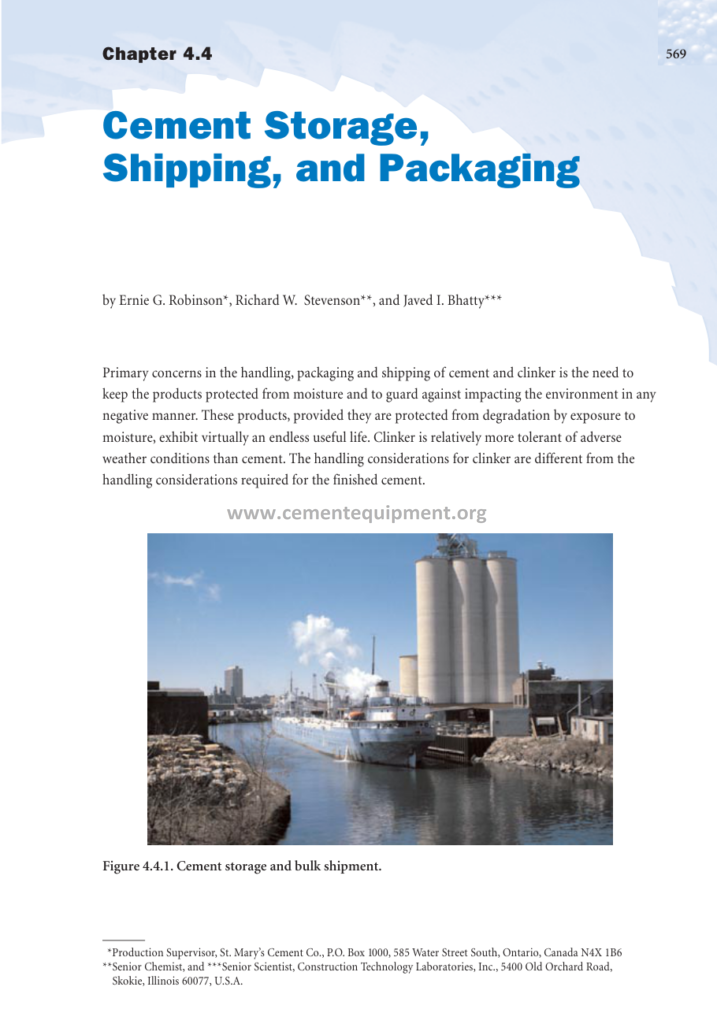
For the large volumes, the plants add the rail loading and the ship loading. The rail loading uses the same principle with the longer loading booms and the automatic wagon positioning, able to load a train of 50 wagons overnight. The ship loading is the largest in scale: the cement is transferred by the pneumatic or mechanical conveying to the ship loader at the wharf, a telescopic vertical chute and horizontal boom that fills the holds of the cement carriers (which are sealed, moisture-tight vessels), with the continuous weighing and the dedusting, and with the loading rate matching the vessel’s capacity and the schedule of the port. The quality control of the ship load-out is particularly rigorous, because a cargo is a single batch that will be tested at the discharge port: the sampling of the cargo, the certificate and the survey by the independent inspector are part of the export discipline. The bulk loading chain must also balance the rates: a packer can run at 2000 to 4000 bags per hour while a ship loader can take 1000 t/h, so the dispatch planner sequences the four channels (truck, rail, ship, bag) to the network of the silos and the conveying lines.
6. The Bag Packing Plant: The Rotary Packer
The bagged cement is the product of the retail and the small-user markets, and it is packed by the rotary and the carousel packers. The rotary packer is the classical machine: a vertical turret with six to twelve filling heads rotating continuously, each head positioned over a packing spout, the bags (paper or laminated plastic) clamped on the spout by the operator or automatically by the bag placer, the cement forced into the bag by a screw or an impeller at the regulated pressure, and the filled bag released on the discharge side, weighed and rejected if outside the tolerance. The modern packers run automatically: the bag magazine, the bag placer, the filling turret with the precision weighing cells, the bag flattening and the ejector, all in a continuous flow of 2000 to 4000 bags per hour. The weighing accuracy is the commercial heart: each bag must be within the legal and the contractual tolerance (for a 50 kg bag, typically in the range of plus or minus 0.2 to 1 kg), and the statistical average must equal or slightly exceed the nominal, because the underweight bags cause the customer complaints and the overweight bags give away the product margin.
The choice of the bag is a technical decision: the paper bags with the moisture barrier and the valve, used for the standard retail; the laminated and the plastic bags for the markets with the high humidity; and the jumbo bags (500 to 1500 kg) for the intermediate users. The cement inside the bag is not immune to the storage effects, so the palletised bags are wrapped in the stretch film or the shrink film that protects against the moisture, and the pallets are marked with the product, the batch, the date and the net weight. The packing plant is also a safety and housekeeping challenge: the dust at the spouts is extracted, the floors are cleaned continuously (the spilled cement is returned), and the ergonomics of the operators, the guarding of the turret and the interlocks of the machinery follow the machine-safety standards of the packers.
7. Palletising and the Bag Handling Systems
After the packing, the bags are formed into pallet loads: typically 40 to 60 bags per pallet, arranged in the interlocking pattern that gives a stable stack (40 or 50 kg bags in the European standard patterns, square and cube patterns for the jumbo markets). The palletiser is a robot or a conventional layer machine: the bags are oriented, stacked in layers, the layers are pressed and the pallet is turned, and the completed pallet is wrapped by the stretch hood or the shrink wrapping that holds the stack for the transport and the handling. The robotic palletiser has become the standard in the modern plants: a single industrial robot with the suction grippers and the layer boards can manage 2000 to 3000 bags per hour, and its flexibility allows the change of the pattern and the product without the mechanical rebuild. The pallet handling then continues to the storage of the finished pallets (they may be stored in a high-bay warehouse or dispatched directly), to the truck loading, and to the dispatch documentation.
The quality control of the bagging and the palletising covers the bag weight statistics, the bag integrity (leak test of the sealed seams), the pallet stability (the stack retention measurements during the transport), and the label and the marking accuracy. The dispatch of the bagged cement is normally done in pallets loaded by forklifts or front loaders onto the trucks, with the truck weight verified at the weighbridge against the documented weight. The whole chain, from the packer to the truck, is operated from the control room, with the production counting, the rejects, the downtime and the changeovers recorded, so that the efficiency of the packing plant (the availability, the bags per hour, the accuracy, the waste) is one of the monitored KPIs of the dispatch department, and the housekeeping of the packing floor, the dust control and the safe handling of the 50 kg loads are the daily discipline of its team.
8. Weighing, Invoicing and the Dispatch Documentation
The accuracy and the traceability of the dispatched quantity are the commercial integrity of the plant. The weighbridge, a certified static scale, is the trade instrument for the truck dispatches: every truck is weighed empty and loaded, the difference is the net quantity, and the certificate is generated automatically by the weighing software, which is connected to the enterprise system so that the invoice matches the delivered quantity without any manual transcription. The bulk loading stations and the ship loaders add the belt or the screw weigher totals as the internal control, and the daily reconciliation between the weighbridge totals, the belt totals, the packer counts and the silo levels is the health check of the whole weighing chain, described in the belt weighing guide. The batches are numbered, the samples are taken and archived, and the certificate of analysis (the composition, the fineness, the setting, the strength, the sulphate) is issued and transmitted with the dispatch.
The dispatch documentation covers the legal and the commercial requirements: the delivery note with the product, the quantity and the vehicle; the certificate of analysis of the batch; the safety data sheet for the transport; and the traceability to the production records. In the export chain, the documents multiply: the certificate of origin, the weight certificate, the survey report, the quality certificate against the specification of the destination, and the insurance documents, each generated from the same verified data. The professional dispatch office is therefore a data hub, and the modern software connects the weighing terminals, the packer counters, the silo inventory, the laboratory and the transport planning into a single flow, so that the customer receives the product, the certification and the invoice that all agree, which is the quiet foundation of the commercial trust of the industry.
9. Dust Control, Safety and Housekeeping of the Dispatch Area
The dispatch area is one of the dustiest and most crowded zones of the plant, and its safety and environmental discipline are a complete chapter in their own right. The dust sources are the transfer points, the spouts of the loading and the packing, the palletising and the vehicle traffic; each is captured by the extraction hoods and the bag filters, and the collected dust is returned to the product, which is both the environmental requirement and the recovery of the material. The occupational exposure limits for the cement dust (which contains respirable crystalline silica) are respected by the ventilation and the respiratory protection, and the housekeeping program keeps the floors, the decks and the roadways clean, because the spilled cement creates the slip hazards and the re-entrained dust. The water is the enemy of the spilled cement: it hardens into the concrete-like masses that clog the drains and the equipment, so the dry cleaning by the industrial vacuums is the rule.
The safety of the machinery follows the standards: the guards and the interlocks of the packer, the palletiser and the conveyors; the safe-access systems and the fall protection on the silo tops and the loading platforms; the lock-out/tag-out for the maintenance; and the confined-space procedures for the silo interiors and the storage hoppers. The loading of the vehicles has its own rules: the driver stays in the cabin or in the safe zone during the loading, the spout is interlocked with the vehicle position, and the overfill is prevented. The emergency response of the area (fires of the paper bags, the dust explosions of the silo atmospheres, the release of the product) is rehearsed, and the housekeeping measurement (the dust measurement at the boundary and in the workplace) is part of the permit compliance. The dispatch is therefore not the last anonymous zone of the plant but one of its most hazardous and most disciplined, and the plants that run it clean run it safely.
10. The Logistics and the Distribution Planning
The dispatch activity is governed by the logistics plan, which coordinates the production, the storage and the transport. The weekly plan matches the product demand (known from the sales orders and the stock levels of the customers) against the mill production plan and the silo capacities, so that each product is available at the right time without the over-production that would fill the silos. The daily plan sequences the truck arrivals (in many plants the appointments are booked by the customers in a slot system), the loading stations, the ship schedule and the rail timetable, and the control room executes it in real time, deciding which silo serves which vehicle and which product changeover is made when. The fleet and the external transport are managed for the capacity and the deadlines, and the distribution cost per tonne (the second largest cost of the cement after the fuel) is optimised by the route planning, the backhauling and the modal split between the road, the rail and the sea.
The planning must absorb the shocks: the seasonal demand (construction peak, the Ramadan and the winter construction stops in the Islamic and the cold markets), the strikes and the breakdowns of the transport, and the sudden large orders. The instruments of the resilience are the inventory buffer, the flexibility of the loading channels and the communication with the customer. The modern distribution is increasingly data-driven: the sales and operations planning (S&OP) connects the demand forecast to the production and the distribution, the transport management system (TMS) plans the fleet in real time, and the tracking gives the customer the estimated arrival. For the plant, the logistics discipline is the difference between a plant that sells what it makes and a plant that makes what it sells, and the dispatch centre, with its silo inventory, its loading stations and its transport contracts, is where this balance is decided every day.
11. The Key Data and the Performance of the Dispatch Chain
The performance of the storage, shipping and packing system is measured by its own KPI set, which the professional tracks continuously:
| KPI | Definition | Typical value |
|---|---|---|
| Packer availability | Running hours / calendar hours | >92% |
| Bagging rate per spout | Bags per hour per spout of the turret | 300–700 b/h |
| Bag weight accuracy | Deviation from the nominal and reject rate | <0.2–1 kg; rejects <1% |
| Bulk loading rate | Tonnes per hour per loading station | 100–500 t/h |
| Silo turnover | Tonnes dispatched per week / silo capacity | Managed, no aged stock |
| Dispatch accuracy | Difference vs the weighbridge | <0.2% |
| Dust emission of the area | mg/Nm³ at the stack and the boundary | Within the permit |
| Lost time injuries | LTI per million hours | Target zero |
These numbers are reviewed in the daily dispatch meeting with the transport and the production, and the improvement projects (a faster packer changeover, a better bag supplier, a new loading spout, an automated pallet warehouse) are decided with their payback. As with the rest of the plant, the KPIs of the dispatch are not decoration: they convert the operational choices of the area into the language of the management and the market, and they keep the chain under control while it runs at high speed, day and night.
12. Frequently Asked Questions
Why does cement need silos at all, and how big are they?
Because the production is continuous and the dispatch is not: the silos buffer the difference and allow the product mix and the weekend and peak demand, so a large plant keeps thousands of tonnes per product in the tall concrete vessels, sized in weeks of production rather than days.
How is the cement prevented from lumping and hardening in the silo?
By drying and cooling the cement before the storage, by sealing the silos against the moisture, by controlling the aeration and the discharge, and by the first-in-first-out inventory discipline that limits the age of the stored product; any leak of humidity is the beginning of the hardening.
How accurate is the bag packing and why does it matter?
An automatic packer reaches an accuracy of about 100 to 500 g per bag, and the tolerance and the legal and contractual limits are strict: the underweight bags damage the customer trust and the overweight bags give away the product margin, so the weighing cells and the statistics are the commercial heart of the packer.
What is the difference between bulk and bagged dispatch?
Bulk dispatch pumps the loose cement directly into the tanks of trucks, rail wagons and ships for the large consumers (ready-mix, precast, big projects), at 100–1000 t/h; the bagged dispatch packs the cement into 20–50 kg bags and jumbo bags for the retail and the small users, at rates of 2000–4000 bags per hour.
How is the quality of the shipped product guaranteed?
Every batch is sampled and tested in the laboratory, the certificate of analysis is issued and travels with the delivery, the batch traceability is kept to the silo and the production record, and the independent surveyors verify the cargo for the exports, so the customer receives the certified product with its full documentation.
Why is the housekeeping of the dispatch area so important?
Because the area is dusty, crowded and alkaline: the spilled cement creates slip and respiratory hazards, the dust has to be kept within the emission limits, and the water-wetted cement hardens and blocks the equipment; the continuous cleaning is both a safety and an environmental discipline.
How does the plant decide which silo serves which truck?
The dispatch control system manages the silo inventory and the loading stations in real time: it opens the silo of the requested product, verifies the remaining stock, sequences the vehicles by the appointments, and records the loaded and the certified quantity, all while the weighbridge and the packer counters feed the same data system.
13. Summary and Conclusion
The storage, shipping and packing system is where the cement plant meets its market, and its engineering is the discipline of the last hundred metres: the silos and their aeration and discharge that preserve and homogenise the product; the bulk loading stations and the ship loaders that deliver the thousands of tonnes of the industrial customer; the rotary packers, the palletisers and the wrapping lines that serve the retail world; the weighbridges, the certificates and the traceability that protect the commercial integrity; the dust control, the safety and the housekeeping that keep the area clean and safe; and the logistics plans that match the demand to the storage and the dispatch. Each element is a fully engineered system with its standards, its KPIs and its failure modes, and the profession of the dispatch engineer combines the mechanical reliability, the weighing metrology, the process chemistry of the stored powder, the environmental compliance and the commercial planning in a single discipline. The plants that master these last hundred metres deliver their certified product accurately, cleanly and on time, and they earn the trust of their customers and the margin of their business, which is why the storage and dispatch is never a passive warehouse but the final, active instrument of the whole cement operation.
Get this cement file + the full 931-file package
$249.99 — one-time purchase, instant download, lifetime access
This file is part of the Complete Cement Technical Package (931 files) available from cementequipment.org. Respective rights holders; library copy for the licensed single user.