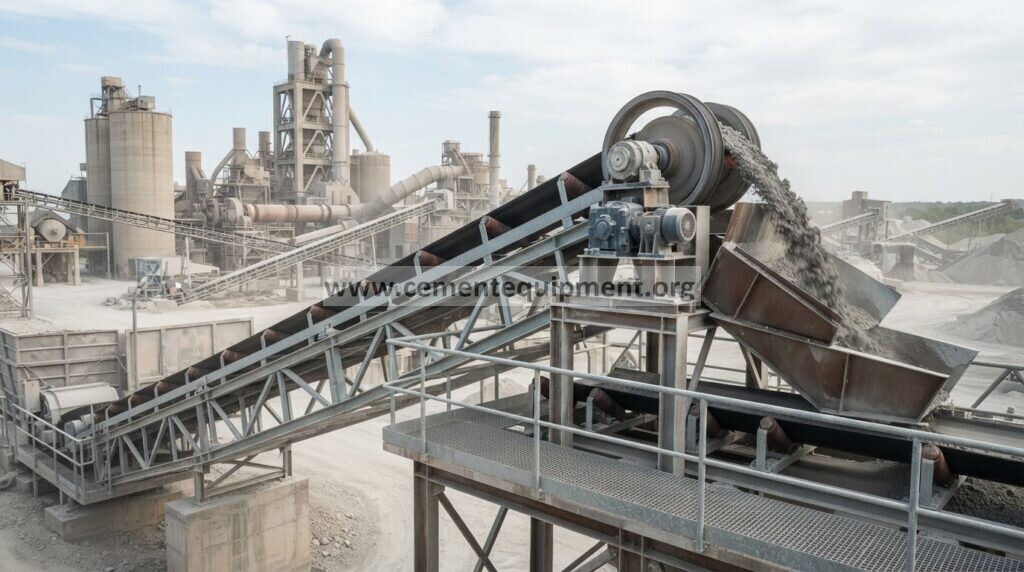

A hot conveyor pulley bearing is not automatically a lubrication shortage. Diagnose temperature together with bearing load, shaft alignment, pulley tracking, seal condition, grease history and vibration. Over-greasing, a failed seal, misalignment, excessive belt tension or a damaged bearing can all raise temperature. Compare the suspect bearing with the opposite side and with its own stable baseline before adding grease or increasing belt tension.
Find why a head, tail, snub or take-up pulley bearing is running hot before it damages the bearing, shaft, seal or pulley.
Use temperature trend, left/right comparison, vibration, grease condition, seal leakage, belt tension, tracking, shaft alignment and pulley load.
Correct lubrication, alignment, tension or contamination causes before replacing the bearing; replace only when condition evidence supports internal damage.
Fast diagnostic order
- Compare both sides first: trend the hot bearing against the opposite bearing, ambient temperature, conveyor load and motor current.
- Check lubrication without adding grease blindly: verify grease type, quantity, interval, purge condition and contamination.
- Inspect the load path: pulley alignment, shaft/housing condition, belt tracking, take-up position and belt tension.
- Use vibration to separate causes: distinguish lubrication heat, misalignment/load effects and internal bearing damage.
- Verify after correction: run empty then loaded and confirm stable temperature, vibration, tracking and seal condition.
Trend both bearings before adding grease
Record: drive/non-drive or left/right bearing temperature; ambient temperature; conveyor load; belt speed; motor current; vibration or noise; grease type, quantity and last lubrication time; visible seal purge or leakage; belt tracking; take-up position; pulley lagging/buildup; and any recent bearing, pulley, belt or take-up work.
A single absolute temperature is less useful than the trend and side-to-side difference under comparable load.
1. Compare the hot bearing with the opposite side
If one side is significantly hotter while the opposite bearing remains stable, investigate local lubrication, seal, housing fit, alignment and internal bearing condition. If both sides rise together, look harder at belt tension, pulley loading, ambient/process heat and a common lubrication practice.
2. Check lubrication quantity and condition
Too little grease can starve rolling contacts, but too much can churn, increase friction and raise temperature. Review the actual grease quantity and interval against the bearing/housing manufacturer’s recommendation. Look for hardened grease, incompatible grease, contamination or excessive purge. Do not repeatedly add grease to a hot bearing without understanding why it is hot.
3. Inspect seals and contamination paths
Cement dust entering through damaged seals can turn grease into an abrasive paste. Inspect labyrinths, contact seals, end covers and purge paths. A failed seal may also let grease escape and attract dust. If dirty grease is found, determine whether the contamination entered through the seal, during lubrication or during previous maintenance.
4. Check pulley and shaft alignment
A skewed pulley, bent shaft or housing misalignment can load one bearing more heavily. Inspect the pulley relative to the conveyor centerline, bearing-base condition and shaft position. Look for unusual belt edge behavior or localized wear. After any bearing replacement, verify that housings were not forced into alignment by bolt tightening.
5. Review belt tension and take-up condition
Excessive belt tension increases radial load on pulley bearings. Check the take-up position, counterweight or hydraulic/screw setting and whether the take-up is free to move. If tension was increased recently to solve drive slip or sag, confirm it did not move the bearing load outside the conveyor design.
6. Inspect pulley buildup, lagging and balance
Material buildup on the pulley face or uneven lagging can create dynamic load and vibration. Clean and inspect the pulley, then check whether vibration changes. A damaged shell, eccentric buildup or poorly repaired lagging can load bearings cyclically even when static alignment is acceptable.
7. Use vibration and noise to judge internal bearing condition
Temperature alone cannot identify spalling, looseness or rolling-element damage. Compare vibration trend and listen for roughness using approved condition-monitoring methods. Rising temperature together with increasing bearing-frequency vibration, metallic noise or debris in grease is stronger evidence of internal damage.
8. Check housing fit and mounting practice after recent work
If overheating began immediately after bearing replacement, review mounting, internal clearance, adapter-sleeve setting, shaft fit, housing seating and bolt condition. Incorrect mounting can remove internal clearance or preload the bearing. Verify against the exact bearing and housing procedure rather than a generic tightening rule.
Pulley-bearing diagnostic matrix
| Observed pattern | Likely direction | Next check |
|---|---|---|
| Temperature rises soon after greasing | Over-greasing/churning or wrong grease | Grease quantity, purge, compatibility |
| One bearing hot; opposite side normal | Local bearing/seal/alignment issue | Seal, housing, vibration, shaft alignment |
| Both bearings hot after tension increase | Excessive radial load | Take-up/tension vs conveyor design |
| Heat plus rough vibration/noise | Possible internal bearing damage | Vibration spectrum, grease debris, planned inspection |
| Heat began after bearing replacement | Mounting/clearance/fit issue | Adapter setting, internal clearance, housing seating |
Common mistakes
- Adding more grease every time temperature rises.
- Ignoring a recent increase in belt tension.
- Replacing the bearing without checking shaft and housing alignment.
- Using temperature alone and ignoring vibration evidence.
- Accepting contaminated purge grease as normal in a cement environment.
Return-to-service verification
After correction, run the conveyor empty and then at representative load according to the site procedure. Acceptance means bearing temperatures stabilize relative to ambient and the opposite side, vibration remains within the plant/OEM condition limit, no abnormal noise or seal leakage appears, pulley tracking is stable and the take-up remains in its intended operating range. Record the final temperature and vibration baseline for future trend comparison.
Frequently asked troubleshooting questions
Does a hot conveyor pulley bearing always need more grease?
No. Over-greasing can also raise temperature. Compare grease history, seal condition, alignment, belt tension and vibration before adding lubricant.
Why is one pulley bearing hotter than the other?
A local bearing defect, seal problem, housing fit issue or shaft/alignment condition can load one side more heavily. Compare both sides under the same conveyor load.
Can excessive belt tension overheat both pulley bearings?
Yes. Higher belt tension raises radial bearing load. Review take-up position and any recent tension change before replacing bearings.
Related Infinity technical guides
References
Bearing lubrication quantity, internal clearance, mounting method and operating temperature limits must follow the installed bearing, housing and conveyor manufacturer’s instructions. Use the plant’s temperature and vibration history under comparable load as the primary condition baseline.