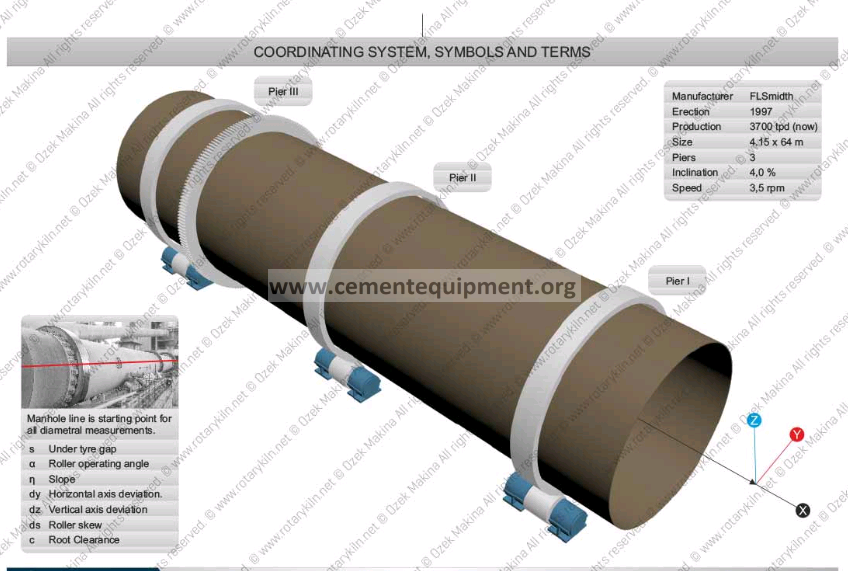
Cement Mill Operation: A Crucial Step in Cement Production
Cement mill operation is a critical step in the cement production process, where cement clinker is ground into a fine powder, with a typical fineness of 3000-4000 cm²/g, to produce the final product.
Cement mill operation is a complex process that involves several variables, including the type of cement, the feed material, the grinding media, and the operating conditions. The cement mill is a critical component of the cement production process, and its operation has a significant impact on the quality of the final product. One of the key factors that affect cement mill operation is the residence time of the material in the mill, which is typically in the range of 2-5 minutes.
The mechanism of cement mill operation involves the grinding of cement clinker, a mixture of limestone, clay, and other minerals, into a fine powder. The grinding process is carried out in a ball mill, where the cement clinker is fed into the mill through an inlet, and the ground material is discharged through an outlet. The grinding media, typically steel balls or cylinders, are used to grind the cement clinker into a fine powder.
The root cause of many problems in cement mill operation is the improper control of the operating conditions, including the temperature, pressure, and humidity. For example, high temperatures can cause the cement to become over-ground, resulting in a loss of strength, while low temperatures can cause the cement to become under-ground, resulting in a poor flowability. The following table shows the typical operating conditions for a cement mill:
| Parameter | Range | Unit |
| Temperature | 100-150 | °C |
| Pressure | 10-30 | mbar |
| Humidity | 50-70 | % |
| Residence time | 2-5 | minutes |
To diagnose problems in cement mill operation, a step-by-step approach is necessary. The first step is to check the operating conditions, including the temperature, pressure, and humidity, to ensure that they are within the recommended ranges. The next step is to check the grinding media, including the steel balls or cylinders, to ensure that they are in good condition and properly sized. The following steps can be taken to diagnose problems in cement mill operation:
- Check the feed material to ensure that it is of the correct composition and size
- Check the grinding media to ensure that it is in good condition and properly sized
- Check the operating conditions, including the temperature, pressure, and humidity, to ensure that they are within the recommended ranges
- Check the residence time of the material in the mill to ensure that it is within the recommended range
What are the common problems in cement mill operation?
Some of the common problems in cement mill operation include over-grinding, under-grinding, and poor flowability. Over-grinding can result in a loss of strength, while under-grinding can result in a poor flowability. Poor flowability can also be caused by the presence of impurities, such as moisture or dust, in the cement.
How can cement mill operation be optimized?
Cement mill operation can be optimized by controlling the operating conditions, including the temperature, pressure, and humidity, and by ensuring that the grinding media is in good condition and properly sized. The residence time of the material in the mill can also be optimized to ensure that it is within the recommended range.
What is the importance of cement mill operation in cement production?
Cement mill operation is a critical step in the cement production process, as it determines the quality of the final product. The cement mill is responsible for grinding the cement clinker into a fine powder, which is then mixed with other ingredients to produce the final product. The quality of the cement is directly affected by the operation of the cement mill, and any problems in the mill can result in a poor-quality product.
How can the energy consumption of cement mill operation be reduced?
The energy consumption of cement mill operation can be reduced by optimizing the operating conditions, including the temperature, pressure, and humidity, and by ensuring that the grinding media is in good condition and properly sized. The use of alternative fuels, such as waste materials, can also help to reduce the energy consumption of cement mill operation.