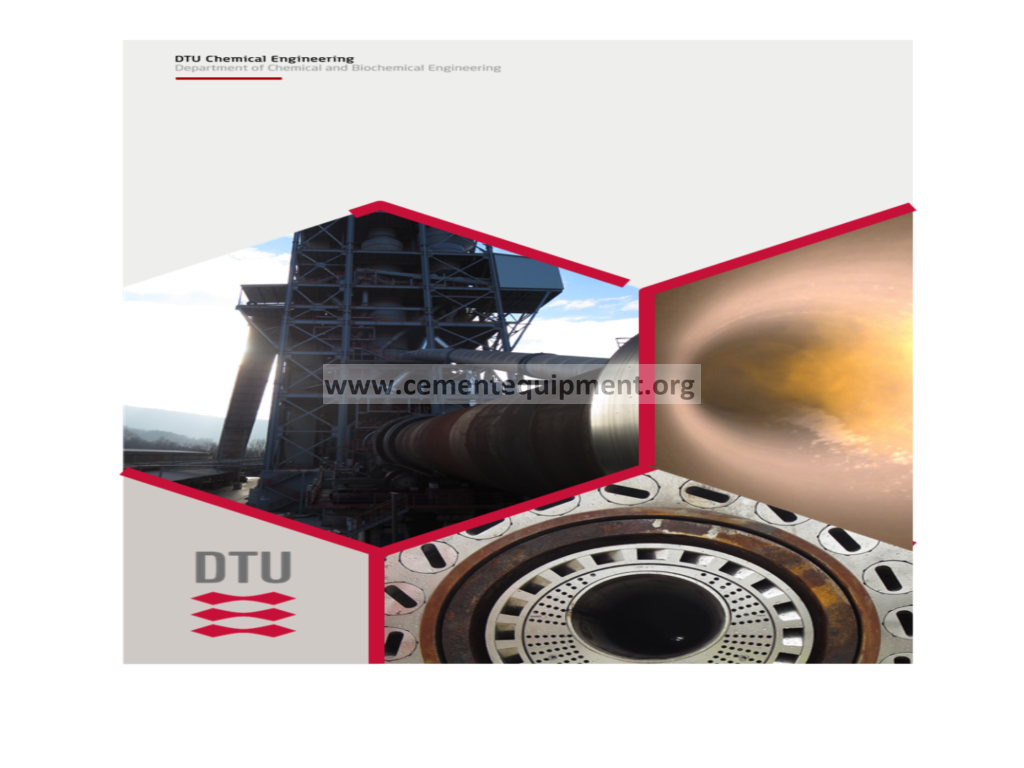
Coal Firing in Cement Kilns: Complete Guide
Coal firing is the energy backbone of the modern cement industry: around two thirds of the world’s clinker is burned with coal or petcoke, and the coal-fired kiln remains the reference system of the pyroprocessing textbooks: the coal enters the plant as a raw material of sorts and leaves it as the hot gas that carries the clinker reactions: the quality of the coal, the fineness of the pulverization and the discipline of the firing system decide the flame, the fuel consumption and the stability of the entire kiln line.
The Complete Cement Technical Package (931 files including the books, the courses, the Excel tools and the presentations: $249.99 one-time: instant download via the PayPal payment) includes this coal firing guide with its quality tables, the combustion calculations, the safety checklists and the Excel burner calculator: the article walks the file: the fuel quality parameters, the storage and the blending, the grinding and the drying, the pulverized coal transport and the burner, the precalciner firing, the control loops, the safety rules and the emissions: the engineer finishes the page with a complete mental map of the coal firing system of his plant.
This page is organized as the sequence of the fuel path: the coal arrives at the plant, it is tested, stored, blended, ground, dried, transported, dosed and finally burned: the sections follow exactly this order, the two tables of the article summarize the coal quality spectrum and the fuel comparison, and the FAQ at the end answers the questions that the plant engineers ask most often in the training courses.
1. The Place of Coal in the Cement Fuel Mix
Coal supplies the bulk of the thermal energy of the cement industry worldwide: the typical clinker heat consumption of a modern dry-process plant is 3000 to 3600 kJ per kg of clinker, and with the fuel demand of the kiln and the precalciner split roughly 40:60, a 5000 tpd plant burns the equivalent of 600 to 800 tons of coal per day at the net calorific values of the international steam coals: the fuel bill is typically 30 to 40% of the cash cost of producing a ton of clinker, which makes the coal handling and the firing the first line of the plant economy.
- The fuel split: in a precalciner line, the kiln burner receives 35-45% of the total fuel while the calciner receives 55-65%: the two firing points must match the two heat demands;
- The fuel flexibility: the modern plants are designed for a fuel mix that can swing between coal, petcoke and alternative fuels, with the coal as the reference fuel of the design;
- The moisture and the drying: every kilogram of water in the fuel costs about 3000 kJ of evaporation heat: the coal moisture is therefore a direct charge on the specific heat consumption;
- The calorific value: the international steam coals for the cement industry run from 21000 to 27000 kJ/kg, the petcoke higher at 30000 to 34000 kJ/kg, and the lignite as low as 8000 to 12000 kJ/kg;
The role of the coal extends beyond the energy: the ash of the coal enters the clinker and participates in the composition, so the coal is a raw material as well as a fuel: an ash content of 10 to 20% means that the plant must compensate the coal ash contribution in the raw mix design, and the variations of the ash change the clinker chemistry on the daily scale: the fuel quality control, therefore, is part of the quality control of the product, a theme that the file treats with its own chapter and its own tables.
The history of the fuel teaches the same lesson as the economics: the wet-process plants of the past burned 5500 to 6500 kJ per kg of clinker, while the modern dry-process lines with the preheater and the precalciner burn 3000 to 3600: the coal firing technology and the heat consumption are two sides of the same development, because the modern systems exist to burn the fuel where the heat is needed: the kiln for the clinker reactions and the calciner for the decarbonation: the fuel split and the energy balance of the plant are therefore the first two chapters of every kiln course, and the file presents them with the numbers of the real plants rather than the textbook averages.
2. The Quality Parameters of the Coal: What the Laboratory Measures
The coal quality is described by two families of measurements: the proximate analysis, which splits the coal into moisture, ash, volatile matter and fixed carbon, and the ultimate analysis, which gives the elemental composition: both are required for the design and the daily control of the firing system.
| Parameter | Bituminous (typical) | Lignite / brown | Petroleum coke |
|---|---|---|---|
| Net calorific value (kJ/kg, as received) | 21000 – 27000 | 8000 – 12000 | 30000 – 34000 |
| Moisture (% as received) | 4 – 10 | 20 – 50 | 1 – 3 |
| Ash content (%) | 8 – 20 | 5 – 15 | 0.3 – 1.0 |
| Volatile matter (% dry) | 25 – 40 | 40 – 55 | 10 – 13 |
| Sulphur content (%) | 0.5 – 3.0 | 0.5 – 3.0 | 4 – 7 |
| Grindability HGI | 45 – 70 | > 80 | 30 – 45 |
The proximate and ultimate parameters drive the engineering decisions: the volatile matter decides the ignition behavior and the flame shape, the moisture decides the drying demand of the mill, the ash decides the raw mix compensation, the sulphur decides the emission profile and the circulation of the kiln, and the HGI decides the mill capacity and the power: the file teaches the correct sampling procedure, because the laboratory value is only as good as the sample: the coal piles and the trucks are notoriously inhomogeneous, and the automatic samplers and the standard quartering methods are the instruments that keep the numbers honest.
The modern plants add the online instruments to the laboratory: the prompt gamma neutron activation analyzers on the conveyor measure the ash, the moisture and the calorific value continuously, and the microwave moisture meters watch the pile and the mill feed: the online data change the operation because the coal quality enters the process control as a live input, and the raw mix compensation for the ash can follow the fuel instead of waiting for the next shift sample: the file compares the instruments with their accuracies and their maintenance demands, and it gives the sampling frequency table of the quality control plan, because the laboratory schedule, the number of the daily samples and the report formats are the documentation backbone of the fuel quality system: the instrumented plants report the NCV swings of their deliveries cut from plus-minus 1500 kJ/kg to plus-minus 300.
3. The Selection of Coal for the Cement Kiln
The selection of the coal is an economic decision constrained by the process: the cement kiln accepts a much wider range of coals than the power plants, because the flame temperature, the retention time and the alkaline environment are forgiving: the real constraints are the volatile matter for the flame stability, the moisture for the mill drying, the sulphur for the SO2 and the cycles, and the ash quality for the clinker chemistry.
- The volatile matter: the kiln coal should carry at least 20-25% volatile matter on the dry basis for a stable ignition at the burner, otherwise the ignition auxiliaries must run continuously;
- The ash fusion behavior: the ash should not form the sticky melts that build the kiln rings: the alkalis and the sulphur in the ash must be checked against the raw material alkalis;
- The sulphur balance: the total SO3 entering with the fuel and the raw materials should stay within the 1.5 to 2.5% of the clinker for the stable kiln operation, above which the sulphur cycles and the build-ups appear;
- The moisture: the mill drying capacity sets the ceiling: a 5000 tpd line has a drying capacity of 0.25 to 0.35 kg of water per kg of coal, which limits the as-received moisture to about 12-15% for the bituminous coals;
- The price versus quality: the purchase decision compares the cost per useful gigajoule delivered to the flame, after the drying and the grinding costs: the file includes the comparison worksheet;
The industry practice is to keep one reference coal and one fallback: the kiln operators learn the reference coal so well that they notice the change of the supplier by the behavior of the flame within the shift: the file recommends the coal quality specification of the purchase contracts, with the guarantee bands on the NCV, the moisture, the ash, the volatile matter and the sulphur, plus the penalty clauses: the specification is the cheapest quality instrument of the fuel department.
The petcoke deserves its own lines because it is the second most common solid fuel of the industry: the petcoke burns with the long slow flame, it needs the finer grinding at 1 to 2% residue on 90 microns and often below, and its 4 to 7% sulphur must be managed in the kiln cycles: the plants that co-fire the petcoke with the coal blend the two at the mill feed so that every particle cloud carries the same mixture, and they hold the kiln exit oxygen on the upper edge of the window to keep the reducing atmosphere away from the sulphide sulphur: the file includes the petcoke blending rules and the operation tables, because the petcoke is cheap but it demands the respect of the process: the plants that respect it run the 30 to 50% petcoke substitution without any quality loss, and the plants that do not, pay with the rings and the build-ups.
4. The Storage and the Blending of the Coal
The coal storage has two faces: the protection of the fuel quality and the protection of the environment: the open piles expose the coal to the rain and the wind, the enclosed domes and the silos protect it but cost money: the compromise of the industry is the covered longitudinal pile with the blending layers, the same principle as the raw material pre-homogenization.
- The pile design: the coal is stacked in 300-500 mm layers and reclaimed vertically, so that the delivery variations are mixed into the homogeneous blend: the blending reduces the NCV and ash swings to a fifth of their delivery spread;
- The stock level: the working stock of the plant is 7 to 14 days of consumption, and the emergency stock of the mine strikes is a commercial decision of the plant;
- The spontaneous combustion: the piles self-heat, the fine coal and the high-volatile coals being the worst: the temperature surveillance and the compaction of the pile are the standard defenses;
- The dust control: the transfer points and the reclaimers are the emission sources: the water sprays, the covers and the bag filters keep the fugitive dust below the permit values;
- The sampling: the incoming trucks and trains are sampled at the unloading, and the pile is sampled at the reclaim: the two sample streams follow the quality history of the fuel;
The fire statistics of the industry teach the discipline: the majority of the spontaneous combustion events happen in the fine coal fractions and the dead corners of the piles, in the weeks after the wet deliveries: the file includes the pile temperature monitoring plan, the weekly sampling grid and the emergency water-injection procedures, so that the storage, which looks like a simple yard operation, becomes a controlled part of the fuel quality system.
5. The Coal Grinding and Drying: The Mills of the Fuel
The coal leaves the pile as the lumps of 0 to 50 mm and enters the firing system only as the powder: the coal mill, typically a vertical roller mill or a ball mill with the hot gas drying, grinds the coal to the fineness of 1 to 2% residue on 90 microns (kiln) and 1 to 3% on 90 microns (precalciner) and dries it to less than 1% moisture in one pass.
- The vertical mill: the VRM grinds, dries and classifies in one machine, using the hot gas from the kiln or the auxiliary furnace: the power demand is 15 to 25 kWh/t of coal, the lowest of the options;
- The ball mill: the air-swept ball mill is the classic solution, robust but hungry at 25 to 35 kWh/t: it survives in the plants with the difficult coals and the petcoke;
- The drying gas: the hot gas enters at 250 to 400°C and leaves at 70 to 90°C, drying the coal by the direct contact in the mill: the moisture removal drives the gas flow and the mill capacity;
- The fineness control: the classifier speed sets the fineness, and the fineness sets the combustion: the too-coarse coal drops out of the flame unburned and the too-fine coal raises the mill power and the explosion risk;
- The inert operation: the mill outlet temperature is held below 90°C and the oxygen below the inert limit where possible: the fire and explosion protections of the coal mill are the subject of their own section;
The mill capacity follows the fuel demand of the kiln plus the margin: the 5000 tpd plant at 700 tpd of coal runs the mill 18 to 22 hours per day, using the intermediate storage silo of 30 to 60 minutes of capacity as the buffer: the silo level becomes a control variable of the firing system, because the kiln must never starve the fuel: the file documents the mill selection calculations, the drying-gas balances and the operation curves of the VRM and the ball mill, with the numbers that the project engineer needs for the design and the plant engineer for the daily operation.
The daily operation of the coal mill has its own rhythm of faults, and the file walks the common cases: the mill vibration and the grinding pressure of the VRM when the coal hardens, the classifier blockage when the moisture climbs, the mill outlet temperature that refuses to rise when the auxiliary furnace weakens, and the fineness drift that follows the wear of the grinding elements: each case is described with its symptoms, its causes and its correction sequence, because the coal mill is the smallest but the most sensitive machine of the fuel path: the plants log the mill parameters on the shift report and the maintenance department compares them weekly against the reference curves, catching the wear and the faults weeks before the failure: the file provides the reference curves and the log sheets as the ready-made instruments of this discipline.
6. The Pulverized Coal Firing System: Transport and Dosing
Between the mill silo and the burners, the pulverized coal travels as an air-solids suspension in the pipes of 60 to 150 mm diameter: the system must deliver a constant mass flow at a constant air velocity, because the fuel split between the kiln and the calciner is set by the dosing of these lines.
- The transport air: the conveying velocity is held at 18 to 30 m/s, high enough to avoid the saltation of the powder and low enough to limit the pipe wear and the fan power;
- The dosing: the pulverized coal is dosed by the weighteeders and the rotary feeders at the mill discharge, or by the volumetric rotary feeders at the burner: the accuracy of the split is plus-minus 1 to 2% of the total flow;
- The distribution: the multi-channel systems split the single coal stream to the kiln and the calciner with the calibrated flow dividers, and the velocities in each branch are measured and balanced;
- The pneumatic conveying: the dense-phase and the lean-phase conveying systems each have their territory: the dense phase runs lower velocities and less power, the lean phase is simpler and more tolerant;
- The wear and the blockages: the abrasiveness of the coal ash wears the elbows, and the moisture condensation blocks the lines: the pipe materials and the trace heating are the standard countermeasures;
The dosing stability is the invisible quality of the firing system: the burner engineers measure the coal flow with the mill-outlet feeders and the combustion responds within seconds to the dosing variations: the modern plants add the on-line calorific value estimation from the mill operation parameters, because the flame knows the quality of the coal before the laboratory does: the file includes the layout diagrams of the three standard firing arrangements, the mill-silo-burner, the direct firing and the semi-direct firing, with the advantages and the failure modes of each.
The measurement of the pulverized coal flow is one of the classic instrumentation problems of the cement plant: the dusty and abrasive flow defies the conventional flowmeters, and the industry settles on the three workable solutions: the weighing of the feed at the mill outlet where the coal is still coarse, the radiometric or the capacitance density measurement on the transport lines, and the calorimetric sensors that measure the temperature rise of a probe in the flow: each instrument has its accuracy class and its maintenance appetite, and the file compares them with the field experience: the simple plants rely on the feed weighing and the mill power as the flow proxy, the sophisticated plants add the per-line sensors for the kiln-calciner split: the common rule of the file is the same everywhere: the flow measurement that the operators trust is the one that is calibrated monthly against the silo level drop, and the calibration discipline, not the instrument brand, is what makes the dosing trustworthy.
7. The Burner and the Flame from Coal
The coal flame of the rotary kiln is the instrument of the burning zone: it must deliver 1900 to 2000°C of flame temperature at a shape that matches the clinker bed, with a length of 10 to 20 kiln diameters and an impulse that carries the combustion to the bottom of the burning zone.
- The multi-channel burner: the modern burners use the primary air of 6 to 10% of the combustion air, arranged in swirl and axial channels that shape the flame by the momentum: the old single-channel burners needed 20-30% primary air;
- The ignition: the coal particles ignite at 400 to 600°C surface temperature, and the volatiles burn first in the bright yellow zone near the burner tip: the ignition distance is set by the primary air swirl and the volatile content;
- The flame shape: the short and bushy flame suits the large modern kilns and the low-NOx operation, the long and lazy flame suits the small kilns and the white cement: the axial and swirl momentum ratio is the shaping dial;
- The burnout: the coal particles of 90 microns burn in 0.2 to 0.5 seconds at the flame conditions, but the coarse residue drops into the clinker and raises the free lime and the reducing atmosphere:
- The burner cooling: the tip of the burner is protected by the ceramic nose and the cooling air, because the flame envelope sits 100 to 300 mm away from the steel:
The flame is the fastest operator dial of the kiln: a change of the swirl momentum changes the burning zone temperature within minutes, and the veteran operators read the flame through the infrared camera and the flame length calculation: the file explains the flame parameters in the language of the operators and gives the checklist of the flame observations, so the shift can adjust the burner before the clinker quality reacts: the Excel flame calculator of the package computes the flame length and the temperature from the fuel and the air inputs, the tool that converts the craft of the flame into the numbers of the report.
The flame and the refractory lining live in a partnership that the file explains honestly: the long and lazy flame deposits its heat low in the kiln and creates the long burning zone with the moderate peak temperatures that the magnesia-spinel bricks survive for 8 to 12 months, while the short and intense flame concentrates the heat and shortens the life of the first row of the bricks: the flame impingement is the worst case, because the direct contact with the refractory at 1600 to 1700°C erodes the lining within weeks: the operating rule of the file is simple: the flame must float above the bed with the 100 to 300 mm clearance, the shape must be checked at every shift and after every burner adjustment, and the lining wear map of the kiln is the feedback that tells the operators whether their flame management is right: the burning zone refractory is one of the largest maintenance items of the plant, and the flame is its destiny.
8. The Coal Firing in the Precalciner
The precalciner burns the second and larger half of the fuel in the swirling gas stream above the riser duct, where the raw meal is suspended: the combustion there is the fastest of the kiln system, because the coal must finish burning within the residence time of 1.5 to 3 seconds before the suspension leaves the calciner.
- The combustion conditions: the calciner operates at 850 to 900°C in the gas, with the coal dosing the only controllable heat input: the temperature is held on the kiln feed rate and the fuel split;
- The ignition in the suspension: the coal ignites and burns in the swirl chamber and the riser duct, the hot meal acting as the heat sink that keeps the temperature below the sticking point;
- The calcination degree: the target is 90 to 95% calcination at the kiln inlet, so that the kiln carries only the clinker reactions and the maximum throughput;
- The burnout problem: the coarse coal and the poor distribution leave the unburned carbon in the kiln feed, which costs fuel and disturbs the kiln: the fineness for the calciner is typically finer than for the kiln;
- The NOx control: the staged air of the calciner creates the reducing zones that destroy the NOx formed in the kiln: the calciner firing is also an emission control instrument;
The calciner firing is the second flame of the plant and its control belongs to the same family of loops: the coal flow to the calciner is cascaded from the kiln feed rate, trimmed by the calciner temperature and the kiln inlet gas temperature: the file includes the control block diagrams of the fuel split and the operating windows of the precalciner, with the trouble cases: the burning coal in the riser, the blockages of the meal pipes and the unstable ignition at the low loads: the operator who masters the calciner has mastered the modern cement process, and the file builds that mastery step by step.
9. The Combustion Control: Air, Fineness and Temperature
The quality of the coal firing is measured by three numbers: the excess air, the fineness and the flame temperature, and the plant holds all three inside the operating windows with the control loops of the file.
- The excess air: the kiln exit oxygen is held at 1.5 to 3.5% by volume, the calciner gas at 1.0 to 2.5%: below the window the fuel wastes as the CO and the reducing atmosphere, above it the specific heat consumption climbs;
- The fineness: the residue on the 90 micron sieve is held at 1-2% for the kiln coal and 1-3% for the calciner coal, and the residue on 200 microns below 0.2%: the fineness drift is the first suspect of every combustion problem;
- The flame temperature: 1900 to 2000°C at the peak, measured by the pyrometer or inferred from the burning zone: the temperature is the balance of the fuel input and the clinker heat demand;
- The CO measurement: the CO at the kiln inlet above 0.1-0.3% announces the local reducing zones, the ring formation risk and the fuel waste;
- The combustion diagnosis: the combination of the exit O2, the CO and the fuel flow tells the whole story of the firing: the file teaches the signature of each fault;
The daily tuning routine of the firing engineer runs like a checklist: the fineness sample at the mill, the exit gas at the kiln inlet, the flame picture on the camera, and the free lime of the clinker from the laboratory: the four measurements close the loop of the day, and the file provides the trend sheets that connect them: the plants that practice the routine report the stable heat consumptions of 3100 to 3300 kJ/kg against the drifting 3400 to 3600 of the uncontrolled plants, a difference of 5 to 10% of the fuel bill that pays the salaries of the whole engineering department.
The troubleshooting table of the file deserves a paragraph of its own because it is the most used page of the document: the symptoms are listed with their signatures: the rising CO with the falling oxygen announces the air starvation, the rising free lime with the stable temperature announces the coarse coal, the falling burning zone temperature with the full fuel input announces the moisture or the NCV change of the fuel, and the flame that stretches and darkens announces the loss of the swirl: each row of the table carries the immediate check and the correction: the operators of the package plants keep the table printed at the desk, because the diagnosis of the combustion faults is a pattern-matching exercise that the table converts from the tribal knowledge into the repeatable procedure: the file closes the section with the monthly combustion audit, the half-day exercise that recomputes the air balance, the heat balance and the unburned losses of the firing system.
10. The Safety of the Coal Firing: Fire and Explosion Protection
Pulverized coal is an explosive material, and the cement industry treats the coal grinding and firing as one of the few safety-critical systems of the plant: the dust clouds of the coal in the pipes and the mills explode when the concentration, the oxygen and the ignition source meet, and the file dedicates its longest chapter to the defense.
- The explosion triangle: the coal dust explodes between about 60 and 2000 g/m³ in air, the lower limit being the operative one: the inerting with the kiln exhaust gas keeps the oxygen below 12-14% in the mill circuit;
- The ignition sources: the hot bearing surfaces, the grinding sparks, the smoldering coal in the mill and the electrostatic discharges are the classic sources: the temperature interlocks watch each one;
- The mill protection: the mill inlet temperature, the outlet temperature and the bearing temperatures are interlocked, the explosion flaps relieve the pressure and the CO monitoring detects the smoldering early;
- The silo protection: the coal silos are built with the cones, the level indicators and the nitrogen or the CO2 injection, and the silo fires are fought with the inert gas, never with the water;
- The housekeeping: the coal dust layers on the floors and the ledges are the smoldering fuel of the plant: the cleaning discipline is the cheapest explosion protection that exists;
The statistics of the industry are sober: the majority of the coal system fires start with the smoldering deposits that the CO detection misses and the temperature probes find too late: the file presents the fire scenarios with the response sequences, the lockout and the entry rules for the mill and the silo, and the prevention audit that the plants run annually: the safety chapter of the coal firing file is not a page of theory but the operating manual of the survival of the fuel system.
11. The Emissions of the Coal Firing
The coal firing is the main emission source of the cement plant, and the modern permits hold the plant to the limits that require the full understanding of the formation and the abatement: the sulphur, the nitrogen oxides, the carbon monoxide and the dust are the four regulated families.
- The SO2: the fuel sulphur is released in the kiln and largely absorbed by the alkalis and the lime of the raw meal, but the excess exits with the gas: the SO2 limits of 50 to 400 mg/Nm³ depending on the jurisdiction are met with the kiln feed management and the desulphurization where needed;
- The NOx: the thermal NOx forms above 1500°C in the burning zone: the staged combustion, the mid-kiln firing and the SNCR with the ammonia injection hold the NOx at 200 to 500 mg/Nm³ against the limits of 200 to 800;
- The CO: the CO rises with the poor combustion: the normal operation holds the CO below 1000 mg/Nm³ and the optimization below 500, the unburned gas being the visible waste of the fuel;
- The dust: the coal mill gas and the kiln gas are dedusted by the bag filters and the ESPs to the limits of 10 to 30 mg/Nm³: the coal ash contributes its share to the total dust load;
- The CO2: the fuel combustion contributes about 40% of the CO2 of the cement process, about 250 to 350 kg per ton of clinker from the coal alone: the fuel switch is a CO2 lever;
The emission control of the coal firing is a matter of the process balance more than the end-of-pipe equipment: the plants that run the stable burning zone, the low excess air and the staged combustion report the emissions at the lower edge of their permits without any investment beyond the control system: the file includes the emission balance of the coal-fired kiln, the calculation sheet of the SO2 absorption and the operating tables that tie each regulated pollutant to its process lever: the environmental engineer of the package works with the numbers, not with the anecdotes.
The trace metals close the emission picture, because the coal carries the mercury, the thallium and the cadmium in the parts-per-billion range and the modern permits regulate them at the microgram levels: the mercury of the coal evaporates in the kiln and circulates in the raw material cycles, and the plants manage it with the coal selection, the by-pass and the activated carbon injection where the limits demand: the file explains the fate of each trace metal through the kiln system, the enrichment factors of the dust cycles and the measurement points of the mercury monitoring: the environmental reality of the coal firing is that the modern limits are reachable, but only with the understanding of the whole system: the fuel, the kiln, the raw materials and the abatement equipment behave as one machine, and the file teaches that machine as a whole.
12. The Coal in the Fuel Mix of the Future
The cement industry of the 2020s is diversifying its fuel base under the pressure of the CO2 reduction and the alternative fuel economics: the coal is retreating from the 100% share towards the 40 to 80% share in the modern plants, replaced by the refuse-derived fuels, the biomass and the tyres, but the coal firing system remains the backbone of the flexibility.
| Fuel | NCV (kJ/kg) | Moisture (%) | Chlorine | Main firing issues |
|---|---|---|---|---|
| Bituminous coal | 21000 – 27000 | 4 – 10 | Low | Reference fuel, none significant |
| Petroleum coke | 30000 – 34000 | 1 – 3 | Low | Ignition, sulphur, fineness |
| Lignite | 8000 – 12000 | 20 – 50 | Low | Drying capacity, mill size |
| RDF / waste-derived | 9000 – 18000 | 15 – 30 | Medium-high | Chlorine cycles, dosing stability |
| Biomass | 8000 – 16000 | 30 – 50 | Low | Moisture, grinding, storage decay |
| Tyres (whole) | 28000 – 32000 | 1 – 3 | Low | Feeding position, steel content |
The engineering message of the table is clear: each fuel brings its own combustion and its own problems, and the coal system is the reference against which the alternatives are blended: the modern plants burn the mixed fuels through the main burner and the calciner with the coal as the stabilizer, because the coal flame is the anchor of the process stability: the file closes with the fuel mix optimization chapter, the blending calculations and the case studies of the plants that reached the 60 to 80% substitution while keeping the kiln stable, the honest lesson that the alternative fuel transition is a gradual engineering project, not a switch.
13. The Frequently Asked Questions
What fineness should the kiln coal be ground to?
The standard is 1 to 2% residue on the 90 micron sieve and below 0.2% on 200 microns for the kiln coal, with the calciner coal slightly coarser at 1 to 3%: the coarse coal burns in the clinker bed instead of the flame, raising the free lime and the fuel consumption, so the fineness is the cheapest combustion control of the plant.
Why does the cement industry use a lower primary air than before?
The modern multi-channel burners shape the flame with the momentum of the small primary air streams of 6 to 10% of the combustion air, while the old single-channel burners used 20 to 30%: the reduction of the primary air raises the secondary air share, which raises the flame temperature and saves fuel: the change is one of the biggest single energy improvements of the kiln history.
Can the cement kiln burn any coal?
Almost, with the constraints: the volatile matter should stay above about 20-25% for the stable ignition, the moisture must fit the mill drying capacity, the sulphur must stay inside the kiln cycle balance, and the ash must not bring the unwanted alkalis: the cement kiln is the most tolerant combustion device of the industry, which is exactly why it is the preferred sink of the alternative fuels.
What is the danger of the smoldering coal in the mill?
The smoldering deposit is the classic precursor of the mill explosion: the smolder raises the temperature slowly, the CO monitoring and the temperature probes detect it, and the correct response is the controlled inerting and the emptying of the mill: the water must never be used on the coal fires, because the steam reaction with the hot carbon produces the explosive gas mixture.
How much coal does a modern cement plant burn?
A 5000 tpd clinker line at 3200 kJ/kg specific heat burns about 600 to 700 tons of coal per day at the NCV of 24000 kJ/kg, which is roughly 40 to 45 tons per hour across the kiln burner and the precalciner: the fuel bill of such a plant reaches 30 to 40% of the clinker production cost, which is why the fuel efficiency measures of this guide repay themselves within months.
14. Conclusion
Coal firing is the energy discipline of the cement industry: the fuel quality, the grinding, the dosing and the flame are one continuous system, and every step of the chain carries its own economics and its own safety: the engineer who masters the coal path masters the largest cost line of the plant.
The Complete Cement Technical Package includes this coal firing guide with the quality tables, the combustion calculations, the safety checklists and the Excel burner calculator: the one-time price of $249.99: the instant download: the library of the cement engineer: the fuel of the package, the knowledge of the plant: the coal firing of your plant, understood end to end.
Get this Coal Firing file + the full 931-file package
$249.99 — one-time purchase, instant download, lifetime access
This file is part of the Complete Cement Technical Package (931 files) available from cementequipment.org. Respective rights holders; library copy for the licensed single user.