Quality Assurance N Cement Industry: Complete Guide & Downlo
Quality assurance in the cement industry is the discipline that turns a quarried rock into a certified building material: the set of procedures, tests and standards that guard every ton leaving the plant: the raw meal chemistry of the morning, the clinker free lime of the afternoon, the cement strength of the 28th day: each number is a checkpoint between the feed and the finished product: quality is not a department in the modern cement plant; it is the operating system of the production itself.
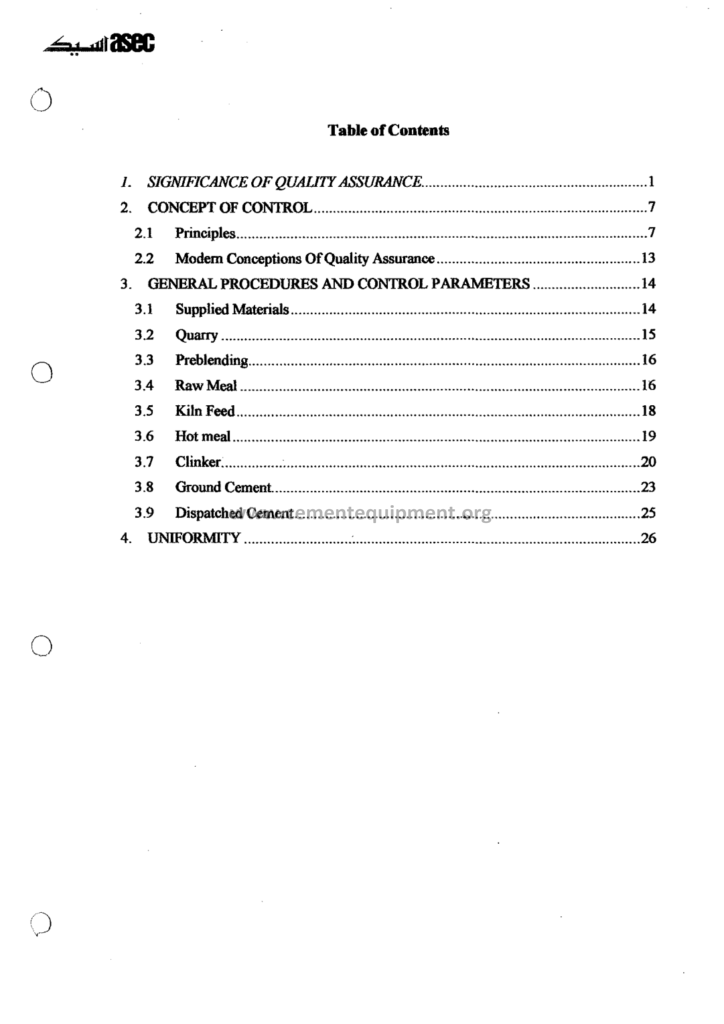
The Complete Cement Technical Package (931 files including the books, the courses, the Excel tools and the presentations: $249.99 one-time: instant download via the PayPal payment) includes this quality assurance guide with the full test procedures, the sampling plans, the standards matrix and the report templates: this article walks the file: the laboratory organization, the raw material control, the process monitoring, the physical testing of cement and the statistical tools that keep the product within specification: the reader closes the page with the complete map of the quality chain of a cement plant.
Quality in cement is measured in many languages: the percentage of calcium carbonate in the raw mix, the free lime of the clinker, the Blaine of the cement, the compressive strength of the mortar cubes: this page is organized so the engineer of the plant finds the laboratory structure first, the raw material control second, the process parameters third and the finished product tests last: the file itself follows the same order, so the article doubles as the index of the document: the beginner reads the logic, the veteran finds the details.
1. The Quality System of the Cement Plant: The Structure and the Responsibilities
The quality organization of a modern cement plant is built around a few permanent functions that never stop between campaigns:
- The central laboratory: the nerve center of the quality chain: receives the samples from the quarry, the mill feed, the kiln and the packing plant: issues the daily reports that the production departments live by: manned in three shifts, because the plant never sleeps;
- The process control room: the real-time counterpart of the laboratory: the online analyzers, the automatic samplers and the operator stations: the chemistry of the raw meal is steered hour by hour from here, with the laboratory acting as the referee of the automatic instruments;
- The physical testing laboratory: the dedicated area for the cement tests: the strength presses, the setting time apparatus, the soundness baths and the fineness equipment: protected from vibration and temperature drift, because the physical tests are sensitive to the environment of the room;
- The quality manager: the single authority for the release of the product: the one person who can stop the silo discharge if the trend goes out of spec: the role carries the authority of the standard and the backing of the management;
The interfaces between the functions are formalized in the procedure documents: the sampling schedule, the analysis frequency, the alarm limits and the response actions: the quality system of the plant is a closed loop: measure, compare, react, verify: the loop runs on the written procedures, not on the memory of the operators: the file documents the full structure with the responsibilities matrix that the plants adapt to their own organization.
2. The Raw Materials Under Control: The Quarry to the Stockpile
Quality assurance starts before the first crusher: the variability of the quarry is the enemy number one of the stable kiln, and the QA system meets it with sampling and blending:
- The quarry survey: the borehole campaign defines the chemistry of the deposit: the calcium carbonate, the magnesia, the alkalis and the sulfur of the layers: the geological model of the quarry is the input of the blending plan;
- The face sampling: the routine samples from the working face confirm that the excavation stays inside the designed layers: the deviations warn the quarry manager days before the chemistry of the feed drifts;
- The crusher feed control: the crushed material is sampled at the fixed points of the plant: the automatic sampler on the crusher discharge belt takes the incremental samples that build the hourly picture of the feed;
- The stockpile management: the pre-homogenization stockpile is built in layers and reclaimed across them: the sampling of the stockpile verifies that the homogenization did its work: the standard deviation of the chemistry drops from the quarry face to the mill feed by a factor of three to five in the well-run plant;
- The alternative raw materials: the pozzolanas, the slag, the fly ash and the corrective materials are quality checked on arrival: each supplier certificate is verified with a spot analysis before the material enters the storage;
The raw material control is the cheapest quality insurance of the plant: the corrections made at the quarry cost pennies compared to the corrections made at the kiln: the file carries the complete sampling frequencies and the acceptance limits for every raw material stream of the plant: the systematic sampling of the raw materials is where the professionals earn their reputation.
3. The X-Ray Fluorescence Laboratory: The Workhorse of the Chemistry
The chemistry of every stream of the plant is measured almost exclusively with the X-ray fluorescence spectrometer (XRF): the instrument that measures the element concentrations of the powder sample in minutes:
- The principle: the sample is irradiated with X-rays: the atoms of the sample emit their characteristic fluorescent radiation: the intensity of each wavelength is proportional to the concentration of the element: the detector converts the spectrum into the oxide percentages of the report;
- The sample preparation: the pressed powder pellet for the routine control and the fused bead for the accurate calibration: the fused bead dissolves the minerals completely and removes the particle size effects: the matrix correction of the fusion guarantees the accuracy of the major oxides;
- The calibration: the spectrometer is calibrated with the certified reference materials and controlled with the plant’s own reference sample: the drift corrections and the daily check sample keep the instrument honest: the calibration records are part of the QA audit trail;
- The elements of interest: SiO2, Al2O3, Fe2O3, CaO, MgO, SO3, K2O, Na2O, Cl and the trace elements: the full panel that the raw mix control needs: the LOI (loss on ignition) is measured separately by the muffle furnace at 950 °C so the oxide sum on the ignited basis is correct;
The XRF laboratory is the heart of the hourly process control: the raw meal samples arrive every hour and the answer returns in ten minutes: the blending control of the plant depends on this speed: the file documents the full procedure of the preparation, the calibration, the drift check and the reporting of the XRF laboratory, including the troubleshooting of the fusion equipment and the quality rules of the pressed pellets.
4. The Raw Mix Control: The Chemistry of the Kiln Feed
The quality of the clinker is decided hours before the kiln: the chemical modules of the raw meal are the recipe of the process:
| Module | Formula | Typical range | What it controls |
|---|---|---|---|
| Lime saturation factor (LSF) | 100 × CaO / (2.8 × SiO2 + 1.18 × Al2O3 + 0.65 × Fe2O3) | 92–99 | The burnability and the alite content of the clinker |
| Silica ratio (SR) | SiO2 / (Al2O3 + Fe2O3) | 2.2–2.8 | The proportion of the silicate and the liquid phases |
| Alumina ratio (AR) | Al2O3 / Fe2O3 | 1.2–1.8 | The liquid viscosity and the coating behavior |
The control of the modules is a statistical problem: the individual samples swing, but the moving average of the kiln feed must stay inside the narrow band:
- The target setting: the chemical module targets derive from the kiln operation, the fuel and the cement quality wanted: the targets are fixed in the mix design document;
- The automatic loop: the raw mill feed proportions are adjusted automatically from the XRF results or the online analyzer: the blender regimes feed correction materials in the proportion that drives the modules back to target;
- The control limits: the standard deviation of the LSF of the well-controlled plant sits near plus-minus 2 to 3 points: the laboratory warns the operator when the trend crosses the alarm band before the quality crosses the spec;
- The fine corrections: the homogenizing silo delivers the last smoothing of the feed: the chemical homogeneity of the kiln feed, measured at the kiln inlet, is the final test of the raw material chain;
The raw mix control connects the quarry to the kiln: the LSF of the feed decides the burnability, the burnability decides the fuel consumption and the free lime, and those decide the clinker quality: the numbers of the modules are the first line of the quality defense of the plant: the section of the file devotes full chapters to the calculation of the mix, the control of the blending and the statistics of the kiln feed.
5. The Process Control of the Kiln: The Free Lime and the Clinker Chemistry
The kiln is where the quality is made or lost: the process control of the burning is followed through a small battery of measurements:
- The free lime (f-CaO): the uncombined calcium oxide of the clinker: the most direct indicator of the burn: the fast titration method or the conduction methods give the answer within minutes: the target of the routine clinker sits between 0.5 and 2.0 percent, depending on the process and the cement type;
- The clinker microscopy: the polished section and the reflected light microscope reveal the alite and belite crystals, the porosity and the cooling texture: the examination confirms whether the clinker was burned hot enough and cooled fast enough: the microscopy is the deep check of the process quality;
- The X-ray diffraction: the quantitative phase analysis of the clinker: the percentages of alite, belite, aluminate and ferrite from the diffraction pattern: the modern plants track the phase composition of the clinker as the definitive quality measure of the burning;
- The alkali and sulfur control: the circulating loads of the alkalis and the sulfur are watched in the kiln system: the build-ups, the coating and the blockages are the physical warnings of the chemical imbalance: the laboratory data anticipates the circulation problems;
- The clinker verticality of the times: the SO3, the MgO and the chloride of the clinker are limited by the cement standards: the process must keep them inside the limits of the reaction: the input control of the fuels and the raw materials is the only lever;
The burning process converts the chemistry of the feed into the reactivity of the clinker: the free lime is the hour-by-hour check and the XRD phase analysis the final verdict: the process specialists of the plant work with the laboratory numbers in one hand and the kiln parameters in the other: the quality loop of the kiln closes daily with the review of the clinker quality and the adjustment of the burning conditions.
6. The Physical Testing of Cement: The Specifications of the Standards
The finished cement is judged by its physical properties, all measured by the standardized procedures of the international standards:
- The fineness: the Blaine specific surface by the air permeability method: the square meters per kilogram of the cement: the typical values of the ordinary cement sit at 300 to 400 m2/kg: the fineness drives the early strength and the water demand;
- The setting time: the Vicat apparatus measures the initial and the final setting: the initial set of the ordinary cement not less than 45 minutes and the final set within ten hours per the classical specifications: the gypsum addition of the cement mill regulates the setting;
- The soundness: the Le Chatelier expansion test with the boiling procedure: the expansion of the hardened paste caused by the free lime and the magnesia: the standard limits the expansion to the small values, because the unsound cement destroys the concrete silently;
- The compressive strength: the mortar prisms of 40 by 40 by 160 millimeters are cast, cured and crushed at 2, 7 and 28 days: the 28-day strength defines the strength class of the cement: the press room is the final court of the cement quality;
- The flexural strength: the same prism is first bent in the three-point test before the compression halves are crushed: the flexural value completes the mechanical picture of the binder;
The standards EN 197-1 and ASTM C150 define the classes, the limits and the test procedures that this guide applies step by step: the tables of the file list the requirements of every cement type so the laboratory compares the measured values against the standard limits without opening a second book: the physical laboratory of the plant releases the cement of every silo from these numbers alone.
7. The Chemical Testing of Cement: The Oxide Limits and the Minor Constituents
Beside the physics, the chemistry of the cement is limited by the standards and watched for the durability of the concrete:
- The loss on ignition: the moisture and the carbon dioxide pick-up of the cement: the LOI is limited to protect the performance and the honesty of the product: the stale cement in the silos loses the quality through the exposure;
- The sulfate (SO3): the total sulfate of the cement regulates the setting and compensates for the aluminate of the clinker: the standard sets the upper limit to prevent the delayed ettringite formation damage;
- The magnesia (MgO): limited to protect the soundness: the periclase of the clinker hydrates slowly and expands: the magnesia control starts at the raw materials and confirms at the finish;
- The chloride: limited for the protection of the reinforcement steel: the chloride of the cement is measured with the titration and reported with the certificate;
- The alkalis (Na2O, K2O): the equivalent alkali affects the alkali-silica reaction risk of the concrete: the cement type must match the aggregates of the market;
- The minor constituents: the trace element control of the clinker, the hexavalent chromium of the final cement and the organic impurities: the modern regulations keep adding items to the routine panel;
These determinations are the classical wet chemistry and the modern instrumental methods running side by side in the laboratory: the file carries the complete procedures of the gravimetric and the volumetric methods plus the ion chromatography and the AAS confirmation of the trace elements: the chemical certificate of the cement is the compact dossier that the QA system attaches to every shipment.
8. The Sampling Discipline: The Representative Sample and the Chain of Custody
The test result is only as good as the sample: the sampling discipline is the most undervalued chapter of the quality assurance:
- The automatic samplers: the cross-stream samplers on the conveyors take the continuous increments according to the standard proceedings: the primary, secondary and tertiary stages of the sampling system bring the large stream down to the laboratory size without bias;
- The manual sampling: the shovel samples, the thief samples from the silos and the car and ship samples follow the prescribed patterns: the manual sampling follows the same statistical principles as the automatic: the increments are taken across the whole stream, not from one spot;
- The subdivision: the sample is divided with the riffle splitter or the rotary sample divider into the analytical aliquot: the mass of the final sample obeys the rules of the representative sampling theory: the minimum sample weights for each size fraction are tabulated in the file;
- The chain of custody: the sample is labeled, registered and its history recorded from the taking point to the analysis: the retention samples are stored for the months needed to revisit any dispute: the traceability of the sample is the backbone of the audit-ready quality system;
The plants that master the sampling master the quality data: the beautiful instrument in the clean laboratory is useless if the sample it measured was not representative of the truck that left the gate: the file devotes a complete section to the sampling theory with the minimum masses, the division schemes and the sampler designs: the confidence in the quality numbers begins here.
9. The Statistical Process Control: The Charts and the Limits of the Plant
The quality numbers of the plant are random, and the randomness is managed with the statistical tools:
- The control charts: the average and the range charts of the key parameters: the LSF of the raw meal, the free lime of the clinker, the Blaine and the strength of the cement: the center line and the warning and action limits mark the normal and the abnormal variation;
- The capability indices: the Cpk of the process measures whether the spread of the process fits inside the specification: the process with the Cpk above 1.33 is considered capable: the indices identify the parameters that need the process improvement instead of the product rework;
- The moving averages: the hourly chemistry decisions run on the moving averages that smooth the noise: the control action reacts to the trend of the average, not to the single point: the operators of the raw mill are trained on the statistical reaction rules;
- The standard deviations: the weekly and monthly standard deviations of the kiln feed and the cement are the headline numbers of the quality report: the trends of the standard deviation expose the deteriorating homogeneity before the spec violations occur;
The statistical process control converts the quality from the reactive firefighting into the preventive management: the chart tells the operator that the process is drifting two hours before the product goes out of spec: the file includes the chart templates, the calculation sheets and the worked examples of the capability analysis that the plants use directly in the Excel tools of the package.
10. The Inspection of the Plant’s Own Operations: The Internal Audits
The quality system audits itself with the planned internal inspections:
- The audit program: the annual audit calendar covers the quarry, the raw material handling, the grinding, the kiln, the packing and the laboratories: each area is audited against its procedures and the records of the year;
- The sampling of the records: the auditor pulls the sample of the laboratory reports and the control charts and checks the completeness, the signatures and the traceability of the chain: the records that cannot be reconstructed are the failures of the system;
- The instrument verification: the balances, the thermometers, the presses and the timers are checked against the traceable references: the calibration records are the truth of the measurements: the overdue calibration is the typical finding of the first audits;
- The corrective actions: the audit findings are logged with the responsible persons and the due dates: the closure of the actions is verified in the follow-up audit: the audit trail of the plant closes the loop of the continuous improvement;
The internal audit is the mirror of the quality system: the plants that audit themselves rigorously pass the external certification audits without panic: the file provides the complete audit checklist of the cement plant laboratory and the manufacturing process, ready to be used as the template of the internal audit program: the proactive self-inspection keeps the certification of the plant alive between the external visits.
11. The Certification and the External Audits: ISO 9001 and the Product Standards
The quality system of the plant is formalized and certified against the international frameworks:
- ISO 9001: the quality management standard: the documented procedures, the risk-based thinking and the continuous improvement requirements: the certification body audits the plant yearly and the certificate follows the plant’s customers;
- The product certification: the cement is certified against the national and the regional standards: the EN 197-1 conformity of the European market or the ASTM quotes of the export market: the notified bodies witness the tests and the factories follow the certified quality systems;
- The factory production control: the system of the own-plant testing that declares the product conformity: the FPC record of the plant is the documented evidence presented to the external assessors: the frequencies, the methods and the limits are defined in the FPC manual;
- EN 196 quality assurance of the testing: the laboratories of the cement industry often follow the EN 196 and the ISO 17025 practice for the calibration and the testing competence: the accredited laboratory adds the extra layer of the trust to the product certificate;
The certification is not a paper chase: the customers and the construction regulators need the audit trail of the product: the file explains the requirements of the certification audits and the preparation that the plant needs: the external audit of the certificate is also the moment where the internal quality discipline is tested: the well-kept files pass, the improvised ones fail.
12. The Quality of the Packing and the Distribution: The Last Meters of Control
The quality assurance does not stop at the silo outlet: the cement is packed, stored and shipped, and each step can degrade the product:
- The packing control: the bag weights are sampled and weighed continuously: the statutory average bag weight is guarded by the check weighers and the statistical sampling of the pallets: the weight fraud is the classic failure that destroys the trust of the market;
- The moisture protection: the packed cement is stored away from the moisture and the rain: the warehouse discipline keeps the bagged material dry between the packing house and the truck: the water and the cement meet only on the construction site;
- The despatch sampling: the load-out samples of the trucks and the ships confirm the cement of every delivery: the automatic samplers on the cement loading extract the reference sample of the shipment: the retained samples settle the disputes of the customers;
- The traceability of the lots: the silo, the production date and the quality report of every lot are registered against the delivery numbers: the traceability system reconstructs the full history of any shipment in minutes: the recall procedures of the plant are the last guarantee of the responsible producer;
The distribution chain is the surface where the customer meets the quality of the plant: the damaged bags, the wrong weights and the stale stock are the visible failures that no laboratory report can repair: the file documents the quality procedures of the packing and the dispatch including the sampling, the weight statistics and the customer complaint handling: the last meters of the quality chain matter as much as the first.
13. The Data, the Reports and the Continuous Improvement: The Quality Culture
The final chapter of the quality system is the data itself:
- The daily quality report: the one-page summary of the raw materials, the raw meal, the clinker and the cement of the day: the trends and the deviations versus the targets: the daily report is read by the plant manager and the production heads before the noon meeting;
- The monthly quality review: the aggregates of the month: the standard deviations, the capability indices, the complaints and the corrective actions: the monthly review selects the improvement projects of the coming month;
- The benchmarking: the quality statistics of the plant compared against the industry norms: the free lime variation, the kiln feed homogeneity and the cement strength margins: the comparison positions the plant and prioritizes the investments;
- The training of the people: the samplers, the laboratory technicians and the operators are trained and re-certified: the proficiency testing of the laboratory staff keeps the measurements comparable between the plants and the shifts: the quality culture is carried by the trained people, not only by the forms;
The quality assurance of the cement plant is a continuously improving system: the data of today correct the process of tomorrow: the honest review of the failures and the systematic closure of the corrective actions build the quality culture that the certificates document: the file of the package closes with the report templates and the improvement toolkit that the plants run year after year: the quality manager of the plant owns the numbers, the trends and the improvements.
14. The Frequently Asked Questions
How many samples per day does the central laboratory of a cement plant handle?
A typical single-line plant runs between fifty and one hundred sample analyses per day across the raw materials, the raw meal, the kiln feed, the clinker, the cement and the fuels: the XRF carries the bulk of the chemistry and the wet analyses cover the water, the free lime and the special determinations: the frequencies are defined by the QA procedure and follow the variability of each stream.
What is the fastest indicator of the kiln burning quality?
The free lime of the clinker: the titration or the conductionmetric measurement returns the result within five to fifteen minutes of the sample reaching the laboratory: the combination of the free lime with the kiln parameters gives the operator the immediate feedback loop that controls the burning zone of the process.
Does the QA guide include the EN 197 and ASTM standards?
The file explains the requirements and the test methods of the classical standards and works through the full procedures step by step: the standard texts themselves are referenced, not reproduced: the engineer finds here the practical execution of the standard tests, from the mortar preparation to the strength report, ready to run in the own laboratory.
What is the statistical tool that the plants use for the raw mix control?
The control charts and the moving averages of the LSF and the modules: the plant steers the blending against the trend of the moving average and monitors the standard deviation of the kiln feed: the Excel tools of the package include the ready chart templates with the warning and action limits for the daily use of the control room.
Is the quality assurance of the packing included in the file?
Yes: the weight control, the moisture protection, the despatch sampling and the traceability of the lots are documented with the same depth as the production quality: the distribution chain is treated as the final stage of the quality chain, because the customer experience of the cement quality happens at the delivery, not at the press of the laboratory.
The external certification: which standard do the cement plants follow first?
The majority of the plants start with ISO 9001 as the umbrella of the quality management system and then add the product certification of their market: the EN 197 conformity for Europe or the national specifications of the export destinations: the file walks the preparation sequence so the plant builds the system in the order that the auditors expect.
15. Conclusion
The quality assurance of the cement industry is the discipline that connects the quarry chemistry to the 28-day strength of the concrete: every sample, every titration and every control chart is a link of one chain that ends with the trust of the builder: the laboratories, the statistics and the audits are the instruments, and the product that leaves the gate certified is the proof: for the quality engineer of the plant, this guide is the compact companion of the daily work: the samplings, the procedures, the limits and the reports of a complete quality department in one file.
The Complete Cement Technical Package includes the quality assurance guide with the full test procedures, the sampling plans, the standards matrix and the report templates: the one-time 249.99: the instant download: the 931 files of the library of cement: the quality chain of the plant, documented to the last form: the certified product of tomorrow starts with the disciplined engineer of today: the knowledge of the package, the quality of the plant.
Get this Quality Assurance file + the full 931-file package
$249.99 — one-time purchase, instant download, lifetime access
This file is part of the Complete Cement Technical Package (931 files) available from cementequipment.org. Respective rights holders; library copy for the licensed single user.
Great piecing all that appertains to quality control in a clinkerization plant.