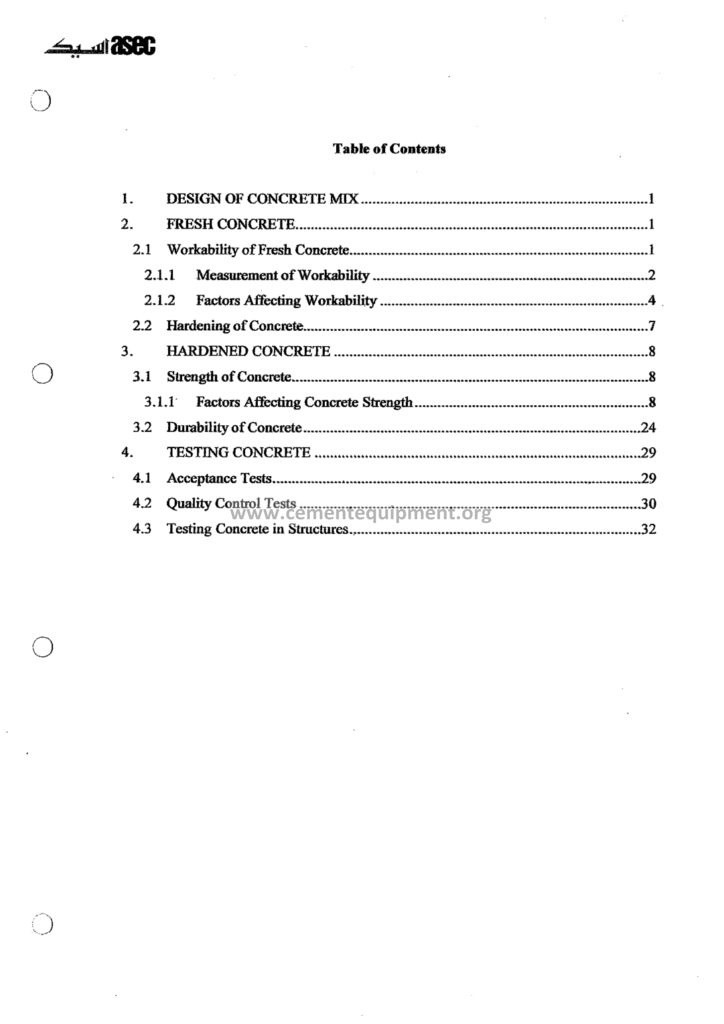
Fundamentals Of Concrete Technology: Complete Guide & Downlo
The fundamentals of concrete technology form the applied science of the cement industry’s final product: the concrete: the mixture of the cement, the aggregates, the water and the admixtures that builds the world’s infrastructure: the cement makes the paste, the paste binds the aggregates, and the concrete becomes the structure: the engineer of the cement plant must know the concrete as the customer knows it: the strength, the workability, the durability and the standards: the entire quality effort of the cement plant ends in the concrete slab, the bridge deck and the foundation wall.
The Complete Cement Technical Package (931 files including the books, the courses, the Excel tools and the presentations: $249.99 one-time: instant download via the PayPal payment) includes this concrete technology guide with the mix design tables, the property charts and the standard references: the article walks the file: the concrete constituents, the hydration and the paste, the aggregate selection, the mix design methods, the fresh and the hardened properties, the durability, the concreting practice and the quality control: the reader finishes with the complete fundamentals of the material that consumes the cement.
Concrete is the most consumed manufactured material on earth: the annual production exceeds 10 billion tons, and the cement at 300 to 400 kg per cubic meter of typical structural concrete binds the material together: the understanding of the concrete is the professional bridge between the cement factory and the construction site: the file of the package teaches the bridge: this article presents its complete content.
1. The Constituents of the Concrete: The Four Main Components and the Admixtures
The concrete is the engineered mixture of the constituents, and the file opens with the quantitative portrait of each:
- The cement: 250 to 450 kg per cubic meter in the structural concretes: the binder that reacts with the water and creates the strength: the cement types of EN 197-1 and ASTM C150: the cement content and the water-cement ratio dominate the properties;
- The water: 140 to 200 liters per cubic meter: the reacting and the lubricating water: the water-cement ratio (w/c) of 0.40 to 0.65 the master variable of the strength and the durability: the water quality controlled (the potable or the tested water);
- The fine aggregate (sand): 600 to 900 kg per cubic meter: the particles below 4.75 mm: the grading, the fineness modulus (2.3 to 3.1 typical) and the silt content (below 3%) define its quality;
- The coarse aggregate (gravel, crushed stone): 1,000 to 1,200 kg per cubic meter: the particles above 4.75 mm: the maximum size (20 to 40 mm for the structural, 63 to 80 mm for the massive) and the shape and the grading;
- The admixtures: 0.2 to 2% of the cement mass: the water reducers, the superplasticizers, the retarders, the accelerators, the air entrainers and the waterproofers: the modern concretes almost always contain at least the one admixture;
- The supplementary cementitious materials (SCMs): the fly ash, the slag, the silica fume and the natural pozzolanas replacing 10 to 50% of the cement: the modern sustainable concretes: the cement plant’s products meet the SCMs in the mix.
The constituent table of the file gives the typical ranges per cubic meter so the reader sees the material budget of the concrete: the total of about 2,300 to 2,500 kg per cubic meter of the normal-weight concrete: the proportions, the starting point of the mix design: the fundamental ingredients, quantified.
2. The Cement Paste and the Hydration: The Glue of the Concrete
The heart of the concrete technology is the cement paste: the file explains the paste formation that the cement plant’s chemistry feeds:
- The hydration reactions: the alite and the belite react with the water to the calcium silicate hydrate (C-S-H) and the calcium hydroxide: the C3A and the C4AF with the sulfate moderate the setting: the hydration products fill the water-filled spaces and bind the aggregates: the chemistry of the hydration is the subject of the package’s dedicated hydration file: this file applies it in the concrete context;
- The water demand: the paste needs the water for the reactions (about 25% of the cement mass) and the water for the space filling: the practical w/c above 0.35 to 0.40: the excess water beyond the reaction creates the capillary pores: the durability enemy;
- The setting and the hardening: the initial set in 1.5 to 4 hours, the final set in 3 to 8 hours: the strength development: the 28-day strength conventionally at 100%, the 7-day at 65 to 75% and the 1-day at 15 to 25% of the 28-day value: the time law of the concrete, specified by the standards;
- The heat of hydration: the typical 300 to 500 kJ per kg of cement over the complete hydration: the massive structures (dams, foundations) need the low-heat cements (the belite-rich clinkers and the slag blends) to avoid the thermal cracking: the temperature control of the mass concrete: the file’s tables of the heat evolution;
- The paste-to-aggregate bond: the C-S-H glues the paste to the aggregate surfaces: the clean, well-graded aggregate surfaces give the bonding: the dust-coated aggregates the weak bond: the aggregate quality directly into the paste performance.
The paste section of the file connects the concrete behavior to the cement chemistry of the package: the w/c ratio, the hydration products and the heat evolution are the scientific terms behind the daily work of the batch plant and the site: the concrete’s performance, traced back to the cement’s chemistry.
3. The Aggregates: The Selection, the Grading and the Quality Tests
The aggregates fill 60 to 75% of the concrete volume: the file treats their selection as the major technical duty of the mix designer:
- The grading: the particle size distribution that fills the voids: the ideal curves of the standards (the Fuller curve) and the practical grading envelopes of EN 12620 and ASTM C33: the well-graded mixes need the less paste and work better;
- The fineness modulus of the sand: the 2.3 to 3.1 acceptable band: the dusty sands (the FM below 2.0) increase the water demand, the coarse sands (above 3.1) hurt the workability: the FM, the daily check of the sand;
- The shape and the texture: the rounded natural gravels vs the angular crushed stones: the crushed angular aggregates give the better bond and the higher strength potential but the harder workability: the flakiness index below 20 to 30% for the structural concrete;
- The strength of the aggregate: the crushing value and the aggregate impact value: the strong aggregates above the concrete’s own strength class: the soft limestone aggregates limit the high-strength concretes;
- The cleanliness: the silt and the clay content below 3% (the sand equivalent test), the organic impurities below the color limits: the contaminated aggregates steal the paste and poison the hydration: the washing of the aggregates, the standard practice of the good plants;
- The reactive aggregates: the alkali-silica reactivity (ASR): the opal, the chert and the strained quartz react with the alkali of the cement and crack the concrete: the preventive specification of the low-alkali cement (the equivalent alkali below 0.6%) and the non-reactive aggregate tests (ASTM C1260, C1567): the durability alliance of the cement and the aggregate.
The aggregate chapter of the file includes the complete test menu with the standard references and the acceptance limits: the aggregate quality is the largest procurement risk of the ready-mix and the construction companies: the file’s table of the typical defects (the contamination, the segregation, the angularity) and the remedies serves the quality engineers daily.
4. The Mix Design: The Methods and the Quantitative Path
The mix design is the calculation that proportions the constituents for the target strength and the workability: the file presents the classical methods:
- The target strength: the specified characteristic strength plus the margin: the standard margin of 1.64 × the standard deviation (the 5% failure probability): the plant with the sigma of 3 MPa adds 5 MPa: the margin, the quality level of the production;
- The water-cement ratio by the strength: the classical strength curves (the Abrams’ law): the w/c of 0.40 for the 45 MPa concretes, 0.50 for the 35 MPa and 0.60 for the 25 MPa: the empirical tables of the file with the cement-type corrections;
- The water content by the workability: the slump classes S1 to S5 (10 to 220 mm): the water content table (150 to 200 liters per cubic meter depending on the aggregate and the admixtures): the superplasticizers reduce the water by 15 to 30% at the equal slump;
- The cement content: the water content divided by the w/c ratio: the minimum cement contents of the standards (300 to 360 kg/m³ for the exposure classes: the durability-driven limits);
- The aggregate proportions: the absolute-volume method: the paste volume plus the aggregate volume equals the cubic meter: the coarse-to-fine ratio from the grading: the trial batch verification: the mix design is never final without the trial: the file’s Excel mix design tool performs the complete calculation;
- The full worked example of the file: the C30/37 concrete with the target 43 MPa: w/c 0.48, the water 170 liters, the cement 354 kg, the sand 780 kg, the gravel 1,080 kg, the admixture 1.1%: the trial batch summary: the concrete, proportioned on the page before the first cubic meter is poured.
| Strength class | Typical w/c | Cement (kg/m³) | Slump target (mm) |
|---|---|---|---|
| C20/25 | 0.60 | 300 – 330 | 80 – 150 |
| C30/37 | 0.48 – 0.52 | 340 – 380 | 80 – 180 |
| C40/50 | 0.40 – 0.45 | 380 – 430 | 120 – 200 |
| C50/60 (high performance) | 0.32 – 0.38 | 420 – 500 | 150 – 220 (superplasticized) |
The mix design chapter is the numerical spine of the concrete guide: the reader who works the examples designs the concrete of any class: the methodologies of the file (the ACI and the European approaches summarized together) give the portable skill: the mix design, the concrete engineer’s daily arithmetic.
5. The Fresh Concrete: The Workability and the Placing
The fresh concrete must be transported, placed and compacted before the hydration locks it: the file covers the fresh-state science:
- The slump test: EN 12350-2 / ASTM C143: the classic workability measure: the 10 to 220 mm classes: the batch-to-batch consistency checks: the slump loss of the retarded and the hot-weather mixes;
- The other consistency tests: the VeBe degree, the flow table and the L-box: the self-compacting concretes (the flow of 650 to 800 mm): the test selection by the application: the concrete families, measured by their proper instruments;
- The segregation and the bleeding: the separation of the paste from the aggregates (the segregation) and the water rising (the bleeding): the causes (the excess water, the poor grading) and the remedies (the correct grading, the low w/c, the admixtures): the fresh-state defects caught at the drum, not in the structure;
- The transport and the placement: the mixing time (the 90 to 120 seconds minimum in the mixers), the transport time limits (the initial set before the discharge), the placing in the layers of 300 to 500 mm, the compaction by the internal vibrators (the 10 to 20 seconds per point): the site disciplines that the file’s checklists enforce;
- The hot and the cold weather concreting: the hot weather (above 30 °C) accelerates the setting and the water demand: the cold weather (below 5 °C) stops the hydration: the precautions and the protections: the seasonal practice of the file, applied by the site engineers.
The fresh-state section of the file bridges the theory and the working life of the concrete: the same mix designed in the chapter 4 must behave in the heat of the site: the tests and the disciplines of this chapter keep the designed concrete intact from the mixer to the formwork.
6. The Hardened Concrete: The Strength, the Elasticity and the Creep
The hardened properties are the delivery of the concrete: the file covers the mechanical behavior with the numbers:
- The compressive strength: the cylinder 28-day strength of 20 to 80 MPa in the structural classes: the cures (the standard moist cure at 20 °C), the test specimens (the cylinders 150 x 300 mm, the cubes 150 mm) and the conversion factors (the cylinder-to-cube 0.8): the sampling and the testing per EN 12390 and ASTM C39;
- The tensile strength: the splitting (the Brazilian) test and the flexural test: the tensile at 8 to 12% of the compressive: the 3 to 5 MPa typical splitting strength: the cracking resistance of the concrete follows the tensile;
- The modulus of elasticity: 25,000 to 40,000 MPa (the secant modulus): the approximate relation to the strength and the density (E ≈ 5,000 × √fcm): the stiffness of the structures, calculated by the concrete’s modulus;
- The creep and the shrinkage: the long-term deformation of the loaded concrete (the creep) and the drying-shrinkage of the unloaded: the typical ultimate drying shrinkage 400 to 800 × 10−6: the creep coefficient 1.5 to 3.0: the prestressed and the long-span designs account for both: the file’s tables of the prediction models;
- The thermal expansion: the coefficient 8 to 12 × 10−6 per °C: the joint design of the structures: the expansion joints at the 30 to 60 meter intervals in the buildings: the movement engineering of the concrete.
The hardened-property chapter gives the designer’s numbers: the concrete is not only the compressive strength: the tension, the stiffness, the creep and the shrinkage engineer the durable structures: the file’s property tables and the prediction formulas serve the structural department as the ready reference: the concrete’s behavior, quantified completely.
7. The Durability of the Concrete: The Exposure Classes and the Protection
The modern concrete design is durability-led: the file presents the exposure classification and the protection measures:
- The exposure classes (EN 206): X0 (no risk) through XC (carbonation), XD (de-icing salts), XS (seawater), XF (freeze-thaw) and XA (chemical attack): each class prescribes the minimum strength, the maximum w/c and the minimum cement content: the XC4 and XD3 classes demand the w/c below 0.50 and the cement above 340 kg/m³;
- The carbonation: the atmospheric CO2 neutralizes the cover concrete and depresses the pH below the steel protection: the carbonation depth grows with the square root of the time: the 25 to 50 mm cover design against the carbonation: the carbonation rate, slowed by the low w/c and the proper curing;
- The chloride attack: the chlorides of the seawater and the de-icing salts penetrate and depassivate the reinforcement: the chloride thresholds (0.4 to 1.0% of the cement mass), the diffusion coefficients and the barrier systems: the marine and the bridge structures, engineered against the chlorides;
- The freeze-thaw and the de-icing salts: the repeated freezing of the saturated pores cracks the concrete: the air entrainment (the 4 to 7% air content, the spacing factor below 0.2 mm) protects the concrete: the air-entrained concretes of the cold regions, the standard practice;
- The sulfate attack: the sulfates of the soils and the groundwater expand the concrete with the ettringite: the sulfate-resisting cement (the C3A below 5%) and the low-permeability mixes: the XA classes of the standards prescribe the measures;
- The alkali-aggregate reaction: the reactive aggregates with the high-alkali cement: the low-alkali cement and the supplementary materials suppress the ASR: the preventive specification of the package’s clinker article, applied at the concrete level.
The durability section of the file is the modern core of the concrete technology: the 100-year design life demands the exposure awareness: the file’s exposure-class tables, the cover requirements and the material prescriptions translate the classes into the practical recipe: the durable concrete, designed by the standard’s logic, not by the habit.
8. The Concreting Practice: The Formwork, the Compaction and the Curing
The site practice turns the designed mix into the durable structure, and the file covers the complete placing discipline:
- The formwork: the rigid, leak-tight and dimensionally correct forms: the striping times (the 2 to 3 days for the vertical, the 7 to 14 days for the slabs depending on the strength development and the loads): the formwork oils and the release agents: the surface quality of the concrete, born in the formwork;
- The compaction: the internal vibrators at the 300 to 500 mm insertion spacing, the 10 to 20 seconds insertion time: the over-vibration segregates and the under-vibration leaves the honeycomb: the compaction, the most skill-dependent step of the concreting: the file’s compaction checklists;
- The joints: the construction joints at the planned positions, the waterstops and the surface preparation (the laitance removal, the bond agents): the movement joints designed by the structure: the joint honesty of the concrete surfaces;
- The curing: the maintenance of the moisture and the temperature after the placing: the curing duration of at least 7 days for the ordinary cements and 14 days for the blended and the pozzolanic types (the EN 13670 minimum): the curing methods (the water curing, the wet coverings, the curing compounds): the curing is the last and the cheapest quality step: the strength increase of the properly cured concrete over the uncured can reach 20 to 40% at the 28 days;
- The quality records: the concrete placement logs, the test reports, the temperature records of the mass pours: the documentary completeness of the modern sites: the traceability of the complete structure.
The practice chapter of the file is the site-operations manual: the checklists, the formwork tables and the curing schedules are the ready-to-print pages of the package: the concreting practices of the file reduce the classic site defects (the honeycomb, the cold joints, the plastic cracking) visibly: the fresh concrete’s promise, kept by the site discipline.
9. The Quality Control of the Concrete: The Testing and the Statistics
The quality control of the concrete production mirrors the statistics of the cement quality, and the file formalizes the control system:
- The fresh-state testing: the slump at the batching plant and at the site for each delivery of the ready-mix: the air content for the air-entrained concretes: the temperature: the fresh testing frequencies per EN 206 and the ASTM practices;
- The hardened testing: the standard specimens for the 7 and the 28-day strength: the cube/cylinder curing conditions (the 20 ± 2 °C water): the failure-mode inspection of the broken specimens: the test laboratory accreditation of the standards;
- The statistical acceptance: the conformity criteria of EN 206 (the mean minus the k-factor times the sigma vs the characteristic value): the assessment of the production by the moving windows: the conformity certificates of the delivered concrete;
- The recording and the trends: the strength control charts, the w/c monitoring, the cement content verification: the sigma of the production (2 to 4 MPa typical): the improvement of the consistency through the statistical feedback: the same chart logic as the cement plant’s quality module;
- The non-destructive testing: the rebound hammer and the ultrasonic pulse velocity as the site screening: the core tests as the final arbiter: the calibration of the NDT against the standard specimens: the in-situ verification of the hardened quality.
The quality chapter of the file gives the complete control loop of the concrete production: the customer’s acceptance of the concrete is a statistical decision, and the producer needs the same discipline as the cement factory: the file’s templates (the test registers, the conformity calculations) are the ready instruments of the batch plant: the concrete quality, controlled like a manufactured product.
10. The Special Concretes: The High-Performance and the Self-Compacting Families
The modern concrete technology extends far beyond the ordinary mixes, and the file presents the special families with their numbers:
- The high-performance concrete (HPC): the 60 to 120 MPa strengths with the w/c of 0.25 to 0.35, the silica fume (5 to 10%) and the superplasticizers: the applications: the high-rise columns, the bridge girders, the offshore structures: the HPC demands the premium materials and the rigorous placing;
- The self-compacting concrete (SCC): the flow of 650 to 800 mm without the vibration: the high paste contents, the viscosity-modifying admixtures: the congested reinforcements and the complex formworks: the SCC quality classes and the passing ability tests (the L-box, the V-funnel);
- The fiber-reinforced concrete: the steel fibers (20 to 60 kg/m³) and the synthetic fibers: the post-cracking behavior and the crack control: the industrial floors, the shotcrete and the pavement applications: the fiber dosage and the mix compatibility;
- The lightweight and the heavy concretes: the lightweight aggregates (the expanded clay at 1,400 to 1,900 kg/m³ concrete) for the insulation and the reduced dead loads: the heavy concretes (the iron ore aggregates above 2,600 kg/m³) for the radiation shielding: the density engineering of the concrete family;
- The sprayed concrete (shotcrete): the dry and the wet processes, the accelerating admixtures, the tunneling and the slope stabilization: the rebound control and the layer quality: the special practice of the underground works.
| Concrete family | Strength class | w/c | Key characteristic |
|---|---|---|---|
| Ordinary structural | C20/25 – C40/50 | 0.40 – 0.60 | The standard reinforced structures |
| High-performance | C50/60 – C100/115 | 0.25 – 0.35 | The extremes of the strength and durability |
| Self-compacting | C25/30 – C50/60 | 0.35 – 0.45 | Flows and fills without the vibration |
| Mass concrete | C20/25 – C30/37 | 0.45 – 0.55 | Low heat, low cement, the thermal control |
The special-concrete chapter of the file gives the reader the modern vocabulary of the industry: the HPC, the SCC and the fibers appear in the specifications of every advanced project: the cement engineer who knows the special families advises the customers on the product demands: the file’s table of the families and their material requirements connects the cement portfolio to the concrete applications.
11. The Frequently Asked Questions
What is the most important single parameter of the concrete strength?
The water-cement ratio: the strength of the concrete falls with the rising w/c by the classical power law (the Abrams relation): the w/c of 0.40 vs 0.60 can double the 28-day strength in the same materials: the low w/c with the workable consistency needs the superplasticizers: the w/c discipline, the first law of the mix design.
Why does the concrete need the proper curing?
The hydration requires the water: the curing keeps the water in the concrete until the strength develops: the well-cured concrete gains 20 to 40% more strength at 28 days than the same mix left to dry: the curing also prevents the plastic and the drying cracking: the cheapest quality investment of the site: the 7 to 14 days of the moisture maintenance.
How do the cement types change the concrete behavior?
The CEM I cements develop the strength fastest in the early ages; the CEM II with the limestone are the versatile generalists; the CEM III (the slag) slow the initial strength but improve the sulfate resistance and the long-term performance; the sulfate-resisting cements serve the XA exposures; the low-heat cements the mass structures: the cement selection is the first decision of the durable mix design.
What is the difference between the segregation and the bleeding?
The segregation is the separation of the coarse aggregates from the mortar during the handling and the placing; the bleeding is the rise of the mixing water to the surface after the placing: both are the fresh-state defects of the over-wet and the poorly-graded mixes: the corrections: the lower w/c, the better grading, the correct vibration: the defects are preventable at the mix design stage.
Does the package include the concrete calculation tools?
Yes: the Complete Cement Technical Package includes the mix design spreadsheet with the strength-target inputs, the w/c tables, the aggregate calculations and the trial batch summaries: the 931 files of the library include the calculators, the courses and the books: the mix design of this article, executed by the tool in the minutes.
12. Conclusion
The fundamentals of the concrete technology: the constituents, the paste and the hydration, the aggregates, the mix design, the fresh and the hardened properties, the durability, the site practice, the quality control and the special concretes: the complete applied science of the material that consumes the cement: the engineer of the cement plant who knows the concrete connects the factory to the structures: the quality of the cement proves itself in the concrete: the fundamentals of this guide, the professional bridge of the cement industry.
The Complete Cement Technical Package includes the concrete technology guide with the mix tables, the property charts and the calculation tools: the one-time $249.99 purchase, the instant download and the lifetime access: the 931 files of the library: the concrete knowledge of the industry, at the hand of the professional.
Get this concrete technology file + the full 931-file package
$249.99 — one-time purchase, instant download, lifetime access
This file is part of the Complete Cement Technical Package (931 files) available from cementequipment.org. Respective rights holders; library copy for the licensed single user.