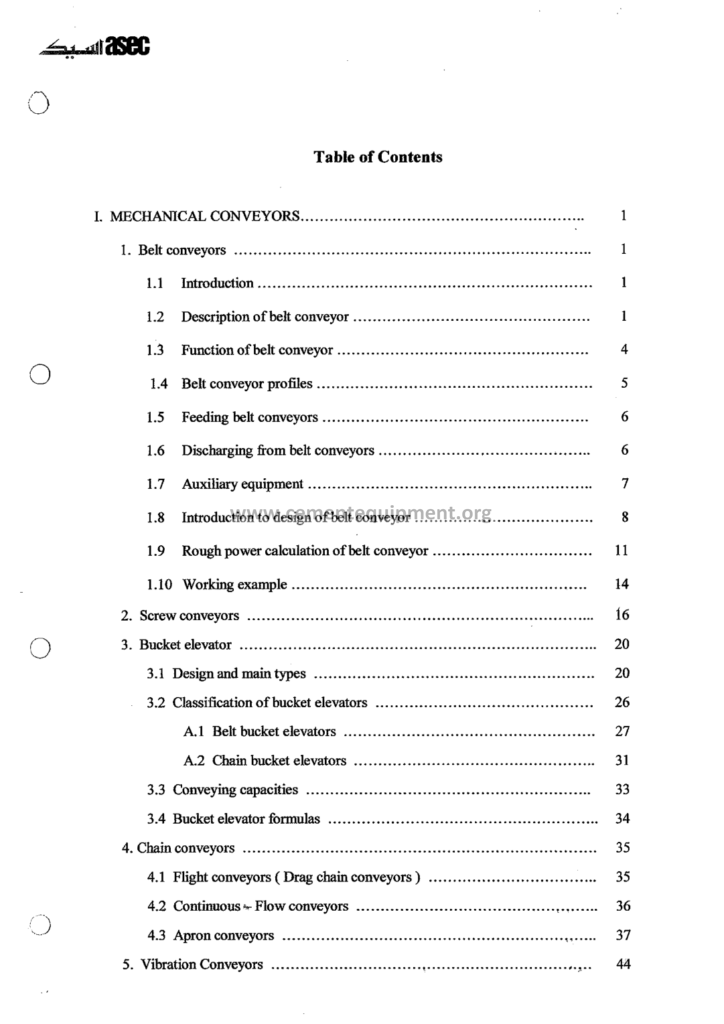
Continuous Conveying And Handling Systems: Complete Guide
Continuous conveying and handling systems are the circulatory system of the cement plant: the belts that carry the limestone from the crusher to the stockpile, the bucket elevators that lift the raw meal to the preheater, the air slides that glide the cement into the silos and the pneumatic systems that blow the fly ash across the plant: a 10,000 ton-per-day cement line moves more than 50,000 tons of materials per day between its processing units, and every ton travels on the continuous handling machinery.
The Complete Cement Technical Package (931 files including the books, the courses, the Excel tools and the presentations: $249.99 one-time: instant download via the PayPal payment) includes this conveying and handling guide with the design calculations, the equipment selection tables and the maintenance programs: this article walks the file: every conveyor family of the plant, its construction, its selection logic and its operation: the reader closes the page with the complete transport map of the cement process.
The conveying systems of the plant are numerous, repetitive and seemingly simple: yet the conveyor stoppage is the fastest way to stop the whole production line: this page is organized so the reader meets the major families one by one: the belts first, the elevators, the screws, the chains, the pneumatic systems and the air slides: the file follows the same order: the plant engineer, the designer and the maintenance planner each find the level that serves them.
1. The Role of the Continuous Handling in the Cement Process
The cement plant is a chain of the processing units connected by the transport machinery, and the handling systems define the flow of the whole process:
- The materials transported: the limestone from the quarry, the raw materials of the stockpiles, the raw meal to the kiln, the clinker to the storage, the cement to the silos and the fuels to the burners: the transported tonnage of the plant is several times its clinker production: the handling capacity is engineered with the utilization factors of 60 to 80 percent of the nameplate rates;
- The continuity requirement: the kiln cannot wait: the interrupting material flow disturbs the process chemistry and the thermal balance: the conveying systems are designed in the redundant configurations: the bypass belts, the buffer silos and the emergency storages protect the continuity of the flow: the availability of the handling systems is a first-order design objective;
- The distances and the elevations: the plant conveys over the kilometers from the quarry to the kiln and lifts the materials to the preheater towers of 100 meters: the long and the steep transport duties choose the different conveyor families: the horizontal distance favors the belts, the vertical lift the elevators and the pneumatic conveying the confined routes;
- The dust and the environment: the conveyed materials are dusty and the handling machinery is a dust source: the enclosed conveyors, the sealed transfer points and the dedusting connections protect the air of the plant and the health of the people: the environmental engineering of the conveying is inseparable from the machinery design;
The material flow diagram of the plant is the blueprint of the handling systems: every arrow of the flow sheet is a conveyor or an elevator of the equipment list: the guide of the package opens with the flow mapping and the design methodology that the plants use to verify the adequacy of their handling fleets: the continuity of the plant starts at the conveyor belt.
2. The Belt Conveyors: The Backbone of the Plant Transport
The belt conveyor is the most common handling machine of the cement plant, moving the bulk of the materials over the long distances:
- The construction: the endless rubber belt running over the idlers, driven by the head pulley and tensioned by the tail pulley: the belt widths of 800 to 2000 millimeters and the speeds of 1 to 4 meters per second: the troughed idler sets of 30 to 45 degrees shape the belt into the loading trough: the steel cord belts carry the long distances and the fabric belts the short duties;
- The carrying capacity: the bulk conveyors of the plant move the raw materials at the rates up to 3000 tons per hour: the belt capacity is the product of the belt speed, the cross-section of the load and the bulk density of the material: the design calculations of the capacities and the power demands follow the standard methodology of the conveyor engineering: the power of the belt drive covers the friction, the lift and the acceleration;
- The components: the drive units with the geared motors, the take-up systems that maintain the belt tension, the idlers of the carrying and the return runs and the frames of the supporting structures: the belt cleaner systems at the discharge that scrape the carry-back from the return side: the misalignment switches and the speed monitors that protect the belt line;
- The loading and the discharging: the feed chutes and the skirts load the belt centrally with the material at the belt speed: the discharge at the head pulley and the trippers that unload at the intermediate points: the belt scale systems that weigh the transported tonnage: the loading discipline protects the belt from the impact damages and the spillage;
The belt conveyor is the most economical transport per ton of all the handling families over the long distances: its energy cost per ton-kilometer is the lowest of the plant: the file documents the belt selection, the idler spacing, the drive sizing and the tension calculations with the worked examples: the belts of the plant move the millions of tons yearly at the cost of the electricity only.
3. The Bucket Elevators: The Vertical Lifters of the Bulk Materials
The bucket elevators lift the materials vertically where the belts cannot climb and the space is limited:
- The construction: the endless chain or belt with the attached buckets that scoop the material at the boot and discharge at the head: the casing that encloses the full run and the gravity of the transport: the elevator heights of the plants reach 30 to 80 meters for the preheater feed duties: the capacities of the large elevators approach 500 tons per hour;
- The discharge methods: the centrifugal discharge where the buckets throw the material into the discharge chute at the head pulley speed and the continuous discharge with the back-stepped buckets that slide the material over the preceding bucket: the selection follows the material characteristics and the elevator speed: the sticky and the coarse materials demand the slow continuous designs;
- The chain and the bucket materials: the welded steel chains and the cast link chains, the plastic and the steel buckets: the abrasion resistance of the buckets against the hard clinker and the limestone: the bucket fixings that distribute the loads evenly over the chain links: the elevator is the machine of the vertical wear; the bucket and the chain life define the maintenance cycles;
- The sensors and the protective devices: the bucket elevator runs enclosed and the operator cannot see inside: the speed monitors of the head shaft, the temperature monitors of the bearings and the belt alignment devices guide the operation: the blocked boot throws the material into the pit until the elevator tears itself: the low-speed and the backstop devices are the mandatory protections of the vertical lifts;
The bucket elevator carries the vertical duties of the plant: the raw meal to the preheater, the clinker to the storage and the cement to the silos: its failure stops the flow of the whole tower: the file documents the elevator types, the capacity calculations, the chain selection and the maintenance programs of the vertical transport: the elevator boxes of the plant are the highest-value conveyors per meter of the plant.
4. The Screw Conveyors: The Compact and the Sealed Transport
The screw conveyor transports the materials through the closed trough with the rotating helix, the compact solution of the short and the confined duties:
- The principle: the helical screw rotating inside the trough pushes the material along by the friction: the screw diameter of 150 to 600 millimeters and the lengths limited to about 30 to 50 meters in the single runs: the screw conveyors serve the short transfers, the proportioning duties and the heated transport: the classic application is the raw mix proportioning between the feeder and the mill inlet;
- The construction types: the standard U-trough screws, the tubular screws with the circular cross-section for the dusty materials, the ribbon screws for the sticky materials and the shaftless screws for the wet pastes: the screw flights of the wear-resistant steel and the intermediate hanger bearings: the enclosed construction of the screw is its dust advantage: the material travels inside the sealed chamber without the dust escape;
- The operation limits: the screw conveyor handles only the materials that slide well: the sticky, the abrasive and the high-temperature materials punish the flights and the trough: the conveying distance is limited by the torque of the screw shaft: the multiple-screw arrangements and the intermediate drives serve the longer runs: the screw is not the economical choice for the long distances but the irreplaceable choice for the compact and the sealed transfers;
- The feeders of the screws: the screw feeders with the variable speed drives proportion the materials: the volumetric dosing of the raw mix and the additives: the screw feeder is both the conveyor and the measuring instrument: the calibration of the screw feeders against the weigh scales completes their duty as the dosing devices;
The screw conveyor is the specialist of the short and the confined paths: the dust-tight transport of the proportioning systems and the compact transfers between the machines: the file covers the screw design calculations, the capacity tables and the dosing applications with the accuracy data: the screw conveyors of the plant work quietly in the dusty corners that the belts and the elevators cannot serve.
5. The Chain Conveyors: The Apron, the Drag and the Scraper Families
The chain-driven conveyors serve the heavy, the hot and the abrasive duties that defeat the rubber belts:
- The apron conveyors: the overlapping steel pans carried by the chains over the rails: the conveyor of the hot clinker from the cooler and the heavy rock from the crushers: the pans withstand the impact of the falling material and the heat: the apron conveyor is the classical link between the process machines and the storage: the pan width and the chain pitch are engineered for the tonnage of the duty;
- The drag chain conveyors: the chains with the flights that drag the material through the enclosed trough: the transport of the dusty raw materials and the clinker dust: the enclosed construction with the dust-tight operation: the drag chain serves the intermediate and the steep routes where the belt would spill: the flights of the hardened steel and the wear liners of the trough: the chain conveyor is the workhorse of the fine dusty materials;
- The scraper conveyors: the deep trough scrapers that move the material in the continuous mass: the collectors of the dust and the materials under the process machines: the scraper belts collect the spills of the plant and return them to the flow: the mass-flow scrapers of the silo bottoms and the tunnel reclaims: the scraping applications of the handling family complete the chain system;
- The chain design and the wear: the chain pitch, the link materials and the sprocket arrangements: the elongation of the chains with the wear limits the service life: the chain tensioning and the replacement thresholds: the chain conveyors are the high-maintenance members of the handling fleet: their wear monitoring is the discipline of the mechanical department;
The chain families carry the roughest duties of the plant: the hot clinker, the heavy rock and the abrasive dusts: their robust construction trades the energy efficiency for the survivability: the file documents the chain conveyor geometry, the chain selection tables and the wear management programs: the chain conveyors of the plant are the machines that the maintenance calendar knows best.
6. The Pneumatic Conveyors: The Materials on the Wings of the Air
The pneumatic conveying systems transport the fine materials through the pipelines in the airstreams, the classical solution of the cement and the fly ash transport:
- The pressure systems: the material is fed into the airstream of the pressure vessel systems and the rotary locks: the dilute phase systems blow the material at the air velocities of 15 to 30 meters per second: the dense phase systems push the slow-moving plugs of the material at the low velocities with the high pressures: the pressure conveying reaches the distances of several hundred meters and the feeder installations of the new plants favor the pressure routes;
- The suction systems: the vacuum systems draw the material into the pipeline from the loading points: the ship unloaders and the tanker loading of the cement trade: the suction systems serve the mobile and the intermittent duties: the vacuum dilution limits the distances of the suction routes: the combination systems: the suction feeding into the pressure distribution: the classical unloading and the plant distribution of the fly ash;
- The pipeline components: the wear-resistant bends and the straight pipes of the conveying routes: the elbows wear fastest where the material impacts the walls: the ceramic and the hardened linings of the bends extend the service life: the air supply of the compressors and the boosters along the dense phase lines: the filtering of the conveying air at the destinations: the blow tanks and the rotary air locks feed the systems;
- The material characteristics: the pneumatic conveying serves the dry and the fine materials with the narrow particle sizes: the cement, the fly ash and the raw meal pneumatically convey easily; the coarse and the heavy materials punish the systems with the high wear and the high energy: the air velocity and the solids ratio are the design parameters: the energy of the pneumatic transport is the highest per ton of the conveying families, justified only by the route flexibility and the sealed operation;
The pneumatic conveying is the transport of the pipes: it crosses the roads, climbs the towers and threads between the machines where no mechanical conveyor fits: the file documents the system pressure calculations, the pipeline sizing, the component selection and the energy comparisons with the mechanical transport: the pneumatic systems of the plants carry the cement dust of the process invisibly through the pipe networks.
7. The Air Slides: The Gliding Transport of the Fine Powders
The air slide is the most elegant member of the conveying family: the fine powder glides on a cushion of air:
- The principle: the inclined trough with the porous fabric medium at the bottom: the low-pressure air blown through the fabric fluidizes the powder layer above it: the fluidized powder behaves like the liquid and flows down the slope: the air slide inclination of 4 to 8 degrees carries the fine material without any moving parts in the material path: the air slides of the plants convey the raw meal and the cement over the moderate distances at the zero mechanical wear;
- The construction: the upper and the lower compartments of the trough: the porous fabric of the polyester or the ceramic media between them: the air supply plenum and the vent connections: the slide widths of 200 to 1000 millimeters carry the capacity of the plant flows: the material layer thickness and the air volume define the conveying rate: the sliding velocity of the fluidized powder reaches 1 to 2 meters per second;
- The applications: the raw meal transport under the silos, the cement distribution over the silo tops and the clinker dust returns: the air slides are the standard of the fine powder distribution in the plant: their simplicity and their freedom from the wear make them the preferred solution between the silos and the process machines: the transitions to the other conveyors use the small drop boxes and the aeration pads;
- The operation rules: the air slide works only on the dry and the finely ground materials: the coarse particles and the moisture kill the fluidization: the air supply pressure of 0.005 to 0.02 bar and the even air distribution across the fabric: the fabric blinding with the fines and the condensation of the moisture are the maintenance items: the low-pressure blowers of the air slides are the modest energy consumers of the family;
The air slide is the quiet genius of the powder transport: no buckets, no belts, no chains: only the air and the gravity: the file documents the air slide design calculations, the fabric selection and the air supply sizing with the working examples of the raw meal and the cement distributions: the air slides of the plants glide the powders in the silent elegance that no mechanical conveyor matches.
8. The Feeders and the Proportioning Devices: The Gates of the Flow
The conveying systems are fed by the feeding devices that control the flow rate and the uniformity of the material:
- The belt feeders: the short belts under the bin outlets that draw the material at the controlled speed: the speed control with the variable frequency drives: the belt feeders serve the proportioning of the crusher feed and the mill feed: the weighing of the belt feeders with the belt scales closes the dosing loop: the feed accuracy of the modern belt feeders reaches the fraction of a percent;
- The apron feeders: the heavy pan feeders under the primary crusher hoppers: the duty of the quarry rock with the impact loads: the apron feeder controls the crusher feed and absorbs the dumping shocks: the drive strength and the pan design follow the hardest duty of the plant;
- The rotary feeders: the rotary valves and the air locks of the pneumatic and the gravity systems: the vane feeders that meter the powder at the controlled rotational speed: the rotary air locks seal the pressure differences of the pneumatic systems: the leakage, the wear and the jamming of the vanes are the maintenance realities of the rotary feeding;
- The bin discharges and the extraction aids: the flow aids of the silos and the hoppers: the aeration pads, the vibratory dischargers and the extraction screws: the mass flow and the funnel flow of the bins: the bridging and the ratholing of the stored materials demand the discharge engineering: the bin discharge devices are the first links of every feeding chain: the reliable extraction from the storage is the silent prerequisite of the whole conveying network;
The feeders are the regulators of the material flow: the plant recipes depend on their dosing accuracy and the process continuity on their reliability: the file documents the feeder selection tables, the dosing accuracy classes and the bin discharge engineering with the flow calculations: the gate of the flow is as important as the conveyor that follows it.
9. The Transfer Points and the Chutes: The Connections of the Network
The transfer points are the joints of the conveying network, where the material passes from one conveyor to the next:
- The chute design: the transfer chutes of the plant direct the falling material into the receiving belt or the machine: the impact plates, the rock boxes and the curved liners slow the material and center the stream: the chutewear at the impact points and the clogging of the sticky materials: the modern engineered chutes with the hoods and the spoons control the flow without the spillage: the chute design is the silent engineering of the plant cleanliness;
- The skirt boards and the sealing: the loading zones of the receiving belts with the skirting that contains the falling material: the sealing strips that compress against the belt: the worn skirting is the first cause of the spillage and the dust: the dust collection connections of the transfer points: the modern plants enclose the transfers and evacuate the dust to the dedusting filters: the clean transfer point is the measure of the plant housekeeping;
- The spillage and the carry-back: the material that falls beside the belt and the residue carried under the return run: the spillage accumulates under the transfers and the return rolls: the collection hoppers and the scraper systems return the spill to the process: the spill management is the daily housekeeping of the conveying network: the clean plant starts at the disciplined transfers;
- The impact protection: the impact idlers and the impact beds of the loading zones that absorb the falling energy: the belt protection at the chute discharges: the rubber cushioning and the reinforced frames of the high drop points: the belt damage by the impact is the recurring cost of the poor transfer design: the engineered transfers protect the belt and the product quality;
The transfer points connect the conveyor families into the network: their design decides the dust, the spillage and the belt wear of the whole plant: the file of the package includes the transfer engineering chapters with the chute design procedures and the dust control standards: the flow of the plant is only as clean as its weakest transfer.
10. The Drives and the Control of the Conveying Systems
The conveying machinery is powered and controlled by the drive and the automation systems that the operators manage:
- The conveyor drives: the geared motors and the electro-mechanical drives of the belts, the elevators and the screws: the variable frequency drives of the modern plants that adjust the speed to the process demand: the soft starters of the heavy conveyors: the drive sizing follows the starting and the running torques of the loaded machines: the backstops of the inclined belts and the elevators prevent the reverse running: the brakes of the plant conveyors follow the safety codes;
- The weighing and the metering: the belt scales of the main streams, the weigh feeders of the proportioning and the impact and the flow meters of the powders: the metrology of the material flow feeds the process control: the calibration of the belt scales with the test weights and the chain tests: the accuracy classes of the plant metering are defined by the process and the commercial requirements;
- The interlocking and the sequence control: the conveyors of the plant start and stop in the programmed sequences: the cascading start from the last conveyor to the first and the cascading stop in the reverse order: the interlocking that protects the machines from the material blockages: the alarm and the trip conditions of the switches, the pull-cords and the speed monitors: the sequence control is the operating brain of the conveying network;
- The central control: the conveying systems of the modern plants are operated from the central control room through the DCS and the SCADA systems: the status, the alarms and the weighing data of every conveyor on the operator’s screen: the remote operation with the camera monitoring of the critical transfers: the automation of the conveying network reduces the manpower and raises the reaction speed of the plant;
The drives and the control systems turn the individual conveyors into the coordinated network: the cascading sequences avoid the blockages and the automation protects the continuity: the file documents the drive selection, the metrology and the interlocking practices of the conveying systems: the brain of the handling network is programmed in the control room.
11. The Safety and the Protection of the Conveying Equipment
The conveying machinery is among the most dangerous equipment of the plant, and the safety systems are the mandatory engineering of every conveyor:
- The pull cord switches: the emergency rope that runs along the whole conveyor length: the operator pulls the cord at any point to stop the belt immediately: the pull cord switches are the primary human safety device of the conveyor lines: the resetting discipline of the tripped switches: the pull cords of the elevators and the selected routes of the plant: the emergency stop capability of the whole network;
- The nip point protections: the guarding of the pulleys, the rollers and the chains: the nip points of the rotating parts are the classic injury zones: the fixed guards, the interlocks and the platform access controls: the lock-out and tag-out procedures of the maintenance work: the guarding of the moving machinery follows the safety codes of the industry: the safety of the people at the conveyors is the first design constraint;
- The dust explosion protection: the coal and the fuel conveying with the potentially explosive atmospheres: the explosion vents, the inerting and the spark detection of the coal handling: the earthing and the static control of the pneumatic conveying: the fire detection of the belt tunnels and the storage routes: the hazardous zone classifications of the conveying areas: the explosion protection of the fuel transport is the specialist discipline of the safety engineering;
- The environmental exposure controls: the noise reduction of the conveying machinery, the dust control at the operators’ positions and the personal protective equipment of the crews: the monitoring of the dust concentrations at the conveyors: the air quality of the plant’s conveying corridors: the environment of the conveying houses serves the health of the operating people;
The safety engineering of the conveying is the discipline of the accidents that never happen: the guards, the switches and the procedures protect the people who work in the dusty corridors of the plant: the file documents the safety standards of the conveyors, the guarding details and the protection systems with the checklists: the safe handling of the materials is the prerequisite of the continuous production.
12. The Selection and the Design of the Handling Systems
The choice of the conveyor family for each duty of the plant follows the engineering selection logic that the designer applies:
| Duty | Preferred family | Reason |
|---|---|---|
| Long horizontal bulk transport | Belt conveyors | The lowest cost per ton and the high capacity |
| Vertical lift of the coarse or the fine materials | Bucket elevators | The compact vertical lift with the high capacity |
| Short confined and the sealed transfers | Screw conveyors | The compact geometry and the dust-tight operation |
| Hot clinker and the heavy rock | Apron and the chain conveyors | The heat and the impact resistance of the pans |
| Fine powder over the medium distances | Air slides and the pneumatic systems | The sealed low-wear transport of the powders |
| Confined routes and the long flexible paths | Pneumatic pipelines | The route flexibility through the plant |
The selection considers the material properties, the distance, the elevation, the capacity, the environment and the cost: the fine powders favor the air and the pneumatic systems; the coarse and the hot materials favor the mechanical carriers; the long distances favor the belts: the design of the complete network balances the machinery against the plant layout: the file carries the selection matrices, the cost comparisons and the design procedures of the handling systems: the flow sheet of the plant is drawn with these tables.
13. The Maintenance of the Conveying Fleet: The Programs and the Wear Parts
The conveying fleet is the most numerous equipment group of the plant, and its maintenance is the calendar of the mechanical department:
- The belt maintenance: the belt wear, the splicing and the replacement: the vulcanized and the mechanical splices of the belt joints: the belt alignment and the training of the running belts: the inspection of the belt surface for the cuts and the edge wear: the belt lifetime of 5 to 10 years in the cement duty with the disciplined operation: the belt storage and the splicing procedures of the maintenance workshops;
- The idler and the pulley maintenance: the idler bearing failures and the replacement cycles: the pulley lagging and the ceramic lagging of the drive pulleys: the alignment of the pulleys and the frames: the idler replacement programs follow the operating hours and the condition monitoring: the seized idlers tear the belt edges quietly until the damage becomes visible;
- The chain and the bucket maintenance: the chain elongation measurements and the bucket inspections: the pin and the bushing wear of the chain joints: the replacement thresholds and the tensioning: the elevator belt splicing and the bucket re-fixing: the chain conveyors of the clinker duty log the shortest wear lives of the handling fleet;
- The cleaning and the housekeeping: the belt cleaners, the scraper blades and the spillage collection: the cleaning systems maintenance and the blade replacements: the conveyor houses cleaning and the dust evacuation: the housekeeping of the conveying areas is both the maintenance and the environment: the clean conveyor wears less and the clean plant works safer;
The maintenance of the conveying fleet is the largest mechanical workload of the plant: the hundreds of bearings, the kilometers of the belts and the thousands of the wear parts demand the organized programs: the file documents the maintenance plans, the wear part inventories and the inspection routes of the conveying systems: the availability of the plant is built on the calm reliability of its handling maintenance.
14. The Often Asked Questions
Which conveyor family moves the clinker from the cooler?
The apron conveyor is the classical clinker carrier: its steel pans withstand the heat of the hot clinker and the impact of the falling lumps: the drag chains and the modern deep-drag conveyors also serve the clinker transport with the enclosed construction: the choice follows the layout and the dust requirements of the cooler area.
Why is the belt conveyor the cheapest transport per ton?
Because its energy consumption is dominated by the friction of the rolling idlers and the belt, which is far lower than the vertical lifting of the elevators or the air drag of the pneumatic systems: the belt carries the highest capacities at the lowest power with the lowest wear per ton: the long plant routes are therefore the territory of the belts.
Can the air slide transport the coarse clinker?
No: the air slide transports only the dry fine powders that fluidize under the air cushion: the coarse particles sink through the aeration and stop the flow: the air slides serve the raw meal and the cement duties and never the coarse materials: the material fineness is the first selection criterion of the fluidized transport.
What protects an inclined belt from the reverse running at the power failure?
The backstop devices of the drive: the mechanical backstops engage automatically when the belt tends to run backwards with the load: the backstopped belt holds the material in place until the restart: the backstop is the mandatory safety component of all the inclined belt conveyors and the bucket elevators.
How are the conveyors started and stopped in the correct order?
By the interlocking sequence control: the starting sequence runs from the last machine of the line backwards to the first, so the material never arrives at a stopped conveyor; the stopping sequence reverses the order so the line empties without the accumulation: the interlocking is implemented in the DCS and the relay systems of the plant.
Does the guide cover the conveyor design calculations?
Yes: the file carries the capacity, the power and the tension calculations of the belt conveyors, the elevators, the screws and the pneumatic systems with the worked examples, and the Excel tools of the package complement the equations with the ready calculators of the design work: the conveyor design of the package serves the projects and the audits of the existing fleets.
15. Conclusion
The continuous conveying and handling systems are the circulatory network of the cement plant: the belts of the long distances, the elevators of the vertical lifts, the screws of the confined transfers, the chains of the hot and the heavy duties, the pneumatic pipelines of the flexible routes and the air slides of the gliding powders: every ton of the materials that the plant processes travels through this network, and the reliability of the transport is the reliability of the production: the selection, the operation and the maintenance of the conveying machinery are the daily engineering of the whole plant: the guide of the package documents the complete handling discipline.
The Complete Cement Technical Package includes this conveying and handling guide with the design calculations, the selection tables and the maintenance programs: the one-time 249.99: the instant download: the 931 files of the library of cement: the transport of the plant, mapped machine by machine: the knowledge of the package, the flow of the production.
Get this Conveying and Handling file + the full 931-file package
$249.99 — one-time purchase, instant download, lifetime access
This file is part of the Complete Cement Technical Package (931 files) available from cementequipment.org. Respective rights holders; library copy for the licensed single user.