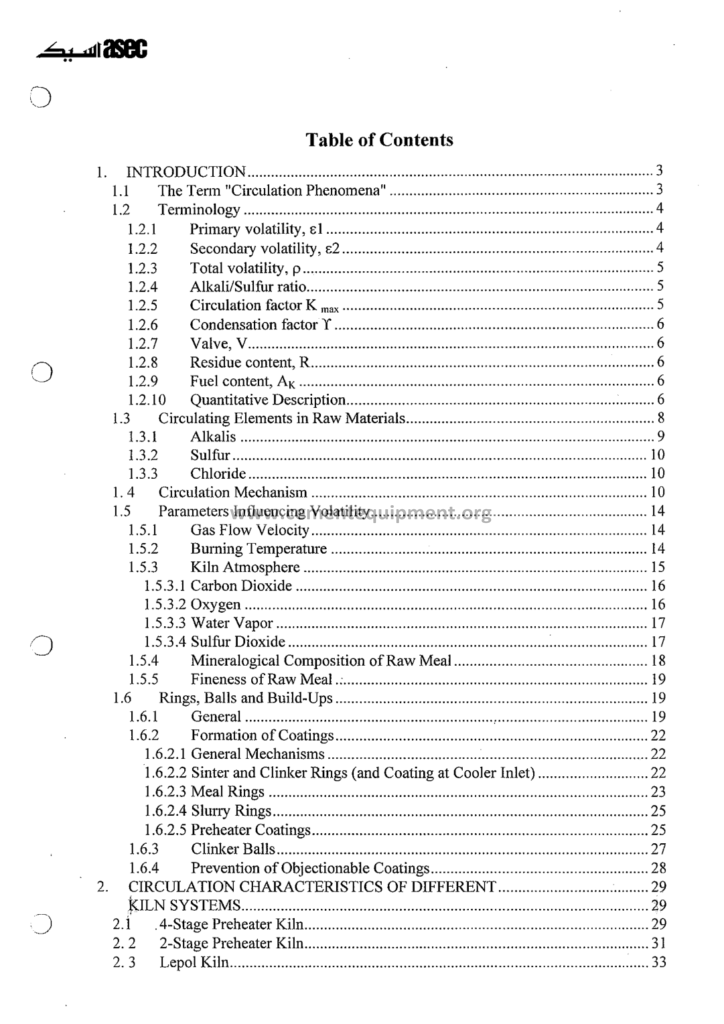
Circulation Phenomena: Complete Technical Guide
Circulation phenomena, part 2 takes the volatile chemistry of the kiln system from the theory of the first part to the working practice: how the sulfur, the chlorine, the potassium and the sodium cycle inside the preheater-kiln system, how the cycles are measured and quantified, and how the operator prevents the build-ups, the coating rings and the blockages that stop the kiln: the volatile cycles are the hidden disease of the modern preheater plants, and the cure is the discipline of the balance.
The Complete Cement Technical Package (931 files including the books, the courses, the Excel tools and the presentations: $249.99 one-time; instant download immediately after PayPal payment) includes this circulation guide with the calculation examples, the phase diagrams and the operating rules of the volatile management: this article walks the file: the chemistry of the cycles, the quantitative treatment, the preventive measures and the operational remedies: the reader of part 1 and part 2 holds the complete treatment of the circulation phenomena.
Part 1 established the mechanisms: the evaporation of the volatiles in the high-temperature zone, their condensation in the cooler regions, and the internal cycle that enriches the gas and the dust: this part 2 quantifies the cycle: the circulating coefficients, the gas and the dust loops, the sulfur-to-alkali balance and the bypass strategy: the numbers of this guide come from the operating practice of the preheater plants and the published case studies of the industry.
1. The Three Volatile Cycles: Sulfur, Chlorine and the Alkalis
The circulation phenomena reduce to the three chemical families, each with its own volatility and its own damage profile:
- The sulfur cycle: the sulfur enters with the fuel and the raw materials as the sulfides, the sulfates and the organic sulfur: in the kiln it forms SO2 in the oxidizing zones and the sulfates with the alkalis: the SO2 of the gas phase condenses and reacts in the cooler regions of the preheater: the internal sulfur cycle reaches the multiplication factors of 2 to 5 in the gas phase:
- The chlorine cycle: the chlorine enters mostly with the raw materials (up to 0.01% to 0.03% in the typical mixes) and the alternative fuels: the chlorine is the most vicious of the volatiles: its cycle multiplies the gas concentration by factors of 30 to 150 in the worst cases, and its condensation at the preheater stages creates the hard deposits that fall as the clumps:
- The alkali cycles (K2O and Na2O): the potassium and the sodium evaporate partially at the burning zone and condense as the alkaline sulfates and the chlorides in the preheater: the alkali cycles enrich the circulating dust and raise the alkali content of the clinker beyond the raw mix input: the cycle factors reach 2 to 10:
The three cycles interact: the sulfur combines with the alkalis to the stable sulfates (K2SO4, Na2SO4) before it can circulate as SO2, and the chloride competes for the same alkalis: the balance between the sulfur and the alkalis decides which cycle dominates: the file presents the system phase diagrams that the operator uses to predict the behavior.
2. The Volatility and the Condensation: The Chemistry of the Cycle
The cycle exists because of the temperature differences inside the system, and the chemistry of each volatile defines its behavior:
| Volatile | Volatility in kiln | Condensation zone | Typical circulation factor |
|---|---|---|---|
| Chlorine (Cl) | Very high (evaporates 90-99%) | Lowest preheater stages, 400-700 C | 30-150 in gas phase |
| Alkalis (K, Na) | High (40-70%) | Middle stages, 700-1000 C | 2-10 in dust |
| Sulfur as SO2 | Moderate-high | Condenses as sulfates, reacts with CaO | 2-5 in gas phase |
- The boiling points: the potassium chloride sublimes near 1,400 degrees and the sodium chloride near 1,460: the sulfates volatilize at the higher temperatures, and the sulfur dioxide is a gas throughout: the relative volatilities decide the separation of the phases at each temperature:
- The condensation sequence: as the gas cools in the preheater, the chlorides condense first at the highest temperatures, then the alkali sulfates, then the remaining SO2 reacts with the calcareous dust: the layered deposits of the preheater cyclones carry the fingerprint of the condensation order:
- The dust as the carrier: the circulating dust carries the condensed salts between the stages: the dust return loops (the kiln dust returned to the feed) multiply the enrichment: the alkali content of the returned dust is the engine of the dust cycle:
- The steady state: the cycle reaches the equilibrium where the output (the clinker, the bypass dust, the stack) carries away what the feed introduces: at the steady state the enrichment factors stabilize at the levels the file’s formulas predict:
The condensation physics is the key to the prevention: the operator who knows where each volatile condenses knows where the deposits will grow: the layer-by-layer analysis of the preheater build-ups is a standing diagnostic practice of the plants with the volatile problems, and the file documents the sampling and the interpretation.
3. The Quantification of the Circulation: The Factors and the Balances
The circulation phenomena are quantified with the circulation factors and the material balances that the file develops step by step:
- The gas circulation factor: the ratio of the volatile in the gas at the kiln inlet to the volatile introduced with the fuel and the raw materials: the chlorine factors of 30 to 150 and the sulfur factors of 2 to 5 quantify the gas-side enrichment:
- The dust circulation factor: the ratio of the alkali in the returned kiln dust to the alkali introduced with the fresh feed: the dust cycles of 1.5 to 4 lift the alkali load of the kiln feed above the raw mix analysis:
- The overall balance: for each volatile: input (raw materials plus fuel) equals the output (clinker plus bypass dust plus stack emissions): the sampling of the feed, the clinker, the bypass and the stack closes the balance and exposes the hidden loop:
- The calculation example: the file works the numbers of a 5,000 tons per day kiln with the 0.02% chlorine feed: the chlorine input of the day, the expected gas concentration at the 100-fold cycle and the resulting deposit risk score: the worked example is the template of the plant’s own balance:
The quantification is the first step of the management: the plant cannot control what it does not measure: the quarterly volatile balances of the file’s method give the plant its circulation numbers, and the trend of the factors over the years tells the story of the fuel substitution and the raw material changes: the balance is the instrument column of the circulation knowledge.
4. The Sulfur-to-Alkali Ratio: The Master Indicator of the System
The famous ratio of the sulfur to the alkalis (the SO3-to-alkali molar balance) predicts the behavior of the whole volatile system:
- The definition: the molar ratio of the total SO3 to the total K2O plus Na2O in the kiln feed: the ratio of 1.0 means the sulfur and the alkalis can combine completely to the stable sulfates:
- The ratio below 1.0: the alkalis exceed the sulfur: the excess alkalis evaporate and circulate strongly as the alkali chlorides: the alkali cycle dominates and the clinker alkali content drifts above the mix value:
- The ratio above 1.0: the sulfur exceeds the alkalis: the free SO2 circulates in the gas, attacks the kiln inlet and the preheater with the corrosive deposits, and raises the SO3 content of the clinker and the stack emissions:
- The target window: the industry practice keeps the ratio between about 0.7 and 1.2, and the plants with the high volatile loads tighten to the narrow band around 1.0: the fuel sulfur content and the alternative fuel sulfur are the moveable variables, and the raw material selection the fixed ones:
The sulfur-to-alkali ratio is the single most useful number in the volatile management: the plant computes it from the routine X-ray fluorescence analyses of the feed and the fuel, and the trend is the operator’s compass: the file provides the calculation spreadsheet and the interpretative table of the ratio ranges.
5. The Damage Modes: Build-Ups, Rings, Blockages and the Falling Clumps
The circulation phenomena damage the system through the four classical failure modes:
- The cyclone build-ups: the condensation of the chlorides and the sulfates at the preheater stages cements the dust into the crusts that narrow the cyclone cones: the blocked cyclone loses its separation efficiency and finally chokes the gas path: the pressure rises and the stages fail one by one:
- The riser duct deposits: the lowest riser duct, where the gas leaves the kiln inlet at the highest temperatures, collects the alkali sulfate coatings: the deposits narrow the duct and force the kiln to the reduced production: the coating falls in the clumps that the kiln feed carries back:
- The kiln inlet rings: the ring formations at the kiln inlet and the transition zone grow from the circulating dust enriched in the sulfates: the rings reduce the effective kiln cross-section, destabilize the material flow and finally block the kiln mouth:
- The snowmen and the clumps: the falling build-ups accumulate in the cooler as the snowmen (the compacted cones under the grate) and the large clumps damage the cooler grates and the crushers: the discharge of the cooler is the physical graveyard of the preheater problems:
The four modes share one root: the uncontrolled condensation of the volatiles: the plant that watches the pressure profile of the cyclones, the kiln inlet draft and the cooler grate friction reads the arrival of each mode in advance: the file presents the signature signals of each damage mode with the alarm interpretation table.
6. The Preventive Measures: The Feed, the Fuel and the Process Windows
The prevention of the circulation damage starts before the deposits form, in the design of the inputs and the process:
- The raw material blending: the selection and the blending of the raw components control the chlorine, the alkali and the sulfur inputs: the raw mix design of the plant with the volatile problems adds the volatile constraints to the LSF and the silica ratio targets:
- The fuel selection: the fuel sulfur and chlorine budgets: the shift to the alternative fuels demands the strict screening of their chloride and sulfur content: the alternative fuels with the PVC fractions are the classic chlorine disasters of the industry:
- The stable operation: the steady kiln operation keeps the condensation zones fixed: the thermal and the process upsets widen the condensation windows and spread the deposits over the wider area: the stability of the operation is a preventive measure, not a luxury:
- The kiln gas management: the control of the excess oxygen and the reduction avoidance: the reducing zones in the kiln release the sulfur in the reduced forms that condense aggressively: the stable oxidizing balance is the chemical prevention:
The prevention program of the file runs from the quarry to the flame: the volatile budget of the raw materials and the fuels is measured quarterly, the sulfur-to-alkali ratio is tracked continuously and the process windows are enforced by the control system: the plants that run the prevention budget report the deposit-free years, against the plants that fight the build-ups monthly.
7. The Cleaning Devices: The Shock Systems of the Deposits
When the deposits begin, the plant has a hierarchy of the cleaning options:
- The air cannons: the shock wave devices mounted on the cyclone cones and the riser ducts: the 20 to 80 liter air blasts at 6 to 10 bar fire against the crusts: the timed firing sequences prevent the growth before it hardens: the air cannons are the first line of the modern preheater houses:
- The pulse cleaning and the rapping: the mechanical rappers and the vibration systems remove the loose dust coatings: the maintenance of the rapping gear is a standing item of the preheater reliability:
- The water cannons: the high-pressure water jets (300 to 800 bar) cut the hardened deposits during the operation: the water cleaning is the surgical option for the local crusts, executed with the locked procedures against the personnel risks:
- The manual cleaning: the pneumatic hammers and the lances during the scheduled stops: the cleaned cyclone inventory per stop is the measurable output of the maintenance team: the manual cleaning of the hot sections follows the confined space and the heat protection procedures:
The cleaning devices convert the deposit problem into the maintenance routine: the air cannons prevent, the water cannons cure and the manual cleaning completes: the file specifies the device selection, the positioning and the firing logic of each system, because the geometry of the installation decides the effectiveness.
8. The Bypass: The Exit Valve of the Volatile System
The bypass is the engineered escape of the volatile-rich gas and dust, and its design is the arithmetic of the circulation:
- The principle: the kiln gas fraction of 3% to 15% (up to 30% in the extreme cases) is drawn from the kiln inlet, quenched and dedusted: the bypass removes the volatile-rich fractions before they reach the preheater and the cooler: the removed dust is disposed or returned at the controlled rate:
- The sizing logic: the bypass rate is set by the volatile load: the plant with the high-chlorine raw materials runs the high bypass rates: the bypass of 10% reduces the internal circulation sharply, and the chlorine content of the clinker falls proportionally:
- The cost accounting: the bypass discards the heat and the material: each percent of the bypass costs the thermal efficiency and the production: the optimization of the bypass rate balances the deposit prevention against the energy bill: the file quantifies both sides:
- The quality effect: the bypassed kiln removes the alkalis and the sulfur from the clinker: the alkali content of the cement falls, the 28-day strengths often improve, and the concrete alkali-silica reaction risk shrinks: the bypass is a quality tool as much as a process tool:
The bypass decision is the classic trade of the volatile management: the right bypass rate is the one that keeps the deposits dormant with the minimum heat penalty: the file presents the bypass sizing calculation with the case examples of the plants that installed, enlarged and optimized their bypasses.
9. The Operational Remedies: The Response to the Emerging Blockage
Despite the prevention, the operator faces the emerging blockage, and the response protocol of the file is the difference between the hour-long cleaning and the week-long stop:
| Signal | Immediate response | Follow-up |
|---|---|---|
| Stage pressure rising | Increase air cannons on the affected stage | Check volatile balance; review bypass |
| Kiln inlet draft falling | Reduce production moderately; check riser deposits | Schedule water cannon cleaning |
| Cooler pressure abnormal | Check clumps at crusher; adjust grate | Inspect discharge for snowmen |
| Ring formation at kiln inlet | Slight production reduction; fuel mix adjustment | Plan kiln stop for ring removal |
- The production juggling: the reduced production changes the gas velocities and the temperatures: the deposits in the early stage often shed at the reduced, stabilized operation: the production management is the operator’s first lever:
- The fuel and the flame adjust: the flame shape and the excess air move the condensation windows: the longer flame at the slightly higher excess air is the classical counter to the reduced conditions that feed the sulfur cycle:
- The targeted cleaning campaign: the coordinated firing of the cannons stage by stage, the water cannons on the hardened crusts and the monitoring of the pressure recovery: the cleaning campaign is executed and measured like a production campaign:
- The decision to stop: when the deposits resist, the planned short stop beats the forced long stop: the file teaches the early decision logic: the cost of the planned six-hour cleaning is a fraction of the unplanned three-day blockage:
The response protocol converts the circulation phenomena from the mysterious force into the manageable process variable: the operators inhabit the situation with the pressure readings, the firing logic and the stop decision rules that the file transmits: the discipline of the response is the second half of the prevention.
10. The Case Histories: The Lessons of the Plants
The circulation phenomena are documented in the industry literature through the case histories, and the file reviews the classical ones:
- The chloride spike of the alternative fuels: the plant substituting the PVC-bearing refuse fuel saw the chlorine cycle multiply within the weeks, the lowest cyclone deposits double and the kiln stops twice monthly: the remedy was the fuel screening, the bypass raise and the chloride budget enforcement: the lessons generalize to every alternative fuel program:
- The alkali-rich raw material shift: the quarry change introduced the potassium-rich marl: the clinker alkali rose from 0.4% to 0.9% and the concrete reactivity complaints followed: the raw mix dilution and the bypass of 6% returned the alkali to the acceptance band: the case demonstrates the raw material control as the primary lever:
- The sulfur from the petroleum coke: the switch to the 5% sulfur petcoke overloaded the sulfur cycle: the preheater SO2 and the kiln inlet corrosion appeared: the balance of the alternative fuel blending and the optimized oxidation restored the operation: the case teaches the fuel sulfur accounting:
The case histories are the practical library of the circulation phenomena: the plants repeat the same discoveries because the individual plant experiences the volatile events once every decade: the file’s case reviews compress those decades into the reading hours, so the engineer recognizes the next event while it is still a trend on the control screen.
11. The Monitoring Program: The Instruments of the Volatile Control
The volatile management is a measurement program, and the file closes the technical section with the full monitoring scheme:
- The feed analysis: the X-ray fluorescence of the raw mix at the normal quality control frequency, with the volatile elements reported at the parts-per-hundred levels: the chlorine trend of the feed is the alarm channel of the system:
- The gas analysis: the kiln gas SO2 at the kiln inlet and the preheater exit, and the CO as the reduction indicator: the gas analyzers of the kiln system serve the volatile balance as the direct sensors:
- The clinker and the bypass dust analysis: the daily clinker samples with the alkali and the sulfate content: the bypass dust analysis quantifies the removed fraction: the balance of the day closes over the week:
- The deposit sampling: the samples of the build-ups taken at the stops, analyzed for the chloride, the sulfate and the alkali contents: the deposit chemistry identifies the responsible cycle and directs the remedy:
- The pressure profile: the continuous trending of the stage pressures: the rising stage pressure is the earliest practical warning of the deposit growth: the alarm and the escalation logic of the file use the pressure trends:
The monitoring program is the nervous system of the volatile control: the plant with the complete measurements manages the circulation; the plant with the partial measurements fights the symptoms: the file provides the sampling schedule, the analysis list and the reporting templates of the monthly volatile report.
12. The Volatile Map of the Kiln Line: The Sampling Campaign
The complete diagnosis of the circulation phenomena begins with the sampling campaign that maps the volatile concentrations through the whole system:
- The sampling points: the raw mix, the kiln feed, the riser gas, the cyclone dusts at the stages, the kiln inlet gas, the clinker, the bypass dust and the stack: the campaign collects the samples at the same time window under the stable operation: the file provides the campaign plan and the sample chain of custody:
- The analyses: the X-ray fluorescence for the K, Na, S, Cl and the major oxides on the solids, the ion chromatography for the chlorides and the sulfates of the aqueous extractions, and the gas analyses for the SO2, the HCl and the particulates: the complete analytical suite of the volatile mapping:
- The interpretation: the computed enrichment factors per stage: the stepwise enrichment from the feed to the cyclone dusts draws the map of the condensation: the stage with the highest enrichment is the stage of the highest deposit risk: the map localizes the prevention:
- The campaign frequency: the annual baseline campaign and the triggered campaigns after the raw material or the fuel changes: the volatile map of the file is the periodic health check of the circulation system: the trend comparisons across the campaigns reveal the creeping changes:
The volatile mapping campaign is the highest-value measurement program of the clinker line: the map replaces the speculation with the stage-by-stage facts, and the deposit prevention is targeted at the stages the map identifies: the file’s campaign protocol is the standard the plants adapt to their systems, and the interpretation tables convert the analytical results into the process decisions.
13. The Design Measures: The Kiln Systems Built Against the Circulation
The modern kiln systems incorporate the design features that resist the volatile cycles, and the file documents the engineering measures:
- The preheater design margins: the oversized cyclone cones, the steep cone angles and the smooth gas paths reduce the deposit attachment: the design velocities and the geometry of the modern preheaters are sized with the volatile load in mind: the file lists the design criteria of the deposit-resistant preheaters:
- The kiln inlet and the riser geometry: the cooled kiln inlet, the air-injected riser ducts and the smooth transitions reduce the condensation surfaces: the riser duct designs of the modern plants incorporate the alkali removal features at the source:
- The full-flow and the partial-flow bypasses: the bypass systems designed at the engineering stage: the quench air chambers, the dust extraction and the disposal routes: the bypass as the design element rather than the retrofit: the file compares the bypass installations of the modern lines:
- The kiln design features: the longer transition zones, the coated kiln sections and the burner designs that hold the stable flame: the equipment geometry supports the process stability that the volatile control demands: the design experience of the industry is codified in the file’s design checklist:
The design measures are the expensive and the permanent solutions: the plants built or rebuilt against the volatile chemistry run their decades with the deposit-free operation: the file’s design chapter gives the project engineers the criteria and the experience base of the deposit-resistant kiln systems, and the retrofit chapter converts the measures for the existing lines.
14. The Alternative Fuels and the Volatile Management of the Future
The alternative fuel substitution is the environmental and the economic direction of the industry, and its volatile management is the frontier of the circulation knowledge:
- The fuel-borne volatiles: the alternative fuels carry the chlorine (the PVC plastics), the sulfur (the tires, the petroleum residues) and the alkalis (the biomass ash): the fuel quality screening and the substitution blending are the primary volatile controls of the alternative fuel programs: the file provides the fuel acceptance specifications:
- The high substitution operation: the plants at the 50% to 90% substitution rates operate the bypasses and the raw material buffers at the limits: the volatile balances of the high-substitution plants are the reference cases of the industry: the file reviews the operating data of the high-substitution lines:
- The co-processing synergy: the alternative fuels solve the waste problem of the region and feed the kiln: the chlorinated waste streams are accepted only within the balance: the regional waste analysis and the acceptance criteria form the commercial interface of the fuel program:
- The monitoring evolution: the online chlorine and the alkali monitoring of the fuels and the raw materials, the continuous gas monitoring and the predictive deposit models: the digital tools of the volatile management evolve toward the real-time control: the file closes with the technology outlook of the volatile management:
The alternative fuel era multiplies the volatile challenge and the volatile knowledge: the plants that master the balances with the waste fuels win the double prize of the low fuel costs and the environmental credibility: the circulation phenomena part 2 ends with the forward view: the volatile management of the future is the measured, digital, high-substitution operation that the file prepares its readers to run.
15. The Interaction of the Circulation with the Refractory and the Kiln Structure
The volatile chemistry also engages the refractory and the steel of the kiln line, and the interaction is the durability chapter of the circulation knowledge:
- The alkali attack on the refractory: the alkali vapors react with the brick phases: the potassium and the sodium compounds attack the silica and the mullite of the conventional bricks, forming the expansive potassium-silicate phases that spall the linings: the magnesia-spinel and the high-alumina refractories of the modern kilns resist the alkali service: the file maps the refractory selection against the volatile load:
- The cement coating as the protection: the stable cement coating of the burning zone is the refractory’s own shield: the coating forms from the clinker minerals and protects the bricks from the thermal and the chemical stresses: the volatile-driven coating instability (the heavy, unstable coating of the sulfur-rich operation) damages the bricks through the thermal cycles: the coating management of the file balances the coating stability:
- The reduced atmosphere damage: the reducing conditions of the volatile-rich operation destabilize the brick iron oxides: the spalling and the corrosion of the lower transition zones follow: the kiln atmosphere control is a refractory protection measure, not only a clinker measure: the file documents the atmosphere-refractory interaction:
- The steel corrosion at the kiln inlet: the volatile-rich gas condenses on the cooler surfaces of the kiln inlet and the riser duct: the chloride condensates corrode the steel shells and the internals: the insulation, the air curtains and the material selection of the inlet sections manage the corrosion: the file treats the structural interaction with the inspection and the material guidance:
The refractory and the structural interaction closes the physical dimension of the circulation phenomena: the volatile cycles attack the process, the bricks and the steel together, and the integrated plant manages all three: the file’s refractory chapter is the durability view of the volatile knowledge: the engineer who reads the cycles in the brick wear trends holds the complete diagnostic of the kiln line health.
16. The Frequently Asked Questions
What is the circulation factor of the chlorine?
The chlorine cycle factors of 30 to 150 are typical in the gas phase of the preheater plants: each kilogram of the chlorine in the feed circulates through the system dozens of times before it leaves with the clinker, the bypass or the stack: this multiplication is why the tiny feed concentrations create the massive deposits.
Why do the alternative fuels cause the preheater blockages?
The alternative fuels often carry the chlorides (PVC plastics) and the sulfur beyond the raw material budget: the sudden input spike multiplies through the circulation factors and the deposits grow within the weeks: the fuel screening and the chloride budgeting are the mandatory controls of every substitution program.
What is the bypass rate for the high-chloride raw materials?
The bypass rates of 3% to 15% of the kiln gas cover the normal ranges, and the extreme raw materials with the chlorine above 0.05% may demand the 20% to 30% rates with the substantial penalties: the exact rate follows the volatile balance calculation of the file, not the rule of thumb.
Does the file include the case studies of the blocked plants?
The Complete Cement Technical Package includes this circulation guide with the worked balances, the phase diagrams and the case histories of the volatile events: the 931 files of the package also include the associated gas analysis and the kiln control documentation, and the tools of the package cover the calculations.
Can the air cannons remove the hard baked deposits?
The air cannons prevent and dislodge the young deposits: the hardened, sintered crusts resist the air blasts and require the water cannons or the manual cleaning: the timing of the cannons is the discipline: the deposits removed young never become the baked ones.
How fast can the kiln recover from the volatile upset?
With the correct response, the deposits shed within the hours and the kiln returns to the full production the same shift: the neglected deposits grow for the weeks and the recovery costs the planned or the forced stop: the response speed is the economics of the volatile management.
17. Conclusion
Circulation phenomena, part 2, completes the volatile management of the kiln system: the sulfur, the chlorine and the alkali cycles are quantified, prevented and controlled: the engineer who owns the volatile balance, the sulfur-to-alkali ratio and the cleaning strategy operates the preheater plant without the blockages that destroy the availability: the circulation phenomena reward the measured operation: the feed budget, the fuel screening, the stable flame and the early response: the knowledge of part 1 and part 2 turns the invisible cycles into the controlled variables of the kiln line.
The Complete Cement Technical Package includes this circulation guide with the balances, the diagrams and the operating rules: one-time 249.99; instant download immediately after purchase: the library of the cement professional: the 931 files of the package carry the complete clinker burning knowledge, and the circulation phenomena are one of its sharpest chapters.
Get this circulation phenomena file + the full 931-file package
$249.99 — one-time purchase, instant download immediately after purchase, lifetime access
This file is part of the Complete Cement Technical Package (931 files) available from cementequipment.org. Respective rights holders; library copy for the licensed single user.