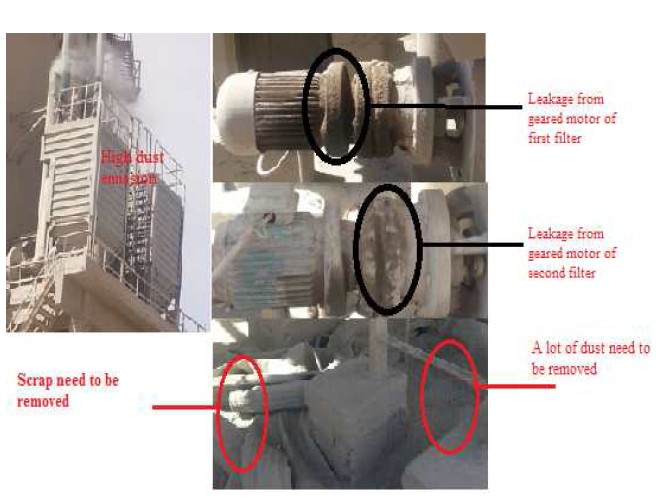
Before changing pulse settings, record the collector differential pressure, receiver pressure before and during a cleaning sequence, actual pulse count over a representative period, compressor loading, visible or audible leakage, and current production rate. Keep this baseline beside the post-adjustment readings so the team can distinguish a real reduction in air demand from a change that simply weakens bag cleaning.
1. Define the Cleaning System Before Calculating Air Demand
Pulse-jet bag-filter compressed-air consumption should be calculated from the actual cleaning demand, not guessed from compressor size. Record the number of pulse valves, bags per valve, pulse duration, pulse interval, cleaning sequence, receiver pressure, minimum acceptable pulse pressure, valve orifice size, and whether cleaning is timer-based or differential-pressure controlled. Also record normal and peak filter differential pressure and process airflow.
Do not use one generic air-consumption number for every collector. A kiln filter, clinker-cooler filter, cement-mill filter and transfer-point collector can have very different cleaning demand and operating behavior.
Diagnostic decision matrix
| Input | What to verify | Why it matters |
|---|---|---|
| Pulse duration | Controller setting and OEM recommendation | Longer pulses consume more compressed air. |
| Pulse interval | Actual time between valve actuations | Sets average pulse frequency. |
| Valves firing | Real count per minute or cycle | Prevents overestimating or underestimating demand. |
| Receiver pressure | Pressure before and during cleaning | Shows whether local storage recovers between pulses. |
| Free air per pulse | OEM/valve data or validated measurement | Provides the correct basis for consumption calculation. |
2. Calculate Average Free-Air Demand
The most reliable input is the free-air volume consumed by one pulse at the actual operating pressure and pulse duration. Obtain it from the dust-collector OEM, diaphragm-valve manufacturer, or a validated receiver/compressor measurement.
For timer cleaning, derive pulse count from the programmed interval. For differential-pressure cleaning, measure the actual pulse count over a representative operating period because demand changes with production rate, dust loading, moisture, bag condition and process stability. Use the number of valves that actually fire during the period, not the total valve count unless all valves fire in that period.
3. Check Receiver Pressure Recovery
A collector can have adequate average compressor capacity and still clean poorly if the local receiver cannot recover between pulses. Trend receiver pressure through a cleaning sequence. Large pressure dips or slow recovery can indicate excessive simultaneous demand, restricted supply piping, inadequate compressor availability, moisture problems or leaking valves.
4. Find Hidden Compressed-Air Losses
5. Optimize Cleaning Without Damaging Filter Performance
Compressed-air optimization must be checked against differential pressure, emissions performance and bag condition. Adjust one parameter at a time and remain inside the collector manufacturer’s approved operating window.
- Verify differential-pressure instrumentation.
- Repair compressed-air leaks and faulty diaphragm valves.
- Confirm receiver pressure and recovery.
- Verify pulse duration.
- Review pulse interval and sequence.
- Use demand cleaning where the installed controller and process support it.
- Trend differential pressure, pulse count and compressor load after each change.
A useful plant worksheet should record valve count, free-air volume per pulse, pulses per minute, average free-air demand, peak sequence demand, receiver pressure drop, compressor available capacity, filter differential pressure and operating production rate. This converts compressed-air consumption into a measurable maintenance and energy KPI.
6. Verify the Result Before Returning to Normal Operation
After each adjustment, run the collector long enough to capture a representative cleaning cycle and compare it with the as-found baseline. Confirm that receiver pressure recovers between pulses, filter differential pressure remains stable for the process load, pulse valves close cleanly, and the compressor is not being driven by avoidable leakage or excessive cleaning frequency. Where emissions monitoring or outlet observations are part of the plant procedure, confirm that filtration performance has not deteriorated.
Return the system to routine operation only when the change reduces unnecessary air demand without creating unstable differential pressure or weaker cleaning. Record the final pulse duration, interval or demand-control setting, receiver-pressure behavior and measured pulse frequency so a future shift can detect drift instead of starting from guesswork.
7. Common Optimization Mistakes
- Reducing pressure or pulse duration before repairing leaking diaphragm valves and supply restrictions.
- Judging performance from compressor pressure alone instead of measuring local receiver behavior during the cleaning sequence.
- Changing several controller parameters at once, which makes the cause of any improvement or deterioration impossible to isolate.
- Using a generic air-consumption value without confirming the installed valve, pulse duration and actual firing frequency.
- Treating lower air use as success when filter differential pressure or emissions performance is becoming unstable.