Concrete Main Components: Complete Technical Guide
The main components of concrete are few and their interactions are everything: the cement that binds, the aggregates that fill, the water that hydrates and the admixtures that tune: the proportions of these four components decide the strength, the workability, the durability and the cost of every cubic meter poured: concrete is often called the artificial stone, and like the natural stone, its properties are decided by the recipe of its minerals and the quality of its bonding.
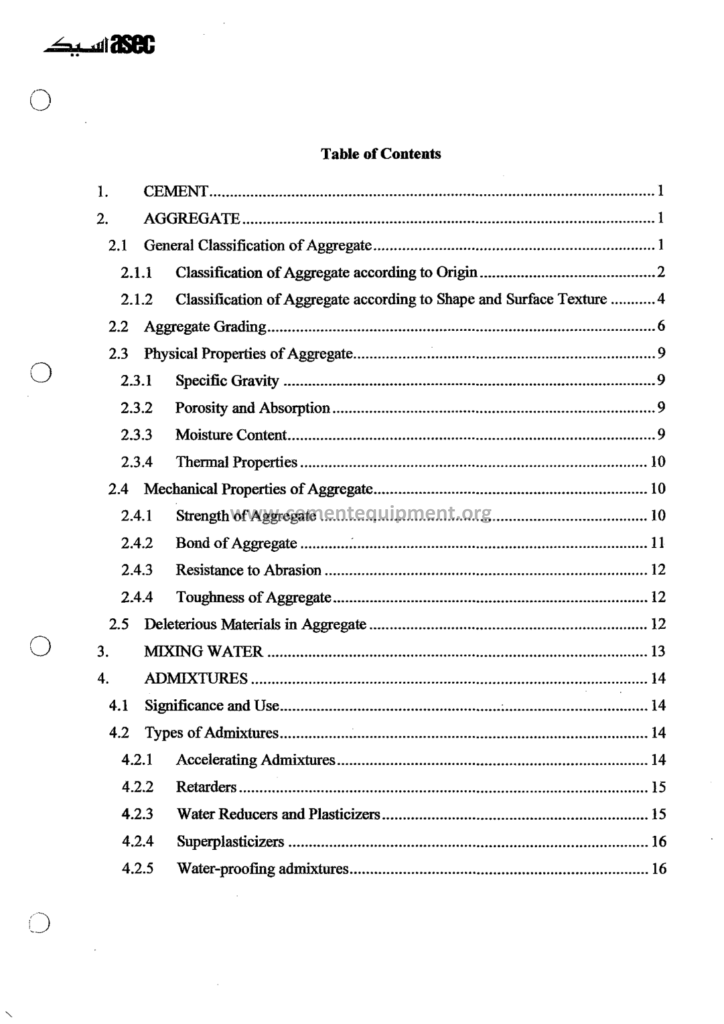
The Complete Cement Technical Package (931 files including the books, the courses, the Excel tools and the presentations: $249.99 one-time: instant download via the PayPal payment) includes this concrete components guide with the full proportioning tables, the aggregate testing procedures and the mix design examples: this article walks the file: the role of each component, the properties that each brings, the water-cement ratio law and the practical rules of the batching plant: the reader closes the page with the complete anatomy of concrete.
Concrete is the most used construction material on the planet: its components are cheap and available, yet the difference between the good and the bad concrete is decided entirely by the discipline of the proportions: this page is organized so the reader meets the cement first, the aggregates second, the water third and the admixtures last: the file itself follows the same order from the binder to the finishing of the mix: the engineer, the student and the quantity surveyor each find the level that serves them.
1. The Portland Cement: The Active Component of the Mix
The cement is the hydraulic binder of the concrete: the component that reacts with the water and glues the whole mix into one solid mass:
- The clinker minerals: the alite (tricalcium silicate) that brings the early strength, the belite (dicalcium silicate) that brings the later strength, the aluminate (tricalcium aluminate) that reacts fast with the water and the ferrite that completes the reaction: the proportions of these four phases decide the behavior of the cement in the mix;
- The gypsum addition: the sulfate of the cement regulates the setting of the aluminate reaction: without the gypsum the cement would flash-set in the mixer: the sulfate balance of the cement is a main factor of the compatibility with the admixtures;
- The strength classes: the 32.5, 42.5 and 52.5 classes of the European standard and the types of the American practice: the class of the cement is matched to the structural needs of the concrete: the high-strength concrete calls for the 52.5 cement, the mass concrete is satisfied with the moderate class;
- The cement types: the ordinary Portland cement and the blends with the limestone, the slag and the fly ash: each type brings its own strength development and its own durability profile: the selection of the cement type is the first decision of the mix designer;
The cement is the smallest component of the mix by volume (typically 10 to 15 percent) but the most expensive and the most influential: the cement content is the main cost driver and the main driver of the heat of hydration: the economic mix design always seeks the minimum cement that meets the strength and the durability requirements: the guide of the package devotes its opening chapters to the chemistry and the selection of the binder.
2. The Fine Aggregates: The Sand that Fills the Voids
The fine aggregate, or the sand, fills the space between the coarse particles and participates in the workability and the finish of the concrete:
- The grading: the particle size distribution of the sand between 0.15 and 5 millimeters: the well-graded sand packs densely and requires less paste: the grading curve of the sand is checked against the standard envelopes of the specification;
- The fineness modulus: the single index of the sand coarseness: the typical range of the good concrete sand sits between 2.2 and 3.0: the fineness modulus changes the water demand and the finishability of the mix;
- The cleanliness: the clay, the silt and the organic matter of the sand are limited to the small percentages: the dirty sand coats the aggregate surfaces and steals the paste: the sand washing of the plant is the standard cure for the excess fines;
- The shape and the texture: the rounded natural sand and the angular crushed sand behave differently in the mix: the crushed sand brings the higher strength at the price of the higher water demand: the shape of the particles influences the voids of the sand;
The sand represents about 25 to 35 percent of the concrete volume: its grading and cleanliness control the paste demand of the mix: the mix that saves the paste saves the cement: the file documents the sieve analysis of the sand, the silt tests and the fineness modulus calculations with the standard tables and the accepted bands of the specifications.
3. The Coarse Aggregates: The Skeleton of the Concrete
The coarse aggregate, the crushed stone or the gravel between 5 and 32 millimeters, forms the structural skeleton of the concrete:
- The maximum size: the largest aggregate size is limited by the section of the element, the cover to the reinforcement and the gap of the forms: the typical sizes of 16, 20 and 32 millimeters cover the structural practice: the bigger the aggregate, the less paste the mix needs;
- The grading: the combined grading of the coarse aggregate is composed to fill the voids between the particles: the continuous grading of the standard envelope and the gap-graded mixes for the special applications: the grading curve of the job aggregate is the daily check of the plant;
- The strength of the rock: the crushing value, the Los Angeles abrasion and the flakiness index of the aggregate must serve the concrete class: the weak aggregate limits the concrete strength no matter how strong the paste is;
- The shape: the flaky and the elongated particles break the packing and increase the voids: the cubical particles are the target: the shape of the crusher product is controlled by the crusher type and its setting;
- The cleanliness: the dust and the clay of the coarse aggregate disturb the bond between the paste and the stone: the wash water of the aggregate plant removes the film that weakens the interface;
The coarse aggregate is the cheapest component and the highest by volume (40 to 50 percent): the aggregate plant is the first quality gate of the mix: the file covers the full test battery of the coarse aggregate with the standards, the limits and the practical interpretation of each result for the mix design table.
4. The Water: The Component that Starts the Reaction
The water performs the double duty of the concrete: the chemical participant of the hydration and the lubricant of the mixed mass:
- The hydration: the water reacts with the cement compounds to form the hydrates that gain the strength: only about 25 to 30 percent of the water by cement weight is needed for the complete chemical reaction: the rest is the price paid for the workability;
- The water-cement ratio: the single most important number of the concrete technology: the lower the w/c ratio, the higher the strength and the lower the porosity: the classical law of the strength quantifies the relation between the w/c ratio and the compressive strength of the concrete;
- The quality of the water: the mixing water must be clean: the sulfates, the chlorides and the organic impurities are limited: the potable water is the safe default, and the recycled water of the plant is tested before the reuse;
- The total water control: the moisture of the aggregates counts: the batching corrections for the surface moisture of the sand and the gravel keep the effective w/c ratio at the designed value: the moisture probes and the daily moisture checks of the aggregates are the standard practice of the ready-mix plants;
The w/c ratio of the ordinary structural concrete sits between 0.40 and 0.60: the high performance concrete drops below 0.40 with the help of the superplasticizers, while the mass concrete rises with the large aggregates and the low heat requirements: the water is the cheapest component and the most dangerous one: the extra liters that make the mix easy to place also make the hardened concrete weak and porous: the file explains the full management of the water and the corrections of the mix water.
5. The Admixtures: The Chemical Components of the Modern Mix
The admixtures are the chemical ingredients added in the small dosages that change the character of the mix without changing its identity:
| Admixture type | Main effect | Typical dosage (% of cement) |
|---|---|---|
| Superplasticizers (high range water reducers) | Large water reduction, high workability | 0.5–2.0 |
| Plasticizers (water reducers) | Moderate water reduction | 0.1–0.4 |
| Air-entraining agents | Micro air bubbles for the freeze-thaw resistance | 0.005–0.05 |
| Retarders | Delayed setting for the hot weather and the large pours | 0.1–0.5 |
| Accelerators | Faster setting and the early strength | 1–3 |
| Waterproofers | Reduced capillary absorption | 0.5–2.0 |
The modern superplasticizers based on the polycarboxylate ethers changed the concrete technology completely: the water reduction of 30 percent or more at the same workability: the high performance concrete, the self-compacting concrete and the pumped concrete exist because of these molecules: the admixture must be compatible with the cement of the project, because the same admixture can work beautifully with one cement and fail with another: the compatibility trials of the batching plant are the standard qualification step.
6. The Supplementary Cementitious Materials: The SCMs of the Modern Mix
Beneath the four classical components, the modern concrete increasingly carries the fifth ingredient: the supplementary cementitious materials that replace part of the cement:
- The fly ash: the fine ash of the coal-fired power plants: the pozzolanic reactivity with the lime of the hydration: replaces 15 to 30 percent of the cement with the slower strength gain and the better durability of the mass concrete;
- The ground granulated blast-furnace slag: the latent hydraulic material from the iron production: replaces 30 to 70 percent of the cement: brings the low heat, the sulfate resistance and the very durable microstructures: the classic binder of the marine concrete;
- The silica fume: the extremely fine byproduct of the silicon production: the pozzolan of the highest activity: used at 5 to 10 percent in the high performance concrete to close the pores and boost the bond of the paste;
- The natural pozzolans: the calcined clays, the volcanic ashes and the diatomaceous earths: the local materials that lower the cost and the footprint of the concrete in the regions where they are available: the calcined clay in particular receives the attention of the modern low-carbon projects;
- The limestone filler: the ground limestone that participates in the hydration and fills the microstructure: the common component of the blended cements and the ternary mixes: the economic substitute of a part of the clinker;
The SCMs are not the inert fillers but the active participants of the hydration: they react with the calcium hydroxide of the cement and convert it into the additional binding phases: the result is the denser, more durable and often cheaper concrete: the selection of the SCM content is the central decision of the modern mix design: the file devotes complete chapters to the chemistry, the dosages and the durability benefits of each material.
7. The Harmful Components that Must be Kept Out of the Mix
The quality of the concrete components is judged as much by what they must not contain: the harmful substances are the classical list that the specifications limit:
- The clay and the silt: the fines that coat the aggregates and absorb the water: limited to a few percent by the washing tests: the clays of the swelling type are especially destructive to the concrete;
- The organic matter: the humic substances and the vegetation of the natural aggregates: they poison the hydration reactions and delay the setting: the colorimetric test of the sand is the quick gatekeeper;
- The sulfates and the chlorides of the aggregates: the sulfates attack the paste and the chlorides corrode the reinforcement: the aggregates for the reinforced concrete are limited in their soluble salts;
- The reactive alkalis: the aggregates that react with the alkalis of the cement in the alkali-silica reaction (ASR): the reactive silica of the aggregates combines with the alkali hydroxides of the pore solution and expands: the petrographic examination and the accelerated mortar bar tests identify the risky aggregates;
- The sea aggregates: the marine sand and the gravel carry the salts that corrode the steel: the washing requirements for the sea-dredged aggregates are strict, and the specification often bans them for the reinforced concrete altogether;
The prevention of the harmful components is cheaper than the repair of the damage: the reactive aggregate expansion, the chloride corrosion and the sulfate attack reduce the concrete life by decades: the file carries the full test procedures and the acceptance limits for each harmful substance, with the decision trees that the quality engineer follows when an aggregate fails a screening test.
8. The Air: The Invisible Component of the Mix
The fresh concrete always carries the entrapped and the entrained air, and the difference between the two is the difference between the weakness and the durability:
- The entrapped air: the large accidental bubbles of the mixing: the result of the poor compaction and the sticky mixes: the entrapped air is limited to one to two percent in the compacted concrete and costs strength whenever it survives the vibration;
- The entrained air: the deliberate microscopic bubbles created by the air-entraining agents: the bubble system of 5 to 7 percent by volume with the diameters below 0.3 millimeters: the bubbles act as the expansion chambers that absorb the freezing water: the air-entrained concrete survives the freeze-thaw cycles of the cold climates;
- The spacing factor: the quality parameter of the air void system: the distance between the bubbles of the paste must stay below the critical value of the standard: the spacing factor is measured with the microscopy of the hardened concrete;
- The air content control: the fresh concrete is tested for the air content by the pressure method with the calibrated air meter: the air content test is the daily check of the concrete plant in the freeze-thaw regions;
The effect of the air is double-edged: each percent of the air costs about five percent of the compressive strength, yet the air-entrained concrete of the roads and the bridges outlives the non-entrained one in the freezing climates: the mix design balances the durability requirement against the strength budget: the guide covers the air entrainment principles, the bubble requirements and the daily control of the air content.
9. The Proportions of the Components: The Mix Design of the Common Classes
The proportions of the components are expressed in the kilograms per cubic meter of the concrete, and the typical mixes of the structural practice illustrate the balance of the components:
| Concrete class | Cement (kg/m3) | Water (kg/m3) | Fine agg. (kg/m3) | Coarse agg. (kg/m3) | w/c ratio |
|---|---|---|---|---|---|
| Plain mass concrete | 250–300 | 160–180 | 650–750 | 1100–1250 | 0.55–0.65 |
| Ordinary reinforced | 300–350 | 150–175 | 650–750 | 1050–1200 | 0.45–0.55 |
| High performance | 380–450 | 140–160 | 650–800 | 950–1100 | 0.35–0.42 |
The batching is done by weight, because the volume measurement of the sand is fooled by the moisture and the compaction of the material: the weight batching tolerance of the modern plants is within one percent for the cement and the water and within two percent for the aggregates: the design of the mix proceeds step by step: the strength class defines the target w/c ratio, the workability defines the water demand, the aggregates define the paste requirement and the result is checked with the trial mixes before the first truck leaves the plant.
10. The Interface of the Components: The Transition Zone of the Mix
The components of the concrete do not work side by side; they work through the interfaces between them, and the weakest of these interfaces is the transition zone:
- The transition zone: the thin layer of the paste around each coarse aggregate particle: more porous and more cracked than the bulk paste: the zone of the concrete where the cracks start under the load: the strength of the concrete is limited by this shell of the weakness;
- The bleeding effect: the water that rises under the aggregate particles during the placing leaves the accumulation of the water pockets: the drying of these pockets leaves the voids of the interface: the low w/c ratio and the proper vibration reduce the bleeding of the mix;
- The bond of the aggregate: the mechanical interlock and the chemical bonding of the paste to the stone surface: the clean, rough and well-shaped aggregates give the better bond: the polished or the dusty aggregates give the concrete that fails at the interface;
- The improvement of the zone: the pozzolans and the silica fume refine the microstructure of the transition zone and close its porosity: the high performance concrete is largely the victory of the improved interface: the flexural strength in particular benefits from the refined zone;
The understanding of the transition zone explains many practical observations: the tensile strength of the concrete is only a fraction of the compressive strength, and the concrete cracks where the weakest interface fails first: the disciplined compaction and the low w/c ratio are not luxury but the direct protection of the interface: the file explains the microstructure of the concrete with the illustrations of the zones and the practical recipes of the strong interfaces.
11. The Batching and the Mixing: The Discipline of the Proportions
The best mix design is worthless without the correct batching and the proper mixing: the plant side of the components is the daily reality of the site concrete:
- The weigh hoppers: the separate weighing of the cement, the water, the admixtures and the aggregates with the calibrated load cells: the automatic recording of every batch creates the traceable batch report of the delivery;
- The moisture correction: the surface water of the aggregates varies with the weather and the stockpile position: the automatic moisture probes of the sand hopper adjust the added water and the aggregate weight batch by batch: the effective w/c ratio stays at the design value from the morning to the night;
- The mixing time: the pan mixer and the twin-shaft mixers need their minimum mixing cycles for the uniformity of the paste: the under-mixed concrete shows the streaks of the unmixed cement and the pockets of the coarse paste: the mixing time is a quality parameter that is never shortened by the dispatch pressure;
- The truck mixing: the ready-mix trucks continue the mixing during the transport: the revolutions per minute of the drum are monitored: the added water on site is the classical fraud that ruins the effective w/c ratio: the modern plants track and record every water addition of the fleet;
The batching plant is the meeting point of all the components: the calibrated scales, the moisture corrections and the recorded batches are the daily quality evidence of the delivered concrete: the file documents the plant equipment, the calibration requirements and the records that the quality system of the ready-mix industry expects: the components leave the plant only as the verified mix.
12. The Testing of the Components: The Acceptance of the Incoming Materials
Every component that enters the concrete plant is tested before the acceptance, and the routine battery of the tests is the shield of the mix:
- The cement tests: the fineness, the setting time, the soundness and the strength of every cement delivery against the certificate: the cement silo is cleared only by the confirmed quality: the couples of the day: the test of the incoming binder is the foundation of the trust;
- The aggregate tests: the sieve analysis of every delivery, the silt content of the sand, the flakiness of the stone and the moisture: the aggregate quality varies from the supplier and from the season, so the plant tests at the delivery frequency of the quality plan;
- The water tests: the pH, the chloride, the sulfate and the solids of the mixing water: the recycled wash water of the plant builds up the solids and the alkalis: the water test protects the w/c ratio arithmetic of the plant;
- The admixture certificates: the density, the solids content and the performance verification of each drum: the admixture is dosed by volume but purchased by the solids: the verification of the delivery documents guards the dosage arithmetic of the mix;
- The SCM performance: the activity index of the fly ash and the slag, measured against the reference cement: the replacement of the cement is valid only with the confirmed reactivity of the substitute;
The test of the incoming components is the front door of the concrete quality: the plant that tests its materials religiously pours the good concrete even in the difficult months: the file includes the complete acceptance test schedules, the sampling frequencies and the limits of each component, formatted as the ready checklists of the incoming goods inspection.
13. The Often Asked Questions
Which component of the concrete is the most expensive?
The cement: even at the modest contents of 250 to 350 kilograms per cubic meter, the cement represents the major share of the material cost of the concrete: the aggregates are the cheapest, the water negligible and the admixtures small in cost but decisive in the performance: the economic mix design is the minimization of the cement without violating the specification.
Why is the water-cement ratio called the most important number?
Because the strength and the durability of the concrete in the normal range depend mostly on the w/c ratio of the mix: the lower the ratio, the denser the paste and the stronger the concrete: the classical strength curves of the concrete technology are drawn against the w/c ratio, and the other factors of the mix move the curve rather than replace it.
Can the sea sand be used in the concrete?
Only with the strict washing and the limits of the chloride: the marine aggregates carry the salts that corrode the reinforcement of the structures: many specifications ban the unwashed sea sand for the reinforced concrete altogether, and allow it only for the plain mass concrete: the washing requirements and the chloride test of the file define the boundaries of the acceptable use.
What is the difference between the entrapped and the entrained air?
The entrapped air is the accidental large bubbles of the mixing and the placing, limited by the compaction; the entrained air is the deliberate system of the microscopic bubbles created by the air-entraining admixture, protected by the spacing factor limits: the first weakens the concrete, the second saves it from the frost: the distinction is the discipline of the air meter.
Does the guide cover the light and the heavyweight aggregates?
The guide concentrates on the normal-weight components of the structural concrete and covers the special aggregates as the reference chapters: the lightweight aggregates of the insulating concretes and the heavyweight aggregates of the radiation shielding are presented with their proportioning principles, so the engineer extends the same component logic to the special mixes.
How often must the batching plant test its incoming aggregates?
The frequency follows the variability of the source: the daily sieve analysis and the moisture of the sand, the weekly silt and flakiness checks, and the full grading confirmation with every change of the supplier or the quarry face: the ready-mix quality systems commonly prescribe the daily to the weekly frequencies that the file tabulates.
14. Conclusion
The main components of the concrete are only four, and the modern mix adds the fifth family of the supplementary materials: cement, sand, stone, water and the chemicals: every property of the hardened concrete is decided at the proportioning table of the plant: the strength of the binder, the grading of the aggregates, the discipline of the water and the chemistry of the admixtures: the engineer who masters the components masters the concrete: the guide of the package carries the tables, the tests and the mix design examples that take the reader from the first recipe to the certified delivery.
The Complete Cement Technical Package includes this concrete components guide with the proportioning tables, the aggregate testing procedures and the mix design workbooks: the one-time 249.99: the instant download: the 931 files of the library of cement and the concrete: the anatomy of the most used material on the planet, documented component by component: the durable structures of tomorrow begin with the correct recipe of today: the knowledge of the package, the strength of the concrete.
Get this Concrete Components file + the full 931-file package
$249.99 — one-time purchase, instant download, lifetime access
This file is part of the Complete Cement Technical Package (931 files) available from cementequipment.org. Respective rights holders; library copy for the licensed single user.