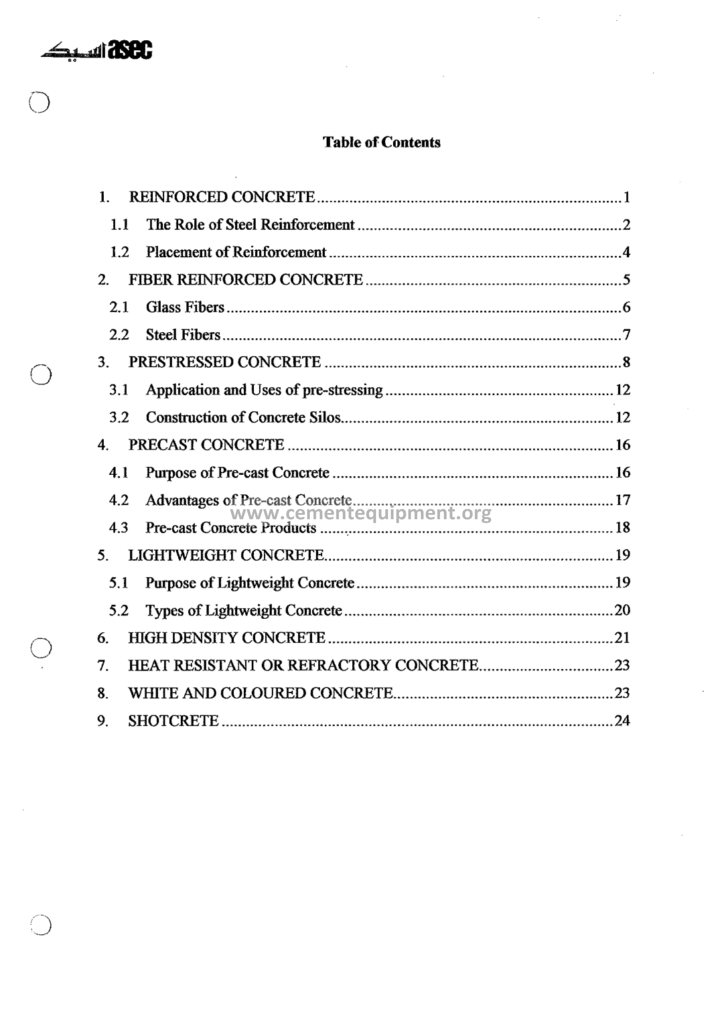
Concrete Categories & Types: Complete Guide
The categories of concrete form the classification map of the most used building material: concrete is not one material but a family: the lightweight insulating concrete weighs one fifth of the heavyweight shielding concrete: the self-compacting concrete flows into the complex forms while the roller-compacted concrete is placed by the asphalt pavers: the classification of the concrete helps the engineer choose the right member of the family for the right task.
The Complete Cement Technical Package (931 files including the books, the courses, the Excel tools and the presentations: $249.99 one-time: instant download via the PayPal payment) includes this concrete categories guide with the full classification tables, the property ranges and the application selection examples: this article walks the file: the categories by the density, by the strength, by the binder, by the production method and by the special applications: the reader closes the page with the complete map of the concrete family and the selection logic of each branch.
The concrete of the site is selected by the performance, and the performance is described by the category: this page is organized so the reader moves from the simple physical classifications to the specialty families: the density first, the strength second, the binder third and the special concretes last: the file itself sets the same order, and each category carries its properties, its typical uses and its production requirements: the specifier, the producer and the student each find the level that serves them.
1. The Classification by the Density: The Three Weight Families
The density of the concrete is the first and the simplest category, decided by the aggregate family of the mix:
- The lightweight concrete: the densities from 300 to 1850 kilograms per cubic meter: the aggregates of the low density like the expanded clay, the pumice, the perlite and the foamed slag: the insulating and the filling roles: the strength of the lightweight concrete is modest (below about 40 MPa) but its thermal insulation, its low weight and the ease of the handling serve the roofs, the partitions and the void fills: the lightweight blocks of the walls are its best-known members;
- The normal-weight concrete: the densities between 2200 and 2600 kilograms per cubic meter: the sand and the crushed stone aggregates: the family of the structural constructions of the world: the buildings, the bridges, the roads and the dams: the classification of the strength within this family follows the standard classes of the compressive strength;
- The heavyweight concrete: the densities above 2800 and up to 4500 kilograms per cubic meter: the aggregates of the high specific gravity like the barite, the magnetite and the steel shot: the radiation shielding of the hospitals, the nuclear facilities and the X-ray rooms: the heavyweight concrete combines the shielding with the structural load-bearing function: the cost of the heavy aggregates limits the family to the specialist applications;
The density category is the first question of the concrete selection: the weight of the structure, the insulation requirement and the radiation protection need each point to its branch of the family: the file tabulates the density ranges, the aggregates of each family and the properties that follow the density: the classification of the weight is the gate of the concrete selection.
2. The Classification by the Compressive Strength: The Classes of the Structures
The compressive strength is the headline property of the structural concrete, and the standards define the classes that the specifier quotes:
| Strength class (cylindrical) | Characteristic strength (MPa) | Typical application |
|---|---|---|
| C12/15 | 15 | The blinding, the lean concrete, the non-structural fills |
| C20/25 | 25 | The unreinforced and lightly loaded elements |
| C25/30 – C30/37 | 30–37 | The ordinary reinforced structures of the buildings |
| C35/45 – C40/50 | 45–50 | The prestressed bridges and the tall columns |
| C50/60 and above | 60 and above | The high performance and the special structures |
The classes are defined by the characteristic cube strength (the first number) and the cylindrical strength (the second number) of the standard test specimens: the concrete of the structure is considered to meet the class when the statistical evaluation of the test cubes satisfies the code requirements: the strength class is measured at 28 days in the standard conditions, and the classification of the site concrete is the daily work of the testing laboratory: the file explains the statistics of the classification, the number of the specimens and the conformity rules that turn the test results into the accepted classes.
3. The Classification by the Binder: From the Plain Portland to the Ternary Blends
The binder of the concrete classifies the family by its chemistry, and the cement types of the standards are the backbone of this category:
- The Portland cement concrete: the pure ordinary Portland cement as the only binder: the classical concrete of the specification simplicity: used where the special durability requirements do not demand the blends;
- The blended cement concrete: the cements with the limestone, the slag, the fly ash and the pozzolana as the constituents: the main family of the modern construction: the slower strength development with the better durability and the lower heat: the EN 197 and the ASTM blended types guide the selection;
- The SCM concrete: the concrete where the supplementary cementitious materials are added at the mixer as the separate components on top of the cement: the flexibility of the exact proportions per project: the ternary and the quaternary mixes with the two or three additions;
- The special binder concretes: the calcium aluminate cement concrete for the refractories and the chemical resistance, the supersulfated and the magnesia-based binders of the specialist niches: the families beyond the Portland system serve the temperatures and the chemistries that it cannot;
The binder category decides the rate of the strength gain, the heat of the hydration, the color and the durability profile of the concrete: the mass concrete of the dams wants the low-heat blends, the rapid repair wants the fast-setting special binders and the aggressive environments want the sulfate-resistant and the low-alkali systems: the file compares the binder families in the tables of the strength development, the heat and the durability so the specifier matches the chemical family to the exposure of the structure.
4. The Classification by the Workability: From the Stiff to the Self-Compacting
The fresh concrete is classified by its consistency, because the placing method of the site must fit the workability of the mix:
- The extremely dry concrete: the zero-slump mixes of the roller-compacted and the pressed concrete: placed and compacted by the pavers, the rollers and the presses: the stiffest branch of the family;
- The stiff and the semi-dry: the low-slump concrete of the mass fills and the simple sections: compacted with the heavy vibration: the classical concrete of the roads and the oversized members;
- The plastic concrete: the slump of 30 to 150 millimeters: the mainstream of the reinforced concrete construction: placed into the forms and compacted by the poker vibrators: the most common workability category of the site;
- The flowing concrete: the slump above 180 millimeters obtained with the superplasticizers: the mixes that fill the densely reinforced elements and the complex forms with the minimum vibration: the pumping branch of the family;
- The self-compacting concrete: the SCC that flows and consolidates under its own weight without any vibration: the slump flow of 600 to 800 millimeters: the high powder content and the modern superplasticizers: the branch of the complex geometry, the congested reinforcement and the visible surfaces of the architecture;
The workability category is translated into the site equipment: the roller’s mix cannot be poured from the chute, and the flowing mix cannot be placed in the steep slopes: the standard tests of the consistency (the slump, the flow table, the Vebe and the slump flow of the SCC) classify the delivery: the file documents the workability classes, the testing procedures and the placing equipment that matches each class: the fresh property category is the language between the plant and the site.
5. The Classification by the Production Method: The Site, the Plant and the Factory
The concrete is also classified by where and how it is produced, and the production category decides the logistics and the control of the material:
- The site-mixed concrete: the small mixers and the batch plants on the construction site: the flexibility of the small quantities and the immediate availability: the quality depends entirely on the discipline of the site batching: the classical method of the small projects and the repairs;
- The ready-mixed concrete: the central batching plants that deliver the concrete to the site with the truck mixers: the dominant method of the modern construction: the quality control concentrates in the certified plant, and the delivery time window of the hydrating mix is the management challenge of the logistics;
- The precast concrete: the concrete cast in the factory forms under the controlled conditions: the elements of the exact dimensions, the perfect surfaces and the repeatable quality: the beams, the panels, the pipes and the sleepers: the factory curing and the early stripping accelerate the strength gain;
- The precast-prestressed production: the tensioned strands and the beds of the factories: the elements that carry the compressive pre-stress of the tendons: the bridges, the slabs and the piles of the industrial halls: the factory method that adds the active reinforcement to the concrete;
The production category determines the control regime of the concrete: the ready-mix plant works to the certified recipes with the recorded batches, the site mixer lives on the memory of the foreman and the precast factory runs the tightest tolerances of them all: the file compares the production methods with their quality systems, their economics and their typical applications: the selection of the production route is part of the design of the project itself.
6. The Classification by the Reinforcement: The Plain, the Reinforced and the Prestressed
Concrete without the reinforcement is a different material from the reinforced concrete: the classification by the reinforcement is the fundamental structural category:
- The plain (unreinforced) concrete: the concrete without any steel: used in the compression-only members and the mass structures: the footings, the floors on the ground and the mass fills: the weakness of the plain concrete in the tension limits its structural use, but the mass structures of the dams and the foundations belong to this family;
- The reinforced concrete: the classical composite of the bars and the concrete: the steel carries the tension and the concrete carries the compression: the family of the frames, the slabs, the columns and the bridges of the world: the bond between the two materials and the protective cover of the bars are the design and the durability constants of the family;
- The prestressed concrete: the concrete compressed by the high-strength tendons before the service loads arrive: the pre-tensioned and the post-tensioned branches: the compression of the prestress cancels the tension of the loads: the long spans, the slender sections and the crack-free members of the bridges and the floors;
- The fiber-reinforced concrete: the short fibers of the steel, the glass, the polypropylene or the synthetic materials distributed through the mix: the fibers bridge the micro-cracks and give the concrete the toughness and the impact resistance: the industrial floors, the shotcrete linings, the pavements and the precast niches: the reinforcement of the third dimension;
The reinforcement category is decided by the structural design of the project: the plain concrete carries the simple loads, the reinforced concrete the general structures and the prestressed concrete the long spans: the fiber reinforcement complements the bars in the thin and the impact-loaded elements: the file documents the properties, the design basics and the production requirements of each reinforcement family: the structural classification of the concrete follows the steel it carries.
7. The High-Performance Concrete: The Category of the Strength and the Durability
The high performance concrete (HPC) and the ultra-high performance concrete (UHPC) form the elite category of the family, defined by the superior properties beyond the ordinary classes:
- The composition: the low w/c ratio between 0.25 and 0.40, the superplasticizers, the silica fume and the high-quality aggregates: the dense microstructure with the refined pores: every component of the mix is selected and tested for the performance target;
- The strength: the compressive strengths of 60 to 120 MPa for the HPC and above 150 MPa for the UHPC: the strengths that the ordinary concretes cannot reach with the conventional proportions: the strength permits the slender columns and the long spans that reduce the material of the structure;
- The durability: the impermeable microstructure resists the chloride penetration, the carbonation and the chemical attacks: the service life of the HPC structures extends far beyond the ordinary concrete in the aggressive environments: the bridges and the marine structures of the modern practice rely on this category;
- The production demands: the exact batching, the controlled mixing and the intensive curing: the HPC is unforgiving to the sloppy practice: the moisture control of the aggregates and the timing of the admixtures are the disciplines that the producer must master: the quality control of the category is the strictest of the family;
The high performance category is the answer of the concrete technology to the demands of the long-span bridges, the high-rise cores and the aggressive coastal environments: the file explains the full proportioning of the HPC and the UHPC with the case tables, the testing requirements and the production rules: the engineer who masters the high-performance branch commands the strongest member of the concrete family.
8. The Special Categories of the Environment: The Air-Entrained and the Sprayed Concretes
Several categories of the concrete are defined by the environment or the placing method of their service:
- The air-entrained concrete: the concrete with the deliberate microscopic air bubble system of 5 to 8 percent: the category of the freezing climates: the bubbles give the freezing water the space to expand and stop the frost damage of the pavement and the bridge decks: the air-entrained concrete is the standard of the road and the airfield construction in the cold regions: the spacing factor of the bubbles below 0.2 millimeters is the acceptance criterion of the category;
- The sprayed concrete (shotcrete): the wet and the dry mix processes that shoot the concrete onto the surfaces at the high velocity: the compaction of the impact replaces the vibration: the tunnels, the slopes, the swimming pools and the repairs of the damaged structures: the early strength and the adhesion of the sprayed layer are the defining properties: the accelerators of the setting make the layer stand on the vertical and the overhead surfaces;
- The underwater concrete: the concrete placed below the water surface with the tremie pipes and the anti-washout admixtures: the piles, the cofferdams and the marine works: the mix flows without the segregation through the water and self-levels on the bottom: the increased cement and the plasticizers give the underwater branch its specialty;
- The polymer-modified and the polymer concrete: the polymer latexes mixed with the ordinary concrete or the polymer-only binders replacing the cement: the overlays of the bridges, the repair mortars and the chemical-resistant surfaces: the high bond, the low permeability and the fast hardening are the properties that the cement alone cannot provide;
The environment-driven categories answer the specific threats of the construction: the frost of the roads, the pressure of the tunnels and the chemistry of the industrial floors: each category is a tuned family within the concrete world: the file presents each with its mix principles, its placing methods and its quality requirements: the selection of the environmental category is the durability decision of the project.
9. The Mass and the Roller-Compacted Concretes: The Categories of the Volume
The massive structures of the civil engineering use their own categories of the concrete, defined by the thermal and the placing challenges of the volume:
- The mass concrete: the large sections of the dams, the massive foundations and the gravity structures: the challenge is the heat of the hydration: the temperature rise of the thick sections cracks the concrete from inside: the mass category uses the low-heat cements, the large aggregates and the cooled pours: the temperature control of the fresh concrete and the water pipes of the deep sections are the tools of the category;
- The roller-compacted concrete (RCC): the dry, zero-slump mixes placed and compacted with the highway pavers and the vibratory rollers: the construction method of the modern dams and the massive pavements: the layers of 300 millimeters are rolled together to form the continuous mass: the economy of the method: the RCC dams rise faster and cheaper than the classical concrete dams;
- The no-slump and the extruded categories: the concrete blocks, the paving stones and the pipes formed by the extrusion and the pressing of the dry mixes: the factory category of the mass-produced elements: the compaction by the pressure and the vibration of the machines replaces the site placing entirely;
- The shotcrete of the tunnels belongs to the sprayed family: yet the tunnel linings are often classified separately because the early strength and the adhesion requirements are defined by the rock support schedule of the tunnel: the categories of the file follow the engineering practice of the tunnel owners;
The volume categories serve the biggest structures of the civil engineering: the dams hold the water with the mass and the RCC concretes, and the industrial floors carry the loads of the factories with the extruded and the rolled pavements: the thermal analysis of the sections is the design core of these categories: the file documents the mix designs, the construction sequences and the temperature control of the mass family with the case examples of the large works.
10. The Refractory and the Insulating Concrete: The Categories of the Temperature
At the extreme of the service temperature, the concrete family gives way to the refractory and the insulating categories:
- The refractory concrete (castables): the heat-resistant mixes of the calcium aluminate cement and the refractory aggregates: the linings of the kilns, the furnaces, the stacks and the incinerators: the service temperatures from 800 to 1800 °C: the castables are cast, gunned or rammed into the linings and gain the strength at the high temperatures: the category of the cement plant itself, where the kiln hoods and the preheater cyclones wear the resistance of the refractory castables;
- The insulating concrete: the lightweight mixes of the perlite, the vermiculite and the foamed aggregates: the thermal insulation of the roofs, the chillers and the industrial equipment: the low density and the high porosity give the family its insulating value: the strength is modest and the protection of the surfaces is the typical application;
- The heat-resistant structural concrete: the ordinary aggregate concretes designed for the fire resistance of the structures: the spalling resistance and the retained strength of the columns and the floors exposed to the fires: the polypropylene fibers that release the steam pressure and the special aggregates of the fire protection;
The temperature categories protect the industrial plant and the buildings: the refractory castables line the furnaces of the cement and the steel industries, the insulating concretes guard the energy of the equipment and the fire-resistant concretes save the lives of the occupants: the file explains the materials, the placing and the testing of the hot-service families, with the selection tables of the service temperatures.
11. The Selection of the Category: The Exposure Classes and the Application Logic
The engineer selects the concrete category from the exposure of the structure: the standards define the exposure classes that summarize the threats of the environment:
| Exposure class | Environment | Typical concrete demand |
|---|---|---|
| XC (carbonation) | Atmospheric carbon dioxide | Minimum strength class, adequate cover |
| XD (chlorides other than sea) | De-icing salts of the roads | Dense concrete, low w/c ratio |
| XS (chlorides from the sea) | Marine and the coastal structures | High performance mixes, high cover |
| XF (freeze-thaw) | Frost with or without the de-icing agents | Air-entrained concrete, durable aggregates |
| XA (chemical attack) | Aggressive soil and the ground water | Sulfate-resistant cement, dense mixes |
The selection logic follows the classes: the exposure defines the minimum strength, the maximum w/c ratio and the minimum cover of the design: the concrete category of the project is then fixed in the specification, and the producer delivers the mix that meets the class requirements of the standard: the file walks the complete selection procedure with the worked examples of the bridge decks, the foundations, the marine piles and the industrial floors: the exposure analysis is the specification science of the concrete family.
12. The Quality Control of the Categories: The Tests that Confirm the Class
Each category of the concrete is confirmed by the tests that verify its defining property:
- The strength classes: the standard cubes and the cylinders tested at 28 days: the conformity evaluated against the required class: the strength tests are the daily evidence of the structural categories;
- The density categories: the fresh and the hardened density tests of the fresh and the hardened concrete: the lightweight and the heavyweight concretes are accepted by the measured density of the members;
- The workability classes: the slump, the flow table, the Vebe and the slump flow tests of the fresh concrete: every delivery is tested at the plant gate and re-tested at the site: the consistency of the mix is the first check of the delivery;
- The air content: the pressure meter test of the fresh air-entrained concrete: the air content and the density are controlled batch by batch in the freezing climates;
- The durability properties: the permeability, the chloride penetration and the freeze-thaw resistance tests of the high performance and the exposed concretes: the durability tests complement the strength tests where the environment is aggressive: the rapid chloride permeability and the frost tests belong to the acceptance of the exposed categories;
The quality control closes the loop of the classification: the category promised on the specification is the category verified on the site: the file carries the full test procedures, the frequencies and the conformity limits of every category: the testing plan of the project follows the classes of the specification, and the reports of the laboratory are the certificate of the correct selection.
13. The Often Asked Questions
Which category of the concrete is used in the dams?
The mass concrete with the low-heat cements and the roller-compacted concrete (RCC) of the modern construction: both categories control the heat of the hydration and build the huge volumes economically: the RCC dams are placed in the thin rolled layers and the conventional mass dams in the large controlled pours with the cooling provisions.
What is the difference between the reinforced and the prestressed concrete in simple words?
The reinforced concrete carries the tension with the embedded steel bars that are passive until the loads arrive; the prestressed concrete carries the tension with the steel tendons that are actively stretched before the loads arrive, compressing the concrete permanently: the prestressing cancels the tensile stresses of the service and allows the longer spans and the slimmer sections.
Is the self-compacting concrete more expensive than the ordinary concrete?
The SCC costs more per cubic meter because of the higher powder content and the modern superplasticizers, but the total cost of the placed element is often lower: the vibration labor disappears, the placing is faster and the invisible surfaces of the congested elements are filled reliably: the economy of the SCC is evaluated at the level of the completed structure, not the batch price.
Which category resists the fire the best?
The refractory concretes with the calcium aluminate cement and the refractory aggregates serve the furnace temperatures far beyond the structural fire: for the buildings, the fire-resistant structural concretes with the polypropylene fibers and the selected aggregates resist the spalling of the fire scenarios: the structural fire resistance is measured by the standard fire tests of the columns and the floors.
How does the specifier choose between the site-mixed and the ready-mixed concrete?
By the volume, the logistics and the quality requirements: the ready-mixed concrete dominates the modern construction because the certified plant guarantees the batching accuracy and the consistency of the deliveries; the site mixing remains for the small works, the remote sites and the special mixes that the plant cannot produce economically: the file compares the economics and the control of both routes.
Where is the heavyweight concrete really necessary?
In the radiation shielding of the hospitals, the nuclear facilities and the industrial X-ray rooms: the high-density aggregates absorb the radiation and reduce the wall thickness below the practical limits of the normal concrete: the category is also used for the counterweights and the stability masses of the special structures.
14. Conclusion
The categories of the concrete are the branches of one family tree rooted in the cement and the water: the density families of the weight, the strength classes of the structures, the binder families of the chemistry, the workability families of the placing and the specialty categories of the environment and the temperature: the engineer who knows the map of the categories selects the concrete that serves the structure for the decades of its life: the specification, the production and the testing of each category are the professional craft that this guide documents: the classification of the concrete is the beginning of the concrete wisdom.
The Complete Cement Technical Package includes this concrete categories guide with the classification tables, the property ranges and the selection examples: the one-time 249.99: the instant download: the 931 files of the library of the cement and the concrete: the map of the concrete family, drawn for the engineer: the right category for the right structure: the knowledge of the package, the certainty of the selection.
Get this Concrete Categories file + the full 931-file package
$249.99 — one-time purchase, instant download, lifetime access
This file is part of the Complete Cement Technical Package (931 files) available from cementequipment.org. Respective rights holders; library copy for the licensed single user.