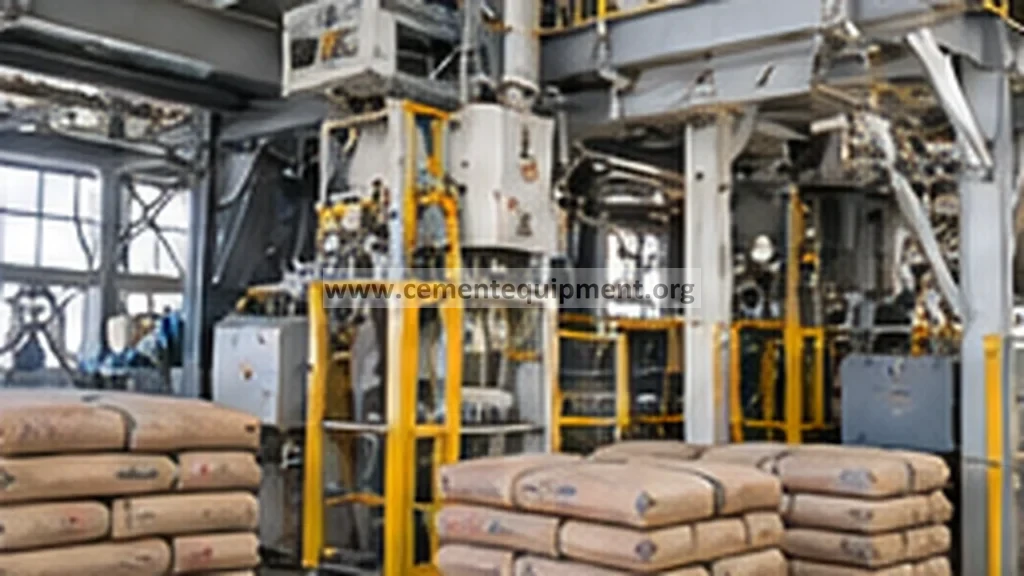

Cement Packing Machine Spout Dust Leakage: Bag Filling Troubleshooting
Dust escaping around a cement packer filling spout is not automatically an extraction problem. The visible plume can come from poor bag-to-spout sealing, damaged spout hardware, unstable cement flow, restricted bag venting, excessive entrained air, or local aspiration that cannot capture the release at the point where it occurs.
Problem / job
Identify why one or more packer spouts release cement dust during bag application, filling, weighing, cut-off or bag discharge without masking the root cause by simply increasing extraction.
Evidence
Use spout-by-spout comparison, leak timing, bag condition, contact marks, product-flow behavior, vent path condition, pressure or aspiration observations, and repeatability across several filling cycles.
Decision
Separate bag/interface defects, mechanical wear, material-flow instability, venting restriction and dust-collection weakness before choosing a repair or setting change.
As-found evidence capture
Before cleaning or adjusting the packer, record which spouts leak and which remain clean. Note whether the dust begins when the empty bag is fitted, during the first material surge, during steady filling, close to target weight, at flow cut-off, or when the filled bag is released. Photograph the bag mouth and spout contact area, record obvious wear or cement buildup, and retain representative rejected bags when possible. Compare the same bag type and cement product on a clean neighboring spout. This comparison is often more useful than a single absolute measurement because the packer itself provides a working reference under nearly identical operating conditions.
Also capture operating context: cement type, recent product change, bag supplier or batch, packer rate, whether the problem is isolated or common to all spouts, dust collector condition, and whether operators recently changed filling or extraction settings. Do not remove deposits until their location has been documented; the deposit pattern can identify the release path.
Practical troubleshooting workflow
1. Identify the exact leak phase
Observe several complete filling cycles from a safe position. A leak that starts immediately after bag application points toward the bag mouth, spout geometry or clamping interface. A leak that grows as the bag fills may indicate poor bag venting, unstable product flow or excessive air carried with the cement. A short plume at cut-off suggests a different mechanism from continuous leakage and should not be diagnosed as the same fault.
2. Compare a bad spout with a good spout
Use the same cement and bag batch. Compare spout surface condition, bag seating, clamp or retaining action, material buildup, visible clearances, filling behavior and dust release timing. The objective is to find a difference that follows the faulty spout. If the problem moves with the bag batch instead, investigate bag dimensions, mouth construction and venting rather than rebuilding the packer.
3. Inspect the bag-to-spout interface
Check for wear, distortion, rough surfaces, hardened cement deposits and damaged components that prevent the bag mouth from seating consistently. Look at witness marks on used bags. Uneven contact or tearing is evidence that the interface is not behaving uniformly. Clean only after the as-found condition is recorded, then repeat the observation to see whether the symptom changes.
4. Check bag venting and product-air release
Cement entering a bag displaces air. If the bag cannot release that air as intended, pressure can drive dust back toward the filling opening. Compare suspect and known-good bags, inspect whether the venting construction is blocked or inconsistent, and note whether leakage worsens with faster filling. Do not invent a pressure limit; use the bag and packer manufacturer requirements when quantitative acceptance values are needed.
5. Evaluate cement flow stability
Watch for surging, interrupted flow, bridging upstream, aeration changes or inconsistent feed that can create sudden dust pulses. Check whether the symptom appeared after a silo, aeration, rotary feeder or product change. A stable packer needs stable feed. Correcting the visible dust hood while the product arrives in repeated surges leaves the initiating fault in place.
6. Verify local aspiration and dust path
Inspect the pickup point, flexible connections, dampers, duct blockage and visible leakage. Confirm that extraction is available when the filling cycle releases dust and that the capture point has not been displaced. Compare suction behavior at clean and dusty spouts where the design permits. Extraction should capture residual release; it should not be used to compensate for a large uncontrolled opening at the bag/spout interface.
7. Check filling sequence and cut-off behavior
Review the mechanical and control sequence for coarse/fine filling, target approach, shutoff and bag release. If dust appears only during a particular transition, focus on that transition. Verify that valves, actuators and weighing signals behave repeatably rather than changing multiple setpoints at once.
8. Correct one cause and repeat the same test
After a repair, use the same product and representative bags and observe multiple cycles. Confirm that the dust reduction is repeatable, that bag filling remains stable, and that weight-control and bag-release behavior have not deteriorated. Record the before/after evidence so the repair can be distinguished from a temporary improvement caused by cleaning.
Diagnostic decision table
| Observed evidence | Most useful next check | Decision direction |
|---|---|---|
| Only one spout leaks | Compare spout surface, bag seating, clamp action and local aspiration with adjacent clean spout | Prioritize local mechanical or local extraction defect |
| Leak follows one bag batch | Compare bag mouth construction, dimensions and venting with known-good bags | Prioritize bag/interface compatibility |
| Dust rises as filling rate increases | Check bag venting, entrained air, feed stability and extraction response | Separate air-release limitation from aspiration weakness |
| Short plume occurs at cut-off | Observe shutoff timing, residual product discharge and bag release sequence | Focus on transition rather than steady filling |
| All spouts worsen together | Check common extraction, feed condition, cement aeration and recent operating changes | Prioritize common-system cause |
| Cleaning temporarily fixes leakage | Identify where deposits reform and why | Treat buildup mechanism, not cleaning frequency alone |
Verification, acceptance and return to service
Return the packer to normal service only after the corrected spout completes repeated filling cycles without the original uncontrolled dust release and without creating a new operating problem. Confirm that the bag seats consistently, filling is stable, cut-off is repeatable, the filled bag releases normally, and local extraction remains functional. Check the surrounding area after the trial for fresh deposit patterns that would indicate a smaller leak remains.
Where the plant uses quantitative dust, airflow, weight or bag-quality limits, use the approved plant procedure and equipment or bag manufacturer specification. This guide intentionally avoids universal numeric tolerances because packer designs, bag constructions, cement properties and dust-collection systems differ.
Common mistakes and repeat-failure traps
- Increasing extraction first: this can hide a poor bag/spout seal while consuming more air and leaving the mechanical fault unresolved.
- Changing several settings together: the plant loses the evidence needed to know which change actually affected the symptom.
- Ignoring bag variability: a packer can appear faulty when the symptom follows a specific bag batch or venting construction.
- Cleaning before documenting: deposit patterns and witness marks are diagnostic evidence.
- Judging one cycle: intermittent faults require repeated observations under comparable conditions.
- Using unsupported generic limits: acceptance values must come from the applicable machine, bag and plant documentation.