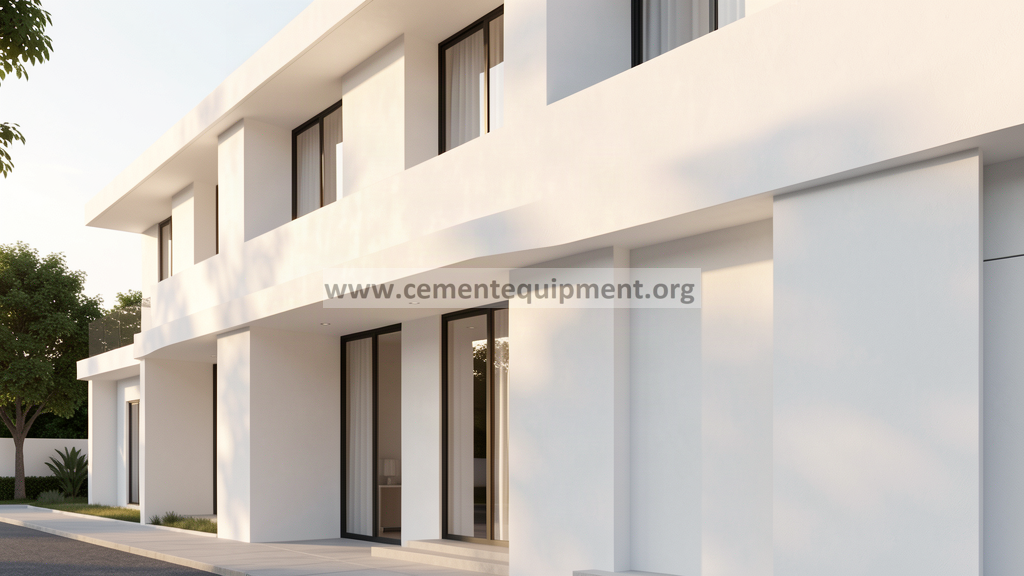
White & Decorative Cement: The Established High-Margin Niche in Cement
White cement and decorative cement occupy a distinct and valuable place in the cement market. They are not the volume business that grey ordinary Portland cement is; they are a specialty, a premium, and a niche where the value is in the aesthetic and functional properties that the white and decorative products deliver, and where the margin reflects that specialty. This article explains the white and decorative cement market — its size, its growth, its applications, its drivers, its competitive dynamics, and the commercial logic that makes it a high-margin niche — and it explains what the market means for the cement producers, the processors, the distributors, and the end-users who operate in it. It is written for cement industry professionals, construction materials specifiers, and anyone who wants to understand the white and decorative cement market as a business rather than as a small corner of the cement market.
If you work in cement or construction materials and you have treated white and decorative cement as a minor specialty, this article is for you. The market is small relative to grey cement, but it is valuable, it is growing, and it is a niche where the right product and the right positioning can deliver margin that the volume business does not.
The market size and growth of white cement
The white cement market is a defined, measurable, and growing market, and the numbers are reported by multiple market-research sources. Fact.MR estimates the global white cement market at about $7.20 billion in 2025. Other sources place the market larger: Grand View Research estimated the white cement market at about $9.43 billion in 2024, and other sources have placed the market in the range of $7 billion to more than $12 billion depending on scope and definition. The variation reflects differences in what is included — whether architectural and decorative applications are included, whether specific geographies are included, and whether the scope covers only pure white cement or also includes off-white and coloured variants — but the size and the growth are consistent: the white cement market is a multi-billion-dollar market, and it is growing at a rate that is meaningful.
The growth rates reported for white cement are in the range of 3.56 percent to 6.1 percent compound annual growth rate across the different sources and the different time horizons. IMARC Group reports a CAGR of about 3.56 percent for the white cement market, while other sources have reported CAGRs up to about 6.1 percent. A LinkedIn-sourced market report has even reported a higher CAGR of about 12.4 percent for the 2026 to 2033 period, though that figure should be treated as an outlier and verified against additional sources. The central, well-supported range is in the mid-single-digit growth rate, which is a healthy growth rate for an established specialty market.
The market is not only a western or developed-market market; it is global, with significant demand in Asia, the Middle East, and other regions where architectural and decorative applications of white cement are common. The global nature of the market is important for the cement producers and the traders who serve it, because it means that the demand is not dependent on a single region’s construction cycle, and that the market offers scale and opportunity across regions.
What white cement is and why it is different
White cement is, in its basic chemistry, a Portland cement that is made from raw materials with very low iron and other colouring impurities, so that the resulting clinker and cement are white rather than the grey of ordinary Portland cement. The whiteness is not just cosmetic; it is a functional property that makes the cement suitable for applications where colour matters — architectural concrete, precast and prestressed concrete, tile adhesives, grouts, plastering, and the many applications where the white or light colour of the cement is part of the product’s value.
The production of white cement is more demanding than the production of grey cement in several ways. The raw materials have to be selected for low iron and low colouring impurities, which can mean higher-cost raw materials or more selective sourcing. The burning and the grinding have to be controlled to preserve the whiteness and to avoid contamination that would discolour the product. The product has to be handled and packaged in a way that preserves its whiteness. All of these add cost, and that cost is part of why white cement is a premium product with a higher price and a higher margin than grey cement in the applications where the whiteness matters.
The whiteness is also a quality attribute that is measured and specified. The degree of whiteness — usually measured on a standard scale — is a key specification for white cement, and the consistency of the whiteness is important to the applications. A white cement producer who can deliver consistent, high-whiteness product is delivering a quality that the applications value, and that quality is part of the value proposition and the margin.
The decorative cement market and its applications
Decorative cement is a broader category than white cement, and it includes the white cement used in decorative applications as well as the coloured and patterned cements and concrete products that are used for aesthetic purposes. The decorative cement and concrete market covers applications such as architectural concrete, exposed-aggregate concrete, polished concrete, stamped and patterned concrete, coloured concrete, precast decorative elements, tile adhesives and grouts, plastering and finishing compounds, and the many applications where the cement or concrete is part of the aesthetic design of a building or a structure.
The applications of white and decorative cement are varied and growing. In architectural concrete, white cement is used to produce light-coloured, consistent, and aesthetically desirable concrete for facades, cladding, exposed floors, and architectural elements. In precast and prestressed concrete, white cement is used for white or light-coloured precast elements — panels, beams, hollow-core slabs, and the architectural precast that shows on the building exterior. In tile adhesives and grouts, white cement is used as a base for light-coloured and coloured adhesives and grouts, where the whiteness of the cement base is important to the colour of the finished product. In plastering and finishing, white and decorative cements are used for light-coloured and coloured renders and finishes. And in the broader decorative concrete market, white and decorative cement are used for the concrete products and finishes that are specified for their aesthetic qualities.
The demand for these applications is driven by the architectural and design trends in construction, the growth of the luxury and premium residential and commercial construction market, the demand for durable and aesthetically pleasing building materials, and the trend toward exposed and finished concrete as a design element. The demand is not only in new construction; it is also in renovation and refurbishment, where the aesthetic upgrade of a building or a space calls for white and decorative cement and concrete products.
The margin logic: why white and decorative cement is a high-margin niche
The margin logic for white and decorative cement follows from the product’s specialty nature. The product is not a commodity; it is a specification product where the whiteness, the consistency, and the aesthetic and functional properties are the value, and where the value is captured in a premium price. The cost of producing white cement is higher than grey cement in many cases — the raw materials, the process control, the handling, and the packaging all add cost — but the price that the market will pay for the white and decorative product is also higher, and the margin reflects the difference between the higher cost and the higher price.
The margin is also protected by the specialty nature of the product. In the grey cement market, the product is largely commoditised, and the competition is on price, volume, and logistics. In the white and decorative cement market, the product is specified for its properties, and the competition is on quality, consistency, and the ability to meet the specification. That tilts the market away from pure price competition and toward value competition, and that is where the margin is. A producer who can deliver consistent, high-whiteness white cement, or a decorative cement product that meets the specification, is selling a value that the market pays for, and that value supports the margin.
The margin is also supported by the applications. The applications — architectural concrete, precast, tile adhesives, grouts, plastering, decorative finishes — are applications where the cement product is part of a larger value chain, and where the value of the right cement product is understood by the specifier and the end-user. The cement is not bought on a commodity basis; it is specified for its properties, and the specification is the protection for the margin. A producer who is the specified supplier for a given application or a given market has a protected revenue stream and a margin that reflects the specification.
The competitive dynamics in the white and decorative cement market
The competitive dynamics in the white and decorative cement market are different from the grey cement market. In grey cement, the competition is on scale, cost, logistics, and price, and the market tends toward consolidation around the large producers with the lowest cost positions. In white and decorative cement, the competition is on quality, consistency, specification, and the ability to serve the specialty applications, and the market is more fragmented and more open to producers who can differentiate on the product and the market.
The incumbents in the white cement market include the large cement producers who have white cement lines and the specialist producers who focus on white and decorative cement. The large producers have the scale, the brand, and the distribution, and they compete on quality and consistency as well as on the breadth of the product range. The specialist producers compete on the depth of the specialty knowledge, the focus on the applications, and the ability to serve the niche with the right product and the right service. Both models can work, depending on the market and the positioning.
The distributors and the traders play an important role in the white and decorative cement market, because the market is often served through distribution channels that reach the specifiers, the processors, the precasters, the adhesive and grout manufacturers, and the end-users who buy the product. A distributor who understands the white and decorative cement market — the applications, the specifications, the quality requirements, and the end-user needs — is a valuable part of the supply chain, and the producers who work well with such distributors are better positioned in the market.
The growth drivers for the white and decorative cement market
The growth drivers for the white and decorative cement market are mostly structural and application-driven. The architectural and design trends in construction are moving toward exposed, finished, and aesthetically considered concrete and cement products, which supports the demand for white and decorative cement. The growth of the premium and luxury residential and commercial construction market supports the demand for the high-quality and aesthetically desirable products that white and decorative cement serve. The growth of the tile adhesive and grout market, and the demand for light-coloured and coloured adhesives and grouts, supports the demand for white cement as a base material. And the renovation and refurbishment market supports the demand for the aesthetic upgrade products that white and decorative cement enable.
The sustainability and durability angle is also a driver. White and decorative cement products are often specified for their durability and their long service life as well as their aesthetics, and the durability is a value that the market pays for. The sustainability angle is growing as well: the market is increasingly asking about the carbon footprint of the cement and concrete products, and the white and decorative cement producers who can offer lower-carbon options — blended cements, optimised mixes, supplementary cementitious materials — are positioned to capture that demand. The sustainability demand is an additional driver and an additional dimension on which the producers can compete.
The geography and the regional dynamics
The white and decorative cement market is global, but it has regional dynamics that matter for the producers and the traders who serve it. In the Middle East, white cement has a long-established market for architectural and decorative applications, and the demand is supported by the construction market and the design trends in the region. In Asia, the white and decorative cement market is growing with the construction market and the rising demand for premium and decorative building materials. In Europe and North America, the market is more mature but still growing, driven by the architectural, precast, and decorative applications and the renovation market. The regional dynamics mean that the market offers scale and opportunity across regions, but that the product, the specification, and the market approach may need to be adapted to each region.
For a producer or a trader, the regional dynamics are an opportunity to build a multi-region white and decorative cement business that captures the demand across regions, but also a challenge to manage the product, the quality, the specification, and the market approach region by region. The producers who succeed in the white and decorative cement market are the ones who can manage that complexity and who can deliver the right product to the right market with the right specification and the right service.
The commercial model for white and decorative cement
The commercial model for white and decorative cement is built on the specialty nature of the product. The product is sold at a premium price, and the margin reflects the premium and the value of the specification. The commercial model is also built on the specification and the relationship with the specifier, the processor, the precaster, the adhesive and grout manufacturer, and the end-user. The producer who is the specified supplier for a given application or a given market has a protected revenue stream and a margin that reflects the specification. The distributor who understands the market and serves it well is a valuable part of the supply chain and a source of margin and retention.
The commercial model is also built on the quality and the consistency of the product. The whiteness, the consistency, and the aesthetic and functional properties are the value that the market pays for, and the producer who delivers those consistently is capturing the value and the margin. The producer who fails to deliver the quality and the consistency loses the specification and the margin, because the market for white and decorative cement is intolerant of inconsistency in the properties that matter.
The commercial model is also built on the service and the support that the producer and the distributor provide to the market. The technical support, the specification support, the quality assurance, the supply reliability, and the market knowledge are all part of the value that the market receives and pays for, and they are part of the margin. The producer and the distributor who provide that value are capturing the margin that the commodity-focused competitor cannot.
The manufacturing process and the quality control for white cement
The manufacturing of white cement is fundamentally the same as the manufacturing of grey cement, in that it follows the same basic process of raw-material preparation, kiln clinkering, and grinding, but the devil is in the materials and the process control, and that is where the margin and the cost come from. The most important material difference is the raw meal: white cement is made from raw materials that are low in iron and other colouring oxides, because the iron and the other colouring oxides are what give grey cement its colour. The limestone used for white cement has to be low in iron content, and the clay or shale or other silica-alumina source has to be low in iron as well, and the whole raw meal has to be managed so that the clinker that comes out is white or near-white, not grey-tinted by the iron content of the raw materials.
That raw-material requirement drives the cost and the complexity of white cement production, because low-iron raw materials are less common and often more expensive than the ordinary grey-cement raw materials. The limestone for white cement often has to be chosen and sourced specifically for its low iron content, and the same is true for the other raw materials; the raw mix has to be proportioned so that the iron content of the clinker comes out low, and that proportioning has to be controlled and verified, because the whiteness of the clinker — and ultimately of the cement — depends on it. The result is a higher raw-material cost and a higher raw-material complexity than grey cement, and that cost is part of the cost structure that the white cement margin has to cover.
The kiln process for white cement is also managed differently in some respects, because the colour of the clinker is sensitive to the chemistry and the temperature history of the kiln. The clinker that comes out of the kiln has to be white, and the kiln process has to be controlled to produce that result consistently. The iron and the other colouring oxides have to be kept low in the clinker chemistry, and the kiln conditions have to be controlled so that the clinker develops the right phases and the right colour. The result is a production process that demands more control and more consistency than the grey cement process in the dimension that matters for white cement — the whiteness — and that demand is part of the cost and the complexity.
The grinding and finishing of white cement is also managed with the whiteness in mind. The grinding of white cement clinker and the blending with the gypsum and any additives or colourants has to be controlled so that the final cement has the whiteness and the consistency that the specification requires. The grinding process, the particle-size distribution, and the blending all affect the whiteness and the other properties, and the production has to be controlled to deliver the product to the specification batch after batch. The consistency of the whiteness is the central quality requirement, because the market for white cement is intolerant of a product that varies in whiteness from batch to batch.
The quality control for white cement is built around the whiteness specification and the consistency of the product. The whiteness is measured — usually as the reflectance of the cement at a standard wavelength or wavelengths — and the product is held to the specification on that measure, with the production process controlled so that the whiteness comes out consistently at or above the specification. The other properties — the strength, the fineness, the setting time, the volume stability, and the other standard cement properties — are also controlled and specified, and the white cement product has to meet those as well as the grey cement product does, because the white cement is a cement and has to perform as a cement, not just look white. The quality control is the protection of the margin, because the market for white cement pays for the whiteness and the consistency, and the producer who cannot deliver that loses the specification and the margin.
The packaging and the handling of white cement are also managed with the colour in mind. White cement is often packaged in bags that protect the product from contamination and from the weather, and the bags are often colour-coded or labelled to identify the product and the specification. The white cement has to be handled and stored so that it is not contaminated by other materials — particularly by grey cement or by dirty materials — because contamination would spoil the whiteness of the product. The logistics of the white cement business have to protect the product through its journey from the plant to the user, and that logistics cost is part of the cost structure.
The cost structure of white cement is therefore higher than grey cement in several dimensions: the raw materials, the process control, the quality control, the packaging, and the logistics. The white cement producer has to manage that cost structure and recover it in the premium price that the market pays, and the margin is the difference between the cost and the price. The margin logic is that the market pays a premium for the whiteness and the specialty properties, and that premium covers the higher cost and leaves a margin that is higher than the grey cement margin. The margin is earned by the producer who manages the cost and delivers the quality consistently.
The chemistry and the process control of white cement clinker
The chemistry of white cement clinker is defined, above all, by what it excludes: the iron oxide. While ordinary grey Portland cement clinker typically carries iron oxide at 1.5 to 3.5 percent — and sometimes higher — the Fe2O3 content of white cement clinker is kept below about 0.5 percent, and often well below, because every increment of iron oxide in the clinker translates directly into a darker, greyer product. The National Plasterers Council and other specifications for white cement products note that white cement typically contains 0.4 percent or less iron oxide, compared with about 2.6 percent for ordinary grey Portland cement. That order-of-magnitude difference is the single most important number in the white cement chemistry, because it sets the raw-material requirement, the process control requirement, and the cost structure all at once.
The raw materials for white cement clinker therefore have to be sourced and selected for their low iron content. The limestone has to be low in iron — some deposits are naturally low, below 0.1 percent Fe2O3, and those are the deposits that white cement producers seek out; others have to be blended or avoided. The clay, shale, or other silica-alumina source has to be low in iron as well, and in many cases the producer substitutes a lower-iron material — kaolin, for example, which is much lower in iron than ordinary shale — for the silica-alumina component. The iron ore or laterite that a grey-cement plant uses to balance the alumina module is, by contrast, exactly what a white-cement plant avoids, because it is an iron source. The raw mix proportioning for white cement is therefore a different exercise from grey cement, and the quality control of the raw materials — the iron assay of every component, every shift, every change in the quarry — is the foundation of the whole operation.
The kiln process for white cement clinker also runs differently from grey cement, because the development of the white colour depends on the mineralogy and the temperature history of the clinker. White cement clinker is typically burned at a slightly higher temperature than grey cement clinker — in the range of 1450 to 1500 degrees Celsius or higher at the burning zone — and the cooler burning conditions and the controlled atmosphere help preserve the white colour and develop the alite (C3S) that gives the cement its strength. The free lime content of white cement clinker is typically higher than grey cement — the clinker is deliberately burned to a higher free lime, in the range of 2 to 4 percent or more, to manage the colour and the mineralogy — and the grinding and fineness are adjusted to compensate for the lower reactivity of the higher-free-lime clinker. The result is a process that is more carefully controlled and more costly per tonne of clinker than the grey cement process, and that cost is the structural feature of the white cement margin.
The grinding and finishing of white cement clinker is also managed with the whiteness in mind in a way that grey cement grinding is not. The clinker is ground finer — the specific surface of white cement is typically higher than the corresponding grey cement, in the range of 350 to 500 cm²/g or more by Blaine, depending on the strength specification — and the grinding is done with grinding media that do not contaminate the clinker with iron, because iron contamination from the grinding media would darken the product. The grinding aids, the particle-size distribution, and the blending with the gypsum are all controlled to deliver the product to the whiteness and strength specification batch after batch, and the consistency of that delivery is the quality-control task that protects the margin.
The whiteness specification itself is the commercial specification of the product, and it is measured and enforced. The whiteness of cement is measured as the reflectance of the cement — typically the L* value in the CIE L*a*b* colour space, or a comparable spectrophotometric measure — at a standard wavelength, and the result is expressed as a number on a scale from 0 (black) to 100 (perfect white). The white cement specification calls for a whiteness above a particular level, and that level varies by market and by application: the higher-whiteness products — the ones that go into the most demanding architectural and decorative applications — call for the highest L* values, and the producer who supplies them has to control the process to deliver that whiteness consistently. The measurement is the tool that verifies the product, and the consistency of the measurement across batches is the reliability that the market pays for.
The applications in detail: what the product is actually used for
The applications of white and decorative cement are the reason the market exists and the reason the margin is there, and understanding the applications in detail is the understanding of the market. The architectural concrete application is one of the most visible: white cement is used as the binder for architectural concrete that is specified for its colour, its finish, and its appearance, either alone or in combination with pigments and aggregates to produce a specific aesthetic result. Architectural concrete is used for exposed structures and surfaces — building facades, columns, walls, benches, sculptures, and the other visible concrete elements — where the colour and the consistency of the concrete are part of the design specification. White cement is the base for that specification because it starts from a white or near-white base rather than a grey one, and it gives the architect and the specifier control over the final colour that grey cement cannot match.
The precast concrete application is another major one. White cement is used in precast concrete elements that are specified for their colour and their appearance — precast facade panels, architectural columns, decorative precast elements, and the other precast products that show on the building. The precast manufacturer who works with white cement is working with a product that lets them produce a lighter, more consistent, and more aesthetically controllable concrete than grey cement allows, and that is the value that the architectural precast market pays for. The precast application also includes coloured precast elements where white cement is the base for the pigment system, and the consistency of the white cement is what lets the coloured precast come out consistently.
The tile adhesive and grout application is a large and growing one. White cement is used as the base for white and light-coloured tile adhesives and grouts, where the colour of the cement affects the colour of the finished adhesive or grout. The architectural tile market — the market for tile flooring, wall tiling, and the other architectural tile applications — is a large and growing market, and the demand for white and light-coloured adhesives and grouts is part of that market. White cement is the base material for that, and the adhesive and grout manufacturers who use white cement are using it because it gives them the colour result that the market wants. The tile adhesive and grout market is one of the drivers of the white cement market, and it is a market that rewards the producers and the suppliers who can supply the right white cement to the manufacturers.
The decorative finishes and the plastering and rendering applications are another set. White cement is used in decorative plasters, renders, and finishes where the whiteness, the consistency, and the aesthetic quality of the cement product matter. These are applications where the cement product is part of a decorative finish, and the whiteness and the consistency of the cement are part of the specification. The decorative finishes market — the market for decorative plasters, renders, and the other decorative cement-based finishes — is a market that uses white cement and that rewards the producers and the suppliers who can supply the right product.
The artistic and sculptural concrete application is a smaller but notable one. White cement is used for artistic concrete — sculptures, custom architectural elements, and the other artistic uses of concrete — where the colour and the aesthetic quality of the concrete are the point of the work. The artistic concrete market is small in volume but high in margin, because the product is a specialty and the value is in the aesthetic result and the craftsmanship. The artist and the sculptor who works with white concrete is working with a material that lets them achieve the colour and the aesthetic result that they want, and that is the value.
The repair and restoration application is another. White cement is used in repair mortars and restoration applications where the colour of the repair material has to match the original — for the restoration of historical buildings, for example, where the original mortar or concrete was light-coloured and the repair material has to match that colour. White cement is the base for that colour match, and the repair and restoration market is a market that uses white cement and that rewards the producers and the suppliers who can supply the right product.
The whiteness specification and the measurement: what the buyer is actually asking for
The whiteness of white cement is the property that defines the product and the value, and it is a property that is specified and measured. The whiteness of cement is a measure of how much light the cement reflects at a particular wavelength or set of wavelengths, and the specification for white cement typically calls for a whiteness above a particular level. The whiteness specification is the commercial specification of the product, and the buyer of white cement is buying to that specification, because the whiteness is the property that sets the product apart from grey cement and that determines its usefulness for the applications.
The measurement of whiteness is typically done with a spectrophotometer or a comparable instrument that measures the reflectance of the cement at a standard wavelength, and the result is expressed as a percentage reflectance or a comparable number. The whiteness specification for white cement varies by market and by application, but it is a specification that is defined, measured, and enforced, and the producer who supplies white cement has to measure and deliver to it. The consistency of the whiteness — batch after batch — is the reliability that the market pays for, and the measurement is the tool that verifies that the product meets the specification.
The other properties that the white cement specification includes are the same as the properties that any cement specification includes: the strength, the fineness, the setting time, the volume stability, and the chemical composition. White cement has to meet those properties as well as grey cement does, because white cement is a cement and has to perform as a cement. The whiteness is the additional specification that sets white cement apart, but the other properties are still the properties that the cement has to deliver, and the white cement producer has to meet them as well. The specification is the combination of the whiteness and the other properties, and the producer who delivers the whole specification is the producer who captures the value.
The specification is also the protection of the margin, because the buyer who buys to a whiteness specification is buying a specialty product and paying for the specialty, and the producer who meets the specification is capturing the premium. The buyer who is buying white cement for an architectural application is not buying a commodity grey cement; they are buying a product that meets the whiteness specification that the application requires, and they are paying for that. The specification is the protection of the margin for the producer and the assurance of the value for the buyer.
The pigment and coloured cement side of the market
White cement is also the base for the coloured cement and the pigment market, which is a related and overlapping segment of the specialty cement market. Coloured cement — cement that is coloured with pigments to a specific colour — is made from white cement as the base, because white cement provides a neutral or near-neutral base that lets the pigment produce the intended colour. The coloured cement market is a market that uses white cement and that rewards the white cement producer who can supply the right base material, and it is a market that extends the white cement opportunity into the coloured-cement applications.
The pigments used in coloured cement are typically iron oxides and other stable pigments, and the coloured cement product is a cement that is specified for its colour as well as its cement properties. The coloured cement is used for the same kinds of applications as white cement — architectural concrete, precast, decorative finishes, tile adhesives and grouts, and the other aesthetic applications — but with a specific colour that is specified. The coloured cement market is a market that builds on the white cement base, and the white cement producer who understands the coloured-cement application is positioned to serve that market as well.
The pigment and coloured cement market is also a market where the specification and the consistency matter, because the colour of the coloured cement is the value, and the colour has to come out consistently. The white cement producer who supplies the base for coloured cement has to supply a consistent white cement that lets the coloured-cement manufacturer produce a consistent colour, and that consistency is the value that the coloured-cement market pays for. The white cement producer who understands that is positioned to serve the coloured-cement market as well as the white-cement market.
The risks and the challenges for the white and decorative cement market
The white and decorative cement market is not without risks and challenges, and understanding them is part of understanding the market. The market is smaller than the grey cement market and more dependent on the architectural and design trends and the premium construction market that drive the applications, so a downturn in those markets or a shift in the design trends could affect the demand. The market is also dependent on the quality and the consistency of the product, and the market is intolerant of inconsistency in the whiteness and the other properties that matter, so the producer who cannot deliver the quality and the consistency loses the specification and the margin. The cost structure of white cement is higher than grey cement, and the cost control and the quality control are essential to the margin, so the producer has to manage the cost structure as well.
The market is also competitive, in the sense that the large producers and the specialists both compete, and the producer who cannot differentiate on quality, consistency, specification, and service will find the margin harder. The market is also global with regional dynamics that require a managed approach, and the producer who wants to serve the white and decorative cement market across regions has to manage the product, the quality, the specification, and the market approach region by region. The risks are manageable, but they are real, and the producer who understands them is better positioned to manage them and protect the margin.
Closing the case
White and decorative cement is an established, valuable, and growing niche in the cement market. The market is multi-billion-dollar in size, growing at a mid-single-digit CAGR, and driven by the architectural, decorative, precast, adhesive and grout, and renovation applications that the product serves. The margin is high relative to the grey cement market because the product is a specialty with a premium price, a specification that protects the margin, and a value that the market pays for. The competitive dynamics favour the producers who can differentiate on quality, consistency, specification, and service, and the regional dynamics offer scale and opportunity across regions for the producers and the traders who can manage them. The market is not without risks, but the structural drivers are strong and the margin logic is sound. For the cement producer, the processor, the distributor, and the specifier who understand the white and decorative cement market as a business, the niche offers a valuable and defensible margin that the volume grey cement market does not.
- White Cement: Manufacture, Properties & Uses — the engineering deep-dive on white cement chemistry, manufacture and specification, complementary to this market-focused analysis.
Internal link added 2026-08-30 to consolidate topic authority with the related white-cement course on this site.
Frequently Asked Questions
I work in a cement plant; will this be useful to me as an engineer?
Basic cement chemistry is useful but not required: the article relates to the complete library in the package. As an engineer in the plant, the article is useful because it explains the market, the applications, the margin logic, and the competitive dynamics of the white and decorative cement niche — which helps you understand where the value is in the specialty products and how the business differs from the grey cement volume business, and that understanding is directly relevant if your plant or your market serves the white and decorative cement applications.
Is the COMPLETE Technical Package going to be worth the price for the team?
It is worth it because the white and decorative cement niche connects to the broader cement chemistry, process, products, and applications knowledge that the Complete Cement Technical Package is built to cover. The package is not a single book; it is a technical desk for the real engineer on the shift, covering the raw materials, the clinker chemistry, the grinding, the product specification, and the applications that connect to the white and decorative cement market described in this article. At $249.99 for the pack, it is the reference library that lets a team go deeper on exactly the topics this article raises.
Will this help me get my project approved?
Yes. Understanding the market size, the growth drivers, the margin logic, and the competitive dynamics of the white and decorative cement niche helps justify the investment in the product, the quality control, the specification support, and the market development that serve that niche — and that justification is what is needed to get a white and decorative cement project approved on a value rather than a speculative basis. For teams that want the related raw-materials, process, and product-specification reference material in one place, the Complete Cement Technical Package from the cementequipment.org library brings it together.