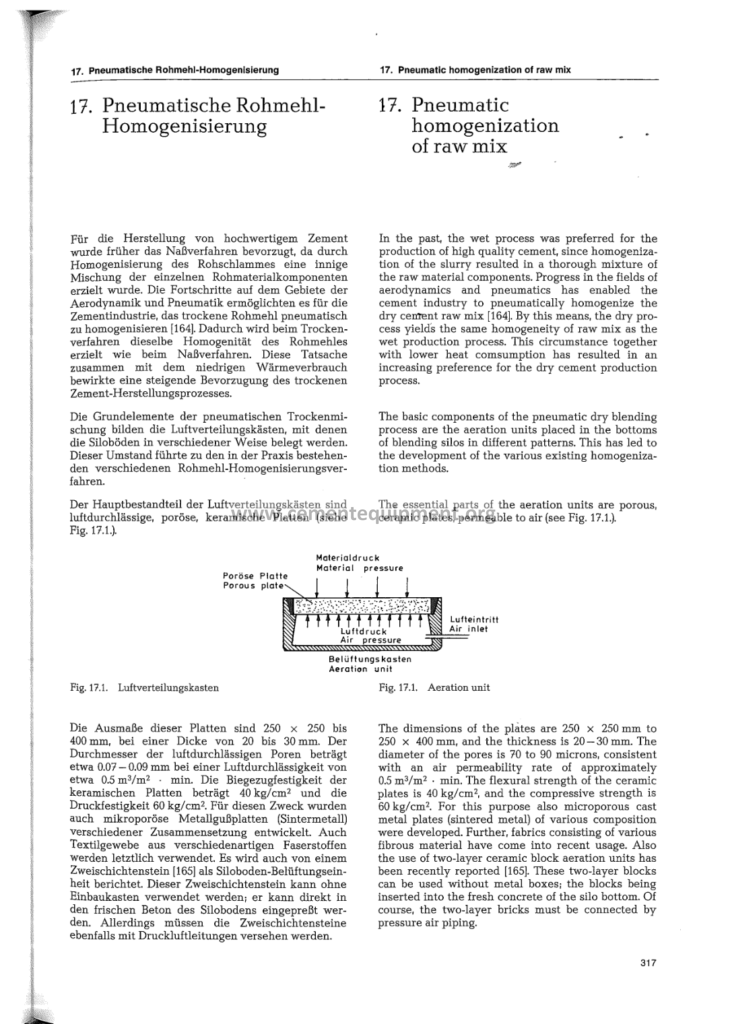
Pneumatic Homogenisation Of Raw Mix: Complete Guide & Downlo
The kiln of the cement plant demands the steady diet: the raw meal entering the preheater must stay inside the narrow band of the chemistry, because the burning zone reacts at 1,450 degrees and tolerates no surprises: but the quarry is not steady: the seams change, the crusher blends imperfectly, the raw mill drifts: between the unpredictable quarry and the demanding kiln stands the homogenisation system: and its most refined instrument is the pneumatic homogenisation silo, the aerated tower that turns the variable meal into the stable feed.
The Complete Cement Technical Package (931 files including the books, the courses, the Excel tools and the presentations: $249.99 one-time: instant download through the PayPal payment) includes this pneumatic homogenisation file with its flow diagrams, the air calculations and the operating procedures of the blending silos: this article walks the file: the sources of the variation, the principle of the air mixing, the silo types, the air system and the daily control: the reader leaves with the complete picture of the tower that feeds his kiln.
The homogenisation is the quiet hero of the cement line: it receives no flame and produces no clinker, yet the whole stability of the burning depends on it: this page follows the document section by section: the engineer of the package can open the PDF and walk the chapters with this article in hand.
1. The Why of the Homogenisation: The Steady Diet of the Kiln
The file opens with the purpose: the homogenisation exists to deliver the constant chemistry to the kiln feed:
- The kiln feed target: the CaCO3 of the meal at the 74 to 79 percent: the standard deviation of the feed to the kiln below 0.20 to 0.30 percent of the CaCO3: the band that the kiln accepts;
- The chemistry of the burning: the free lime, the alite formation and the coating stability all react to the feed composition: the swinging feed burns badly and the clinker quality suffers;
- The plant economics: the stable feed allows the lower burning temperature margin, the lower fuel and the stable quality: the deviation costs the fuel, the quality and the refractory;
- The mixing history: the industry learned the lesson of the raw meal variation in the 1950s and 1960s: the homogenisation silos spread with the dry process plants: the history of the discipline;
- The complete chain: the homogenisation is the last of the three blending layers: the quarry blending, the raw mill blending and the silo mixing: the file positions the silo in the chain;
The why of the homogenisation is the stability of the burning: the file states the targets with the numbers: the standard deviation of the feed is the currency of the discipline: the homogenisation silo is the bank that pays the kiln the steady chemistry: the purpose, named at the first page.
2. The Variations: The Sources Before the Silo
The raw meal arrives at the silo with its history of variations and the file lists the sources:
- The quarry seams: the limestone layers differ in the CaCO3 by the units of percent: the blasting mixes imperfectly: the loader blends by the bench: the variation of the deposit is the first source;
- The crusher effect: the crusher receives the stones of the mixed benches: the feeding order and the fines segregation at the stockpile: the layering and the reclamation of the piles: the second source of the variation;
- The raw mill: the mill feed proportions drift with the feeders, the moisture and the hardness: the meal out of the mill varies within the hour: the third source;
- The moisture: the wet seams and the rain change the flow of the material: the feeders of the clay and the sand misbehave with the moisture: the hidden source of the instability;
- The magnitude: the combined raw variations of the CaCO3 of the meal at the mill outlet can reach the 1 to 2 percent standard deviation: the silo must compress this to the 0.2 percent: the scale of the task;
The variations are the enemy that the silo fights: the file teaches the engineer to measure each source before the blame: the sampling of the quarry, the stockpile and the mill discharge: the variation budget of the line: the homogenisation is designed against the measured numbers, not the guesses.
3. The Principle of the Pneumatic Mixing: The Fluidized Bed
The pneumatic homogenisation borrows its physics from the air: the file explains the principle of the fluidization:
- The aeration: the compressed air enters the silo through the pads of the bottom: the air rises through the powder bed: the particles are suspended: the bed expands and behaves like the liquid;
- The fluidization: the powder of the fine raw meal fluidizes easily: the 1 to 2 percent of the air by the bed volume: the fluidized bed flows, mixes and finds its level like the water: the liquid of the powder;
- The movement: the air pockets in the bottom create the rising streams of the material: the powder circulates: the descending and the rising columns: the mixing of the bed in the minutes;
- The gravity flow: the fluidized meal discharges through the center or the side openings: the silo empties with the flow of the liquid: the discharge control of the kiln feed;
- The limits: the fluidization needs the dry powder: the moist meal with the 1 percent of the water clumps and refuses the air: the humidity is the mortal enemy of the pneumatic system;
The principle is elegant: the air turns the solid bed into the liquid and the liquid mixes itself: the file teaches the physics of the fluidization with the numbers of the air and the bed: the engineer who understands the fluidized bed understands the whole behavior of the silo: the theory of the tower.
4. The Types of the Homogenisation Silos: The Architectures
The industry built several families of the pneumatic silos and the file presents them:
- The full-aeration silo: the entire bottom is aerated: the whole bed mixes at once: the batch operation: the silo filled, mixed and emptied in cycles: the classical mixing chamber of the older plants;
- The air merge silo: the bottom divided into the segments: the air applied to one segment at a time: the sequential aeration creates the circulation and the blending: the continuous operation: the efficient classic of the industry:
- The central cone silo: the inverted cone in the bottom with the radial aeration: the material flows to the center: the circulation driven by the geometry: the compact design of the mid-size plants;
- The combined systems: the silo pairs the pneumatic mixing with the mechanical extraction: the multi-compartment towers and the side discharge: the hybrids of the modern designs;
- The capacity: the homogenisation silos of the typical plants hold the 1 to 3 days of the kiln feed: the 5,000 to 20,000 tonnes of the large lines: the reservoir of the chemistry;
The architectures of the silo differ in the aeration pattern and the operation mode: the file compares the mixing efficiency, the energy and the availability of each family: the engineer of the project chooses the tower per the size of his line: the geometry of the blending, the map of the file.
5. The Air System: The Blowers and the Pads
The pneumatic system lives on the air: the file presents the hardware of the aeration:
- The air supply: the rotary lobe blowers: the capacities of the several thousand cubic meters per hour: the pressures of the 0.05 to 0.15 bar: the air house of the silo;
- The aeration pads: the porous tiles of the silo bottom: the sintered or the fabric covered: the air distribution of the pad area: the pads the 1 to 2 cubic meters per minute per square meter of the bed at the mixing;
- The piping: the air main, the ring mains and the valves per segment: the solenoid valves of the sequencing: the timers of the cycles: the control of the aeration pattern;
- The filtration: the dust filters on the silo roof: the displaced air and the pressurization control: the safety of the venting: the filter of the aeration air at the blower inlet;
- The instruments: the pressure gauges of the blowers, the flow meters and the level sensors: the windows of the system: the control room sees the air of the silo;
The air system is the muscle of the tower: the file gives the sizing rules, the pad densities and the pressure levels so the plant can check its own installation: the blowers of the silo consume the electricity and the file quantifies the bill: the air: the medium of the mixing: engineered like the steel itself.
6. The Blending Process: The Cycles of the Aeration
The mixing inside the silo follows the choreography of the air: the file explains the operational cycle:
- The fill: the raw meal enters the silo from the mill: the top filling distributes the material: the bed builds over the hours: the incoming meal stores its variations in the layers;
- The mix: the aeration cycles start: the segments aerated in the sequence: the material circulates: the layers intermingle: the mixing time of the batch silos: the 30 to 60 minutes of the full aeration;
- The sequence: the air merge cycles: the timed sequence of the segments: the classic pattern of the “one segment on, the neighbors off”: the movement of the circulation zone through the bed;
- The discharge: the aerated discharge to the kiln feed: the continuous flow of the fluidized meal: the transport to the kiln feed silo or directly to the tower top;
- The steady state: the continuous silo never stops: the fill and the discharge overlap: the mixing happens during the flow: the stationarity of the operation: the chemistry of the outlet compressed;
The cycle of the blending is the heart of the operation: the file teaches the sequence design, the timing and the observation: the engineer of the plant learns to read the aeration panel as the score of the mixing: the cycles of the air and the layers of the meal: the choreography, understood.
7. The Mixing Efficiency: The Numbers of the Compression
The performance of the homogenisation is measured in the numbers and the file teaches the metrics:
- The standard deviation: the sigma of the CaCO3 at the silo outlet: the target below 0.2 to 0.3 percent: the measure of the quality of the mixing;
- The ratio of the improvement: the quotient of the inlet variation over the outlet variation: the mixing ratio of the silo: the values of the 5 to 15 for the good pneumatic towers: the amplification of the stability;
- The measurement: the sampling of the meal at the mill outlet and at the kiln feed: the hourly samples over the days: the statistics of the series: the honest picture of the blending;
- The variables: the mixing ratio depends on the silo type, the air rate, the filling level and the meal fluidity: the file gives the reference values of each variable;
- The audit: the periodic measurement of the ratio: the declining ratio signals the worn pads, the wet meal or the reduced air: the maintenance alarm of the tower;
The numbers of the mixing tell the truth about the tower: the file trains the plant in the sampling and the statistics so the audit is honest: the sigma of the feed: the ratio of the silo: the two numbers that the kiln engineer watches for the health of the whole homogenisation: the metrics of the stability.
8. The Energy of the Homogenisation: The Air Bill
The pneumatic mixing costs the electricity and the file presents the accounting:
- The specific energy: the 0.5 to 1.5 kilowatt-hours per ton of the meal for the air merge and the cone silos: the full-aeration batch silos the higher end: the bill of the tower;
- The air consumption: the continuous aeration of the typical silo consumes the 1 to 2 Nm3 per minute per square meter of the aerated area: the blower power from the air and the pressure;
- The comparison: the pneumatic blending is the energy-hungry end of the homogenisation: the mechanical blending alternatives save the air but invest in the hardware: the trade of the design;
- The optimization: the sequencing that reduces the aeration during the quiet hours, the variable speed blowers, the pressure optimization: the savings of the 10 to 30 percent of the air bill;
- The accounting: the kWh per ton of the kiln feed: the line item of the energy balance: the file includes the calculation sheet of the air and the power;
The energy of the homogenisation is the price of the stability: the file teaches the plant to audit the air bill, compare the options and optimize the cycles: the stability of the kiln is bought with the kilowatts and the file makes the purchase transparent: the energy of the blending, counted.
9. The Alternatives: The Mechanical Homogenisation
The pneumatic tower is not the only blender and the file compares the alternatives honestly:
- The gravity blending silos: the meal flows through the multiple discharge tubes and the inverted cones: the gravity mixing without the air: the low energy of the operation: the efficiency limited to the coarse variations;
- The prehomogenisation stockpiles: the stacker lays the material in the horizontal layers and the reclaimer cuts them vertically: the mixing ratio of the piles: the 3 to 10 of the good reclaimers: the first line of the blending;
- The multi-component blending: the dosing of the several corrected materials at the mill feeders: the active control of the chemistry at the source: the computer-aided proportioning of the modern plants;
- The online control: the prompt gamma neutron analyzers on the belt: the real-time chemistry and the feed correction: the blending loop of the modern quarries: the sensors that shrink the variations before the silo;
- The combination: the practical plants combine all the layers: the piles, the feeders and the pneumatic tower: the last silo receives the already improved meal: the division of the labor;
The file positions the pneumatic silo in the complete blending system: the pile first, the feeders second, the tower last: the engineer who designs the line allocates the mixing ratios across the layers: the pneumatic tower remains the crown of the system: the fine correction of the chemistry.
10. The Control of the Feed: The Loop of the Chemistry
The homogenisation works with the control loop and the file describes the feedback:
- The sampling: the XRF analysis of the kiln feed: the samples every hour or the online analyzer: the chemistry of the outlet: the measured truth;
- The correction: the feed blend adjusted at the mill: the limestone share up when the CaCO3 falls: the correction loop of the quarry and the mill: the upstream compensation;
- The silo level: the kiln feed must be continuous: the level control of the silo and the transport system: the fill-discharge balance: the logistics of the tower;
- The alarms: the chemistry deviations beyond the band, the low air pressure, the high silo level: the alarm hierarchy of the control room: the responses of the operator;
- The trend reports: the daily and the weekly trends of the kiln feed chemistry: the long-term view: the drift detection of the quarry seams: the planning of the blend;
The control of the feed closes the loop of the homogenisation: the file teaches the sample frequency, the correction rules and the alarm handling: the tower is the passive mixer and the control is the active brain: the plant that blends well measures, corrects and watches: the chemistry of the kiln feed, managed.
11. The Troubleshooting of the Pneumatic Silo: The Failure Modes
The pneumatic tower has its own diseases and the file dedicates the diagnosis chapters:
- The blocked pads: the fine dust and the moisture seal the aeration tiles: the dead zones of the bottom: the symptoms: the rising pressure of the blowers and the falling mixing: the cleaning and the replacement of the pads;
- The wet meal: the moisture above the fluidization limit: the clumped bed refuses the air: the meal bridges and channels: the discharge stops: the remedy: the dry the meal upstream, the extraction with the mechanical aids;
- The bridging: the arching of the meal above the discharge: the collapse hazards of the towers: the air lances and the vibrators of the discharge: the extraction control: the safety of the silo entry;
- The segregation: the coarse particles settle and the fines float: the mixing degrades: the symptoms in the outlet chemistry: the air distribution correction and the discharge redesign;
- The blower degradation: the wear, the leakage and the pressure loss: the air flow falls silently: the periodic measurement of the blower performance: the maintenance of the air house;
The troubleshooting of the silo is the discipline of the air and the moisture: the file provides the checklists so the plant restores the mixing quickly: the blocked pad is found before the kiln complains: the tower of the plant, healthy: the diagnosis, ordered.
12. The Excel and the Calculations: The Tool of the Blending
The practical part of the file: the calculations and the spreadsheet of the package:
- The air calculation: the air demand of the silo: the area, the pad density and the pressure: the blower sizing of the design or the audit: the sheet of the air;
- The statistics: the standard deviation calculator: the inlet and the outlet series of the samples: the sigma and the mixing ratio: the performance report of the tower;
- The cycle design: the timing of the aeration segments: the cycle plan for the mixing ratio: the scenario comparisons of the batch and the continuous modes;
- The energy sheet: the kWh per ton of the silo: the blower power and the operating hours: the monthly bill of the homogenisation: the optimization baseline;
- The case studies: the worked examples of the file: the tower of the 3,000 tons per day line: the air house of the 2,500 cubic meters per hour: the numbers complete;
The Excel tool of the package turns the file into the working instrument: the engineer enters the data of his own tower and receives the air, the energy and the mixing ratio: the tool among the 931 files: the homogenisation, calculated and audited: the spreadsheet of the blending tower.
13. The Silo in the Flowsheet: The Logistics of the Feed
The homogenisation tower is anchored in the flowsheet between the raw mill and the kiln feed: the file presents the logistics that surround the pneumatic silo:
- The raw meal transport: the meal from the mill reaches the tower by the pneumatic conveying or the bucket elevator: the air slide and the pressure vessel conveyors of the dry meal: the transfer systems sized for the line capacity;
- The kiln feed extraction: the aerated discharge and the proportioning feeders: the meal drawn from the tower and weighed to the kiln feed: the accuracy of the 1 to 2 percent of the kiln requirement: the continuous extraction;
- The feed silo: many plants keep the small kiln feed silo after the homogenisation tower: the buffer of the final steps: the meal flows from the mixer to the buffer and the preheater: the two-silo arrangement of the classical lines;
- The kiln feed weighing: the weigh feeders and the airslides: the totalized tonnage and the feed rate control: the compact of the kiln operation: the meal arrives at the preheater at the set rate;
- The storage reserve: the tower doubles as the reserve: the capacity of the 1 to 3 days allows the raw mill maintenance without stopping the kiln: the buffer value of the homogenisation storage;
The logistics chapter ties the tower to the daily operation: the same silo that mixes the chemistry is the storehouse that decouples the mill from the kiln: the plant plans the mill shutdowns against the tower level: the file teaches the balance of the level, the extraction and the maintenance windows: the silo, the silent warehouse of the line.
The layout options close the chapter: the single big tower versus the twin smaller cells: the round versus the rectangular plan: the civil cost and the aeration efficiency: the file compares the layouts with the numbers so the plant engineer participates in the layout discussions of the expansions: the homogenisation silo is the landmark of the cement plant skyline: the tower that the flowsheet places between the powder and the flame: the logistics, engineered.
14. The Future of the Homogenisation: The Intelligent Towers
The final chapters of the file look forward: the homogenisation of the modern plants:
- The online analyzers: the prompt gamma and the X-ray on the belt: the chemistry in the seconds: the correction in the real time: the variations die at the source;
- The model-based control: the mixing model of the silo: the prediction of the outlet chemistry from the inlet and the air: the optimized aeration: the control of the future towers;
- The digital twins: the simulation of the bed, the air and the flow: the training of the operators and the testing of the scenarios: the virtual silo of the control room;
- The energy integration: the variable speed blowers, the waste pressure recovery and the peak management: the homogenisation in the energy grid of the plant: the green tower;
- The carbon accounting: the stable burning reduces the fuel and the emissions: the homogenisation contributes to the CO2 reduction of the line: the sustainability story of the blending;
The future keeps the pneumatic tower but sharpens its senses: the file positions the classical discipline at the edge of the digital plant: the engineer who masters the file masters the blending of the next decades: the tower of the air, the intelligence of the data: the homogenisation of the future.
15. Conclusion
The pneumatic homogenisation of the raw mix: the aerated tower that compresses the variations of the quarry into the steady diet of the kiln: the file of the package teaches the totality: the principle of the fluidization, the silo types, the air system, the cycles, the efficiency and the control: the engineer who reads the file reads the tower of his plant with the new eyes: the stability of the burning begins in the air of the silo: the homogenisation, the quiet hero of the line, understood and respected.
The Complete Cement Technical Package includes this pneumatic homogenisation file with the diagrams, the air calculations and the Excel of the blending: the one-time $249.99: the instant download: the library of the cement: the file of the tower: the engineer of the package: the kiln feed, steady: the variations, compressed: the knowledge of the blending, the professional.
The Frequently Asked Questions
Why does the kiln need such a stable feed?
The burning zone operates at the 1,450 degrees with the melt phase and the alite formation: the feed chemistry swings force the operator to the conservative temperatures, the fuel and the quality suffer, and the coating of the refractory destabilizes: the standard deviation of the feed below the 0.2 to 0.3 percent of the CaCO3 is the accepted target of the industry: the stability is the fuel economy of the kiln.
What is the mixing ratio of a good pneumatic silo?
The ratio of the inlet variation to the outlet variation: the good air merge and the cone towers achieve the factors of the 5 to 15 with the proper air and the dry meal: the ratio falls with the blocked pads and the wet material: the file teaches the measurement so the plant audits its own tower and knows when the maintenance is due.
Can the pneumatic silo handle the wet meal?
The fluidization demands the dry powder: the meal above roughly the 0.5 to 1 percent of the moisture refuses to fluidize and the mixing collapses: the moisture of the meal is the first discipline of the pneumatic blending: the plants dry the raw material upstream and protect the tower from the humid days: the file covers the moisture management completely.
Is the air mixing the cheapest way to homogenise?
The pneumatic blending costs the 0.5 to 1.5 kWh per ton of the meal: the mechanical and the gravity alternatives are cheaper in the energy but weaker in the mixing ratio: the best plants combine the prehomogenisation piles, the corrected dosing and the pneumatic tower: the file presents the trade so the engineer selects the system for the required stability of his line.
Does the file include the air sizing of my silo?
The file gives the pad densities, the air quantities and the blower calculation with the worked examples: the Excel tool of the package sizes the air house from the silo area and the required mixing ratio: the engineer enters the dimensions of his tower and receives the air and the power: the tool among the 931 files.
What is the first check when the kiln feed chemistry swings?
The sample frequency and the analysis first: then the silo: the air pressure, the pad condition and the meal moisture: then the upstream: the mill feeders and the quarry blend: the file orders the cascade from the cheap to the expensive: the swinging feed is usually the tower symptom before the quarry problem: the diagnosis of the file.
Get this Pneumatic Homogenisation file + the full 931-file package
$249.99 — one-time purchase, instant download, lifetime access
This file is part of the Complete Cement Technical Package (931 files) available from cementequipment.org. Respective rights holders; library copy for the licensed single user.