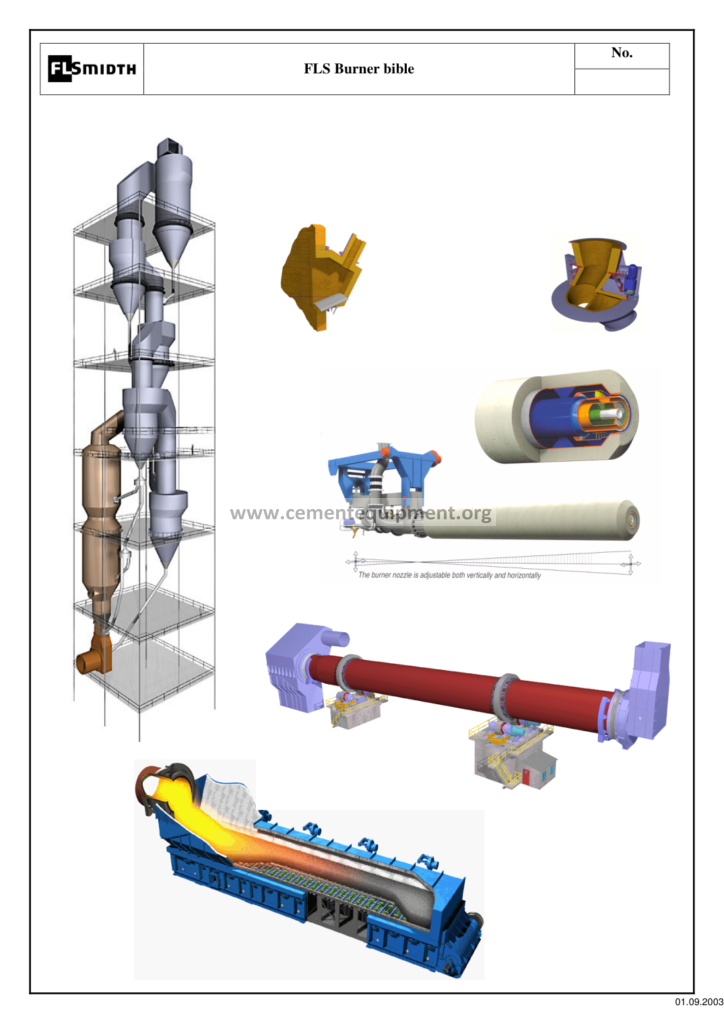
Kiln Burner Bible: Complete Flame & Combustion
The burner bible of the file is the pocket encyclopedia of the kiln firing engineer: the 121-page FLS reference of September 2003 collects the complete knowledge that the burner and the kiln process need in one volume: the chemistry of the main cement minerals, the clinker moduli and the Bogue calculation, the clinkerisation sequence, the burnability and the calcination degree, the homogenisation and the proportioning, the fuel properties of the oil, the coal and the gas with the viscosity tables and the conversion factors, the flow measurements, and the miscellaneous formulas of the burner world: the nozzle velocities, the fan power, the clinker factor, the PID tuning and the thermocouple types: this article walks the bible section by section, with the numbers that the firing engineer uses at the control desk and at the burner front.
The Complete Cement Technical Package (931 files including the books, the courses, the Excel tools and the presentations: $249.99 one-time: instant download via the PayPal payment) includes this burner bible with the chemistry tables, the clinkerisation data, the fuel properties, the conversion factors, the flow measurement methods and the formula sheets: the practical reference for the kiln operators, the process engineers, the burner technicians and the quality staff: this article follows the bible’s structure: the chemistry, the clinkerisation, the homogenisation, the fuels, the flow measurement and the miscellaneous formulas: every section with the real numbers of the cement industry.
The genius of the burner bible is its compactness: the whole science of the burning process is condensed into the tables, the diagrams and the formulas that fit the pocket of the shift engineer, and every page earns its place with the practical value: the reader of the bible answers the questions of the shift with the book in hand: the viscosity of the heavy oil at the burner temperature, the fineness of the coal for the flash-burner, the nozzle velocity of the flame, the conversion of the gas units, the PID settings of the control loop: this page walks the complete book, and the reader inherits the pocket encyclopedia of the burning process.
1. The Chemistry Section of the Bible: The Main Cement Minerals and the Clinker Moduli
The bible opens with the chemistry of the clinker: the four main minerals, the clinker moduli and the minor components form the first section of the book, because the burner man must know the chemistry his flame creates: the alite (C3S), the belite (C2S), the aluminate (C3A) and the ferrite (C4AF) of the grey clinker, the moduli that characterize the raw mix, and the minor components that the process must manage: the bible’s tables give the typical values and the operating ranges that the firing engineer compares with his kiln’s samples.
| Chemistry parameter | Typical range of the bible | Burning consequence |
|---|---|---|
| C3S (alite) | 55 to 70% | demands the highest burning temperature and the longest retention |
| C2S (belite) | 10 to 25% | forms in the solid state, lower temperature demand |
| C3A (aluminate) | 5 to 12% | fluxing phase, early hydration, gypsum reaction |
| C4AF (ferrite) | 8 to 12% | flux at the lower temperature, low heat of hydration |
| Lime saturation factor | 90 to 98 | sets the alite potential and the burnability |
| Silica ratio / alumina ratio | SR 2.0-3.0, AR 1.3-2.5 | decide the liquid phase and the coating behavior |
The chemistry section of the bible condenses the phase chemistry into the operating tables: the moduli calculations, the relation of the moduli to the burning difficulty and the mineral compositions of the typical clinkers: the burner engineer uses the chemistry section to anticipate the burning behavior: the high LSF mix demands the hotter flame and the longer burning zone, the low AR mix brings the liquid earlier and the coating sooner: the bible’s tables are the daily references of the quality-burner dialogue, and the reader who masters them interprets the clinker analyses with the burning consequences in mind: the chemistry section is the foundation of the whole book, and every later section assumes its numbers.
2. The Bogue Calculation and the Minor Components: The Phase Arithmetic and the Chemistry of the Small Percentages
The bible’s chemistry section includes the Bogue calculation, the classical formula that converts the oxide analysis into the phase proportions, and the minor component tables that the modern kilns must manage: the Bogue of the bible gives the phase arithmetic in the compact form that the quality office uses daily, and the minor component treatment covers the alkalis, the sulfate, the magnesia, the chloride and the phosphorus with their limits and their process roles.
- The Bogue formulas: the C3S from the lime saturation of the silica and the alumina-ferrite, the C2S as the residual silica, the C3A from the alumina beyond the ferrite stoichiometry and the C4AF from the iron: the bible’s formula sheet gives the calculation steps with the worked example, and the reader reproduces the Bogue phases from any oxide analysis: the Bogue values of the bible agree with the clinker microscopy within the few percent, and the deviations point to the alkali and the sulfate inclusions;
- The alkali and the sulfate: the sodium and the potassium (0.3 to 1.5% total in the typical clinkers) partition between the silicates and the interstitial phases and form the alkali sulfates: the alkali-sulfate ratio decides the sulfate availability for the C3A control in the cement, and the bible’s minor component tables give the typical contents and the operating consequences: the alkalis raise the early strength and the ASR risk, and the sulfate management is the daily quality task;
- The magnesia and the chloride: the magnesia up to about 2% fluxes the melt and above the limit forms the periclase: the chloride is the volatile flux of the kiln cycles, concentrating in the preheater passages and the bypass dust, and its feed budget (typically below 0.1% of the feed for the preheater kilns) is one of the strictest of the minor components: the bible’s tables carry the limits and the management rules;
- The phosphorus and the titanium: the phosphorus oxide destabilizes the alite (the phosphorus above about 2.5% makes the normal alite contents impracticable) and the titanium enters the ferrite solid solutions: the minor component chemistry of the bible closes with the complete table of the typical contents, the limits and the process roles of every minor oxide;
The Bogue and the minor component sections of the bible give the firing engineer the complete chemical picture behind the flame: the phases that the flame must create, the minor components that the flame must manage and the limits that the process must respect: the reader who masters the section reads the raw mix analyses and the clinker reports with the burning consequences in mind, and the operator anticipates the process behavior from the chemistry of the feed: the chemistry section of the bible is the silent partner of every burner adjustment, and its tables are the reference of the quality-burner dialogue.
3. The Clinkerisation Section: The Formation Sequence, the Burnability and the Calcination Degree
The second major section of the bible covers the clinkerisation: the clinker formation sequence along the kiln, the burnability of the raw meal and the calcination degree measurement: the clinkerisation section is the process chapter of the book, and its pages connect the chemistry of the first section to the operation of the flame: the firing engineer uses the burnability and the calcination data to set the burning zone temperature, the fuel rate and the retention.
| Clinkerisation topic | Content of the bible | Operating use |
|---|---|---|
| Clinker formation | the sequence from the drying to the sintering | zone temperature targets, reaction management |
| Burnability | the factors: LSF, SR, AR, particle size, liquid phase | mix design, burning temperature selection |
| Calcination degree | the CO2 release measurement of the kiln feed | precalciner efficiency, kiln load control |
| Sampler | the sampling practice of the feed and the clinker | representative samples, analysis confidence |
The clinker formation pages of the bible map the reaction sequence with the temperature zones: the drying, the dehydroxylation, the calcination, the exothermic reactions, the liquid phase formation and the sintering: the burnability treatment of the bible collects the factors that decide how easily the meal burns: the lime saturation, the silica and the alumina ratios, the quartz content and the fineness, the liquid phase quantity and the minor components: the high burnability meal needs the lower temperature and the shorter retention, and the low burnability meal demands the hotter flame and the longer burning zone: the calcination degree of the bible is the operating instrument of the precalciner kilns: the feed enters the kiln with the calcination degree of 85 to 95% from the precalciner, and the kiln’s remaining duty is the clinkerization: the sampler pages of the bible cover the representative sampling of the raw meal and the clinker, because the analysis quality begins with the sample: the clinkerisation section of the bible is the process core of the book, and its tables and the diagrams are the reference of the burning zone control.
4. The Homogenisation Section: The Proportioning and the Raw Meal Quality
The homogenisation section of the bible covers the proportioning of the raw materials and the homogenisation of the raw meal: the mixing of the limestone, the clay and the corrective materials in the correct proportions, the blending in the raw mill and the homogenisation silos, and the quality control that delivers the uniform meal to the kiln: the burner engineer depends on the homogenisation section, because the uniform feed is the precondition of the stable flame and the steady burning.
- The proportioning: the raw materials are dosed by the weigh feeders to the target chemistry, the limestone carries the lime, the clay carries the silica and the alumina, and the corrective materials (the iron ore, the sand, the fly ash) adjust the moduli: the proportioning control of the bible gives the target LSF, SR and AR, the corrective actions and the feed control limits: the raw mix deviations of the few tenths in the LSF translate into the free lime changes of the clinker, and the proportioning discipline of the bible keeps the feed within the narrow band;
- The homogenisation silos: the raw meal is blended in the aerated silos with the continuous or the batch operation: the homogenising silos equalize the composition fluctuations, the air injection maintains the fluidization, and the blending action of the multi-compartment silos delivers the uniform meal: the bible’s homogenisation pages give the silo design parameters, the aeration rates and the blending factors, and the reader understands the equipment that makes the chemistry table work;
- The quality control loop: the X-ray analysis of the feed, the raw meal and the clinker, the frequent sampling and the corrective dosing form the control loop that holds the chemistry: the bible’s control charts relate the measured moduli to the target values, the alarm limits trigger the corrective actions, and the homogenisation report of the shift documents the quality: the quality loop of the bible connects the proportioning, the silos and the laboratory into the one system;
- The consequence for the firing: the uniform meal burns with the steady flame, the free lime stays in its band and the coating behaves predictably, while the fluctuating meal forces the operator to chase the temperature: the homogenisation section of the bible explains why the best burner cannot compensate the worst feed, and the firing engineer reads the homogenisation report with the same attention as the temperature chart: the feed uniformity is the first line of the burning stability;
The homogenisation section of the bible completes the process picture of the book: the chemistry, the clinkerisation and the homogenisation form the triangle of the stable burning, and the reader who masters the three sections runs the kiln with the complete mental model: the proportioning delivers the chemistry, the silos deliver the uniformity and the flame delivers the temperature, and the three must cooperate: the bible’s treatment is compact but complete, and this article’s walk through the section gives the reader the homogenisation knowledge of the book: the feed quality is the silent foundation of the burner’s success, and the bible documents the foundation.
5. The Fuel Section: The Oil Properties and the Viscosity Tables
The fuel section of the bible is the largest of the book, and it opens with the oil: the properties of the heavy fuel oils that the kilns burn, the viscosity behavior of the oils with the temperature, the viscosity tables and the diagrams that the burner engineer uses to set the fuel temperature, and the atomization requirements of the oil burners: the heavy fuel oil of the kilns is the residual product of the refineries, and its handling is the science of the viscosity control.
| Oil property | Typical values of the bible | Burner consequence |
|---|---|---|
| Density at 15 C | 0.92 to 1.0 kg/liter (heavy fuel) | mass-to-volume conversions, tank sizing |
| Viscosity at the storage | up to 380 cSt at 50 C (IFO 380) | storage heating and the transfer pumps |
| Burner viscosity target | 10 to 20 cSt at the burner | atomization quality, droplet size |
| Preheating temperature | 100 to 140 C for the heavy oils | viscosity reduction to the atomization range |
| Sulfur content | 0.5 to 3.5% by the grade | SO2 emissions, dew point considerations |
The viscosity tables of the bible give the oil viscosity as a function of the temperature for the standard grades, and the viscosity diagram allows the graphical determination of the preheating temperature: the heavy oil must be heated to the 100 to 140 C range so that its viscosity falls into the 10 to 20 cSt atomization band, and the burner nozzle delivers the fine spray that the flame needs: the atomization quality of the oil decides the droplet size, the evaporation rate and the combustion efficiency: the bible’s oil section covers the density conversions, the sulfur and the ash management, and the burner settings for the oil firing, and the reader inherits the complete oil firing practice: the oil era of the cement industry may have passed on many plants, but the alternative fuel oils and the liquid wastes of the modern kilns still use the same viscosity science, and the bible’s tables remain the reference of the liquid fuel handling.
6. The Fuel Section: The Coal Properties, the Fineness and the Drying
The coal section of the bible covers the properties of the coal, the typical values and the fineness requirements, the coal drying and the analysis conversions: the coal is the main fuel of the cement industry, and its quality, its fineness and its moisture decide the flame, the burning zone and the clinker quality: the bible’s coal pages are the daily reference of the firing engineer and the coal mill operator.
- The coal properties: the hard coals of the kiln firing carry the net calorific values of 25 to 32 megajoules per kilogram, the ash of 5 to 20%, the volatile matter of 15 to 40% and the moisture of 5 to 15% as received: the bible’s property tables classify the coals and give the typical values by the origin and the grade, and the reader compares the delivered coal with the reference of the book;
- The fineness requirements: the kiln coal is ground to the fineness of 85 to 95% passing the 90 micron sieve and the 98 to 99.9% passing the 200 micron sieve: the finer coal ignites faster, burns more completely and gives the shorter flame, while the coarse coal extends the flame and raises the unburnt losses: the bible’s fineness tables relate the fineness to the flame behavior and the burnout, and the coal mill operation of the plant targets the fineness band;
- The coal drying: the coal moisture of the raw coal (up to 20% for the brown coals) is dried in the mill by the hot gas: the mill outlet temperature (65 to 90 C for the hard coal, lower for the volatile-rich grades), the inerting requirements of the coal grinding (the oxygen below 12 to 14% in the mill atmosphere) and the explosion protection form the coal drying practice of the bible: the moisture of the pulverized coal at the burner (0.5 to 2%) is the typical target;
- The analysis conversions: the coal analyses arrive in the different bases (as received, air dried, dry, dry ash free) and the bible’s conversion tables translate between the bases and between the units (the megajoules to the kilocalories, the kilocalories to the BTU): the conversions of the bible also cover the coal consumption calculations: the fuel rate from the clinker production, the specific heat consumption and the thermal substitution of the alternative fuels: the analysis conversions of the bible are the arithmetic that the shift report needs;
The coal section of the bible gives the firing engineer the complete coal practice: the quality verification of the delivered coal, the fineness control of the mill, the drying and the safety limits, and the conversions that translate the analyses into the operating numbers: the reader who masters the section manages the coal from the hopper to the flame, and the flame that the coal mill delivers is the flame of the burning zone: the coal is the workhorse fuel of the industry, and the bible’s treatment is the complete workhorse manual.
7. The Fuel Section: The Gas Properties, the Conversions and the Alternative Fuels
The gas pages of the bible cover the properties of the gaseous fuels, the gas conversions and the calculation of the gas consumption, and the alternative fuel pages close the fuel section with the modern fuel streams: the natural gas of the kilns, the gas conversion arithmetic of the burner and the thermal data of the alternative fuels complete the fuel knowledge of the book.
| Gas fuel topic | Typical data of the bible | Operating use |
|---|---|---|
| Natural gas properties | CV 35 to 40 MJ/Nm3, density 0.7-0.8 kg/Nm3 | flow metering, burner sizing |
| Gas conversions | volume to mass, CV to volume, mixed fuel proportions | fuel accounting, reports |
| Gas consumption calculation | CV and flow to thermal input | kiln firing control, specific consumption |
| Thermal data of the fuels | CV of the liquid, solid and gaseous alternatives | substitution planning, burner settings |
| Alternative fuels | tyres, plastics, RDF, biomass, solvents | thermal substitution up to 80% |
The gas conversions of the bible handle the units of the burner world: the cubic meters to the kilograms, the CV in the megajoules, the kilocalories and the BTU, the theoretical air demand and the flue gas volumes, and the mixed fuel calculations for the burners that fire the coal and the gas or the oil and the waste simultaneously: the alternative fuel pages of the bible give the thermal data of the tyres (the whole tyre CV of about 30 to 35 megajoules per kilogram), the plastics (35 to 45), the refuse-derived fuel (12 to 18) and the biomass (8 to 18), and the reader plans the substitution rates with the thermal arithmetic of the book: the fuel section of the bible closes with the complete fuel menu of the modern kiln, and the firing engineer who masters the section fires the kiln with any fuel the market offers: the fuel flexibility of the modern plant is the economic survival skill, and the bible’s fuel section is the complete arithmetic and the property reference of the flexibility.
8. The Flow Measurements: The Gas, the Air and the Material Flows of the Kiln System
The flow measurement section of the bible covers the measurement of the gas, the air and the material flows of the kiln system: the pitot traverses of the ducts, the orifice plates and the venturis of the pipes, the flow nozzles of the burners and the weighing of the solids: the flow measurements are the instruments of the process balance, and the bible’s section gives the methods, the calculations and the practical accuracy of each measurement.
- The gas flow measurements: the pitot tube traverses measure the velocity profiles of the ducts, the integrated flow gives the volumetric rate, and the corrections for the temperature, the pressure and the composition convert the measured flow to the standard conditions: the bible’s gas flow practice covers the traverse grids, the pitot formulas and the correction factors, and the reader measures the kiln exhaust, the cooler air and the preheater gas flows with the confidence of the method;
- The orifice and the venturi meters: the differential pressure devices of the pipes measure the air and the gas flows with the square-root relation between the flow and the differential pressure: the orifice discharge coefficients, the installation requirements and the calibration practice of the bible give the accuracy of the measurements, and the burner primary air and the gas flows of the firing system are metered with the differential devices;
- The burner flow monitoring: the primary air flow, the fuel flow and the auxiliary flows of the burner are monitored for the flame control: the flow indications of the control room, the setpoint adjustments and the alarm limits form the burner flow panel of the bible, and the operator manages the flame with the flow readings: the burner air-to-fuel ratio and the momentum derive from the flow measurements, and the flame adjustments of the bible are the flow adjustments;
- The material flow measurements: the weigh feeders and the belt scales measure the feed rates of the raw materials and the coal, the metering accuracy (typically plus or minus 0.5 to 1%) decides the proportioning quality, and the calibration practice of the bible keeps the weighing honest: the material flows of the kiln system, combined with the gas flows, close the mass balance of the process;
The flow measurement section of the bible gives the engineer the instruments of the process balance: the flows of the gas, the air and the materials are the measured reality behind every balance sheet, and the reader who masters the section measures the process, verifies the balances and diagnoses the deviations: the flow measurements of the bible connect the operating panel to the physical plant, and their accuracy decides the quality of every derived number: the flow section of the bible is the metrology chapter of the burning process, and this article’s walk gives the reader the complete measurement practice of the book.
9. The Miscellaneous Section: The Nozzle Velocities, the Fan Power, the Clinker Factor and the Formulas
The miscellaneous section of the bible collects the formulas that the firing engineer needs: the burner nozzle velocity, the fan power, the clinker factor, the specific heat and the surface loss calculations, the density and the volume conversions, and the effects of the power increase: the miscellaneous section is the formula appendix of the burner world, and its sheets are the working instruments of the engineering office.
| Formula of the bible | Typical values | Use |
|---|---|---|
| Burner nozzle velocity | 80 to 150 m/s coal, up to 250 m/s gas | flame momentum, flame length |
| Fan power | P proportional to flow and pressure / efficiency | fan sizing, power consumption checks |
| Clinker factor | 1.55 to 1.65 t feed per t clinker typical | feed-to-clinker conversion, balance |
| Surface loss | 5 to 15% of the heat input | energy accounting, lining condition |
| Specific heat | Cp of the gas, the air and the material | enthalpy calculations, heat balances |
The nozzle velocity calculation of the bible links the burner flow to the flame momentum: the nozzle velocity (the flow divided by the nozzle area) with the mass flow gives the momentum that shapes the flame, and the bible’s velocity tables give the typical values for the coal, the oil and the gas burners: the fan power formula of the bible (the flow times the pressure divided by the efficiency) sizes the fans and verifies the motor loads: the clinker factor of the bible (the feed tons per clinker ton, typically 1.55 to 1.65 with the dust and the losses) converts the feed rates into the clinker production for the kiln balance: the surface loss and the specific heat sheets complete the energy arithmetic: the miscellaneous section of the bible is the calculator of the burner engineer, and its formulas are the daily instruments of the process calculations: the reader who masters the section computes the nozzle velocities, the fan powers and the balances of his own kiln with the sheets of the book.
10. The Miscellaneous Section: The PID Tuning, the Thermocouples and the Analysis of the Kiln Down Time
The closing pages of the bible cover the control loops and the measurements of the burning process: the PID tuning of the process controllers, the thermocouple types and their application ranges, the dew point considerations and the analysis of the kiln down time: the closing section of the book gives the firing engineer the control and the measurement knowledge that the shift needs, and this article presents the final sheets of the bible.
- The PID tuning: the temperature, the pressure and the flow loops of the kiln are controlled with the PID controllers, and the bible’s tuning pages give the practical procedure: the P, I and D parameters of the classic loops (the burning zone temperature, the preheater temperatures, the pressures), the tuning steps (the proportional band, the reset time, the rate time), the disturbance handling and the loop stability: the classical tuning procedure of the bible gives the starting values and the refinement rules, and the reader tunes his loops without the fear of the mathematics;
- The thermocouple types: the temperature measurements of the kiln use the thermocouple families with the different ranges: the K type (200 to 1200 C, the general purpose), the S and the R types (to 1600 C, the high temperature), the N type (the modern alternative with the stability) and the specialized couples of the kiln shells: the bible’s thermocouple table gives the ranges, the accuracies and the application notes, and the operator selects the couple for the measurement point: the burning zone temperature of the kiln (1400 to 1500 C at the shell scan) and the gas temperatures (to 900 to 1100 C in the preheater) use the appropriate families;
- The dew point considerations: the flue gas dew point decides the corrosion risk of the cold ends, and the bible’s dew point pages give the calculation and the management: the sulfur trioxide of the gas raises the dew point to the 120 to 160 C range, the gas temperatures at the bag filters and the fans must stay above the dew point, and the acid protection of the cold end follows: the dew point science of the bible protects the equipment from the invisible corrosion;
- The analysis of the kiln down time: the down time of the kiln is analyzed with the discipline of the bible: the failure categories, the time accounting, the Pareto analysis of the causes and the action plans: the down time analysis of the bible turns the shutdowns into the data, and the data into the maintenance plans: the reader who masters the analysis reduces the unplanned stops with the evidence of the records: the closing pages of the bible are the management sheets of the firing engineer’s world, and the book closes with the complete set of the instruments;
The miscellaneous section of the bible completes the pocket encyclopedia: the formulas, the control tuning, the thermocouples, the dew points and the down time analysis form the last sheets of the book, and the reader who has walked the complete bible from the chemistry to the down time analysis inherits the entire reference of the burning process: the burner bible of the file is the compact library of the kiln firing engineer, and this article has walked its complete path with the numbers and the formulas that the book carries: the bible of the burner world, delivered page by page.
11. The Frequently Asked Questions
What is the correct preheating temperature for the heavy fuel oil in the burner?
The heavy fuel oils must be heated so that the viscosity at the burner falls into the atomization band of 10 to 20 cSt: for the IFO 380 grade this demands the preheating to about 100 to 140 C, and the bible’s viscosity tables and the diagram give the temperature for every grade: the atomization quality of the oil at the correct viscosity produces the fine droplets, the complete combustion and the short, intense flame, while the too-cold oil gives the coarse spray, the long flame and the unburnt losses.
What coal fineness does the kiln burner require?
The kiln coal is ground so that 85 to 95% passes the 90 micron sieve and 98 to 99.9% passes the 200 micron sieve, with the typical residue on the 90 micron of 1 to 5%: the finer coal ignites faster, burns more completely and shortens the flame, while the coarse coal extends the flame and raises the unburnt losses: the fineness target of the mill balances the combustion quality against the grinding power, and the bible’s fineness tables relate the fineness to the flame behavior and the burnout of the plant’s coal.
How is the burner nozzle velocity calculated, and why does it matter?
The nozzle velocity is the volumetric flow of the primary air and the fuel divided by the nozzle area, and the typical values of the industry are 80 to 150 meters per second for the coal burners and up to 250 for the gas: the velocity with the mass flow determines the flame momentum, and the momentum shapes the flame: the high momentum gives the short, intense, well-mixed flame with the good coating, and the low momentum gives the lazy, long flame with the poor heat transfer: the nozzle velocity setting is the central adjustment of the burner, and the bible’s calculations quantify the adjustment.
Why does the flue gas dew point matter for the kiln cold end?
The sulfur trioxide raises the acid dew point of the flue gas into the 120 to 160 C range, and the gas falling below this temperature condenses the sulfuric acid on the cold surfaces: the bag filter housings, the fans and the ducts corrode from the inside while the gas stays invisible: the plants keep the cold end temperatures above the dew point, choose the corrosion-resistant materials and control the sulfur in the fuel and the process: the dew point management protects the equipment that the operator never sees, and the bible’s dew point practice is the reference of the protection.
How is the calcination degree measured and used in the precalciner kilns?
The calcination degree is the fraction of the feed carbonate already released as carbon dioxide before the kiln, measured by the loss on ignition of the kiln feed samples: the modern precalciner systems deliver the feed to the kiln with the calcination degree of 85 to 95%, so the kiln’s remaining thermal duty is the clinkerization: the calcination degree trending tracks the precalciner efficiency, the calciner fuel distribution and the kiln load, and the operator balances the calciner and the kiln fuel rates with the measurement: the calcination degree of the bible is the daily instrument of the precalciner kiln operation.
12. Conclusion
The burner bible of the file is the compact encyclopedia of the burning process: the chemistry, the Bogue and the minor components, the clinkerisation and the calcination, the homogenisation and the proportioning, the oil, the coal and the gas fuels with their tables and the conversions, the flow measurements and the formula sheets of the nozzle velocities, the fan powers and the control loops: this article has walked the complete bible section by section, and the reader now holds the pocket reference of the kiln firing engineer: the bible of the burner world, delivered page by page with its numbers intact.
The Complete Cement Technical Package includes the burner bible with the chemistry tables, the fuel properties, the conversion factors, the flow measurements and the formula sheets: the one-time $249.99 purchase, the instant download and the lifetime access: the pocket encyclopedia of the firing engineer, organized for the working professional: the chemistry, the fuels and the formulas of the burner world, delivered complete: the bible that the shift engineer keeps in the pocket, now in the hands of the reader.
Get this burner bible guide + the full 931-file package
$249.99 — one-time purchase, instant download, lifetime access
This file is part of the Complete Cement Technical Package (931 files) available from cementequipment.org. Respective rights holders; library copy for the licensed single user.