Wet Grinding In Closed Circuit: Complete Technical Guide
Wet grinding in closed circuit is the oldest continuous technology of the fine comminution: the material carried as a slurry through the mill, the ground pulp pumped to the classifier, the coarse returned and the fine discharged: no dust, no hot air, no explosion — just the water, the pistons and the pumps: the wet circuits grind the mineral ores of the world, the wet raw materials of the cement, the clinker of the white cement and the specialty materials of every continent: when the drying is expensive and the water is cheap, the wet route takes the victory: the water is a grinding lubricant, a transport medium and a classifier in its own right.
The Complete Cement Technical Package (931 files including the books, the courses, the Excel tools and the presentations: $249.99 one-time: instant download via the PayPal payment) includes this guide to the wet closed-circuit grinding with its flowsheets, the pump calculations, the cyclone manuals, the slurry tables and the control strategies: this article walks the document: the theory of the wet grinding, the slurry rheology, the classifiers, the circuit control, the energy and the total-water balance: the reader leaves with the complete command of the wet loop: the file, the handbook and the article, the guide.
Wet grinding is older than the cement itself: the water mills of the silver mines carried the crushed ore in the streams, and the modern wet circuit is the same idea industrialized: the mill grinds the pulp at the 60 to 75 percent solids, the pulp flows to the classifier that sorts by the settling, and the coarse fraction rides the return to the mill: the closed circuit is the same concept that lifts the dry grinding — the classification feedback — but the physics of the water replaces the physics of the air: this page follows the document through the science and the machinery of the wet loop: the reader turns the last page understanding why the water route endures.
1. The Wet Grinding: The Mission and the Reach of the Water Route
The wet route serves where the drying harms or where the water helps, and the file opens the mission map:
- The ores and the minerals: the copper, the gold, the iron and the phosphate ores: the wet grinding is the universal standard of the mineral processing: the pulp enters the flotation directly: the grinding and the separation both in the water: the largest grinding machines of the world — the SAG and the ball of the mines — run wet:
- The wet cement raw materials: the marl and the clays of the wet quarries with the high moisture: the washable raw materials of the Mediterranean and the tropical plants: the wet raw mills grind the slurry for the wet process kilns: the historical wet process: the plants that sold their water for decades:
- The white cement and the specialties: the white clinker and the clean ground materials: the water avoids the dust and the contamination: the white process plants run the wet finish grinding: the products of the purity:
- The industries of the slurry: the pigments, the paper fillers, the fine ceramics and the coal-water fuels: the wet circuits serve the whole chemistry of the fine powders: the sedimentation the basis of the classification:
- The cement periphery: the wet grinding in the cement field remains the niche of the raw and the white, while the grey cement went dry long ago — yet the mining experience of the water circuit feeds the design of every new plant: the file covers the whole: the logic of both worlds:
The wet route is the bedrock of the mineral-pound: billions of tonnes per year: the closing of the wet circuit — the return of the rejects with the water — is the standard of the mineral plants: the cement engineer of the package reads the wet discipline in the same language: the solids, the density, the circulating load: the water route teaches the loop at the industrial scale: the mission: the file: the honest map of the water world.
2. The Slurry: The Physics of the Water Carriage
In the wet grinding the water is not a nuisance: it is the working fluid, and the file teaches the material science of the slurry:
- The solids content: the percent of the solids in the slurry by mass: the wet ball mills operate the feed pulp at the 60-80% solids, the rod mills at 70-80: the optimum set by the viscosity, the wear and the grinding energy: the full scale of the numbers:
- The rheology: the slurry is a non-Newtonian fluid: the viscosity depends on the shear: the concentrated suspensions thicken: the yield stress rises with the solids and the fineness: the grinding efficiency drops in the stiff pulps: the dispersants cut the inter-particle forces:
- The fine particles in the water: the electrostatic and the van der Waals forces: the attraction that agglomerates the fines, the repulsion by the surface charges: the pH, the zeta potential and the ions: the file: the chemistry of the water: a fighters’ chapter of the slurry science:
- The density: the slurry density of the 1.5 to 2.0 kg per litre: the control of the grinding by the density measurement: the nuclear and the coriolis: the meters of the loop: the density: the master variable of the wet circuit:
- The temperature: the slurry warms in the grinding: the 40-70 degrees in the heavy loops: the viscosity falls, the evaporation grows: the temperature balance of the wet plant: the file: the pipe lengths and the heat:
The slurry is the material’s third state in the circuit — neither the rock, nor the powder, but the pulp — and its physics decides the grind: the file’s slurry chapters explain the solids-viscosity-energy triangle with the charts and the field data: the engineer who controls the solids and the viscosity controls the wet mill: the water is the accelerator, friend, and the density gauge of the operation: the reading: the pump pressure.
3. The Wet Mills: The Tube, the Rod and Their Differences
The wet grinding uses the same tumbling families as the dry — but tuned for the water:
- The wet ball mills: the same shells and the cascades as the dry: the differences: the liners carry the lifting pattern for the pulp, the discharge grates and the hydro-cylinders: the outlet is sealed, the trunnion bearings wash: the mill power absorbed reacts to the pulp level:
- The rod mills: the long cylinder with the steel rods: the wet primary grinding of the mines: the rod contact breaks the coarse while the fines slide: the rod mills define the wet crude circuit: the restrictions of the rotation speed against the tangled rods: the 75-80% capacity of the shell: the documented:
- The SAG and the AG: the autogenous and the semi with the water: the huge machines of the mine: the feed from the crusher direct: the screens inside the drum: the grate discharge: the wet rivers of the 1,000 tonnes per hour:
- The moisture of the feed: the wet mill accepts the feed with any moisture: the water is added to specification: the pumpability of the slurry: the dust-free environment of the wet mill: the health of the staff, the cleanliness of the house:
- The efficiency of the wet: the wet grinding is 5-20% more efficient in the energy than the dry grinding for the same size — the water transports the material, leaves the fine particles move, reduces the coating and the media: the wet and the dry both hold their documents: the file is fair with both:
The wet mill is a household cousin of the dry: the same tumble, the same power laws — but the pulp level and the grate discharge change the load behavior: the file gives the charging, the speed, the power and the pulp density of the common wet mills: the mill is only half the wet circuit: the classification the other, and the article follows the water now into the classifiers: the discharge, the pump, the cyclone: the second act of the loop.
4. The Classifiers of the Wet Circuit: The Separation in the Water
The separation of the coarse from the fine inside the water is the heart of the wet closed circuit — and the classifiers take many shapes:
- The hydraulic classifiers: the settling tanks and the cones where the solids sort by the fall velocity: the coarse settle the sand, the fine overflow the water: the old standbys of the wet route: the accuracy useful for the crude classification:
- The rake and the spiral classifiers: the mechanically raked slopes and the helical spirals that drag the settled sand up the inclined bed: the sand drains against the incline and the fines wash down the overflow: the classic closed-circuit machines of the minerals: the simplicity and the sand dewatering in one machine:
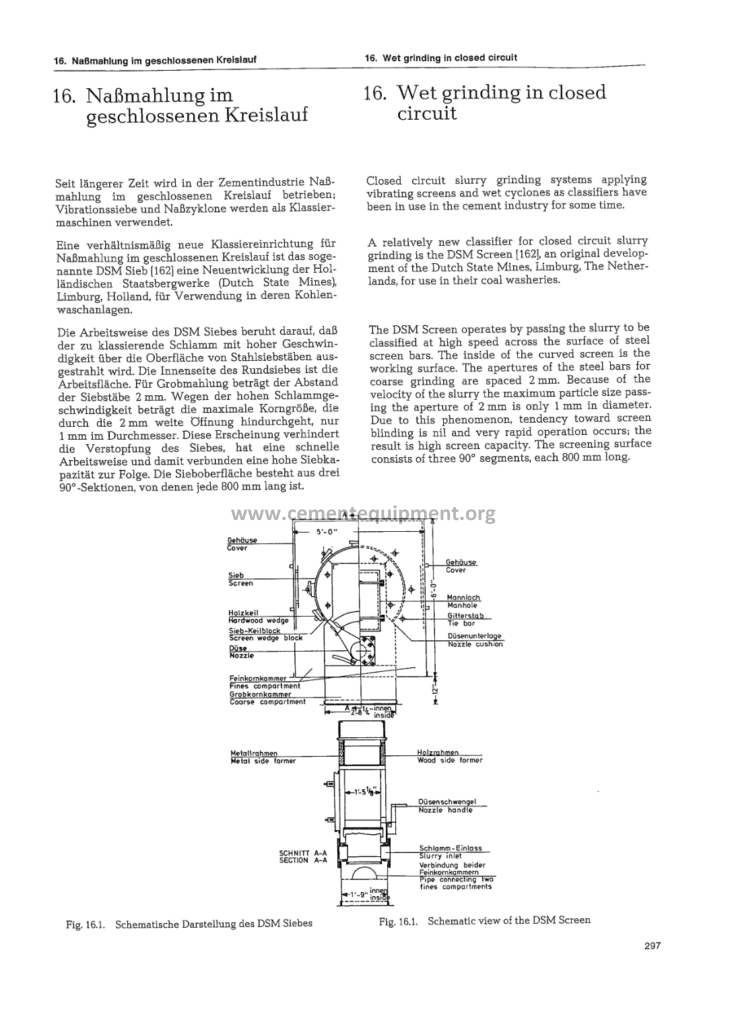
- The hydrocyclones: the modern unpowered centrifuge: the pump in the pulp tangentially: the vortex: the coarse spins out the underflow: the fines leave the central overflow: the cyclone is the crowded classifier of the modern wet loop: no moving parts, the only the pressure:
- The screens: the classifiers at the coarse end: the drum and the vibrating screens grade the oversize of the rod and the SAG: the whole world of the coarse separation remains the mechanical: the file: the screen types: the media:
- The multi-stage closing: the two and the three classifications in the series: the primary cut the secondary polish: the hydrocyclone + the screen combines: the closed-circuit optimization: the quality of the two-stage cut: the file: multistoried:
The classification in the water enjoys subtle physics: the settling velocity depends on the size AND the density AND the viscosity: the water adds the dimension the air never sees: the file explains the deviations and the field application: the engineer’s wet classifiers: the cyclone: the sieve, the tools: the closed loop is the sum of both the mill and the classifier: the water carries both: the connection: the pump.
5. The Hydrocyclone: The Vortex of the Modern Closure
The hydrocyclone is the most common classifier of the wet closed circuit in the world, and the file gives it the royal chapter:
- The geometry: the cyclone body of 100 to 1,000 millimetres: the tangential inlet chamber, the cylindrical section, the conical section and the two outlets: the top vortex finder for the overflow (the fines) and the bottom spigot for the underflow (the coarse): the standard proportioning:
- The flow: the slurry enters at the pressure of 60-300 kPa: the swirl creates the vortex with the low pressure in the center: the coarse particles spin outward and descend the cone to the underflow: the fine near the axis escape upward through the vortex finder: the separation by the centrifugal 100-200 g:
- The operating variables: the feed pressure (the pump and the valves), the pulp density, the underflow diameter (the spigot) and the feed size: the maps: the higher pressure: finer cut: the smaller spigot: the denser underflow and the coarser: the adjustments of the field: the file: the curves:
- The cyclone clusters: the batteries of the cyclones in parallel for the big lines: the 10-30 units on one manifold: the equal distribution of the feed and the wear: the ball valves at the every cyclone: the isolation and the changing:
- The maintenance: the consumable rubber or ceramic liners: the apex spigot is the wear point: the change every weeks depending on the abrasivity: the pressure gauge the torn: the cyclone time the sharp: the cost of the loop: the file estimates: per ton:
The hydrocyclone is the release of the modern wet close: cheap, passive, installed in the minute: the file: the complete selection and the design of the cyclone battery: the file’s several curve rules: the flow, the pressure and the size of the nozzle: the engineer of the package designs and sounds the cyclone loop from the file immediately: the single moving part: none: the power: the pump only: the simple: the mighty.
5. The Pump and the Pipe: The Veins of the Closed Loop
The slurry must circulate — the pumpbox, the pump and the pipes survive the intent of the loop:
- The mill discharge box: the launder box: the feed befriends the classifier underflow: the metering: the density: the box is the mixing seat of the load: the outlet the pump section:
- The slurry pump: the rubber-lined centrifugal pump: the throat of the circuit: the head of the cyclone 15-40 m: the impeller the solids content of the slurry 60-70%: the pump wear the erosion: the liners and the impellers replace every months: the standby pump always:
- The pipes and the bends: the abrasion of the internal pipe: the bending radii and the killed flows: the detection of the wear: the replacement: the pipe life on the material: the elbow: the stone: the wear-measuring devices:
- The density control on the line: the nuclear or the coriolis densitometers on the pump discharge: the flow meters: the loop control: the water addition at the box and the sump: the dilution to the cyclone feed target: the valves: the automatic: the density: the master:
- The surge and the safety: the sump at the lows, the spill ways, the splash guards: the pump protection: the “fouled cyclone” and the blocked pipes: the purge and the wander: the safety of the water circuit: the file: a hand:
The pump line is the circulatory system of the closed loop: the same slurry flows through the mill, the box and the cyclone at the rate of the whole circulating load: the pumps deliver the volumetric flow of the 3000-8000 m3/hour on the big lines: the rubber and the steel fight the rock: the file’s pump selection chapter calculates the head, the wear and the power of the loop: the operator of the wet circuit trusts his pumps as his own veins: the pump: the silent heart.
6. The Circulating Load and the Balance: The Numbers of the Water Loop
The closed wet circuit is a mass-balance machine, and the file runs the numbers:
- The circulating ratio: the tons of the coarse the returns divided by the fresh tons: 100 to 400% for the wet ball-cyclone circuits: the sand ratio: the ratio sets the concentration of the mill work: the equal of the dry: the wet uses the hydraulic instead of the pneumatic yards:
- The calculation: the mass balance with the solids and the densities: the sample (the cyclone feed, the overflow, the underflow) at the same time: the assay of the sizes: the Newton the memory: the file includes the balance: the equation roster: the example with the numbers:
- The dense loops: the high loads: 3x the new feed returns to the mill: the mill at the full density: the dilution in the box and the density of the cyclone: the proper closing: the fine: the file: the optimum of the load: the curve plateau:
- The water balance: the make-up water balances the grate dish and the product moisture: the fresh 10-40% of the flow: the water of the ore: the rain: the plant: the file: the water audit of the loop: the tanks and the return: the circuit topography:
- The solids inventory: the pulp of the mill and the tanks: the material that weighs on the system: the dynamics: the disturb: the storm surges: the residence of the water: the froth: the load: the balances of the file made
The circuit of the numbers: the wet closed is the balance sheet: the sample the density and the flow: the file trains the engineer: the mass closure 100 ± 2%: the water: the mineral: the mill: the balls: the product: the one-page balance: the trend: The check: the control: the presented: the wet spin of the same calculations that run the dry plant — the units differ: the water replaces the air: the feed of the file: the spreadsheet in the package: the click: the answer of the loop.
7. The Control of the Wet Loop: The Density and the Load Automation
The automated control of the wet circuit manages the density and the mill load:
- The mill feed control: the fresh feed by the weight: the density of the mill pulp: the power of the mill: the sound: the accurate: the loop of the mill: the feed, the water: the mill: the power: the automatic:
- The density on the cyclone: the solids of the cyclone’s feed held at 60-70%: the water valves and the sump level: the cascade of the loops: the density gauge: the pump speed: the level:
- The cyclone pressure: the constant pressure: the fixed overflow: the finer: the pressure loop: the pumps: the battery: the stable cut: the stability of the product:
- The product fineness control: the on-line particle sizer samples the overflow: the feedback to the cyclone pressure and the mill rate: the clos: the old lab sieve: the automation: the net present cream: the loop: the file’s control diagrams: the architecture:
- The plant’s distributed control: the DCS: the alarms: the trends: the ratio of the water and the ore: the operators: the dashboard: the file: the simulator: the training of the shift: the modern suites: the cloud:
The control of the loop is the discipline of the multiple loops: the maestro of the files: the instrumented loops: the mill, the pump, the density, the pressure: each setpoint: the interaction: the wet plant automates: the profit: the stable: the file: the templates: and the loops: the operator: a seat: control room: the wet loop, smooth: the metrics: the tons per day: the plant: the wheel.
8. The Energy and the Water: The Two Bills of the Wet Route
The wet circuit pays its energy and water bills, and the file opens the two ledgers:
- The grinding energy: the wet ball climbs the 10-20 kWh per tonne for the raw, 5-10 below the dry comparison where the drying is absent: the currency of the circuit: the same answer: the kWh/t of the wet plant: the file’s tables: the ores, the clinker, the specials:
- The pumping energy: the pumps and the shelf: the slurry: the 2-8 kWh/t of the total loop, non-negligible: the hydraulic power: the measuring of the pumps: the efficiency: the pumps: the file: the life:
- The water itself: the make-up of the mine and the process: the 0.3 – 1 m3 of the water per tonne: the recycle: the e gray: the treated the return: the resource of the site: the licenses: this file, the wet world: the water: the cost and the value:
- The evaporation: the env: the moist climate: the tanks: the losses: the return water, the pond: the file: the balance of the seasons: the make-up: the rain: the grid:
- The total of the wet: the total energy: the compare: the wet with the dry-with-drying: the wet wins when the ore arrives wet of the rain of the sea — it loses when the water is the desert: the total buttons: the file: the cost of the decision: the tables:
The wet route is the midday of the water: the energy transferred from the drier to the pump and the dew: the resource: the climate and the ores: the file teaches the full-cost thinking: the kWh, the water tonne and the man-hour all on the one sheet: the comparison of the wet vs the dry, not in the kWh alone but in the total capital and the operating of the site: the engineer: the full: the complete price of the route: the answer: the file: the evidence.
9. The Quality of the Product From the Wet Loop
The product of the wet closed circuit — the fine slurry — carries its own quality language:
- The fineness: the overflow of the cyclone: the Blaine equivalent of the fine: the 80% < 50-100 microns for the ores: the cement of the wet route 3500-4500: the measure: the residue by the sieve and the laser: the loop: the overflow:
- The distribution: the steepness of the wet-ground distribution: the controlled by the classifier: the rounded, the off the attack: the smooth particles of the wet: the less the surface roughness: the properties of the wet product: the flotation and the hydratation: the concrete: the wet’s own fingerprint:
- The moisture of the product: the cake at the site: the 8-25% moisture: the wet product must be dried (the kiln feed, the cake) or shipped (the slurry): the whole value chain of the wet line: the drying: the file: the complete sequence:
- The slurry homogeneity: the well-mixed, the constant density: the feed of the kiln: the lime modules mixed: the wet route: the perfection of the slurry mix: the saving of the homogenization:
- The quality control: the sample of the overflow hourly: the XRF the moisture: the density: the automatic sampler: the lab: the file: the QC chapters: the standard-of-the-wet: the control of the wet flock:
The wet loop’s product: the slurry of the characteristics: the plants that know them can deliver: the kiln feed with the constant composition and the fineness: the raw mix: the three-carat the file: the product: the value: the quality: the authorization: the tests of the wet loop: the procedure: on the line: the final: the file and the article: the detail: the slurry.
10. The Problems of the Wet Loop: The Troubleshooting in the Water
The wet grinding has its own failure language, and the file organizes the clinic:
- The cyclone roping: the underflow becomes the rope of the thick slurry: the cut collapses and the coarse floods the overflow: the cause: the feed density too high, the spigot too small, the grid clogged: the diagnoses of the rope by the sight glass: the correction:
- The pump cavitation: the starvation of the suction: the noise and the sand of the mill: the cause: the sump level or the too large pump: the damage: the corrections of the suction and the valves:
- The viscosity runaway: the slab of the slurry: the grinding drop: the cause: the fine products, the clay: the correction: the dilution, the dispersant: the file: the group of the additives:
- The wear cascade: the eroded liners of the pump, the worn spigot: the cut drifts: the spotting of the wear by the pressure & the flow signatures: the planned wa: the spares: the cost of the suddenly:
- The mill overload: the rising the pulp: the power: the grate clogged: the “pegging” of the mill: the flushing: the water: the check-grate: the re-establish: the file: the regimes of the failure: the responsible: the record: the sheet:
The troubleshooting: the systematic: the wet loop: the symptom-the-cause-the-check: the old and the new: the operation planned of the file: the clinicians of the wet: the patient: the circuit: the of the diagnosis: the pump, the cyclone and the viscosity: the trinity of the wet troubles: the file: the pray: the response: the shift: the file: the practice.
11. The Wet Versus the Dry: The Honest Scales of the Rivalry
The wet and the dry: a rivalry of the century: the file runs the famous comparison:
- The energy: the grinding: the wet 5-15% less than the dry at the same size (the lubricating of the water; the transport); the drying: absent. The dry: absent, but the energy: the mill fans: the net: the climate: the file: the tables:
- The product: the dry: the loose powder: the wet: the slurry: the downstream processes differ: the cement dry: the flotation wet: the dispute: settled by the process: the whole: the file: the properties:
- The wear: the wet is more corrosive (the water + the O2) and the pumps and the pipes wear fast: the dry: the dusty: the abrasion: both: the file: the wear data of the two routes: the maintenance: the cost:
- The environmental: the wet: the water: the treatment and the dust: the dry: the dust collection: the CO2 of the drying: the footprint: the file: the scale balances the green:
- The capital: the wet: the pumps, the pens, the treatment: the dry: the filters, the dust, the heating: the file: the compares: the installs the elementary: the total of the project: the decision table:
The wet vs the dry: the file resolves the rivalry honestly — the selection: the local: the water: the energy: the temperature: the product: the wet: the choice of the ores, the cold and the rainy: the dry: the choice of the cement, the desert and the precision: the file: no opinions: the tables and the case examples: the reader: the reasoning with the coherence: the great divide of the comminution: the file: the two worlds complete.
12. The Modern Developments of the Wet Loop: The Direction of the Water
The developments of the wet grinding and its closures — the file surveys:
- The sensor intelligence: the on-line rheometers and the particle sizes in the pulp: the digitization of the viscosity: the model predictive: the wet loops of the mines at the highest automation: the file: the instrumented pulps: the archetype of the process 4.0:
- The hydrocyclone evolution: the ceramic-lined, the optimized inlet: the efficiency curves of the new generation: the sharper cuts at the higher throughput: the tests and the case data: the file: the bifur:
- The mill: the pulp: the grate research: the pulp lifting and the discharge: the SAG discharge: the energy densities: the modern schools of the large: the file: the mill developments: the staying power:
- The dewatering integration: the closing of the water: the thickening and the filtration: the clarified water back, the cake to the end: the zero-discharge wet loops of the tight environments: the water: the resource: the file: the new schemes:
- The grinding of the changing minerals: the finer ores of the new mines: the ultrafine wet grinding: the stirred mills wet: the energy: the abrasive: the submerged: the mill: the new era of the modifications: the attention of the file’s: the future branches of the wet:
The wet loop: old, tested and renewing: the automation and the new geometries keep the water the majority of the world’s tonnage: the file closes the survey: the trajectories: the wet world will grind the lower grades of the future, the finer and the harder: the closed circuit and its water: the tools of the resource: the engineer of the package: the interface: the future: the document: a careful balance of the nostalgia and the innovation: the reader: the page: 2050: the closed loop still: the numbers.
13. Conclusion
The wet grinding in the closed circuit: the mills that tumble the pulp, the cyclones that sort in the water, the pumps that circulate the slurry: all obeying the same law of the closed circulation that makes the comminution efficient: the water: the carrier, the lubricant, the classifier: the manual: the wet route grinds the ores of the world and the raw of the wet plants: the engineer, armed with the densities, the cyclones and the circulations, runs the wet loop as the master of the elements: the water: young: the file: the knowledge: the end.
The Complete Cement Technical Package includes this complete guide to the wet closed-circuit grinding with the flowsheets, the balances, the pump calculations, the cyclone design and the troubleshooting tables: the one-time $249.99: the instant download: the library: the article has carried the reader from the slurry physics to the cyclone battery: the loop: the closed: the plant: the next: the water: the beginning: the knowledge: the package: the fluid industrial: the mastery: the complete.
The Frequently Asked Questions
Why is wet grinding more efficient than dry grinding?
At the same target size the water absorbs the heat, lubricates the particle contacts, keeps the fine particles in the suspension so they do not cushion the coarser impacts, and transports the product away: the measured advantage of 5 to 15 percent in the specific energy is typical: the wet route pays the mechanical gain in the water and the pumping costs, so the real comparison always includes the drying and the pumping – the file shows the full ledger.
How does a hydrocyclone classify particles?
The slurry is pumped tangentially into the cyclone body, creating a vortex that spins at hundreds of the earth’s gravity: the coarse particles, feeling the stronger centrifugal force, travel outward and down the cone to the underflow; the fine particles remain near the center axis and leave the overflow: the pressure of the feed and the dimensions of the apexes tune the cut: no plates, no moving parts at all.
What is the optimum solids content of a wet mill feed?
The ball mills of the wet ores run at about 60 to 70 percent solids by mass, the rod mills higher: the optimum balances the grinding efficiency (dilute pulps grind poorly) against the viscosity (concentrated pulps of the fine ground choke the media contacts): the exact optimum is measured for each material with the viscosity curves of the file: the density is the master of the loop.
Can wet and dry grinding share the same mill foundations?
The mill shells are similar but the trunnions, the seals, the grates and the slurry feed arrangements differ: a dry mill bolted to run wet requires the sealing modifications, the grate changes, the slurry launder and the classification section – in practice the conversion is a half rebuild: the honest answer: plan the route before the steel; retrofits are the costliest transitions of all.
Why is the circulating load important in the wet circuit?
The circulating load defines how many passes every particle takes through the mill: too low, the mill must reduce the product distribution to reach the target size, the overgrinds the fines: too high, the transport and the pump energy explode for the small gain: the optimum of the wet loop is commonly between 150 and 350 percent, and the file’s balance sheet shows the calculation to find the plant’s optimum empirically.
Does the wet product need to be dried completely?
Only when the market or the process demands: the slurry product of the raw mills goes directly to the wet kilns, the flotation pulps keep the water, and the filter cakes of the cement and the finished materials carry a modest 10-20 percent moisture, which the downstream systems handle: the water is not the enemy: the task’s the target: the intermediate transport of the slurry is often the cheapest of the plant’s conveyors.
Get this Bond file + the full 931-file package
$249.99 — one-time purchase, instant download, lifetime access
This file is part of the Complete Cement Technical Package (931 files) available from cementequipment.org. Respective rights holders; library copy for the licensed single user.