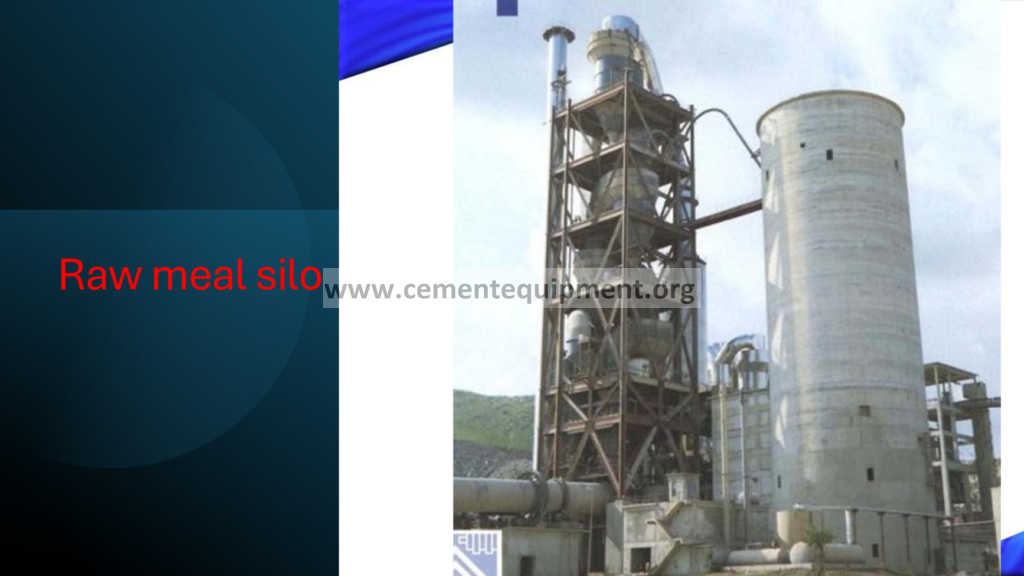
Raw Meal Silo: Design, Flow & Extraction Guide
The raw meal silo is the storage and buffering heart of the raw material handling system: it receives the raw meal from the raw mill, holds it for the periods when the mill is stopped or the kiln demand changes, and supplies it to the kiln feed system in a controlled and uniform flow. Beyond simple storage, the silo often performs homogenization, smoothing the chemical variation of the raw meal before it reaches the kiln, and it serves as the decisive buffer that decouples the operation of the raw grinding department from the operation of the pyro line. This article provides a complete technical treatment of the raw meal silo: its functions, the main types and designs, the aeration and discharge systems, the homogenizing action of the different configurations, the operation and control, the maintenance and cleaning, the safety of silo work, and the engineering decisions that govern the silo selection. It is written for process engineers, mechanical engineers, quality managers and plant operators who design, operate or maintain the raw meal storage systems of cement plants.
1. The Functions of the Raw Meal Silo
The raw meal silo performs four distinct functions in the cement plant, and the design of the silo reflects the weight given to each of them. The first function is storage: the silo holds the raw meal that the raw mill produces, so that the kiln can continue to run when the mill is stopped for maintenance, power restrictions or raw material shortages. The storage capacity is normally set at 24 to 72 hours of kiln consumption, balancing the capital cost of the silo against the availability requirements of the plant. The second function is buffering: the silo absorbs the difference between the mill’s production rate and the kiln’s consumption rate, so that neither department is forced to follow the other’s short-term fluctuations.
The third function is homogenization: the silo reduces the chemical variation of the raw meal, either passively, through the mixing that occurs during the filling and the extraction, or actively, through the aeration systems that create the blending currents. The homogenizing requirement is defined by the quality targets of the kiln feed and by the burnability of the raw mix, and it determines the type of silo installed. The fourth function is the delivery of a uniform feed: the silo and its discharge system must supply the kiln feed system with a continuous, controlled and stable flow of meal, because the kiln feed rate and composition are the direct inputs of the pyro process.
The silo therefore stands at the interface of two departments and two quality levels: it receives the raw mill product, whose composition varies with the raw materials and the mill operation, and it delivers the kiln feed, whose composition must be held within the narrow limits that the kiln can process. The design and the operation of the silo are the practical tools with which this quality transition is managed, and every engineering decision, from the silo size to the aeration arrangement, is ultimately a quality decision.
2. Types of Raw Meal Silos
The raw meal silos of the industry fall into three broad families, distinguished by their homogenizing ability: the storage silos, the mixing silos and the homogenizing silos. The storage silo is a simple vessel with a central or multiple discharge, designed primarily for capacity; its homogenizing effect is limited to the statistical mixing of the layers during the filling and the extraction. The mixing silo adds aeration elements that fluidize the meal and create some blending currents, achieving a moderate homogenization with the moderate complexity. The homogenizing silo, such as the CF design, the multi-compartment silo or the intermittent section silo, is engineered specifically for the blending, with the sequenced aeration, the selective extraction and the blending indices of 5 to 15 or more.
The engineering selection between the types follows the plant’s quality situation:
- A plant with a stable raw material and a modern raw mix control can operate with storage silos and external homogenization in the conveying system, minimizing the capital and the operating cost.
- A plant with a moderately variable raw material typically installs a homogenizing silo of the CF or the multi-compartment type, achieving the required blending index with the moderate cost.
- A plant with a difficult raw material, or a plant that must guarantee the tightest kiln feed control, installs a combination: a homogenizing silo followed by a small kiln feed silo that provides the final buffering.
The physical design of the silo is dominated by the storage and the flow requirements. The silo is a vertical cylinder with a conical or flat bottom, built of reinforced concrete or welded steel, with the height-to-diameter ratio chosen for the required capacity and the homogenizing effect. The concrete silos dominate for the large capacities because of their lower cost, while the steel silos are used for the smaller capacities and the faster construction. The bottom geometry is the critical flow element: a steep conical bottom promotes the mass flow of the meal to the central discharge, while a flat bottom requires the aeration to move the meal toward the extraction points.
3. The Discharge and Aeration Systems
The discharge system of the raw meal silo must deliver the meal from the storage volume to the conveying system in a controlled and reliable flow. The principal discharge arrangements are the central discharge, in which the meal flows by gravity through a central outlet in the cone; the multiple discharge, in which the meal is extracted through several outlets arranged across the flat or gently sloping bottom; and the aeration-assisted discharge, in which the meal is fluidized by the aeration elements in the bottom and flows to the outlets as a fluid. The choice between the arrangements determines both the reliability of the flow and the homogenizing effect of the extraction.
The aeration elements are the key components of the discharge and the homogenizing systems:
- The aeration pads: the porous plates, made of sintered metal, ceramic or polymer, through which the compressed air enters the meal bed; they are arranged in sectors over the silo bottom.
- The air supply: the blowers deliver the air at a pressure of 0.5 to 1.5 bar through the ring mains and the sector valves, and the pressure in each sector is monitored.
- The aeration control: the air to the discharge zones is controlled to maintain the fluidization and the flow, and the air to the homogenizing zones is sequenced for the blending effect.
- The airlocks and the discharge valves: the rotary valves, the slide gates and the discharge boxes that control the meal flow from the silo to the conveying system.
- The conveying system: typically the airslides and the bucket elevators that transport the meal to the kiln feed silo or the weigh feeders.
The flow behavior of the raw meal in the silo is governed by its bulk properties: the meal is a free-flowing powder with a median particle size of 20 to 50 microns, and it flows by gravity when the outlet is open and the hopper angle is steep enough. The risk of the flow interruption is the ratholing: the formation of a vertical channel above the outlet, with the surrounding meal remaining stationary, which stops the flow and prevents the homogenization. The aeration is the standard remedy: the fluidization of the bottom breaks the arches and the ratholes, restores the flow and allows the complete extraction of the stored meal.
4. Homogenization in the Raw Meal Silo
The homogenizing performance of the raw meal silo is described by the blending index, the ratio of the standard deviation of the incoming composition to the standard deviation of the discharged composition. The mechanisms that produce the homogenization are statistical: the silo mixes portions of meal from different times and different zones, and the law of large numbers reduces the variation of the mixture relative to its components. The effective mixing depends on the number of statistically independent portions that are combined per unit of discharged volume, and the silo designs differ precisely in how many independent portions they combine.
The simple storage silo achieves a blending index of 2 to 4 through the layer mixing during the filling and the extraction: the meal is distributed in horizontal layers as the silo fills, and the extraction through the cone mixes the layers from different heights. The mixing silo achieves 4 to 8 with the aeration-supported extraction, which adds the lateral mixing. The homogenizing silo achieves 8 to 15 or more with the sequenced sector aeration, which extracts the meal selectively from all the zones and creates the intensive mixing currents. The plant’s quality requirement, combined with the raw mill’s correction capability, determines which index is needed, and therefore which silo type is installed.
The practical measurement of the homogenization is performed with the routine quality data: the calcium carbonate or the lime saturation factor is sampled in the kiln feed, and the same parameters are sampled in the raw mill product. The standard deviations are computed over a defined period, and the ratio is the achieved blending index. The measurement is standardized within the plant, so that the trends of the index reflect the real changes in the silo performance: the effect of the level, the aeration settings, the silo cleaning and the raw material changes are all visible in the index trend.
5. Operation and Control of the Raw Meal Silo
The operation of the raw meal silo is the management of the material balance: the filling by the raw mill, the level in the silo, and the discharge to the kiln feed. The operator’s central parameters are the silo level, the discharge rate, the aeration pressures and the quality of the delivered meal. The control system automates the routine: the level control adjusts the raw mill output to the kiln consumption and the level target, the discharge control maintains the kiln feed rate, and the aeration sequence runs the homogenizing program.
The operating principles of the silo are:
- The level management: the silo level is held in the operating range, typically 40 to 80 percent, to provide the buffer for the mill stops and the kiln disturbances without the risk of the overflow or the complete emptying.
- The discharge stability: the kiln feed rate is held constant by the discharge control, and the weight feeding system verifies the rate continuously.
- The aeration verification: the sector pressures and the air flows are monitored for the correct fluidization, and the operator responds to the deviations with the valve and the blower adjustments.
- The quality monitoring: the kiln feed samples are analyzed, and the quality department uses the results to manage the raw mix corrections and the silo transition periods.
- The transition management: when the raw mix changes, the new meal is layered into the silo and extracted gradually, so that the kiln feed composition moves smoothly to the new level.
The control of the silo also includes the safety functions: the high-level and the low-level alarms, the interlocks of the conveyors and the valves, and the emergency procedures for the power failure, the blower failure and the feed interruption. The operator’s shift routines cover the verification of the equipment, the recording of the levels and the pressures, and the reporting of the deviations, and the shift handover passes the silo state and the ongoing issues to the next crew.
6. Maintenance of the Raw Meal Silo
The maintenance of the raw meal silo concentrates on the mechanical components that operate continuously: the aeration elements, the valves, the blowers and the conveying equipment. The aeration pads are the wear and the fouling components: they clog with the fine dust, the moisture and the condensation, their pressure drop rises and their fluidizing performance falls, and they are cleaned or replaced on the schedule derived from the pressure monitoring. The blowers and the compressors receive the standard rotating machine maintenance: the oil changes, the filter cleaning, the belt and the coupling checks and the pressure verification.
The maintenance program covers:
- The aeration elements: the cleaning with the compressed air or the replacement of the blocked pads, on the schedule and the condition.
- The air lines and the valves: the inspection for the leaks, the verification of the valve operation and the calibration of the pressure instruments.
- The discharge boxes and the rotary valves: the wear inspection, the seal renewal and the drive maintenance.
- The conveying system: the airslide maintenance with the aeration and the fabric condition, the elevator chains and buckets, and the belt conveyors.
- The instrumentation: the level transmitters, the pressure transmitters and the flow meters, with the calibration and the verification.
- The silo internals: the inspection of the distribution system and the detection of the deposits during the silo cleaning.
The silo is emptied and cleaned periodically, typically during the annual stops or when the material condition or the internal inspection requires it. The cleaning is performed with the full confined space precautions: the silo is isolated from the conveying systems, ventilated, gas tested, and entered under the permit with the standby personnel and the rescue plan. The cleaning removes the deposits, the compacted material and the residues, restores the silo’s full capacity and the flow behavior, and provides the access for the internal inspection of the aeration and the distribution equipment.
7. Safety in Raw Meal Silo Work
The raw meal silo is a confined space with specific hazards, and the safety of the silo work is a distinct discipline. The principal hazards are: the engulfment and the burial in the meal, which can occur when the silo is entered without the isolation of the discharge; the atmosphere, which may be deficient in oxygen or contaminated with the dust and the gases; the fall hazards during the access and the work at height; and the mechanical hazards of the conveying and the aeration equipment. The safety program therefore includes:
- The permit-to-work system for all silo entries, with the isolation of the feeding and the discharge equipment and the locking of the valves.
- The atmospheric testing before and during the entry, with the continuous monitoring of the oxygen and the gas concentrations.
- The ventilation of the silo during the work, using the blowers and the ducts to maintain the breathable atmosphere.
- The entry with the harnesses and the lifelines, with the standby personnel at the entry point and the rescue plan rehearsed.
- The use of the appropriate personal protective equipment, including the respiratory protection against the dust.
- The prohibition of the entry onto the meal surface without the protective equipment, because the meal can engulf a person in seconds.
- The housekeeping of the silo area, the platforms and the access ways, and the correct storage of the tools and the materials.
The training of the personnel in the silo safety is mandatory: the permit procedures, the gas testing, the rescue techniques and the emergency communication are drilled at the defined intervals, and the plant maintains the records of the permits, the testing and the drills. The silo safety is a management priority, because the confined space incidents are among the most serious accidents that a cement plant can experience.
8. Design Considerations for New Raw Meal Silos
The design of a new raw meal silo is an engineering project that integrates the process requirements, the civil and the mechanical design, and the operating and the maintenance considerations. The principal design decisions are the capacity, the silo type, the geometry, the discharge and the aeration system, the instrumentation and the interface with the conveying and the kiln feed systems. The design process follows the quality requirements first: the required blending index is derived from the raw material variation and the kiln feed quality target, and the silo type and size are selected to achieve it.
The capacity is set by the storage requirement, normally the kiln consumption during the longest planned raw mill stop plus the margin for the disturbances. The geometry, the diameter and the height, is set by the capacity, the site constraints and the homogenizing requirement, since the height-to-diameter ratio influences the mixing. The bottom and the discharge design follow the flow and the aeration requirements: the steep cone for the gravity flow, the flat bottom with the aeration sectors for the homogenizing designs, and the multiple outlets for the large diameters. The instrumentation covers the level, the pressures, the flows and the quality sampling, and the control system integrates the silo into the plant’s process control.
The design also addresses the reliability: the redundant blowers, the spare aeration elements, the access for the inspection and the maintenance, and the provisions for the future capacity increase. The civil design of the concrete silo includes the foundation, the wall and the roof structure, with the wind and the seismic loads; the steel silo adds the fabrication and the erection considerations. The complete design is documented, and the operating and the maintenance manuals are prepared for the plant’s personnel.
9. Frequently Asked Questions
Q1: How much storage capacity should a raw meal silo have?
Typically 24 to 72 hours of the kiln consumption, depending on the raw mill availability and the plant’s buffering philosophy. The capacity is a trade-off: more capacity gives more buffering and homogenizing volume but costs more capital and floor space.
Q2: What is the difference between a storage silo and a homogenizing silo?
The storage silo is designed for the capacity and delivers a moderate homogenization through the layer mixing; the homogenizing silo is engineered with the aeration sectors and the sequenced extraction to achieve a high blending index. The plant selects the type according to its quality requirements.
Q3: Why does the raw meal need to be aerated in the silo?
The aeration fluidizes the meal, making it flow like a liquid: it enables the discharge through the outlets, breaks the arches and the ratholes, and creates the mixing currents for the homogenization. Without the aeration, the fine meal can bridge and stop the flow entirely.
Q4: What is a rathole and how is it prevented?
A rathole is the vertical channel that forms above a discharge outlet when the surrounding meal remains stationary. It stops the flow and the homogenization. It is prevented by the steep hopper angles, the aeration of the bottom and the correct design of the discharge geometry.
Q5: How often is the silo cleaned?
Depending on the material behavior and the inspection findings, typically once per year or per two years, usually synchronized with the kiln stops. The cleaning removes the deposits and the compacted material and allows the internal inspection of the aeration and the distribution equipment.
Q6: Can the silo compensate for the raw mix errors?
The silo homogenizes the variation around the average composition, but it does not correct the average. The average is corrected by the raw mix control at the raw mill, and the silo and the raw mix control work together to deliver the stable kiln feed.
10. Final Summary
The raw meal silo is the storage, buffering, homogenizing and feed delivery system that stands between the raw mill and the kiln, and its engineering covers the capacity, the type selection, the discharge and the aeration systems, the operation and the control, the maintenance and the safety. The silo types range from the simple storage vessels to the engineered homogenizing designs, and the selection is driven by the quality requirements measured through the blending index. The operation manages the material balance and the quality, the control system automates the level, the discharge and the aeration, and the maintenance protects the aeration elements, the blowers, the valves and the conveying equipment, with the periodic cleaning and the confined space safety as the fixed disciplines. The well-designed and well-operated raw meal silo delivers the stable kiln feed that the pyro process requires, and this article has provided the complete technical framework for its design, operation and maintenance.
13. The Raw Meal Silo Design and the Storage Function
The raw meal silo is the buffer between the raw mill and the kiln system: the silo capacity of the plants typically covers the 6-24 hours of the kiln feed (the 5000 t/d plant needs the 1000-3000 tonnes of the storage), the silo protects the kiln operation from the raw mill stops and the feed variations, and the silo provides the final homogenization of the raw meal before the kiln. The design of the silo considers the material flow: the raw meal is the fine dry powder (the 80-90% below the 90 microns, the moisture below the 1%) that flows well when aerated, and the silo geometry (the conical or the flat bottoms, the central or the peripheral extraction) together with the aeration system ensures the reliable discharge without the bridging, the ratholing and the segregation: the storage function of the raw meal silo is the operational buffer that decouples the raw grinding from the pyro-processing.
14. The Flow Problems and the Solutions in the Raw Meal Silos
The flow problems of the raw meal silos are the operational reality of the plants: the bridging (the arch of the material over the discharge opening that stops the flow), the ratholing (the stable pipe of the flow through the stagnant material), the segregation (the size and the density separation during the filling that changes the quality of the discharged meal), and the hydration (the moisture that cakes the meal at the silo walls and the aeration pads). The solutions combine the design and the operation: the flow-promoting geometries (the steep hoppers, the mass flow transitions), the aeration pads at the hopper walls and the bottom, the discharge aids (the air cannons, the vibrators, the flow inserts), and the operational practices (the low-moisture air, the regular level management, the periodic silo inspections and the cleanouts): the flow reliability of the raw meal silos is the quiet precondition of the uninterrupted kiln operation.
15. The Extraction and the Feeding to the Kiln
The extraction of the raw meal from the silo feeds the kiln system through the controlled chain: the extraction equipment (the rotary feeder, the screw extractor or the fluidized extraction at the silo bottom) discharges the meal to the conveying system, the weighing and the metering equipment (the loss-in-weight feeders or the weigh belts) measure the kiln feed rate, and the pneumatic conveying delivers the meal to the preheater top stage: the extraction rate follows the kiln feed demand with the accuracy of the 1-2%, the extraction quality is controlled by the silo blending and the sampling, and the extraction system is interlocked with the kiln feed control. The modern plants extract from the homogenizing silos with the continuous blending, and the extraction quality data closes the quality loop: the silo extraction is the final quality adjustment point before the kiln feed, and its reliability and its accuracy are the last links of the raw meal preparation chain.
16. The Silo Instrumentation and the Level Management
The instrumentation of the raw meal silo manages the storage safely and reliably: the level measurement (the continuous level transmitters, the radar and the guided wave instruments, the diaphragm and the paddle switches) prevents the overflow and the emptying of the silo, the extraction and the feed instruments (the weigh feeders, the flow meters) measure the discharge, and the aeration instrumentation (the pressures, the air flows) monitors the blending and the fluidization. The level management of the silo follows the operational rules: the minimum working level (the 10-20% of the capacity) protects the extraction against the ratholing, the maximum level (the 85-95%) avoids the overflow and the dust, and the planned level campaigns (the controlled emptying and filling cycles) manage the meal age and the homogenization. The instrumentation data of the silo is integrated with the quality and the production systems: the silo levels, the discharge rates and the quality trends are visible to the control room, and the integrated silo management prevents the operational surprises: the raw meal silo is the controlled buffer of the plant, not the passive storage.
Get this cement file + the full 931-file package
$249 — one-time purchase, instant download, lifetime access
This file is part of the Complete Cement Technical Package (931 files) available from cementequipment.org. Respective rights holders; library copy for the licensed single user.