Operation Of Tube Mills: Complete Technical Guide
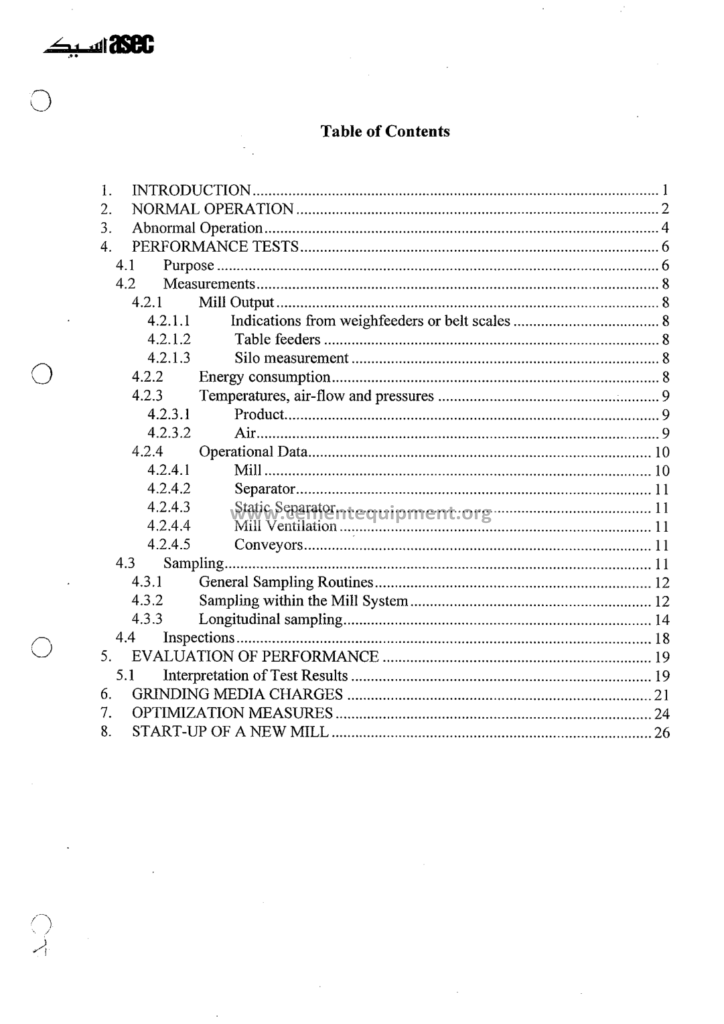
The operation of the tube mills is the daily discipline of the cement grinding department: the mill that grinds the clinker, the slag, the raw meal and the coal is the machine that turns the kiln product into the saleable powder, and the way the shift runs it decides the tonnage, the fineness, the temperature, the energy and the life of the steel inside: the tube mill is not a black box: it is a system of the cascading media, the aerated bed, the classified product and the controlled temperature that responds to every decision of the operator: this article is the complete operating guide to that system, in the spirit and the content of the OPERATION OF TUBE MILLS file of the package.
The Complete Cement Technical Package (931 files, the courses, the books, the Excel tools and the presentations: $249 one-time: instant download immediately after payment) contains this operating course with all its chapters, its checklists and its worked examples: this page walks the file from the first chapter to the last: the reader gets the operating logic that the course delivers in the plant and in the classroom: the beginning operator builds the mental model, the veteran checks his own habits against the file, and the trainer takes the structure directly into his shift training.
The tube mill remains the majority of the worldwide grinding fleet even in the era of the vertical mills, because it is robust, predictable and easy to maintain: many champions of the industry grind with the iron barrel they installed decades ago, upgraded with the modern liners, the dynamic classifiers and the modern control: the operation of the tube mill is therefore a timeless skill: the professional who masters the charge, the speed, the media level, the sound, the temperature and the residue of the product can run any tube mill built in the last sixty years: this guide follows the operating file and turns the physical machine into a professional instrument.
1. The Tube Mill Anatomy: What the Operator Faces Every Day
The tube mill is a horizontal steel barrel, rotated by a motor through the gearbox and the ring gear or the gearless drive, filled with the grinding media, and fed continuously: the operation begins with the anatomy, and the file documents every part:
- The shell: the welded steel cylinder that rotates around the horizontal axis at a fraction of the critical speed: the shell carries the liners that protect the steel and lift the media;
- The liners and the lifters: the internal profiles: the lifting liners of the coarse chamber, the wave and the classifying liners of the fine chambers: the liners dictate the motion of the media: the high lift throws the balls, the low lift rolls them, and the classifying liners sort the media along the barrel automatically;
- The diaphragms or the partitions: the internal walls that divide the barrel: the feed plate and the discharge plate with the slots that let the material through but stop the balls: the diaphragm controls the material level and forces the coarse material to travel the full length;
- The feed and the discharge: the inlet pipe with the feed spout or the screw feeder, the outlet grate and the discharge housing: the feed arrives by the belt or the elevator and the product leaves into the discharge or the air slides;
- The drive: the ring gear at the center or at the end, the pinion, the auxiliary drive for inching the shell during the maintenance, the motor with the clutch: the drive transmits the hundreds to the ten thousand kilowatts that the barrel needs;
- The ventilation: the inlet for the gas and the air, the outlet pipe to the dust filter: the airflow through the mill sweeps the fines out and cools the interior;
The file insists that the operator draws the mill from memory in the first session: the drawing forces the mental map: the feed, the chamber, the diaphragm, the fine chamber, the discharge, the gas path: the positions of the manholes where the media is inspected: every screw and every hatch is part of the operating story of the machine, and the operator who knows the anatomy reads the symptoms correctly.
2. The Motion of the Media: The Cascading and the Cataracting
The soul of the mill is the motion of the balls inside: the theory of the rotating drum applies to all the tube mills, and the operating file teaches it with the trajectory drawings:
- The cascading: the charge rotates with the shell until the angle of repose is reached, then the outer layers roll down over the inner layers: the grinding happens by the attrition and the shear between the layers: the regime of the fine grinding at the medium throughput;
- The cataracting: the charge is lifted high and the top layers leave the shell to fall through the air in a parabola: the impact of the falling balls breaks the coarsest feed: the regime of the coarse chambers and the coarse grinding;
- The centrifuged regime: the speed too high, the balls stick to the shell and no grinding occurs at all: the waste of the power and the heat: the point the operator avoids;
The operating speed of the typical tube mill is 70 to 80% of the critical speed, where the critical speed of a mill of diameter D in meters is about 42.3 divided by the square root of D, in revolutions per minute: the filling of the media, generally 30 to 35% of the internal volume, together with the speed defines which regime the charge practices: the operator who knows the two numbers knows the picture inside without looking: the mill sound discipline starts here, in the physics of the tumble.
3. The Operating Variables: The Six Knobs of the Mill
The operator has a fixed number of handles, and the file lists them as the six knobs of the mill: every action of the shift is one of the six:
- The feed rate: the tons per hour that enter the mill: the main knob, the answer to the demand, the most exercised control;
- The feed size: the incoming particles from the crusher or the upstream circuit: fixed by the design but drifting with the plant, and the operator must notice it;
- The grindability: the hardness of the material: the operator cannot change it, but knows its trend and adjusts the rest around it;
- The media charge: the level and the grading of the balls: set by the maintenance at the stops, monitored through the campaign;
- The mill speed: fixed by the gear ratio for the standard mills, variable for the modern drives: a change of the speed means a different regime inside;
- The air and the temperature: the ventilation flow and the internal temperature: the drying in the raw mill, the cooling in the finish mill: the most neglected knob, read every hour;
The hierarchy of the knobs: the daily dance of the operator is between the feed rate, the sound and the residue: the media, the speed and the ventilation are the weekly and the monthly set points: the good operating analysis keeps all six in view at every session: the file provides the log sheets that name all six per hour, so the drift of the mill becomes a drift of the numbers instead of a memory of the shift.
4. The Mill Sound: The Ear of the Shift
The most famous instrument of the tube mill is not an instrument: it is the ear of the experienced operator, supported today by the electronic ear: the sound discipline of the course is a whole chapter:
- The full mill: the heavy, low rumble: the crushing of the feed by the balls: the packed state at the correct load gives a dense rolling noise without the sharp knocks;
- The empty mill: the metallic ringing and the clatter of the balls against the liners: the empty state wastes the energy, wears the steel and heats the mill: a danger of the overloaded mill, reversed;
- The overloaded mill: the muffled and dull sound, the noise fading: the charge is choking in the material, the grinding stops and the mill prepares to plug;
- The underloaded mill: the clear, striking sound with the frequent metallic contacts: too little material in the bed: the feed must rise;
The modern plants hear the mill in the control room: the microphone with the bandpass filter extracts the grinding band of the noise, the peaks and the valleys are the load contour: the electronic ear replaced the walking rounds, but the interpretation remains a skill: the file shows the plots of the sound versus the residue from the real plants, how the sound track lines up with the feed disturbances, and how the automatic control loops on the sound to keep the mill fill in the optimum band: the new operator learns the three states within the first week, the good operator keeps the ear for life.
5. The Charge Control: The Fill Level and the Regulation
The internal state of the mill is the charge: the material level inside the drum, and the operating file details the measurement methods:
- The absorbed power: the motor power as the fill indicator: the power curve of the mill has a maximum at a specific fill, and the operator keeps the mill at the power point that matches the capacity: the classic method, still the primary;
- The bearing pressure: the load cells under the bearings: the weight of the whole mill including the charge: the weight rises as the material accumulates: more of a level sensor than a fineness vision;
- The differential pressure: the difference between the pressure at the inlet and the outlet: the material in the drum restricts the air path: the pressure rises with the fill and warns of the approaching plug when the values climb;
- The sound method again: the oldest and the fastest: the automation combines it with the other signals in the multi-input controllers;
The goal of the charge control is the optimum point of the mill: enough material in the ball bed that the balls exactly touch the material, never each other and never in the suffocation: the capacity of the mill is a curve drawn against the fill, it has a peak, and the operator steers the fill to the peak with the feed and the ventilation: the file shows the control diagram and the tuning of the load loop; the plants that follow it hold the tonnage peak despite the feed variation: the fill is the direct mirror the state of the iron.
6. The Start and the Stop: The Sequence of the Shift
The starts and the stops are the events where the plant condition changes the fastest, and the file drills the exact sequences:
- The preparation: the lubrication system start (the oil sump, the bearing oil, the pressure and the temperature of the oil), the cooling water, the seal air, the local atmosphere check for the dust and CO, the position of the gates, the drive brakes and the manholes locked;
- The start of the mill: the cement mill starts loaded (with a previous charge of the material) or blank depending on the drive and the coupling: the first turn at the low speed if the ring auxiliaries available, the main motor in with the clutch, the mill only the rotation is at the safe speed to accept the feed;
- The feed order: the mill reaches the operating condition, the feed is raced from low to the target over the minutes to avoid admitting full the coarse material to an empty media bed: the fast opening is the cause of the first-chamber bogging;
- The sequence of the stop: the feed stops first and the mill runs empty for the minutes (the purge period) to discharge the machine; at the end the gas and the fan are stopped after the housing clears, the drive latches, the maintenance access awaits the permits;
- The emergency stop: the motor trips, the operators stop the feed, the cooling continues, the mill gate the drive: the file lists the emergency list that belongs above every desk;
The stop tea practice is the signature of the trained crew: the balanced shutdown protects the media, the liners and the operator: the cement is not something to be sucked out of a stopped mill: the file’s checklists for the I and the O sequences are laminated on the walls of the plants that follow the package, and the fresh crews are tested on them before the first stand-alone shift.
7. The Temperature and the Ventilation of the Finishing
The finish mill is the heat engine of the grinding: the grinding converts most of the energy into the heat, and the grinder governs the cement temperature by the ventilation and the cooling water:
- The mill temperature normally runs at 100 to 130 degrees Celsius at the discharge: measured on the liners of the first compartment, the outlet and the bearing:
- The temperature of the discharge cement over 110-120°C risks the gypsum dehydration: the sulfate converts to the hemihydrate and the anhydrite: the false set and the strength drop are the consequence: the quality knife;
- The ventilation of the mill does three duties: it transports the fine powder to the separator, it cools the bed, and it announces the internal state by its flow and the delta: 0.8 to 1.4 m/s through the mill gas is the typical practice;
- The water spray or the internal water injection cools the last chamber when the ventilation alone falls short: only the closed-loop water systems are used, because the water must not wet the cement;
The thermodynamics of the mill are simple: the grinding power goes partly to the new surface and partly to the heat; every kilowatt that becomes heat must leave through the air, the water or the cement itself: the file gives the heat balance sheet of the finish mill and the table of the gypsum water loss versus the temperature: the cement stored hot in the silo gives the pack set and the strength complaints: the operating proof of the mill is the cool product: the best tonnage is the one the customer can store for a month without the problems: the temperature discipline is therefore not a comfort issue but a quality instrument, read on every hour.
The ventilation numbers deserve the operator’s attention: the standard finish mill of 4.2 meters diameter and 13 meters length runs with a gas flow of about 60,000 to 90,000 cubic meters per hour through the mill, at a velocity of 0.8 to 1.2 meters per second: the velocity range is the balance: too slow and the fine particles do not leave the drum, the over-grinding separates from the bed and the mill plugs; too fast and the coarse particles are carried out, the separator overloads and the residue of the product rises: the delta pressure across the mill is the visible signature of the ventilation: normally 300 to 500 Pa, climbing slowly with the fill and jumping with the blockages: the operators who log the delta after every shift see the mill’s interior without entering it: the file includes the ventilation calculation sheet with the density corrections for the hot and the cold days.
8. The Mill Balance: The Residence Time and the Material Flow
The operator who masters the flow through the drum understands the delay of the decisions: the residence time is the average time a particle spends inside the mill, and it is the clock of the mill operation:
- The residence time of the ordinary finish mill is 30 to 60 minutes: the material travels from the feed end to the discharge in stages: the first minutes break the coarse material, the later minutes refine the fine: the passage is graded, not uniform;
- The material level inside the drum (the inventory) divided by the feed rate defines the time of the bed: the operators measure the inventory by the power and the bearing loads, and they know that a sudden feed change needs a full residence time to reach the separator and the product sample point;
- The mill internal loading in the operation: the first chamber carries the highest specific material (the grinding bed cushions the impact of the large balls), the second chamber runs leaner: the transfer over the diaphragm follows the draft of the material: the packing of the diaphragm slots is the classic restriction that stretches the residence;
- The draw: the flow out of the mill is a function of the feed, the internal level and the slot area: the mill draws like a tank with a hopper, and the operator controls the level by the feed just as the kiln operator controls the burning zone by the feed: the difference: the mill response is minutes, the kiln hours;
The mass balance of the mill is the workbook exercise of the course: the feed in, the product out, the return from the separator, the dust: two hours of the logged flow and the table of the balanced residence: the exercises of the file build the instinct of the operators: after the balance, the “one more ton per hour” talk becomes concrete: the flow discipline of the mill is the root of all stability: the roller mill and the ball mill both eat in the same rhythm when respected.
9. The Grinding Media in Operation: The Watching and the Campaign
The media inside determines everything the operator measures, and the operating course follows the media from the charging to the campaign:
- The initial load: the delicacy of the first filling: the correct grading shortens the commissioning camp: the wrong grading burns the liners and the power: the file includes the calculation sheets of the media load;
- The topping up: the media consumption in the operation, typically 20 to 60 grams per ton of cement, is compensated daily or weekly by the fixed quantities: the topping up follows the reading of the mill power and the residence residue:
- The media sampling: at the stops the operator draws the media samples at the fixed local and measures the wear distribution: the ball size histogram shows the alloy quality and the sorting date:
- The re-sorting and the re-loading: the yearly task that empties the mill, screens the full charge by the size, and rebuilds the graduation: the correct mediation plan halves the power per ton in the older machines:
The media plan is the budget of the finish department: the file contains the media Excel of the consumption and the monitoring charts, so the superintent combs the wear rate of his own mill against the reference and against the history: the monthly chart of the media level is the heartbeat line of the grinding economy: and the operator of the plant stands among the numbers of his own campaign, not the visits of the suppliers.
9. The Closed Circuit: The Separator as the Operating Partner
Most tube mills today run in the closed circuit with a separator, and the operation of the ‘pair’ is the crown of the course:
- The circuit rhythm: the mill product goes out partially ground, the separator splits it into the fine cement and the coarse return: the return travels back to the mill feed, the circuit breathes: the circulating load is typically 100 to 250%;
- The separator settings: the speed of the rotor, the airflow of the fan and the guide vanes determine the cut size: the operator monitors the residue of the separator feed and product to know the justification of the mill activity:
- The dynamic combination: the mill and the separator are two coupled processes: a fast adjustment of the mill means a late change at the separator exit, the loop must be calm: the PID strategies of the file control the residue with the separator speed and the load with the mill feed;
- The energy logic: the closed circuit breaks the over-grinding: the separator returns only the coarse, so the mill stops doing the fine the fines repeated: the energy per ton is lower and the residue distribution is sharper;
The separator is not the inspector of the mill’s order; it is the partner: the course treats the two as one machine with the intermediate product: the operator who closes the circuit learns the language of the classification in addition to the language of the tumbling: the package has the separate chapter and the article on the separators, and the full training of the grinding works across both stations.
10. The Coal and the Raw Mills in the Operation Plan
The tube mill family serves three masters, and the operation differs with the product:
| Duty | Feed | Operating special |
|---|---|---|
| Raw grinding | Crushed limestone/clay | Drying in the process, the air and the temperature double the duty |
| Cement finishing | Clinker + gypsum | The gypsum dehydration control, the temperature and the fineness target |
| Coal grinding | Lump coal | The inert atmosphere, closed the inert gas system, the CO watch, the millal the risk |
The interchangeability of the tube mill is its strength: the sites that run the same drum for the raw and the finish save the warehouse and train the crews the kids: but the operating parameters and the safety envelopes are specific: the coal mill operating rules for the oxygen and the CO at the discharge and the automatic trip, the raw mill uses the kiln gases with the moisture dynamics, the finish mill lives under the gypsum chemistry: the file devotes a separate operating section to each: the quick-reference cards for the coal mill and the raw mill are part of the package, for the operations in the same complex.
11. The Common Disturbances and Their Remedies: The Case of the Shift
No mill passes the month without the disturbances, and the file presents the casebook of the grinding floor:
- The sagging the flow: the mill stops the feed and barely moves: the cause: the moisture of the feed, the reached the plug, the broken air path: the cure: the reduce the feed, raise the air, turn the mill at the speed until the bed unravels, do not the exhaustion the motor;
- The eddy the residue: the product is coarse: the causes: the low media, the worn liners, the wrong speed, the miscalibrated separator: the triage: the audit of the media, the air, the drive;
- The raised temperature: the cementorning the pack: the ventilation increase, the water spray, and the review of the feed heat;
- The vibrations of the drive: the gear, the pinion, the bearing damage: the trip of the mill, the inspection, the alignment: the mechanical case, the operator recognizes the signature and protects the machine;
- The sudden fineness jump: the separator inlet of the new feeding material, the delaminated the classifier blade: the checks by the specific the order given in the casebook;
The casebook is not a list of the theories, it is the order of the diagnostications: the symptom, the probable causes in the order, the tests to confirm, the remedies with the estimates: the file formats the casebooks for the plant’s manual, and the trainers of the package repeatedly practice them in the classroom: the operative of the mill resolves the disturbances inside the hour instead of waiting for the shift change.
12. The Energy Management in Operation: The kWh of the Ton
The operating course closes the process with the energy: the ton per kilowatt-hour the improvement objective, the daily measure of the grinding:
- The measurement: the kWh per ton of the product with the meter of the mill only (the unit air also), reported by the hour and the shift: the base and the target from the pellet;
- The list of the power drains: the overgrinding (circulation and classification blunders), the high temperature circulation, the low material levels, the empty running, the separator recirculation at the peak: each appears in the numbers;
- The trim moves: the level of the mill feed steadiness, the low feed size, the correct media gradient, the adequate ventilation, the calcination in the correct speed: the monthly audit package, the energy reporting workbook;
- The night work: the same grid at the lower rates and the appliances: the mill at the low load must still be efficient: the operators steer the reception around the other flows;
The energy of the daily operations is the ~3% of the global: the same duty by the team actions halves that class: the Excel tool of the package reads the meter and prints the shift report: the superintendent sees the kWh/ton of every shift of the week and the trends of the drives the guidance: the energy discipline is the final chapter of the operating, and the mill that masters flow of the energy masters the door of the profit.
13. The Safety of the Operation: The Locked and the Confined
The tube mill is one of the plant’s heaviest and most confined machines, and the safety is not a chapter, it is the layer under every other chapter:
- The LOTO: the lock-tag-try of the drive and the energy, the breaker, the clutch: before any human work approaches the drum, the energy is locked at the source;
- The confined space: the mill body is a confined space: the atmosphere tested (the O2, CO), the ventilation run, the lights of the certified, the fire blanket: covered in the file’s permit-to-work samples;
- The storage and the hot work: the charging of the media and the hot welding near the dust and the coal: the spark and the dust explosion the reason of the procedures: the mill air and the concentration checks;
- The barricades: the access in the moving parts (the ring, the inlet screw, the guides), the guards, the fall of the top: the walkway of the mill the non-negotiable rule of the site;
The operating course of the package ends by the safety of the person, the only part of the mill that is not replaceable: the mills of the industry come with their manuals, but the habits of the crew come from the training: the pre-use check video and the permit documents of the file are among the most downloaded pages: the operator who works safe, works long, and the plants build the culture over the paperwork.
14. The Optimization Campaign: From the Good Operation to the Best
The final section of the operating file is the organized improvement: the course of pack how the good mills get to the best:
- The baseline: two weeks of the steady data: the tonnage, the residue, the kWh/t, the temperature, the broken hours: the box of the current state;
- The critical analysis: the separator performance (the bypass and the yield), the media grading, the power draw, the airflow balance: the parameter vessels against the file’s references;
- The ranked changes: the improvements implemented in the order of the least risk and the highest return: the new mobile tests for each case: the change log;
- The verification: the two weeks of re-measurements: verified gains are the resistant ones: the successes are embedded into the new operating standards;
The method turns the operator into the engineer of his own machine: the file even provides the 90-day audit template of the mill operation (the questions, the checklists, the scoring) and the reports the plants the improvements delivered from the operating fine-tunes: the grinding is not a mystery, it is an audit field, and the operator who performs the field audits every quarter keeps the mill in the top of the fleet: the machine, the method, the identity.
The Frequently Asked Questions
What is the best mill speed in the practice?
70-80% of the critical speed is the normalized band for the tumbling: the exact optimum depends on the liner profile, the media size and the feed: some mills with the high lifters prefer the 72% and the low lift the 77%: the file gives the calculation of the critical speed and the test to find the own best: change the rounding of the speed in the small steps, observe the power and the residue over the shifts, and adopt the better.
Why the gypsum must stays of 110 degrees?
Above the 110-130 degree range the gypsum of the cement loses the water of the crystallization step by step, and the cement may set faster or give the “flash” and the deviation in the concrete: the modern plants inject the small water spray and the ventilation holds: the temperature is a quality issue, not only a comfort one.
Is the mill operated “full” or “half full” in the cement finish?
The mill is operated at the fill where the power is at the top region and the material spied not the balls: roughly 25-32% of the inner volume of the media and the material occupies to the 30-40% total: the “full” saying of the operators means the fill of the material inside in the practical center, not the literal to the top of the shell: the file and the course draw the natural levels.
What happens if the mill is fed too fast?
The material rolls over the media, the sound fades, the power drops and the product remains coarse while the mill floods: the correct answer is the feed reduction and the extra time, not the feed increase: the operator’s rule: the feed up a little, wait three residence times, then the sample: the increments may be seen only after the residence time.
Can the operative know the fill without the stop?
Yes: the motor power, the acoustic signal, the differencial of the tower, the weighbearing cells, and the vibration measurement estimate all: the modern portfolios send the multimix norm: the file covers each with its pro and con and how to combine them: no manual of the stop is needed for the daylight steering; the stop is for the audit.
Is the cold start possible for the cement mill?
Yes, with the designed drive, the grinding media pre-tumble and the feed discipline: the tangential mills start the loaded (left with the material inside) to reduce the impact of the empty barrel, the others start the empty: the file matrix gives the allowed start per drive type and the load, so the operators do not the forced it by the guess.
15. The Final: The Operating Classic
The operation of the tube mills is the union of the anatomy, the motion, the six knobs, the sound, the fill, the sequence, the heat, the media, the separator, the safety: the operating course of the package teaches the whole, the file in hand the operator is never alone: the knowledge of the drums that grind the world, the practical spirit of an industry.
The Complete Cement Technical Package (931 files, $249.99 one-time, instant download via the PayPal payment) includes this OPERATION OF TUBE MILLS file and its companions: the grinding media Excel tools, the mill energy template, the troubleshooting cards and the training modules: everything the grinding department needs is one library: download the package, open your mill’s condition page, and run the shift with the document as your partner: the professional, the milled, the package.
Get this Operation of Tube Mills file + the full 931-file package
$249 — one-time purchase, instant download immediately after payment
This file is part of the Complete Cement Technical Package (931 files) available from cementequipment.org. Respective rights holders; library copy for the licensed single user.