HELLO DEAR , IF YOU NEED TO DOWNLOAD THE MANUALS AND FORMULAS AND EBOOKS FOR 27 EXPERIENCED EX-HOLCIM ENGINEER PLEASE CLICK HERE NOW, THIS IS THE ULTIMATE ESSENTIAL PACKAGE CONTAIN BOOKS , PROCESS MANUALS AND EXCEL SHEETS FOR CALCULATIONS.
kiln Refractories Selection Criteria
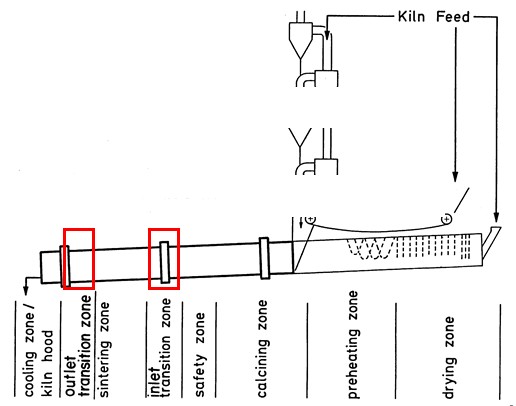
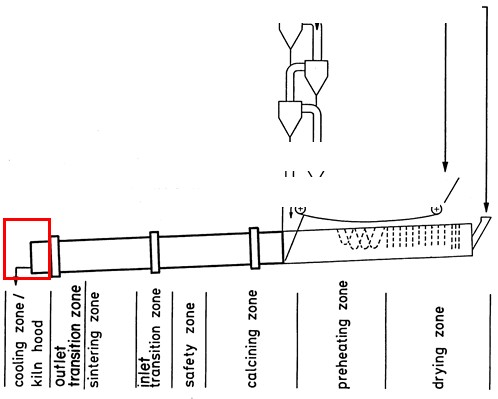
Zoning in cement kiln
- Drying Zone / Chain Zone
- Preheating Zone / Calcining Zone
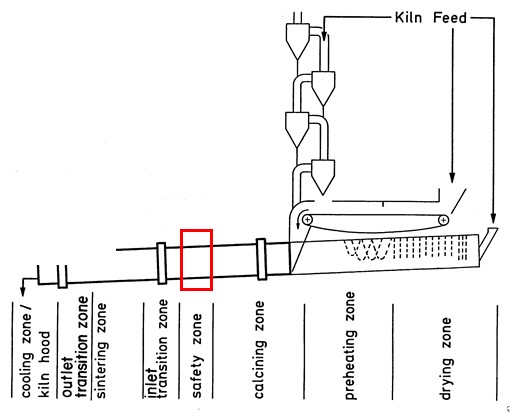
- Safety Zone
- Upper and Lower Transition Zone
- Sintering (Burning) Zone
- Cooling Zone
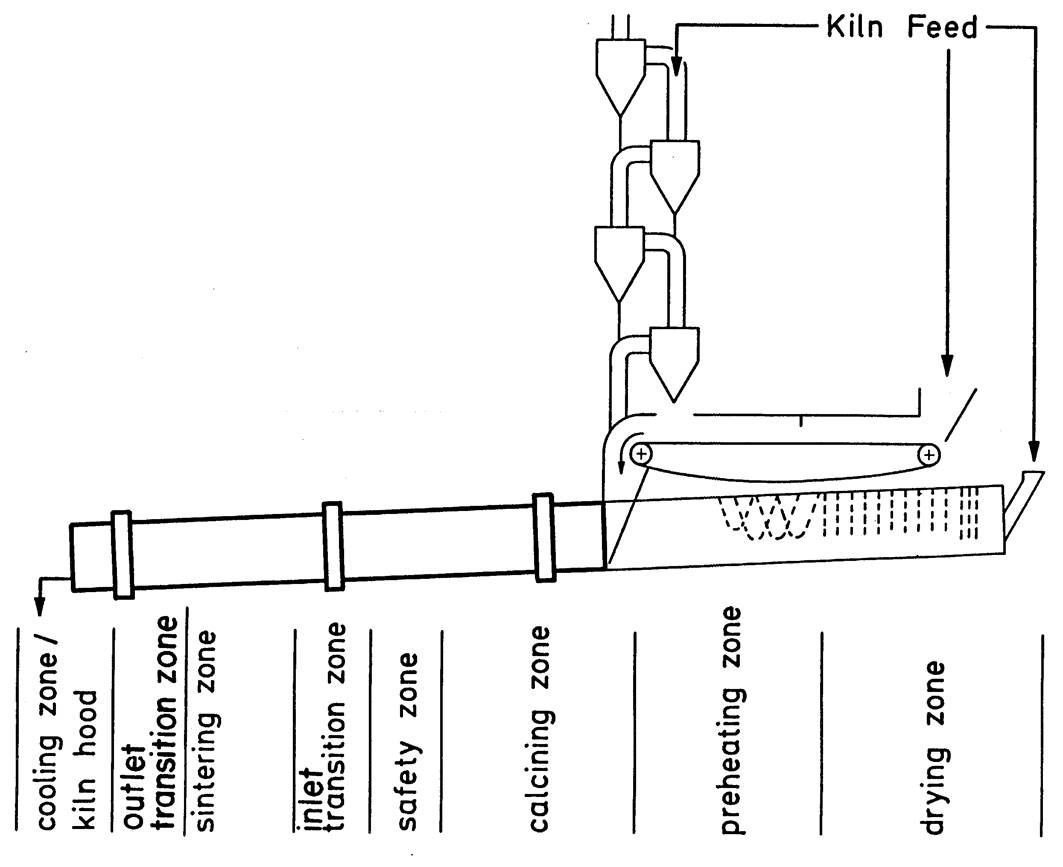
Drying Zone / Chain Zone
- High abrasion/wear caused by the movement of the chains
- Low material temperature
(100-400 °C) - Selection of Bricks:
Dense fire-clay
Air setting mortar (water resistant)
Dense, fire-clay castables (if chain hangers requires extensive modification work)
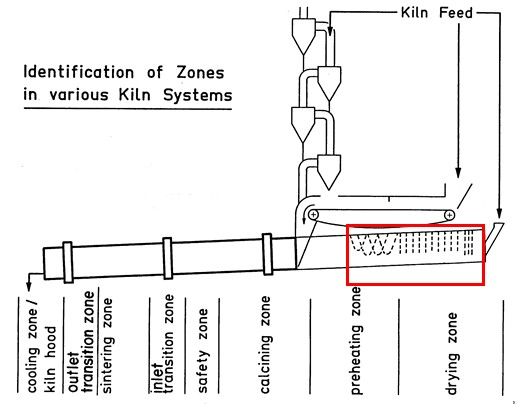
Preheating Zone / Calcining Zone
- Preheating Zone: Driven off hydrate-water and heating up of raw material:
up to 700°C. - Calcining Zone: Starts below 600°C and ends at approx. 1200°C. Most part takes place at 700-900°C
- Mechanical abrasion by material, temperature changes
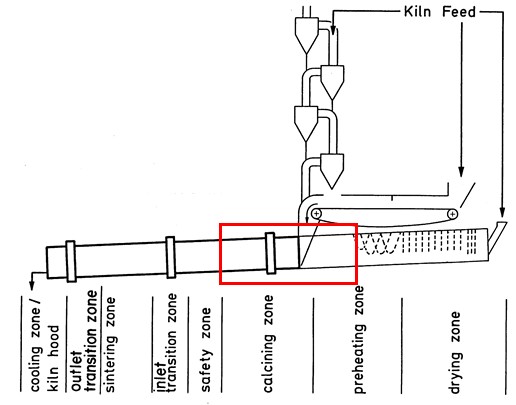
- Selection of Bricks:
Preheating Zone
Low alumina fire-clay
Lightweight fire-clay (better thermal insulation)
Calcining Zone
Normal fire-clay
Lightweight fire-clay
Acidic light weight bricks (SiO2 : > 65%) in case of alkali attack
Safety Zone
- High temperature variations
- Chemical attack (eutectic reactions)
- Alkali attack
- Selection of Bricks:
Low porosity (<16%)
High thermal shock resistance
Basic bricks
Alumina rich bricks:
Al2O3: 50 to 60%
Transition Zones
- Highest thermal load
- No or only unstable coating
- Directly exposed to the flame radiation
- High temperature variations (flame and secondary air)
- Attack by alkali salts and clinker melts
- Selection of Bricks:
Magnesia-spinel bricks of very pure (synthetic) materials (chrome free)
Sintering (Burning) Zone
- Material temperature: 1100 °C to 1400 °C (up to 1500 °C)
- More or less stable coating, formed with clinker and liquid phase.
- Attack by increased material diffusion with formation of the C3S
- Attack alkali salts
- High temperatures (overheating)
- High thermal shocks depending on coating stability
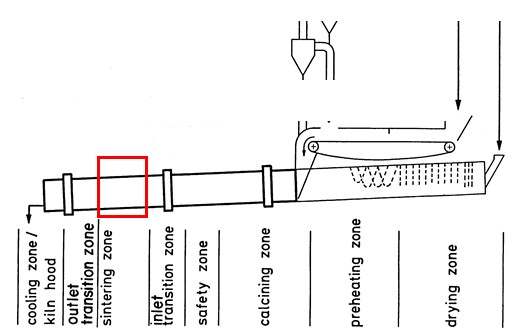
- Brick Selection
Dolomite
Chrome-free magnesia-spinel
Hands off magnesia-chrome bricks
Cooling Zone
- High thermal shocks (secondary air temperature, clinker/coating)
- Abrasion (clinker dust)
- Alkali attack
- Overheating
- Brick Selection
Dense, abrasion resistant high alumina bricks Al2O3 80 %
(with SiC)
Basic bricks (Mg-spinel) in case of heavy chemical attack.
if you have any Questions , please don’t Hesitate to consult our Refractories consult Department at [email protected]
Premium technical shortcut
Need organized cement references instead of scattered files?
This package is built for engineers, plant teams, buyers, and decision-makers who need faster access to high-value cement industry references. The material value is positioned at more than $50,000, but the package is offered at $249.
If you are researching this topic because of an active plant issue, project, or supplier discussion, use the package for technical depth or request direct business support.
Hi,I check your blog named “Refractories Selection Criteria – Cement Equipment” like every week.Your writing style is witty, keep it up! And you can look our website about
I must say you have hi quality articles here.
Why particular zone got the name as “Safety zone”? Is it depend on temperature at this location?