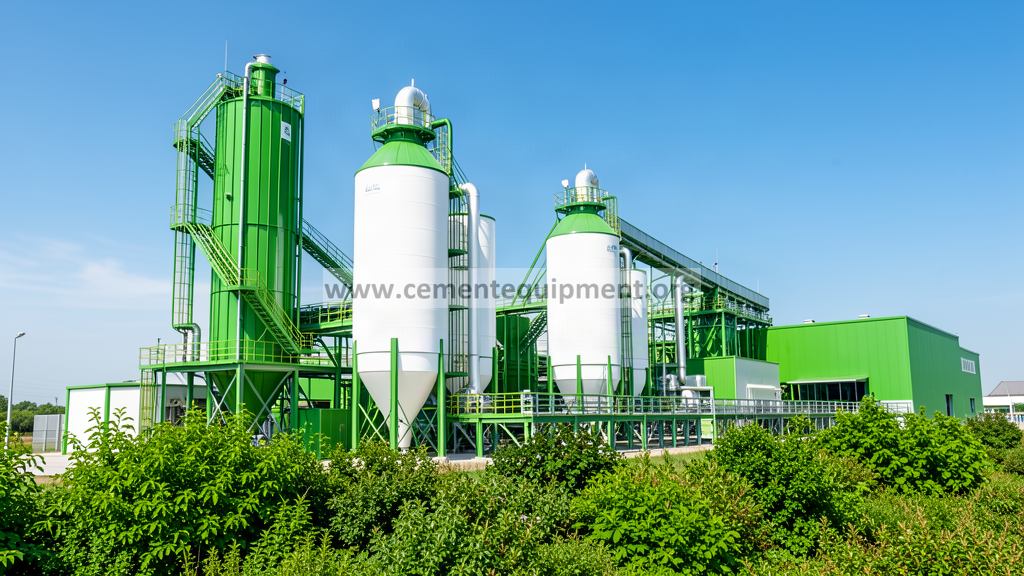
Green & Low-Carbon Cement: The Largest Future Market Opportunity in Cement
Green cement and low-carbon cement are the terms that the cement industry is using to describe the products and the processes that reduce the carbon footprint of cement and concrete, and they are also the terms that describe the market that is forming around those products. The market is large — by some estimates the green cement market is already in the tens of billions of dollars and growing fast — and it is the market that the cement industry is building toward as the pressure to reduce the carbon footprint of cement and concrete grows from regulators, from customers, and from the industry’s own commitments. This article explains the green and low-carbon cement market: its size, its growth, its drivers, its products, its margin challenge, its competitive dynamics, and the commercial logic that will determine who wins in it. It is written for cement industry professionals, construction materials specifiers, sustainability professionals, and anyone who wants to understand the low-carbon cement market as a business opportunity and a business challenge.
If you work in cement and you have heard that green cement is the future but you have not seen a clear picture of the market, the products, the margins, and the competitive stakes, this article is for you. The short version is that the green cement market is the largest future opportunity in cement, but it is also a market where the margins are not yet settled and where the winners will be the producers and the suppliers who can deliver the carbon reduction at a cost and a quality that the market will accept.
The clinker chemistry and the carbon footprint: what the numbers mean in practice
The carbon footprint of cement starts with the clinker chemistry and the calcination process, and understanding that starting point is necessary to understand the margin challenge. Portland clinker is made from limestone (calcium carbonate) and smaller amounts of silica, alumina, and iron-bearing materials, and the clinker chemistry that gives Portland cement its properties is dominated by the calcium silicates: alite (C3S, or tricalcium silicate) and belite (C2S, or dicalcium silicate), with smaller amounts of the aluminate phase (C3A) and the ferrite phase (C4AF). The alite and the belite are what give Portland cement its strength development, and the alite in particular is the phase that drives the early strength; the alite and the belite are both calcium silicates, and both come from the calcium in the limestone.
The carbon footprint of the clinker comes from two sources. The first is the process CO2 from the calcination of the limestone: when calcium carbonate (CaCO3) is heated to the temperatures at which it decomposes to calcium oxide (CaO) and carbon dioxide (CO2), that CO2 is released as a direct process emission. The stoichiometric CO2 from calcination is about 0.53 to 0.54 tonnes of CO2 per tonne of pure CaO, and because the limestone used in cement making is not pure CaCO3 — it typically contains 75 to 95 percent CaCO3 — the practical calcination CO2 per tonne of limestone fed is somewhat lower than the pure-stoichiometry figure, but the calcination CO2 is still a large fraction of the total clinker carbon footprint. The second source is the combustion CO2 from the fuel burned to heat the kiln to the clinkering temperature of about 1450°C and to maintain the kiln at temperature through the clinkering and cooling process. The combustion CO2 depends on the fuel, the thermal efficiency of the kiln, and the specific energy consumption of the plant.
The combined carbon footprint of ordinary Portland cement clinker is commonly cited in the range of about 0.8 to 0.9 tonnes of CO2 per tonne of clinker, and for the cement — which includes the gypsum and any blending materials — the carbon footprint per tonne of cement is somewhat lower because the cement contains less clinker per tonne than the clinker itself. A typical ordinary Portland cement (CEM I) might have a carbon footprint in the range of about 0.7 to 0.9 tonnes of CO2 per tonne of cement, depending on the plant, the fuel, the limestone source, and the system boundaries. That carbon footprint is the baseline against which the low-carbon products are measured, and it is the number that the market is trying to reduce.
The carbon-footprint number matters for the margin challenge because different products reduce it in different ways and at different cost. A blended cement that replaces 30 percent of the clinker with slag — a CEM III or a blended Portland-slag cement — reduces the carbon footprint per tonne of cement roughly in proportion to the clinker reduction, because the slag carries little or no calcination CO2 and the clinker that is displaced carries the full clinker carbon footprint. But the slag has its own cost and availability constraints, and the substitution is not free: the cost of the slag, the durability and performance requirements of the application, and the limits on how much slag can be used in a given application all constrain the substitution and the resulting margin. The margin on the blended product depends on whether the reduced clinker cost (less clinker per tonne of cement) more than offsets the cost of the slag, and on whether the market pays a price for the lower carbon footprint that covers the cost of the blend and leaves a margin.
The calcination CO2 math is the reason the clinker substitution is the most direct and the most widely used low-carbon lever, and it is also the reason the margin challenge is so central: every tonne of clinker that is not made is a tonne of calcination CO2 and a tonne of combustion CO2 that is not emitted, but it is also a tonne of clinker that is not sold, and the revenue and the margin that the clinker would have generated are also not generated. The low-carbon cement business is, in this sense, a business of trading clinker volume for carbon reduction, and the margin is the negotiation of that trade with the market.
The green cement market is large and growing quickly, and the numbers are reported by multiple sources, though the exact figures vary with the scope and the definitions. Persistence Market Research estimates the green cement market at about $37.7 billion in 2026, growing to about $74.4 billion by 2033 at a compound annual growth rate of about 10.2 percent. Grand View Research estimates the market at about $37.8 billion in 2024, growing to about $50.2 billion by 2030 at a CAGR of about 6.1 percent. Other sources have reported different figures — Spherical Insights, for example, has reported a green cement market of about $43.3 billion in 2025 with a CAGR of about 9.5 percent — and the variation reflects differences in scope, geography, and the definition of “green cement.” The central, well-supported picture is a market in the tens of billions of dollars today, growing at a mid-to-high single-digit or low-double-digit CAGR, and projected to be substantially larger by 2030 and 2033.
The low-carbon cement market — a narrower category that focuses on the cements and the blends that deliver a lower carbon footprint per unit of cement — is also large and growing. Zion Market Research, for example, has estimated the low-carbon cement market at about $1.94 billion in 2023, growing to about $5.09 billion by 2032 at a CAGR of about 11.3 percent. The low-carbon cement market is smaller than the broader green cement market in absolute terms, but it is growing at a high rate, and it is a product category that is at the heart of the carbon-reduction challenge in cement.
The market is driven by the carbon-reduction pressure that is building from multiple directions. The cement industry is responsible for a significant share of global carbon dioxide emissions — the World Economic Forum and other sources have put the cement and concrete share of global emissions at around 8 percent — and that share is the target of regulatory, corporate, and investor pressure to reduce. The regulatory pressure comes from carbon pricing, emissions standards, and building codes that increasingly require lower-carbon materials. The corporate pressure comes from the large buyers of concrete and cement — the construction companies, the real estate developers, the infrastructure owners, and especially the hyperscale data-center and commercial-builders — who are setting Scope 3 supply-chain emissions targets and asking their cement and concrete suppliers for lower-carbon options. The investor pressure comes from the investors and the lenders who are increasingly requiring the companies they invest in or lend to to have credible decarbonisation plans. All of these pressures are driving demand for green and low-carbon cement, and they are driving the market growth.
The products that make up the green and low-carbon cement market
The green and low-carbon cement market is not a single product; it is a range of products and processes that reduce the carbon footprint of cement in different ways. Understanding the range is important because the products have different costs, different margins, different applications, and different competitive dynamics.
Blended cements and supplementary cementitious materials are the most established low-carbon products. By replacing a portion of the clinker in the cement with supplementary cementitious materials — slag, fly ash, limestone, calcined clay, and the other materials that can contribute to the cement’s performance while reducing the clinker content — the cement producer can reduce the carbon footprint of the cement per unit, because the clinker is the most carbon-intensive part of the cement. The blended cements and the SCM-based products are well-established, they are widely used, and they are a mature part of the low-carbon cement market. The cost and the margin depend on the availability and the cost of the SCMs, the quality of the blend, and the applications that the blend serves.
Clinker substitution and clinker efficiency are the process-level reductions. By improving the clinker quality, the burnability, the fuel efficiency, and the alternative-fuel use in the clinker production, the cement producer can reduce the carbon footprint of the clinker per tonne, which reduces the carbon footprint of the cement per tonne. These are process improvements that reduce the carbon footprint without changing the product category, and they are an important part of the low-carbon cement story, especially in the near term, because they can be implemented in existing plants and they reduce the carbon footprint of the product that the plant is already making.
Alternative fuels and co-processing are the fuel-level reductions. By replacing coal and petcoke with alternative fuels — waste-derived fuels, biomass, processed refuse, and the other fuels that can be co-processed in the cement kiln — the cement producer can reduce the carbon footprint of the fuel, which reduces the carbon footprint of the clinker and the cement. The alternative-fuel strategy is a major part of the low-carbon cement story, and the plants that are pushing alternative-fuel rates toward high levels — the ifactoryapp data reports alternative-fuel rates up to 90 percent in some plants — are the plants that are achieving significant carbon reductions through the fuel strategy.
Novel and emerging low-carbon cements are the longer-term products. These include the cements and the binder systems that are being developed to reduce the carbon footprint of the cementitious material itself — the low-clinker and no-clinker cements, the calcium-sulphate-based systems, the geopolymers and the alkali-activated materials, and the other novel binder systems that are in various stages of development and commercialisation. These products are the longer-term opportunity in the low-carbon cement market, and they are the products that could, over time, change the structure of the cement market if they achieve the cost, the performance, and the scale that the market requires.
Carbon capture, utilisation, and storage is the end-of-pipe reduction. By capturing the carbon dioxide from the clinker production and either using it or storing it, the cement producer can reduce the carbon footprint of the clinker and the cement at the point of production. CCUS is a major part of the long-term low-carbon cement strategy for many producers, and it is a technology that is being developed and piloted and deployed at various scales. The cost and the economics of CCUS are significant, and the margin impact depends on the cost of the capture, the availability of the utilisation or storage pathways, and the regulatory and market support for the carbon price or the carbon contracts that make CCUS economic.
The chemistry, the calcination, and the carbon reduction roadmaps
The carbon footprint of conventional Portland cement is anchored in the chemistry of the clinker and the process of making it, and understanding that chemistry is what makes the low-carbon categories intelligible rather than just a list of labels. The dominant source of the carbon footprint is the calcination of limestone. When limestone — calcium carbonate — is heated to the temperatures of the clinker kiln, it decomposes into calcium oxide and carbon dioxide: CaCO3 → CaO + CO2. That is a chemical reaction that releases carbon dioxide by stoichiometry, independent of the fuel that provides the heat, and it accounts for roughly the larger share of the clinker’s carbon footprint, with the fuel combustion for the kiln heat accounting for the remainder. The International Energy Agency (IEA) and the cement industry’s own life-cycle data put the clinker carbon footprint in the range of about 0.8 to 0.9 tonne of CO2 per tonne of clinker, with the calcination share being the larger one. The realistic implication for margin is concrete: a 30 percent clinker reduction via slag substitution lowers the cement CO2 footprint by roughly 20 to 25 percent, but the cost effect depends on slag pricing. In markets where slag is available at 10 to 20 dollars per tonne below clinker cost, the blended cement can be cheaper than ordinary Portland cement; where slag is scarce or priced at parity, the blended product becomes a premium low-carbon product or the margin is squeezed. The WBCSD CSI Cement CO2 and Energy Information Task Force and the IEA Cement Technology Roadmap provide the benchmark data that the industry uses to track this footprint, and they are the reference points for the carbon-reduction claims across the low-carbon product categories.
The calcination reaction is not optional for Portland cement, because the calcium oxide from the limestone is the primary reactive phase that gives Portland cement its strength, and the clinker has to contain enough calcium oxide — as the silicate phases C3S and C2S — to deliver the performance. What the low-carbon strategies do is to reduce the amount of clinker per unit of cementitious performance, or to reduce the carbon footprint of the clinker that is still made, or to replace the Portland-clinker chemistry with a different chemistry that does not depend on limestone calcination in the same way. That is the organising principle behind the blended cements, the alternative fuels, the novel binders, and the CCUS: each one reduces the carbon footprint by a different lever on the same basic chemistry and process.
The limestone calcined clay cement — LC3 — is one of the most concrete near-term opportunities. LC3 replaces a portion of the clinker with a blend of calcined clay and limestone filler, in proportions that can deliver cement performance comparable to ordinary Portland cement while cutting the clinker content sharply. The clay is calcined at a temperature lower than the full clinker kiln temperature, which reduces the energy and the carbon footprint of the calcination step, and the limestone filler is a low-impact filler that contributes to the composite performance. LC3 is being advanced by a number of research and industry programmes — the LC3 project led by EPFL and the partners, and the work by the major cement companies — and it is a product that is moving toward commercial scale. The margin point for LC3 is that it uses materials — clay and limestone — that are widely available in many regions, which means it can be a lower-carbon cement that does not depend on the scarce or expensive SCMs, and that is a practical advantage for scale and cost.
The alternative-fuel strategy carries its own technical detail. The co-processing of alternative fuels in the cement kiln is not simply a matter of burning whatever fuel is available; the kiln conditions — the temperature profile, the residence time, the mixing, the raw meal chemistry — have to be managed so that the alternative fuel burns completely and does not disrupt the clinker chemistry or the clinker quality. The plants that achieve high alternative-fuel rates — the ifactoryapp data reports rates up to about 90 percent — are the plants that have mastered that technical management, and the alternative-fuel rate is a measure of both the carbon reduction and the technical capability of the plant. The alternative-fuel strategy also interacts with the SCM strategy, because the alternative fuel can be a waste-derived fuel that co-processes in the kiln, and the co-processing can be paired with the use of SCMs in the cement, compounding the carbon reduction across the fuel and the product.
The CCUS technologies are the longer-term, higher-cost lever, and they come in more than one form. The amine-based post-combustion capture is the most mature capture technology, and it can be applied to the kiln exhaust — but the cement kiln exhaust is large in volume and relatively low in CO2 concentration compared with some other sources, which affects the capture cost. The oxyfuel combustion — burning the fuel in oxygen rather than air — produces a flue gas that is mostly CO2 and water, which simplifies the capture, but it requires an oxygen supply and changes the combustion conditions. The calcium looping and the other innovative capture routes are at an earlier stage. The utilisation side — using the captured CO2 in cured concrete, in aggregates, or in other products — is developing, but the utilisation volumes are not yet large enough to absorb the CO2 from a major clinker plant. The storage side — geological sequestration — is the most mature disposal route, but it requires suitable geology and the regulatory and contractual framework for the storage. The realistic picture is that CCUS will be part of the low-carbon cement portfolio for the large producers, but it will take time, investment, and carbon-price or carbon-contract support to become economic at scale.
The other novel binders — the geopolymers and the alkali-activated materials, the belite-rich clinkers, the calcium-sulphate-based systems, and the others — are at various stages of development and commercialisation, and they are the longer-term bet on a different chemistry that could, over time, change the structure of the cement market. The geopolymers and the alkali-activated materials use industrial by-products — slag, fly ash, and the like — activated with an alkaline solution, and they can deliver high performance with a lower carbon footprint than Portland cement, but they also carry their own challenges: the activation chemistry, the setting and hardening control, the long-term durability data, the supply of the specific by-products, and the specification acceptance. The belite-rich clinkers — clinkers that are richer in the belite phase C2S and lower in the alite phase C3S — can offer a lower carbon footprint per tonne of clinker because the belite forms more slowly and at lower effective temperatures, but they also require more energy per tonne of clinker in some cases and they set more slowly, which affects the applications. The novel binders are the longer-term opportunity, and the margin on them, if and when they reach commercial scale, will depend on the cost trajectory, the performance, and the market acceptance — a long-run bet rather than a near-term margin.
The margin challenge in the green and low-carbon cement market
The margin challenge is the central business issue in the green and low-carbon cement market, and it is the issue that will determine which producers and which products succeed. The green and low-carbon cement products are, in general, more costly to produce than the conventional grey cement — the raw materials for white and low-impurity clinker are more expensive, the SCMs have costs and availability constraints, the alternative fuels require investment and operational change, the novel cements are at an immature cost stage, and the CCUS adds significant cost. At the same time, the market for green and low-carbon cement is price-sensitive in the sense that the buyers — the concrete producers, the construction companies, the real estate developers — are buying the carbon reduction as a value, but they are also buying the cement as a material that has to perform and has to fit the budget. The margin in the green and low-carbon cement market is, therefore, a margin that has to be earned by delivering a carbon reduction that the market values at a price that the market will pay, and the margin is not automatic; it has to be built and defended.
The margin is also a margin that is likely to evolve over time. In the near term, the green and low-carbon cement products are premium products that command a premium price because the market is early and the supply is limited and the buyers who want the carbon reduction are willing to pay for it. As the market matures, as the supply increases, as the technology improves and the cost comes down, and as the carbon reduction becomes more of a standard expectation rather than a premium feature, the premium is likely to compress. That compression is the natural dynamic of a maturing market, and it means that the margin in the green and low-carbon cement market is, in the long run, a margin that has to be earned by cost leadership and by the value of the carbon reduction, not just by the premium that the early market will pay.
The margin challenge is also a challenge for the novel and emerging products. The novel low-carbon cements — the low-clinker and no-clinker systems, the geopolymers, the alkali-activated materials, and the others — are at an immature stage where the cost is high and the performance and the scale are not yet proven at the level that the market requires. The margin on these products, if and when they reach commercial scale, will depend on the cost trajectory, the performance, and the market acceptance, and that is a long-run bet rather than a near-term margin. The producers and the investors who are betting on the novel products are betting on the long-run margin potential, and they are accepting the near-term cost and the market-development challenge.
The competitive dynamics in the green and low-carbon cement market
The competitive dynamics in the green and low-carbon cement market are shaped by the scale of the producers, the maturity of the products, and the nature of the demand. The large cement producers have the scale, the plants, the R&D, the brands, and the distribution to compete in the green and low-carbon cement market, and they are the producers that are making the largest investments in the clinker substitution, the alternative fuels, the process efficiency, and the CCUS. The large producers are also the producers that are making the commitments to reduce the carbon footprint of their products, and those commitments are the market signal that the buyers are looking for.
The specialist and the smaller producers have a different competitive position. Some specialists are focused on the novel and emerging low-carbon cements, where the specialist’s depth in the specific technology and the product is the competitive advantage, and where the specialist is competing on the innovation rather than the scale. Other specialists and smaller producers are focused on the blended cements and the SCM-based products in their regions, where the local availability of the SCMs, the local market knowledge, and the local specification relationships are the competitive advantage. Both models can work, depending on the product and the market.
The consultants, the engineering firms, and the service providers are also part of the competitive landscape, because the green and low-carbon cement transition requires engineering, commissioning, optimisation, and the ongoing support that these providers supply. The producers who work well with the right engineering and service providers are better positioned to make the transition efficiently and to defend the margin through the transition.
The sustainability and the Scope 3 angle
The sustainability and the Scope 3 angle is one of the most important commercial developments in the green and low-carbon cement market. The large buyers of cement and concrete — the construction companies, the real estate developers, the infrastructure owners, the hyperscalers, and the other large corporate buyers — are setting Scope 3 supply-chain emissions targets, and those targets include the emissions from the cement and concrete that they buy. The buyers are asking their cement and concrete suppliers for lower-carbon options, for product carbon-footprint data, and for credibly verified carbon reductions. That demand is real, it is coming from the largest and most influential buyers, and it is a demand that is creating the market for the green and low-carbon cement products and the market for the product carbon-footprint information that supports those products.
The Scope 3 demand is a commercial opportunity for the producers who can deliver lower-carbon products and the product carbon-footprint data that the buyers need. The producers who can provide a credibly lower-carbon cement, with the data and the verification to support it, are capturing a value that the buyers are willing to pay for — at least in the near term, while the market is early and the supply is limited and the buyers who have Scope 3 targets are motivated to buy the lower-carbon product. The Scope 3 demand is also a commercial opportunity for the providers of the product carbon-footprint data, the life-cycle assessment, the verification, and the certification services that support the green and low-carbon cement market.
The geographic and regional dynamics
The green and low-carbon cement market is global, but it has regional dynamics that matter. In Europe, the regulatory pressure on carbon emissions is the strongest, and the carbon pricing and the emissions standards are driving the demand for lower-carbon cement. In North America, the market is developing with the corporate Scope 3 pressure and the building-code trends, and the demand is growing. In Asia and the developing markets, the demand is growing with the construction market and the rising awareness of the carbon footprint of cement, though the regulatory pressure is less developed in some of these markets. The regional dynamics mean that the market offers scale and opportunity across regions, but that the products, the pricing, the specifications, and the market approach may need to be adapted to each region.
For a producer or a supplier, the regional dynamics are an opportunity to build a multi-region green and low-carbon cement business that captures the demand across regions, but also a challenge to manage the product, the cost, the specification, and the market approach region by region. The producers who succeed in the green and low-carbon cement market are the ones who can manage that complexity and who can deliver the right product to the right market with the right carbon reduction and the right cost.
The commercial model for green and low-carbon cement
The commercial model for green and low-carbon cement is built on the carbon reduction, the cost, the quality, and the specification. The product is sold at a premium price in the near term, and the margin reflects the premium and the value of the carbon reduction. The commercial model is also built on the product carbon-footprint data, the verification, and the certification that support the product and the market, and on the relationships with the buyers who have Scope 3 targets and the concrete producers who buy the cement and blend it into their concrete.
The commercial model is also built on the cost and the efficiency of the production. The producers who can deliver the carbon reduction at a lower cost — through the clinker efficiency, the alternative fuels, the SCM availability, the process optimisation, and the scale — are in a better position to defend the margin as the premium compresses over time. The cost and the efficiency are the long-run margin defence in the green and low-carbon cement market, and they are the issue that the producers need to manage as they build the market.
The commercial model is also built on the specification and the relationships. The green and low-carbon cement products are increasingly being specified in the building codes, the procurement specifications, and the buyer requirements, and the producers who are the specified suppliers for those specifications have a protected revenue stream and a margin that reflects the specification. The relationships with the buyers, the concrete producers, the specifiers, and the certification and verification bodies are part of the value and the margin in the green and low-carbon cement market.
The risks and the challenges
The green and low-carbon cement market is not without risks and challenges. The margin challenge is the central one: the cost of the carbon reduction is real, and the premium that the market will pay is not guaranteed forever, and the producers who cannot manage the cost and the margin will find the business harder as the market matures. The technology risk is real for the novel and emerging products: the cost, the performance, and the scale are not yet proven, and the bet on the novel products is a long-run bet with near-term challenges. The regulatory and market risk is real: the carbon pricing, the emissions standards, the building codes, and the Scope 3 demand are all evolving, and the market and the regulatory environment that supports the green and low-carbon cement market are not fully settled. The supply-chain risk for the SCMs and the alternative fuels is real: the availability and the cost of the SCMs and the alternative fuels affect the cost and the margin of the low-carbon cement products, and the supply-chain constraints can affect the margin. And the market-development risk is real: the green and low-carbon cement market is a market that the buyers need to understand and accept, and the market development takes time and effort and investment.
The mitigation is to build the business on the cost and the efficiency that defend the margin, to manage the technology and the market-development risk with a focused, staged approach, to build the relationships and the specifications that protect the revenue, and to monitor the regulatory and market environment and adapt to it. The green and low-carbon cement market is a market with strong structural drivers and a large future opportunity, but it is a market where the margin is earned, not given, and where the winners are the producers and the suppliers who manage the cost, the carbon reduction, the quality, and the market development well.
Closing the case
Green and low-carbon cement is the largest future market opportunity in the cement industry, and it is a market that is being built right now by the regulatory, corporate, and investor pressure to reduce the carbon footprint of cement and concrete. The market is large — tens of billions of dollars today and growing fast — and it is projected to be substantially larger by 2030 and 2033. The products are varied — blended cements, SCM-based products, clinker-efficient processes, alternative fuels, novel low-carbon cements, and CCUS — and each has its own cost, margin, application, and competitive dynamic. The margin challenge is the central business issue: the carbon reduction costs money, the premium is not guaranteed forever, and the long-run margin defence is in the cost and the efficiency. The competitive dynamics favour the large producers with the scale and the R&D and the specialists with the depth in the novel products, and the market is global with regional dynamics that require a managed, adapted approach. The Scope 3 demand from the large buyers is a powerful commercial driver and an opportunity for the producers who can deliver the carbon reduction and the data. The market is not without risks, but the structural drivers are strong and the opportunity is large. For the cement producer, the processor, the supplier, and the specifier who understand the green and low-carbon cement market as a business, the niche offers the largest future opportunity in cement — and the largest margin challenge to go with it.
The chemistry, the calcination, and the carbon reduction roadmaps
The carbon footprint of conventional Portland cement is anchored in the chemistry of the clinker and the process of making it, and understanding that chemistry is what makes the low-carbon categories intelligible rather than just a list of labels. The dominant source of the carbon footprint is the calcination of limestone. When limestone — calcium carbonate — is heated to the temperatures of the clinker kiln, it decomposes into calcium oxide and carbon dioxide: CaCO3 → CaO + CO2. That is a chemical reaction that releases carbon dioxide by stoichiometry, independent of the fuel that provides the heat, and it accounts for roughly the larger share of the clinker’s carbon footprint, with the fuel combustion for the kiln heat accounting for the remainder. The International Energy Agency (IEA) and the cement industry’s own life-cycle data put the clinker carbon footprint in the range of about 0.8 to 0.9 tonne of CO2 per tonne of clinker, with the calcination share being the larger one. The realistic implication for margin is concrete: a 30 percent clinker reduction via slag substitution lowers the cement CO2 footprint by roughly 20 to 25 percent, but the cost effect depends on slag pricing. In markets where slag is available at 10 to 20 dollars per tonne below clinker cost, the blended cement can be cheaper than ordinary Portland cement; where slag is scarce or priced at parity, the blended product becomes a premium low-carbon product or the margin is squeezed. The WBCSD CSI Cement CO2 and Energy Information Task Force and the IEA Cement Technology Roadmap provide the benchmark data that the industry uses to track this footprint, and they are the reference points for the carbon-reduction claims across the low-carbon product categories.
The calcination reaction is not optional for Portland cement, because the calcium oxide from the limestone is the primary reactive phase that gives Portland cement its strength, and the clinker has to contain enough calcium oxide — as the silicate phases C3S and C2S — to deliver the performance. What the low-carbon strategies do is to reduce the amount of clinker per unit of cementitious performance, or to reduce the carbon footprint of the clinker that is still made, or to replace the Portland-clinker chemistry with a different chemistry that does not depend on limestone calcination in the same way. That is the organising principle behind the blended cements, the alternative fuels, the novel binders, and the CCUS: each one reduces the carbon footprint by a different lever on the same basic chemistry and process.
The limestone calcined clay cement — LC3 — is one of the most concrete near-term opportunities. LC3 replaces a portion of the clinker with a blend of calcined clay and limestone filler, in proportions that can deliver cement performance comparable to ordinary Portland cement while cutting the clinker content sharply. The clay is calcined at a temperature lower than the full clinker kiln temperature, which reduces the energy and the carbon footprint of the calcination step, and the limestone filler is a low-impact filler that contributes to the composite performance. LC3 is being advanced by a number of research and industry programmes — the LC3 project led by EPFL and the partners, and the work by the major cement companies — and it is a product that is moving toward commercial scale. The margin point for LC3 is that it uses materials — clay and limestone — that are widely available in many regions, which means it can be a lower-carbon cement that does not depend on the scarce or expensive SCMs, and that is a practical advantage for scale and cost.
The alternative-fuel strategy carries its own technical detail. The co-processing of alternative fuels in the cement kiln is not simply a matter of burning whatever fuel is available; the kiln conditions — the temperature profile, the residence time, the mixing, the raw meal chemistry — have to be managed so that the alternative fuel burns completely and does not disrupt the clinker chemistry or the clinker quality. The plants that achieve high alternative-fuel rates — the ifactoryapp data reports rates up to about 90 percent — are the plants that have mastered that technical management, and the alternative-fuel rate is a measure of both the carbon reduction and the technical capability of the plant. The alternative-fuel strategy also interacts with the SCM strategy, because the alternative fuel can be a waste-derived fuel that co-processes in the kiln, and the co-processing can be paired with the use of SCMs in the cement, compounding the carbon reduction across the fuel and the product.
The CCUS technologies are the longer-term, higher-cost lever, and they come in more than one form. The amine-based post-combustion capture is the most mature capture technology, and it can be applied to the kiln exhaust — but the cement kiln exhaust is large in volume and relatively low in CO2 concentration compared with some other sources, which affects the capture cost. The oxyfuel combustion — burning the fuel in oxygen rather than air — produces a flue gas that is mostly CO2 and water, which simplifies the capture, but it requires an oxygen supply and changes the combustion conditions. The calcium looping and the other innovative capture routes are at an earlier stage. The utilisation side — using the captured CO2 in cured concrete, in aggregates, or in other products — is developing, but the utilisation volumes are not yet large enough to absorb the CO2 from a major clinker plant. The storage side — geological sequestration — is the most mature disposal route, but it requires suitable geology and the regulatory and contractual framework for the storage. The realistic picture is that CCUS will be part of the low-carbon cement portfolio for the large producers, but it will take time, investment, and carbon-price or carbon-contract support to become economic at scale.
The other novel binders — the geopolymers and the alkali-activated materials, the belite-rich clinkers, the calcium-sulphate-based systems, and the others — are at various stages of development and commercialisation, and they are the longer-term bet on a different chemistry that could, over time, change the structure of the cement market. The geopolymers and the alkali-activated materials use industrial by-products — slag, fly ash, and the like — activated with an alkaline solution, and they can deliver high performance with a lower carbon footprint than Portland cement, but they also carry their own challenges: the activation chemistry, the setting and hardening control, the long-term durability data, the supply of the specific by-products, and the specification acceptance. The belite-rich clinkers — clinkers that are richer in the belite phase C2S and lower in the alite phase C3S — can offer a lower carbon footprint per tonne of clinker because the belite forms more slowly and at lower effective temperatures, but they also require more energy per tonne of clinker in some cases and they set more slowly, which affects the applications. The novel binders are the longer-term opportunity, and the margin on them, if and when they reach commercial scale, will depend on the cost trajectory, the performance, and the market acceptance — a long-run bet rather than a near-term margin.
Is the Complete Cement Technical Package worth the price for this niche?
It is worth it because the green and low-carbon cement topic connects to the broader cement chemistry, clinker process, raw materials, fuel, alternative fuels, SCMs, product carbon-footprint data, and market development knowledge that the Complete Cement Technical Package is built to cover. The package is not a single book; it is a technical desk for the real engineer on the shift, covering the process, the products, the chemistry, and the applications that connect to the green and low-carbon cement market described in this article. At $249.99 for the pack, it is the reference library that lets a team go deeper on exactly the topics this article raises.
Frequently Asked Questions
I work in a cement plant; will this be useful to me as an engineer?
Basic cement chemistry is useful but not required: the article relates to the complete library in the package. As an engineer in the plant, the article is directly useful because it explains the green and low-carbon cement market — the products, the drivers, the margin challenge, the competitive dynamics, and the Scope 3 demand — and that understanding is exactly what you need if your plant is moving into the low-carbon cement space or if you are evaluating the market and the products as part of the plant’s decarbonisation strategy.
Is the COMPLETE Technical Package going to be worth the price for the team?
It is worth it because the green and low-carbon cement topic connects to the broader cement chemistry, clinker process, raw materials, fuel, alternative fuels, and product knowledge that the Complete Cement Technical Package is built to cover. The package is not a single book; it is a technical desk for the real engineer on the shift, covering the process, the products, the chemistry, and the applications that connect to the green and low-carbon cement market described in this article. At $249.99 for the pack, it is the reference library that lets a team go deeper on exactly the topics this article raises.
Will this help me get my project approved?
Yes. Understanding the market size, the growth drivers, the products, the margin challenge, and the Scope 3 demand behind the green and low-carbon cement market helps justify the investment in the clinker efficiency, the alternative fuels, the SCMs, the product carbon-footprint data, and the market development that serve that market — and that justification is what is needed to get a green or low-carbon cement project approved on a value rather than a speculative basis. The Complete Cement Technical Package, available from the cementequipment.org library, covers the materials science and process knowledge that underpin these low-carbon cement technologies, and it is a practical complement to the market analysis in this article.