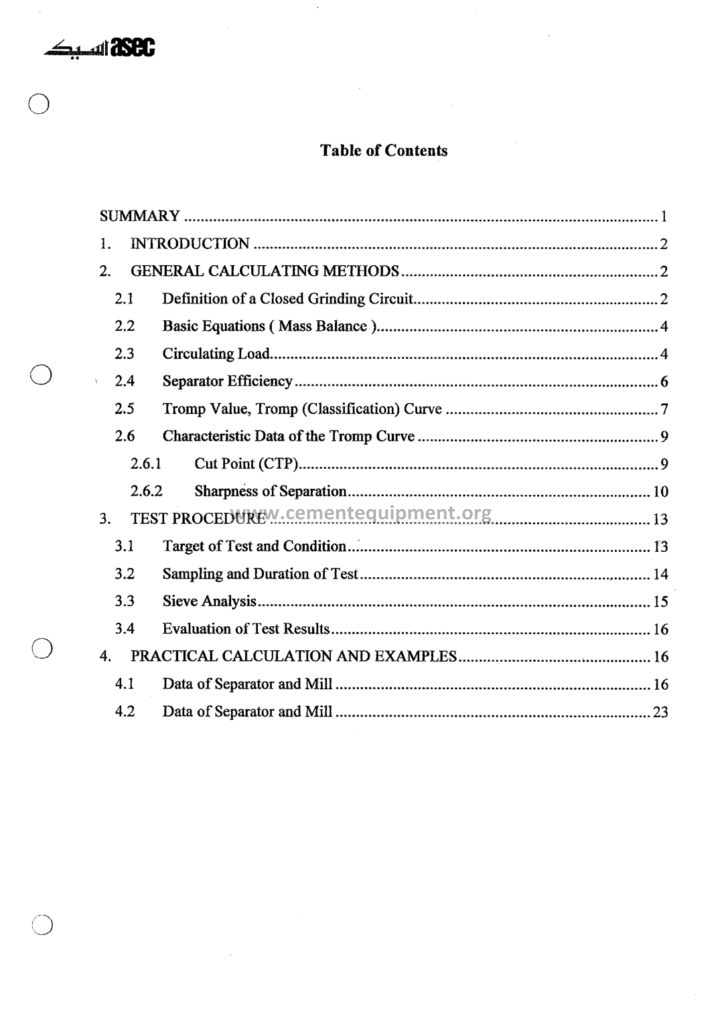
Separator Operation in Cement Grinding: Complete Guide
The separator is the classification element of a closed grinding circuit. It divides the mill discharge into a fine product stream and a coarse reject stream that returns for further grinding. Its performance affects product fineness, particle-size distribution, circulating load, mill loading and specific energy, but these outcomes are determined by the complete mill–separator circuit rather than the separator alone.
The Complete Cement Technical Package includes 931 cement-industry files covering books, courses, Excel tools and presentations. The $249.99 one-time package includes this separator-operation reference with performance curves, control concepts, troubleshooting material and Tromp-analysis tools, with instant download access immediately after payment.
The separator appears simple: a rotating machine that sorts the powder by the size: the reality is the delicate balance of the airflow, the rotor speed, the feed distribution and the mill interaction: this guide organizes the operation so that the newcomer understands the principle first, the operator masters the controls second, and the engineer optimizes the performance third: the tables and the worked examples of the file become the daily tools of the shift.
1. The Separator in the Grinding Circuit: The Closed Loop of the Mill
The separator is the second element of the closed circuit, and the circuit is the system of the mill:
- The transport: the mill discharge leaves the trunnion or the peripheral grate into the elevator or the air slide, and arrives at the separator feed: the bucket elevator of the finish mills lifts the material 20 to 40 meters to the separator inlet;
- The separation: the separator divides the feed into the fines (the finished product, 0 to 90 microns) and the rejects (the coarse, the further grinding): the fines continue to the bag filter or the cyclone and then to the cement silo, the rejects return to the mill inlet by the air slide or the conveyor:
- The circulating load: the reject stream creates the recycle around the circuit. Its value depends on separator cut, mill discharge PSD, product target and circuit configuration. It should be calculated from measured stream data and compared with the circuit’s design or stable operating baseline rather than treated as one universal percentage.
- The circuit KPIs: the new feed rate (the production), the circulating load ratio, the separator feed size distribution, the rejects size and the product fineness: the four measurements of the shift log describe the circuit completely:
Closed circuits allow acceptable fines to leave while coarser material returns for further grinding. This generally improves control of product fineness and can reduce unnecessary overgrinding. The actual capacity or energy benefit depends on the original circuit, separator efficiency, target fineness and mill condition and must be verified from plant data.
2. The Classification Principle: The Cut Size, the Bypass and the Efficiency
The science of the classification rests on the definitions of the cut and the efficiency:
- The cut size: the size of the particles that split with the equal probability between the fines and the rejects: the cut size d50 of the finish mill separator 10 to 30 microns: the cut size is set by the rotor speed and the airflow:
- The bypass: the non-ideal fraction that reports to the wrong stream—for example, fines returning with rejects or coarse particles escaping with product. The exact definition depends on the Tromp-curve convention used, so the audit must state the convention before comparing values.
- The classification efficiency: the recovery of the finished size fraction into the fines: the efficiency curve of the separator shows the recovery per size class: the sharp ideal curve is the step function at the cut size: the real curves show the bypass plateau and the slope of the transition:
- The performance indicators: d25, d50 and d75 values can describe the transition region of the Tromp curve. If a sharpness coefficient such as d25/d75 is used, its formula and curve convention should be stated explicitly and compared with the design or historical baseline for that separator.
The vocabulary of the classification is the language of the separator reports: the lab of the plant sieves the three streams (the feed, the fines and the rejects) at the check screens and computes the curve: the file teaches the lab procedure and the calculation of the bypass and the sharpness from the three samples: the numbers of the plant’s separator seasonal trend tell the wear story of the machine before the mechanical inspection.
3. The Generations of the Separators: From the Static Cone to the Dynamic Cage
The separator family evolved in the three generations, and the plants operate the mixture of the history:
- The first generation: the static separators: the cyclone and the conical vane classifiers: the air or the gas carries the feed into the vortex, the centrifugal and the gravity separate the sizes without the moving parts: the bypass of the static machines 30 to 50 percent, the cut control limited to the airflow: the static separators survive in the dedusting and the simple dry circuits:
- The second generation: the classic dynamic separators: the Sturtevant and the swept machines: the rotating whizzer blades inside the static body create the centrifugal field: the speed adjusts the fineness: the bypass 25 to 40 percent, the sharpness 0.5 to 0.7: the machines of the twentieth century still running in the older plants:
- The third generation: the high-efficiency separators: the dynamic cage rotor with the aerodynamically profiled blades, the guide vanes around the rotor, the feed distributed by the dispersion plate, the reject cone and the fines outlet separated: the bypass 5 to 15 percent, the sharpness 0.7 to 0.9: the standard of the modern plants and the retrofits:
- The cyclone variants: the third-generation machines with the cyclone collectors of the product instead of the internal fines separation: the lower the fan load and the price, the trade of the collecting efficiency: the file compares the variants with their circuits:
| Generation | Bypass | Sharpness | Cut control | Specific power |
|---|---|---|---|---|
| Static cyclone | 30 – 50% | 0.3 – 0.5 | Airflow only | Low |
| 2nd gen dynamic | 25 – 40% | 0.4 – 0.6 | Rotor speed | Medium |
| 3rd gen cage | 5 – 15% | 0.7 – 0.9 | Speed + airflow | Higher |
The retrofit value of a high-efficiency separator depends on the condition of the existing classifier and the complete grinding circuit. A successful upgrade can reduce bypass, change circulating load, improve PSD control and create additional usable mill capacity, but the expected production, energy and payback figures should come from an audit and a vendor-backed performance guarantee rather than generic percentages.
4. The Anatomy of the High-Efficiency Separator: The Components in the Flow
The modern separator is a machine of the eight functional zones, and the operator knows each:
- The feed inlet: the feed enters tangentially or axially into the dispersion zone: the feed spout distributes the material onto the dispersion plate or the static vanes: the feed distribution quality is the first condition of the sharp classification: the uneven feed creates the local load zones in the rotor:
- The feed box and the dispersion: the material spreads by the centrifugal force from the rotating or the static spreaders: the fines separate from the coarse as they distribute in the air stream: the dispersion plate speed and the air velocity over the plate set the initial split:
- The guide vanes: the adjustable static vanes surround the cage and direct the air into the rotor: the vane angle sets the tangential velocity of the air entering the rotor and the cut size at the equal speed: the vane adjustment is the second control of the modern machine:
- The cage rotor: the central rotating cage forms the dynamic classification zone. Fine particles follow the air through the rotor while coarser particles are rejected outward. Rotor speed and tip velocity depend on separator diameter, blade design and OEM limits; use the manufacturer’s operating range rather than a generic rpm value.
- The reject cone: the coarse material collects and leaves the separator through the reject spout: the rejects continue to the mill: the reject cone of the modern designs washes the rejects with the air and reduces the bypass:
- The fines outlet: the fine product with the air leaves the top of the separator to the bag filter or the cyclone: the product is separated from the air downstream:
The anatomy chapter of the file is the map of the inspection and the troubleshooting: the operator who knows the zones reads the symptom to the component: the surging product from the feed box, the coarse in the fines from the vane damage, the reject flooding from the rotor wear: the labeled drawings of the file hang on the wall of the separator control room.
5. The Control Variables: The Speed, the Air and the Feed
The separator operation runs on the three control channels, and their effects are the daily curriculum of the operators:
- The rotor speed: the principal fineness actuator: the higher the speed, the stronger the centrifugal field, the finer the cut: the rotor speed control by the variable frequency drive (the standard of the modern machines) or the couplings of the old: the speed range of the operation 60 to 110 percent of the design:
- The airflow: the classification air of the separator, provided by the dedicated fan at the fines side: the higher the air, the higher the transport capacity, the coarser the cut at the equal speed: the air control by the damper or the variable speed fan:
- The feed rate: the separator feed equals the mill discharge (the circulating load): the higher the feed, the denser the loading in the rotor zone and the coarser the actual cut at the nominal settings: the feed rate is the boundary condition of the speed and the air:
- The interaction: the three variables couple: the operator raises the speed and the fineness rises, the product rate falls, the mill load stabilizes with the new circulating conditions: the understanding of the three-way interaction is the professional difference: the file’s control matrix maps the combinations to the results for the typical mill:
Rotor speed, airflow and separator feed loading interact and should not be treated as three independent one-function knobs. Rotor speed commonly influences cut size, while airflow affects drag and transport capacity, but the actual response depends on separator geometry and circuit condition. Operators should use plant response curves and stable product samples to guide controlled changes.
6. The Circulating Load and the Mill Interaction: The Equilibrium of the Loop
The separator and the mill interact through the circulating load, and the equilibrium determines the performance:
- The definition: the circulating load L = the rejects flow divided by the new feed flow, expressed in the percent: the finish mills operate at L of 150 to 400 percent: the separator feed = the new feed x (1 + L):
- The separator effect: better classification reduces misplaced fines in the reject stream and limits unnecessary regrinding. The effect on circulating load can move in different directions depending on cut size, feed PSD and operating point, so it should be determined from the measured material balance rather than assumed to always rise with sharper separation.
- The mill effect: the mill product grows with the grinding time and the fineness: the mill discharge at the separator feed has the 30 to 60 percent of the finished-size material in the typical cone: the mill and the separator divide the work: the mill creates the fines, the separator harvests them:
- The equilibrium example: the new feed 100 tonnes per hour, the rejects 250 tonnes per hour: the circulating load 250 percent: the separator feed 350 tonnes per hour: the fines 100 tonnes per hour of the product: the numbers of the equilibrium are the steady state of the loop, and the shifts record the triplex (the production, the rejects, the product fineness) as the fingerprint of the station:
The mill sees the fresh feed together with the returned reject stream, while the net circuit product equals the fresh feed at steady state. Optimization therefore requires a material balance of fresh feed, separator feed, product and rejects together with mill power and product quality. The best operating point is the one that meets the product specification at stable throughput and minimum practical circuit energy.
7. The Fineness Variables of the Product: The Blaine, the Residue and the Particle Distribution
The product of the separator is described by the three families of the fineness parameters:
- The Blaine: the specific surface by the air permeability: the finish cement 330 to 380 square meters per kilogram, the off-spec cement beyond: the Blaine is the principal quality target of the finish circuit, correlated to the early strength and the water demand:
- The residue: the retained material on the standard screens: the R45 at 8 to 15 percent for the ordinary cements, the R90 at 2 to 5 percent: the residue catches the coarse tail that the Blaine averages hide: the two parameters together describe the fineness:
- The particle size distribution: the laser diffractometer or the sedimentation curve: the full PSD of the cement (the d10, d50, d90): the separator design shapes the PSD: the high-efficiency machines give the narrower distributions with the lower coarse tail and the lower ultrafine fraction:
- The quality consequences: the PSD of the cement decides the water demand, the packing, the early and the late strengths and the workability of the concrete: the same Blaine from the different PSD behaves differently: the separator operation is a quality project, not only the fineness project: the file’s chapter links the PSD parameters to the concrete behavior with the honest industry observations:
The lab and the separator speak the same language through the samples: the hourly Blaine of the shift, the daily residue curves, the weekly PSD: the operating set of the file coordinates the lab data with the separator settings: the shift log of the file relates the speed, the air and the fineness parameters, and the plant builds its own calibration of the machine: the separator is the instrument of the quality, and the quality of the instrument is the discipline of its calibration.
8. The Raw Meal Separation: The Moisture, the Coatings and the Classifier of the Vertical Mill
The raw material circuits carry the same classification science with the different constraints:
- The raw mill classifiers: the vertical roller mills integrate the dynamic cage classifiers at the top of the mill: the raw meal fineness at 12 to 14 percent R90 and 1.5 to 2.5 percent R212: the classifier of the vertical mill separates the product from the recirculating bed load in the continuous flow:
- The moisture effects: high feed moisture and operation close to the gas dew point can promote build-up on classifier surfaces and disturb airflow and material distribution. The correct outlet-temperature margin depends on gas composition, pressure and moisture, so dew-point control should be based on measured process conditions rather than a fixed temperature rule.
- The coatings: the clay and the moisture build the coatings on the vane surfaces: the coated vanes slow the airflow locally and disturb the cut: the plants sweep the classifier at the stops, and the file’s cleaning schedule matches the raw seasons:
- The wear in the raw duty: the abrasive limestone speeds the vane wear: the wear opens the gaps and the bypass rises: the raw classifier inspection interval of the file at 2,000 to 4,000 hours with the profile checks: the raw circuit maintenance is the short-cycle discipline of the file:
The raw separator operates at the service of the kiln: the raw meal fineness and the distribution stability feed the burnability of the mix: the kiln process control watches the meal quality daily: the file connects the raw classifier settings to the kiln performance: the fineness too coarse raises the free lime, the too fine wastes the energy: the raw classifier is tuned for the burnability, not only the residue: the balance of the two is the chapter of the operating art.
9. The Separator in the Coal and the Slag Circuits: The Special Duties
The special circuits of the plant carry the separator into the specialized duties:
- The coal mill classifiers: the coal fineness of 1 to 2 percent R90 for the kiln firing with the pulverized coal: the classifier of the coal mill shares the mill with the hot gas drying: the safety overlay of the operation: the CO monitoring, the oxygen limits and the inerting of the classifier zone: the coal separator maintenance with the spark-free tools and the housekeeping rules:
- The slag grinding: the granulated blast-furnace slag grinds hard with the high work index, and the fineness targets of the blended cements reach the 380 to 420 Blaine range: the separator of the slag circuit operates at the extreme cut sizes and wears the vanes fast: the file’s operating window of the slag separators: the speed ranges, the air loads and the wear calendar:
- The limestone and the additives: the limestone filler circuits at the retrofit plants send the fine powder to the cement blending: the separators of the additive circuits simplify to the airflow-stable machines: the file’s selection tables of the specialized duties:
The special duties of the file teach the generality of the science: the same principles of the cut and the bypass, applied with the constraints of the fuel safety, the hard material and the product chemistry: the plant engineers of the diversified sites find the operating guidance of every classifier of the plant in the one chapter: the separator family of the whole plant, operated with the one doctrine.
10. The Operational Problems of the Separators: The Symptoms and the Remedies
The daily operation of the separators faces the family of the problems, and the file maps the symptoms:
| Symptom | Cause | Remedy |
|---|---|---|
| Fineness coarser than target | Rotor setting, airflow, feed loading, separator wear or material change | Check product PSD, rotor speed, airflow/pressure, feed rate and separator condition before making a controlled adjustment |
| Product becomes finer while production falls | Separator setting, restricted airflow, feed change or circuit overload | Review airflow, pressure, feed and reject trends first; change one verified cause at a time |
| Product-flow surges | Feed instability, material build-up or intermittent discharge | Stabilize upstream feed and inspect the feed/discharge path under the approved shutdown procedure if build-up is suspected |
| Reject-stream flooding | Separator overload, coarse mill discharge, material change or discharge restriction | Check material balance, reject PSD, mill discharge, separator loading and reject transport before changing feed rate |
| Bypass rising versus baseline | Wear, air leakage, build-up, poor dispersion or changed operating point | Confirm with a repeatable Tromp test; inspect internals during a safe planned stop if the data indicates mechanical degradation |
| Abnormal rotor vibration | Build-up, imbalance, bearing or drive fault | Follow the OEM/plant alarm and shutdown procedure; inspect and rebalance only after safe isolation |
| High separator-drive power | Mechanical drag, rotor/casing interference, build-up or abnormal loading | Compare current, vibration and process load with baseline; stop and isolate for mechanical inspection if rubbing or interference is suspected |
The troubleshooting table of the file is the quick reference of the shift: the measurement discipline first: the fineness sample, the air pressure, the drive current and the reject flow before the diagnosis: the operators of the file confirm the symptom with the data, apply the remedy, and observe the response in the hour: the separator problems that persist beyond the adjustments lead to the internal inspection at the next stop: the table and the inspection chapters close the diagnostic circle.
11. The Measurement of the Separator Performance: The Sampling and the Tromp Analysis
The performance of the separator is measured by the plant test, and the Tromp analysis is the standard report:
- The sampling campaign: the plant samples the separator feed, the fines and the rejects simultaneously at the steady operation: the sampling points of the file (the elevator head, the product line, the reject line) with the incremental sampling over the 30 to 60 minutes: the samples split and sieved at the 32, 45, 63, 90, 125 and 180 microns:
- The mass-balance check: separator feed should equal fines plus rejects over the same sampling period, and the feed PSD should agree with the weighted product/reject PSD. Define an acceptance tolerance appropriate to the sampling and measurement method instead of assuming one universal closure percentage.
- The Tromp curve: the recovery of each size class into the rejects (or the fines) plotted against the size: the curve shows the plateaus: the bypass at the fine end, the sharp transition at the cut size: the parameter extraction: the d50, the bypass, the sharpness K and the fish-hook anomalies of the conglomerating materials:
- The report and the trend: the quarterly Tromp analysis of the plant’s separators: the baseline of the machine, the drift detection by the repeated tests: the curve of the worn machine shifts the bypass up: the curve of the choked machine flattens the transition: the trend report of the file is the evidence of the maintenance decisions:
The Tromp analysis is the separator’s X-ray: the file contains the calculation spreadsheet (the input of the sieve data produces the curve and the parameters automatically) and the interpretation guidelines with the sample curves: the plants that institutionalize the quarterly analysis operate their separators with the measured knowledge: the performance report of the separator is the report card of the machine and the justification of the capital.
12. The Optimization Campaign: The Speed-Air Matrix and the Energy
The optimization of the separator is the structured campaign of the file, executed at the plant in the weeks:
- The baseline: the plant records the current operating point: the speed, the air, the production, the fineness, the circulating load and the specific power: the baseline of the campaign:
- The matrix test: test a limited set of rotor-speed and airflow points around the stable baseline, staying within OEM and product-quality limits. Each point must be held long enough for the complete circuit and laboratory sample to stabilize; the required duration is plant-specific.
- The response model: the regression of the data: the production as the function of the speed and the air, the Blaine and the PSD as the functions of the settings: the response surface of the file identifies the optimum: the maximum production at the target fineness with the minimum specific energy:
- The implementation: move the validated operating point into the shift instructions and control system only after product quality and circuit stability are confirmed. Report gains from measured before/after averages at comparable cement quality rather than using generic production or energy percentages.
The campaign is the annual project of the grinding department: the file’s campaign protocol, the data sheets and the analysis tool make the project repeatable: the optimization is not the one-time event but the annual cycle: the plant returns with the fresh measurements and the changed raw materials: the separator optimization is the practice of the continuous improvement: the file is the operating manual of that practice.
13. The Maintenance of the Separators: The Vanes, the Rotor and the Drives
The separator runs on the high speeds and the dusty gas, and its maintenance follows the calendar:
- The daily checks: the drive current, the bearing temperatures, the vibration of the rotor and the gearbox, the air pressures: the daily log of the shift:
- The stop inspections: the quarterly internal inspection: the vane profiles and the gaps, the rotor blade condition and the balance, the seals of the rotating shaft, the internal build-ups and the coatings: the inspection form of the file covers the 20 check points of the machine:
- The annual overhaul: the rotor removal and the rebalancing, the vane renewal (the typical life 8,000 to 20,000 hours depending on the duty), the bearing replacement, the lubrication of the drive and the seal renewal: the overhaul checklist of the file and the spare parts list: the rotor of the large separators is the balanced assembly and its handling follows the rigging drawing of the file:
- The lubrication: the rotor bearings and the gearbox with the specified greases: the relubrication intervals and the oil changes: the oil analysis of the gearbox annually: the lubrication program of the file is the quiet protector of the machine:
The maintenance of the separator protects the quality: the worn vanes are the silent drift of the fineness, the coated rotor the vibration risk of the week: the file’s maintenance calendar integrates the separator stops with the mill stops: the separator never stops the plant alone: the planned maintenance of the machine fits the windows of the mill: the availability of the separator approaches the 99 percent with the discipline of the file.
14. The Selection and the Retrofit: The Modern Separator for the Mill
The final operating chapter looks forward: the purchase and the retrofit of the separator:
- The selection criteria: the capacity of the separator feed, the fineness range, the airflow range, the bypass and the sharpness guarantees, the specific power of the rotary, the maintenance access and the spare part availability: the selection matrix of the file scores the offers on the equal basis:
- The retrofit project: replacement of an older separator may require structural work, ducting, fan changes, airlocks and control modernization. Expected capacity and energy gains should be based on the measured existing separator performance and a supplier-backed guarantee for the actual cement and circuit.
- The interaction with the mill: the sharper separator changes the mill’s operating point: the circulating load rises, the rejects quality changes, and the mill tuning follows: the simultaneous optimization of the mill and the separator after the retrofit is the project chapter of the file: the two machines are the one system:
- The pairing with the online analyzers: the modern projects add the online fineness measurement to the separator control: the direct fineness loop of the automation maintains the product on the target continuously: the file describes the control architecture and the tuning of the loops:
The selection chapter closes the operating guide with the decisions: the plant chooses the separator of its future with the measured baseline of its present: the retrofit economics, the quality implications and the mill interaction of the file give the engineer the complete dossier: the separator of the plant, selected, operated and maintained by the book: the classification of the cement, mastered.
15. The Instrumentation of the Separator Circuit: The Measurements of the Loop
The separator operates on the measurements, and the file devotes a chapter to the instruments and their care:
- The air pressure measurements: the static pressures around the machine: the separator inlet pressure, the rotor zone differential, the fines line pressure and the filter pressure: the set of the pressures defines the air path and the load distribution: the differential pressure across the separator reflects the feed loading and the airways of the machine: the blocked vanes or the bag filter rise in the readings instantly:
- The airflow measurement: the pitot traverse of the fines duct for the calibration and the continuous flow measurement by the annubar or the flow nozzles: the air is the second control of the cut, and its measured value is the base of the operating curves: the file’s annual calibration of the airflow instruments by the pitot traverse keeps the control truthful:
- The temperature measurements: the feed, the product and the air temperatures: the separator of the finish mill sees the clinker side temperatures near 100 degrees, the raw mill classifiers the humid gases: the temperature readings of the raw classifier guard the dew point discipline of the earlier chapter: the thermocouple positions and the radiation shields of the file:
- The online fineness meters: the in-line analyzers of the finished product: the laser diffraction of the sample loop or the ultrasonic attenuation probes: the online meters close the fineness loop directly: the response time of the laser analyzers 1 to 5 minutes and their sampling representativity is the operating caveat: the calibration against the lab Blaine weekly:
- The weighing of the streams: the belt scales of the new feed, the impact flow meters of the rejects, or the elevator power as the load proxy: the circulating load calculated from the weighings: the mass balance of the loop from the instruments of the file: the daily balance check of the shift log:
The instrument care is the invisible maintenance of the separator: the purging of the impulse lines of the dusty circuits, the zero checks of the transmitters monthly, the annual calibration against the reference instruments: the file’s instrument list of the separator circuit with the ranges, the positions and the maintenance intervals is the working document of the instrument department: the separator is only as good as its measurements: the instruments of the loop, maintained by the book, keep the classification sharp and the fineness true: the measured machine is the controlled machine.
16. Practical Separator Operating Checklist
- Confirm the current cement or raw-meal product target, production rate and stable baseline settings.
- Review rotor speed, airflow, separator pressure, feed loading, reject flow and drive current together before making a change.
- Check product Blaine/residue and, where available, the product PSD against the same product baseline.
- Calculate circulating load from measured fresh feed, separator feed/product/reject data rather than assuming a standard percentage.
- If classification performance has drifted, verify feed distribution, guide-vane condition, air leaks, build-up, rotor condition and reject transport.
- Use a Tromp analysis with a clearly stated convention to separate a true classification problem from a mill-grinding problem.
- Make one controlled adjustment at a time and wait for the complete circuit and laboratory sample to stabilize before the next change.
- Escalate abnormal vibration, rubbing, bearing temperature or suspected internal damage through the plant/OEM shutdown and isolation procedure.
17. Frequently Asked Questions
Why does the cement fineness drift during the night shifts?
The drift follows the circulating loads and the mill conditions: the cooler at night with the colder clinker, the moisture of the ambient air, the mill liner and the media wear of the weeks: the shift often compensates with the speed adjustments: the file’s control matrix and the hourly fineness samples identify the systematic drifts and remove them at the causes.
What is the ideal bypass of the high-efficiency separator?
There is no single ideal bypass value for every separator because the reported number depends on the Tromp-curve convention, product duty and machine design. The most useful benchmark is the separator’s clean/design performance measured with the same method. A sustained increase from that baseline can indicate wear, build-up, leakage, poor dispersion or an operating-point change.
The separator feed is too coarse: is the machine at fault?
The separator feed is the mill discharge: the coarse feed points to the mill: the grinding media, the liner profile, the mill feed rate or the material grindability: the file’s diagnostic order separates the mill and the separator faults by the sampling of the two streams: the feed problem belongs to the mill, and the treatment follows the mill chapters.
Can the second-generation separator be modernized without the replacement?
Partial modernization can include rotor, guide-vane, dispersion or airflow improvements, while a full replacement changes the complete classification system. The value of either option depends on the measured limitation of the existing machine, so compare alternatives using the same baseline, product specification, energy boundary and acceptance test.
How often should the Tromp analysis be run?
Run a Tromp analysis often enough to establish a clean baseline and detect meaningful drift. The interval should reflect separator wear rate, process stability, maintenance history and the cost of testing. Repeat the analysis after major maintenance, retrofit or unexplained performance change rather than relying on one universal quarterly schedule.
Does the package include the separator calculators and the tracking tools?
The Complete Cement Technical Package includes the Tromp analysis spreadsheet, the control matrix tool, the circulating load calculator and the maintenance tracker of the separators: the 931 files of the package: the engineer of the file runs the analyses and the reports with the tools of the same library: the separator knowledge, carried to the desk and the floor.
18. Conclusion
The operation of the separator is the operation of the closed circuit: the cut size, the bypass, the circulating load and the interaction with the mill: the operators of the plant master the speed and the air, the laboratories read the Blaine and the curves, and the engineers analyze the Tromp and the campaigns: the separator of the modern plant is the quality gate of the grinding, and this file is its complete operating manual: the classification, measured and mastered.
The Complete Cement Technical Package includes this separator-operation reference together with control matrices, troubleshooting material, Tromp-analysis tools and maintenance references. The complete 931-file library is offered for $249.99 as a one-time purchase with instant download access immediately after payment.
Related Separator and Grinding Guides
- High Efficiency Separator: Complete Technical Guide
- Tromp Curve I: Separator Efficiency Guide
- Classifiers and Separators: Complete Guide
- Cement Grinding Systems: Complete Technical Guide
Get this Separator Operation file + the full 931-file package
$249.99 — one-time purchase, instant download, lifetime access
This file is part of the Complete Cement Technical Package (931 files) available from cementequipment.org. Respective rights holders; library copy for the licensed single user.