Focused services for buyers, suppliers, and industry partners.
CEMENTEQUIPMENT.ORG is evolving into a more organized commercial platform that combines technical knowledge, niche audience reach, and buyer-intent support for the cement industry.
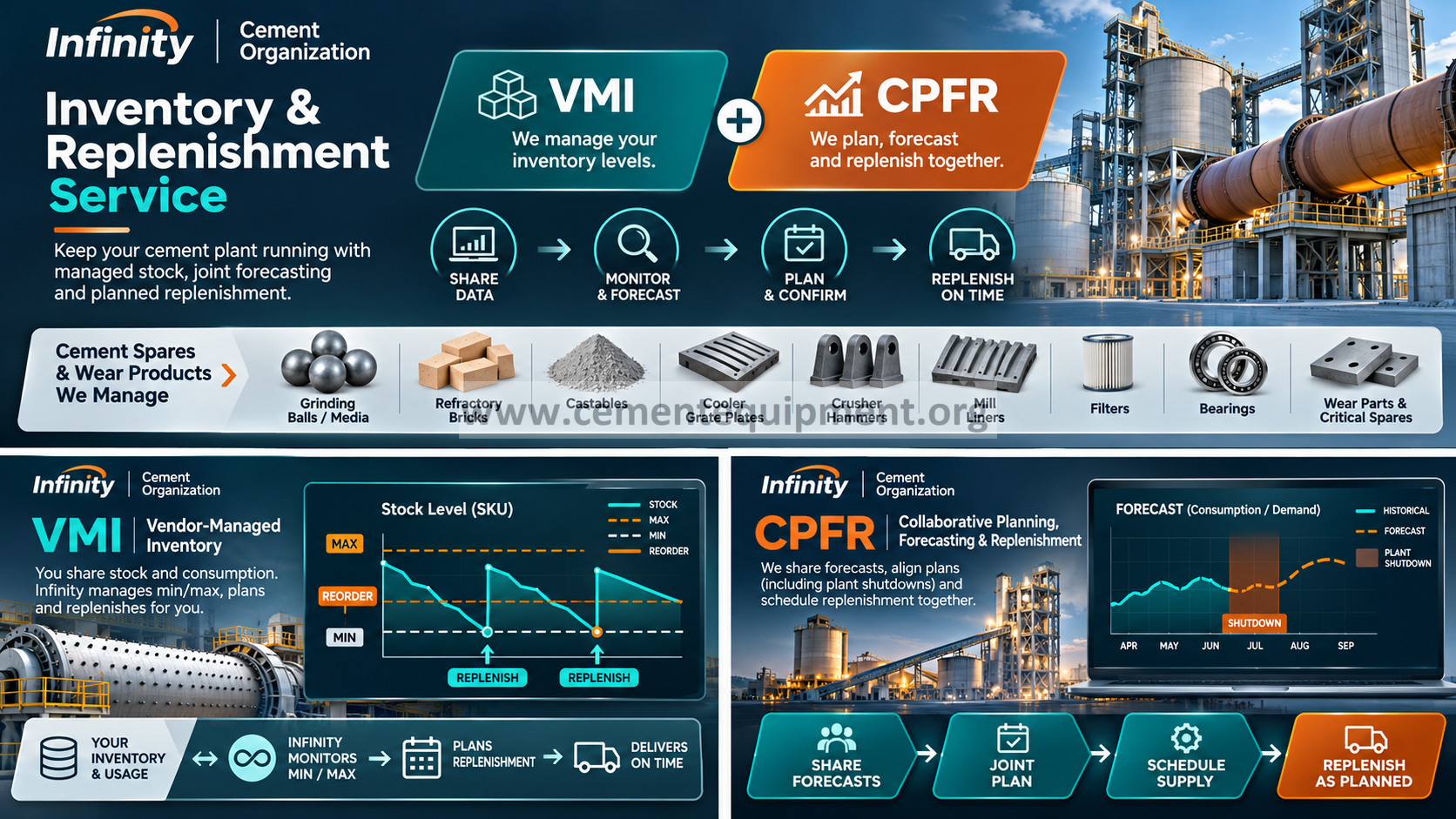
We manage cement plant spare parts inventory, forecasting and replenishment.
Share your inventory levels, consumption records and plant maintenance plans. Infinity for Cement can manage agreed min/max stock policies, predict demand, coordinate suppliers and replenish the contracted grinding media, refractories, mill liners, wear parts and critical MRO spares.
Explore VMI & CPFR Inventory Management Service
What we are building services around
The strongest opportunities are the ones that fit the platform naturally: technical knowledge, supplier connection, and niche market visibility.
Technical package sales
The premium package remains the clearest direct offer for engineers, plant teams, and technical buyers who need practical reference value.
Buyer-side supplier search
Support for buyers who need help identifying relevant suppliers, service companies, and equipment contacts for cement-related needs.
Supplier visibility and inquiries
Commercial discussions with companies that want to reach a niche cement audience through this platform and its community presence.
Where these services can create revenue
Direct revenue
- Technical package purchases
- Brokered commercial introductions
- Lead-generation support for suppliers and service companies
Indirect revenue support
- Stronger trust and higher conversion from content traffic
- More serious buyer inquiries through clearer contact paths
- Better positioning for future AI-assisted business development
Who these services are meant for
Plant teams and buyers
People looking for technical knowledge, supplier support, or specific cement equipment contacts.
Suppliers and service providers
Companies that want more visibility and better industry conversations through a niche platform.
Commercial partners
Organizations interested in content collaboration, introductions, and market-facing opportunities inside the cement industry.
Blockchain & Digital Traceability for Cement Manufacturers
Explore the Full Blockchain Services Guide & Request a Consultation
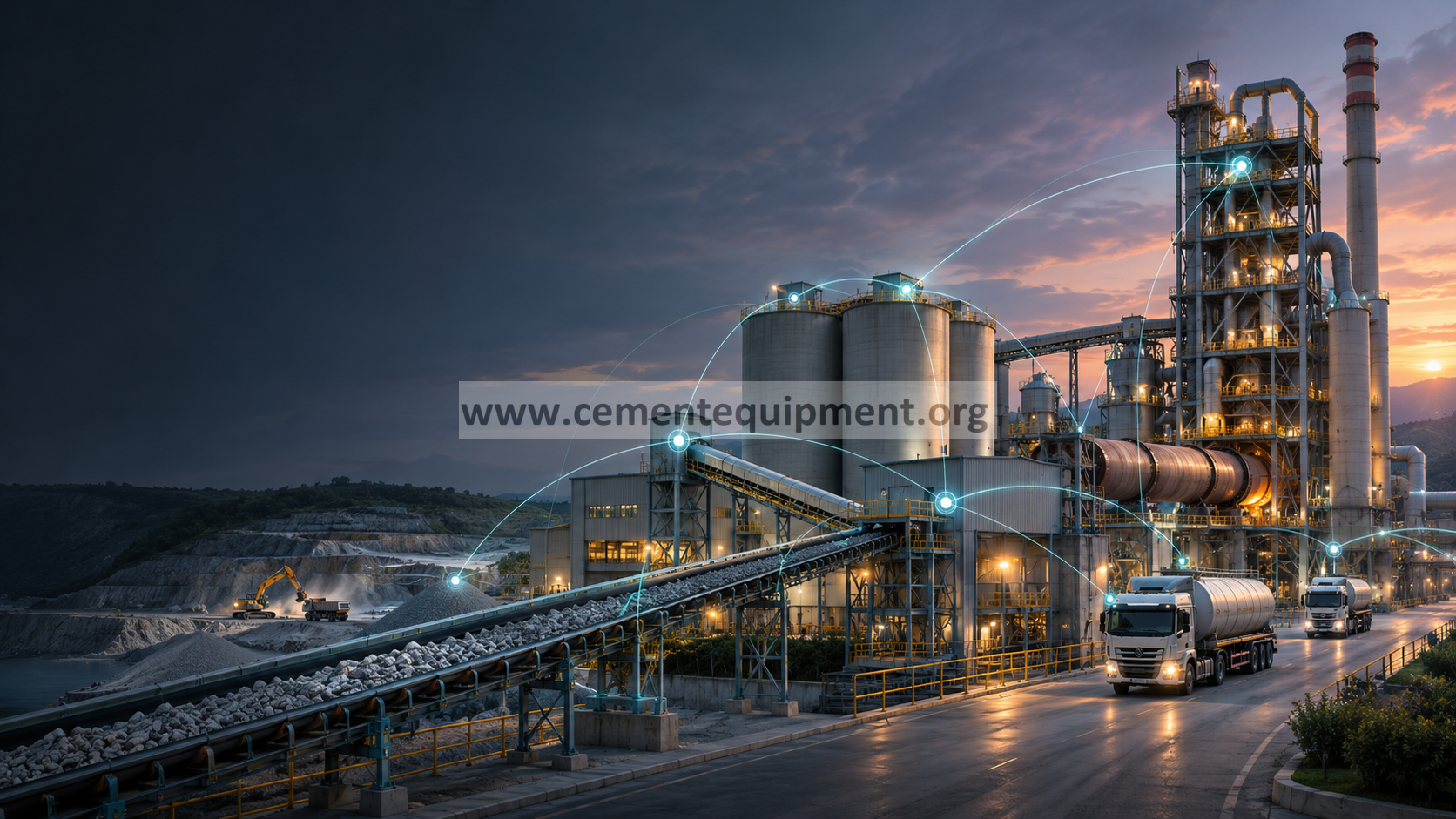
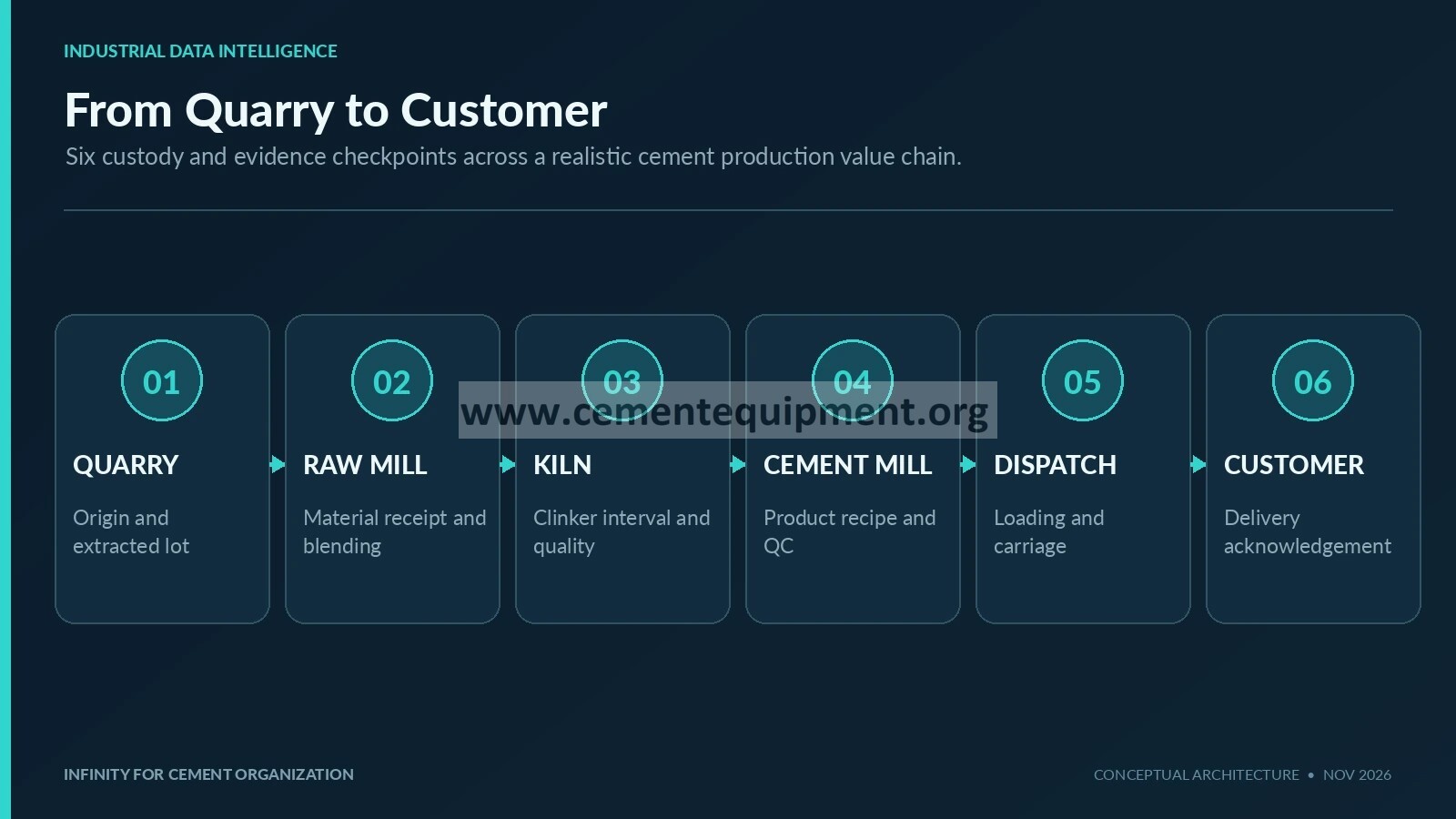
From quarry to customer: connected, verifiable, auditable cement-industry operations. Explore permissioned blockchain and conventional digital-trust systems for procurement, supplier qualification, material genealogy, spare-parts provenance, cement quality and environmental evidence. Our approach begins with the manufacturing problem, not a cryptocurrency pitch.
Start with three scoped services
Readiness Assessment
Business-process review, data sources, use-case prioritization, blockchain-vs-database recommendation, financial model and roadmap.
Proof of Concept / Pilot
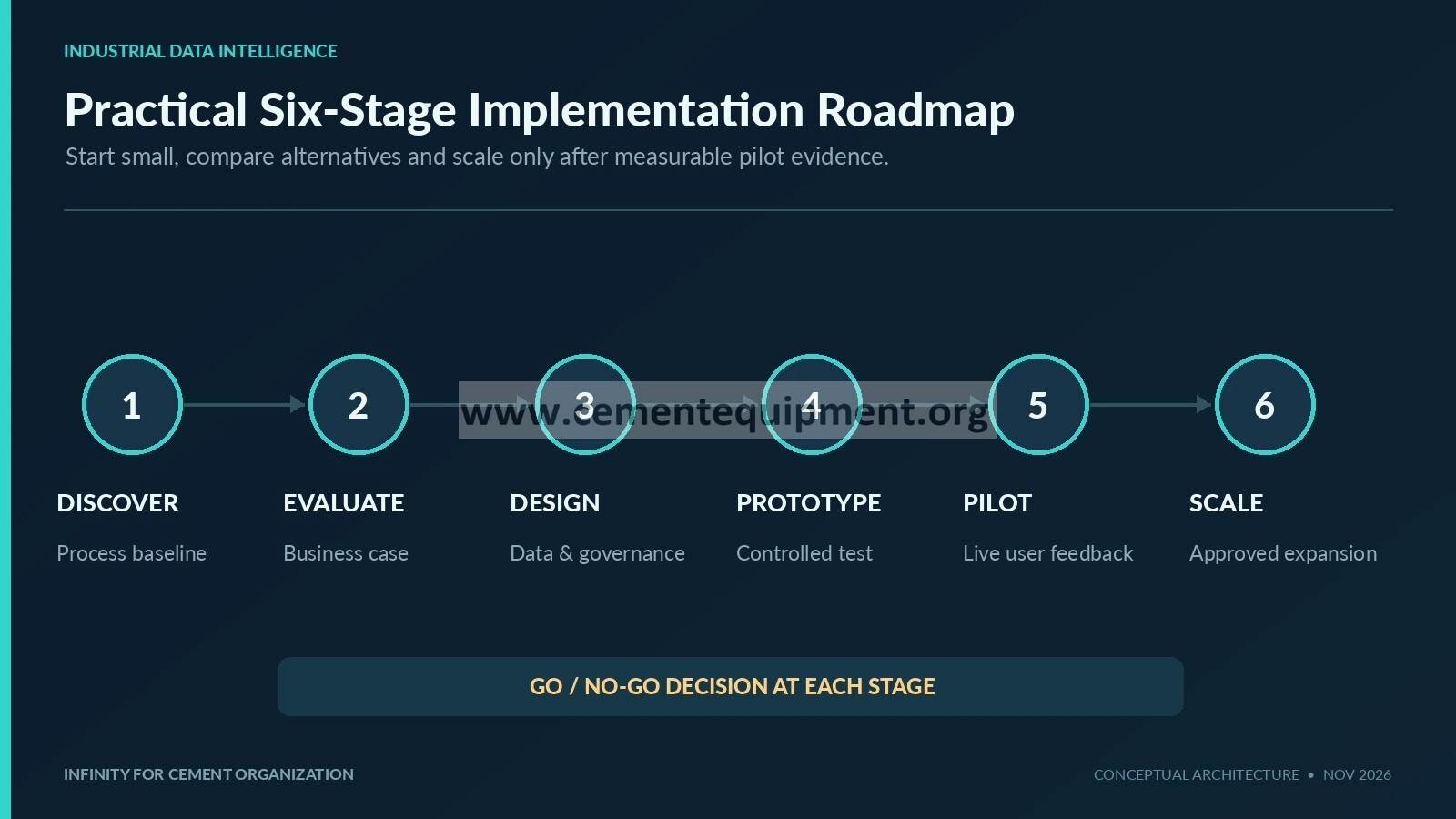
One supplier, shipment or quality workflow; permissions, evidence model, prototype integration and measurable exception testing.
Enterprise Architecture & Integration
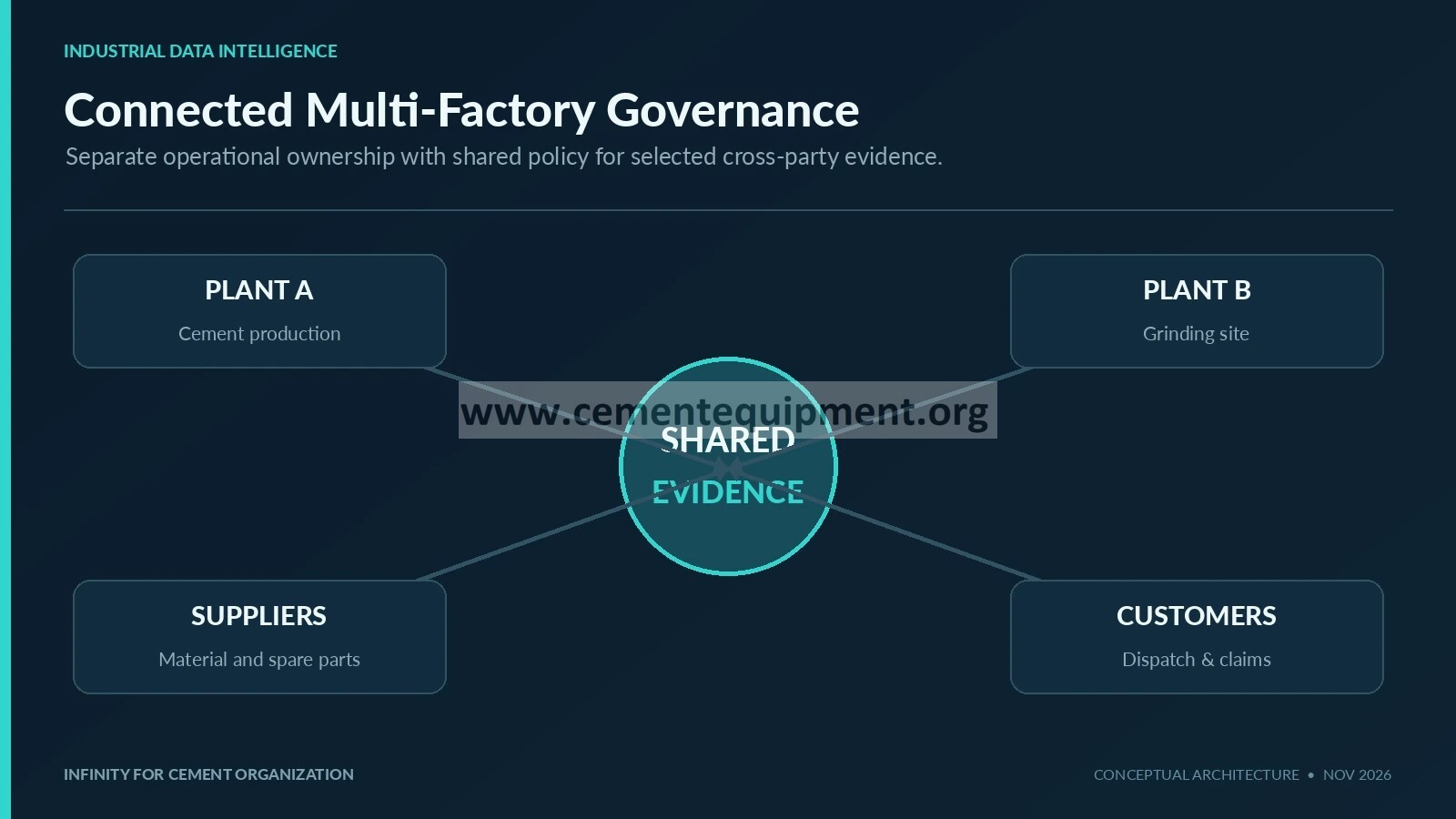
Multi-plant governance, secure ERP and supplier interfaces, architecture, vendor selection, rollout and support scoping.
Who this serves: cement CEOs, plant directors, procurement managers, CFOs, quality heads, ERP/IT directors and sustainability teams. All proposals are scoped individually; software delivery, specialized technical resources and third-party integrations require confirmation. No completed client blockchain deployments are claimed.
Original cement blockchain process graphics
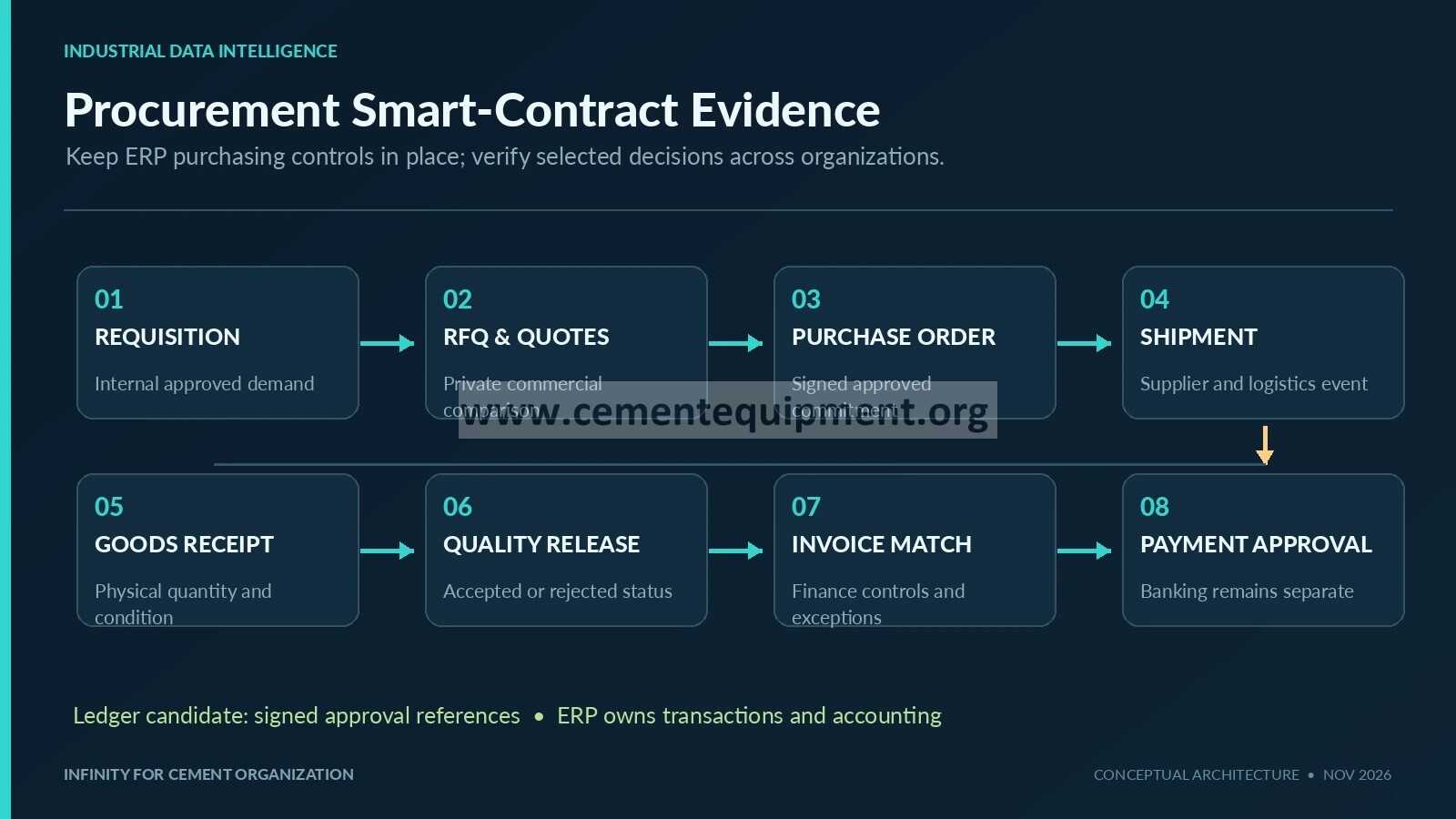
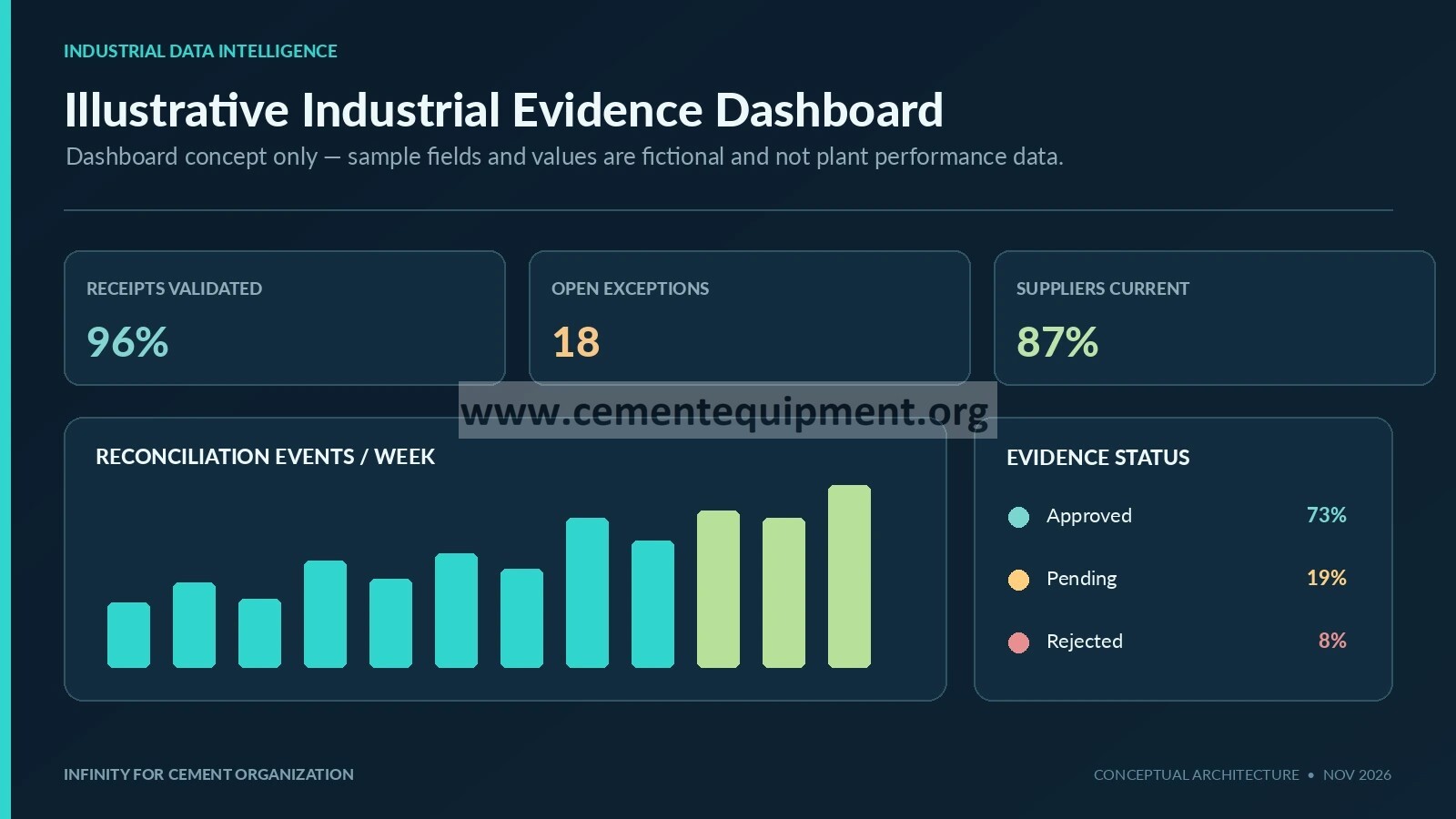
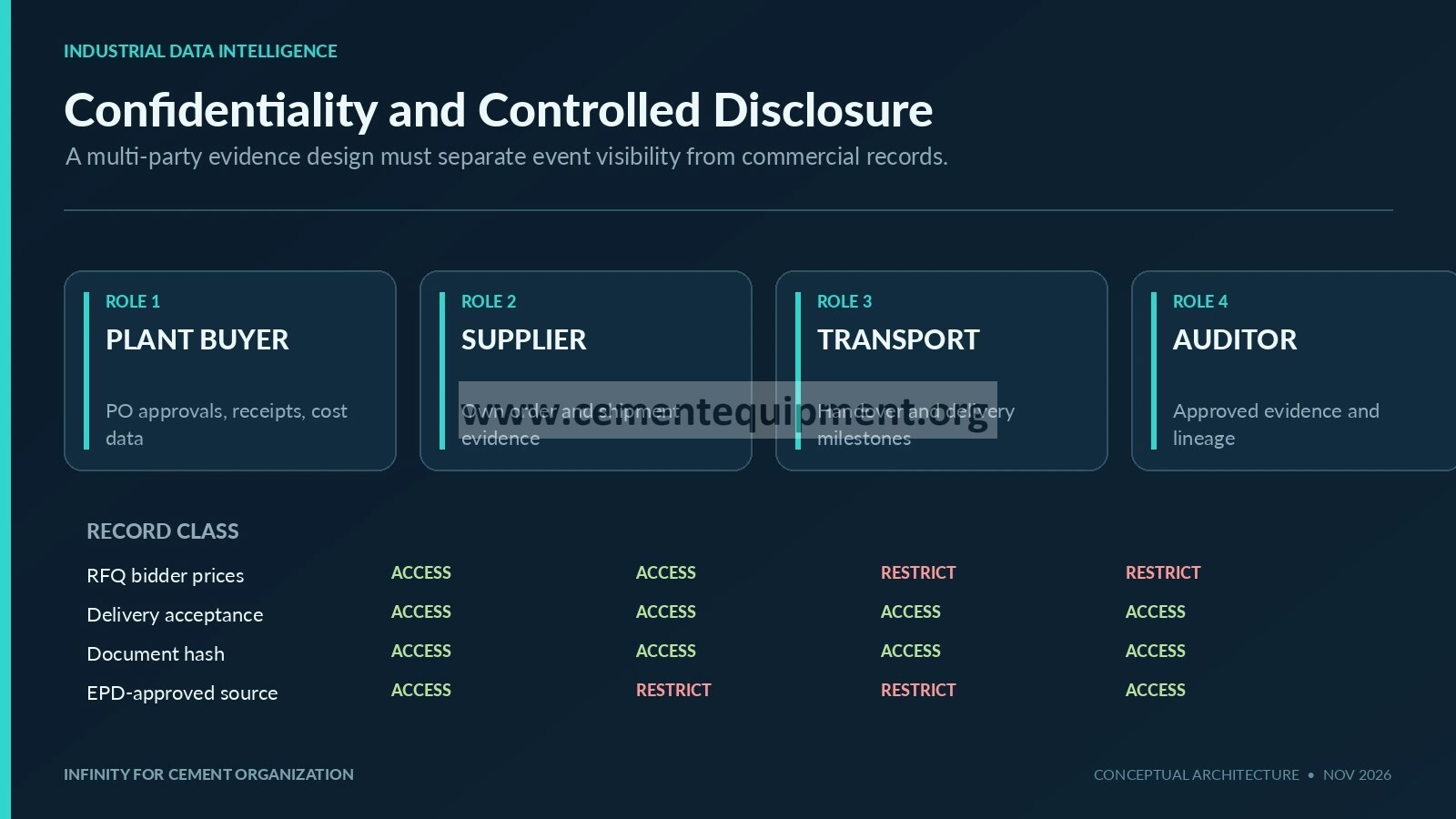
These original diagrams translate complex architecture into practical cement-sector workflows. Architecture screens and sample dashboard figures are illustrative, not screenshots of deployed client systems.
Industrial use cases and technical architecture
01. Procurement workflow and three-way matching
Model the sequence from purchase requisition, RFQ, supplier evaluation, contract approval and PO acknowledgement to goods receipt, quality disposition, invoice review and controlled payment authorization. The ERP remains the financial system of record; shared proof is limited to business events whose verification creates value for independent parties.
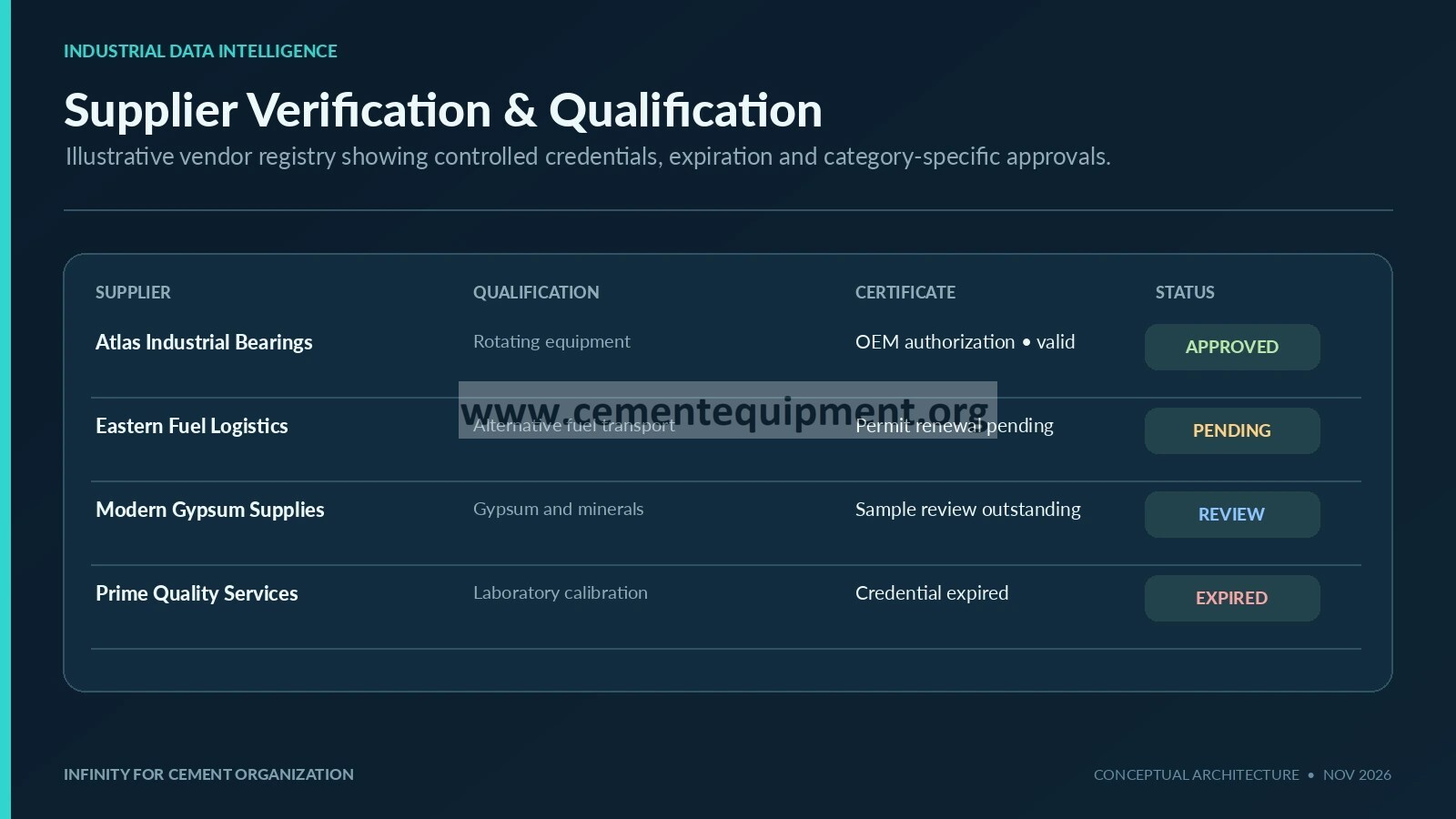
02. Supplier verification and qualification
Represent supplier approvals by plant, material category, issuing authority and validity dates. Version certificates and maintain transparent revocation and reapproval events while keeping personal and commercially sensitive source documents in a protected repository.
03. Genuine industrial spare parts
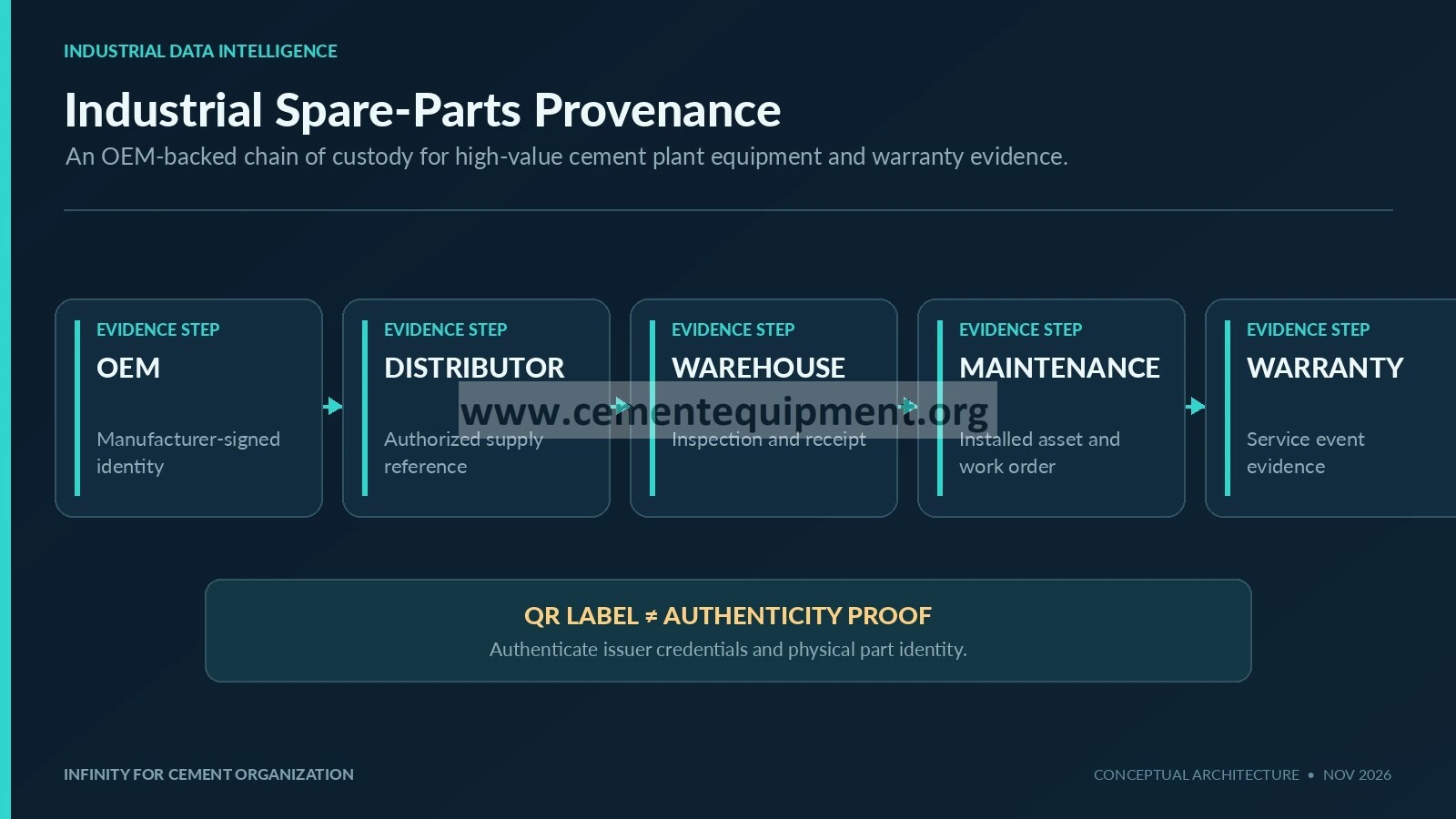
Anchor manufacturer part identifiers, serial numbers, authenticity certificates, dispatch evidence, receiving inspection, maintenance work orders and warranty history. A QR code alone is not sufficient to prove genuine origin, and the CMMS should continue to own equipment records.
04. Quarry and limestone provenance
Connect the material source, dispatch lot, vehicle, weighbridge receipt, sampling, laboratory result and inventory movement. Blended limestone stockpiles and cement silos require explicit genealogy or mass-balance rules; a shipment ID must not be mistaken for chemically exact provenance.
05. Petcoke, coal and alternative fuels
Trace quality-sensitive fuel contracts through transport, delivered mass, sampling, gross and net calorific value, moisture, ash, sulfur and applicable environmental evidence. Record disputed laboratory findings and retest approval as revisions instead of deleting earlier events.
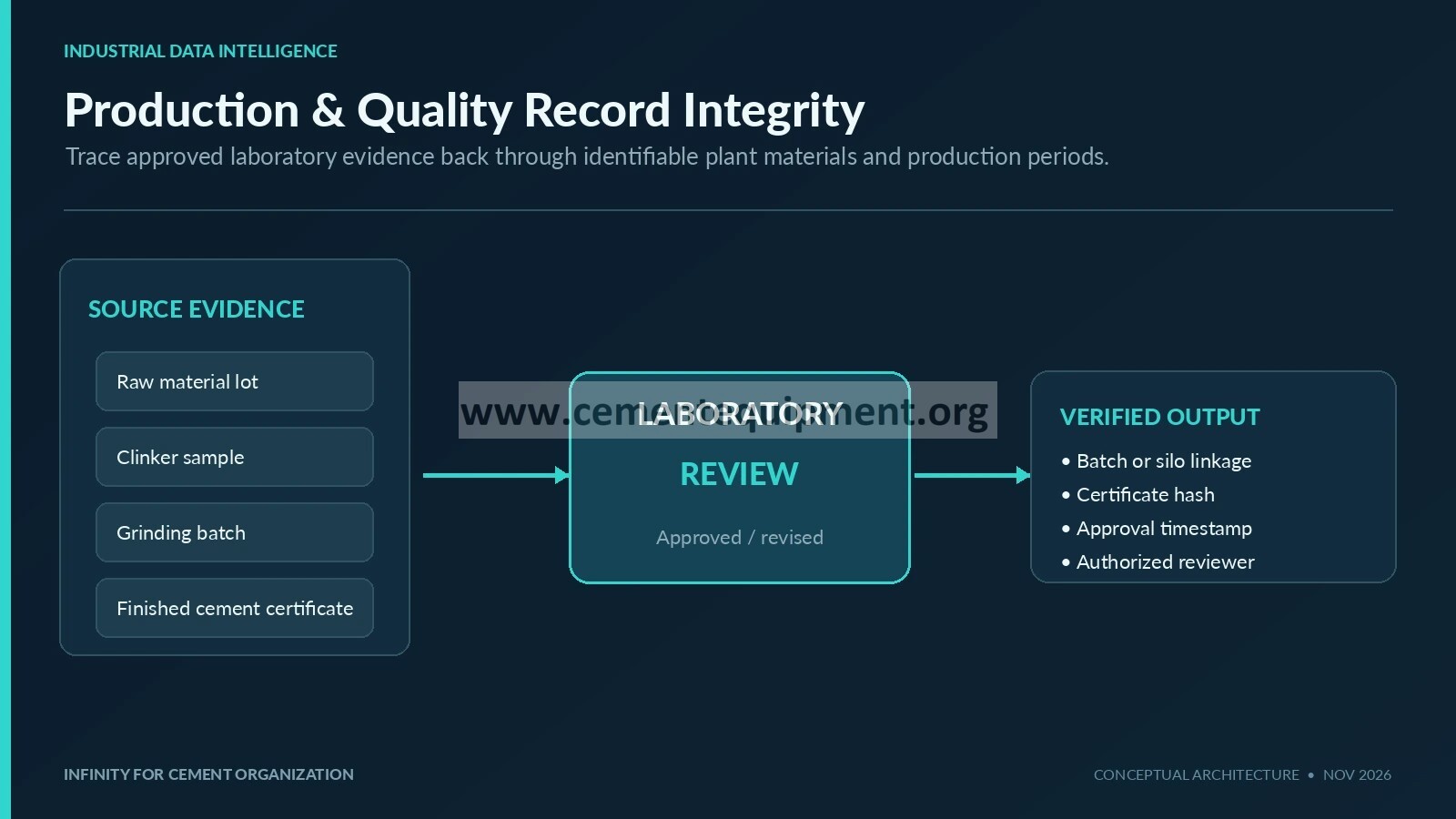
06. Cement quality data integrity
Protect approved report versions for clinker, raw meal and finished cement without moving high-frequency or confidential measurements onto a distributed ledger. Link sample, test method, instrument, analyst, approval status and batch or production interval.
07. Dispatch and transport documents
Relate sales order, batch or silo, loading ticket, weight, vehicle, transporter milestone and customer receipt. Dispute resolution requires a clear record of who made each assertion and how corrections were authorized.
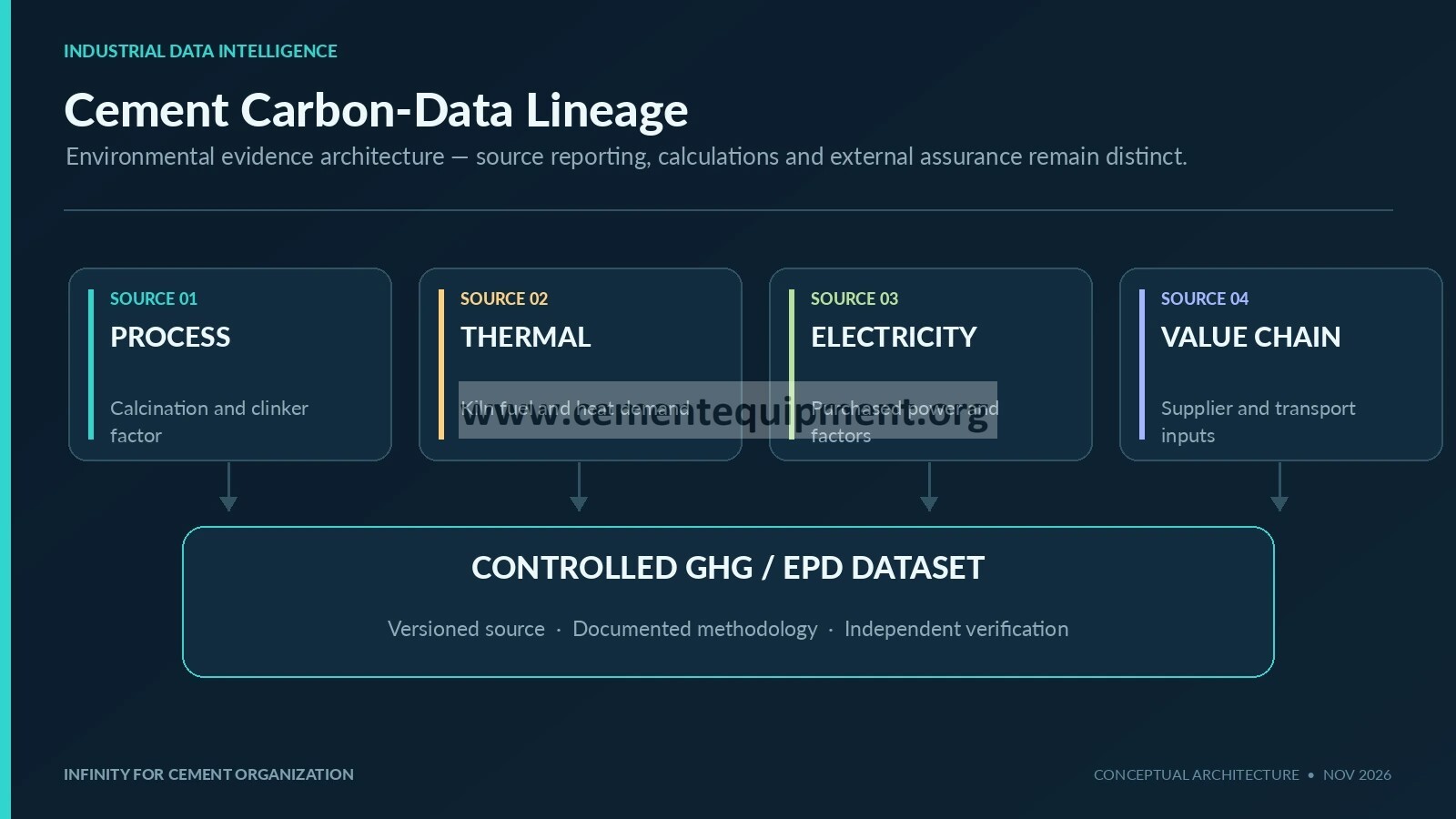
08. Carbon source-data lineage
Map fuel, calcination, electricity, clinker-factor and selected Scope 3 inputs to recognized reporting boundaries. Cryptographic records preserve versions and approvals but do not validate measurement accuracy or replace third-party environmental assurance.
09. Cement digital product passports
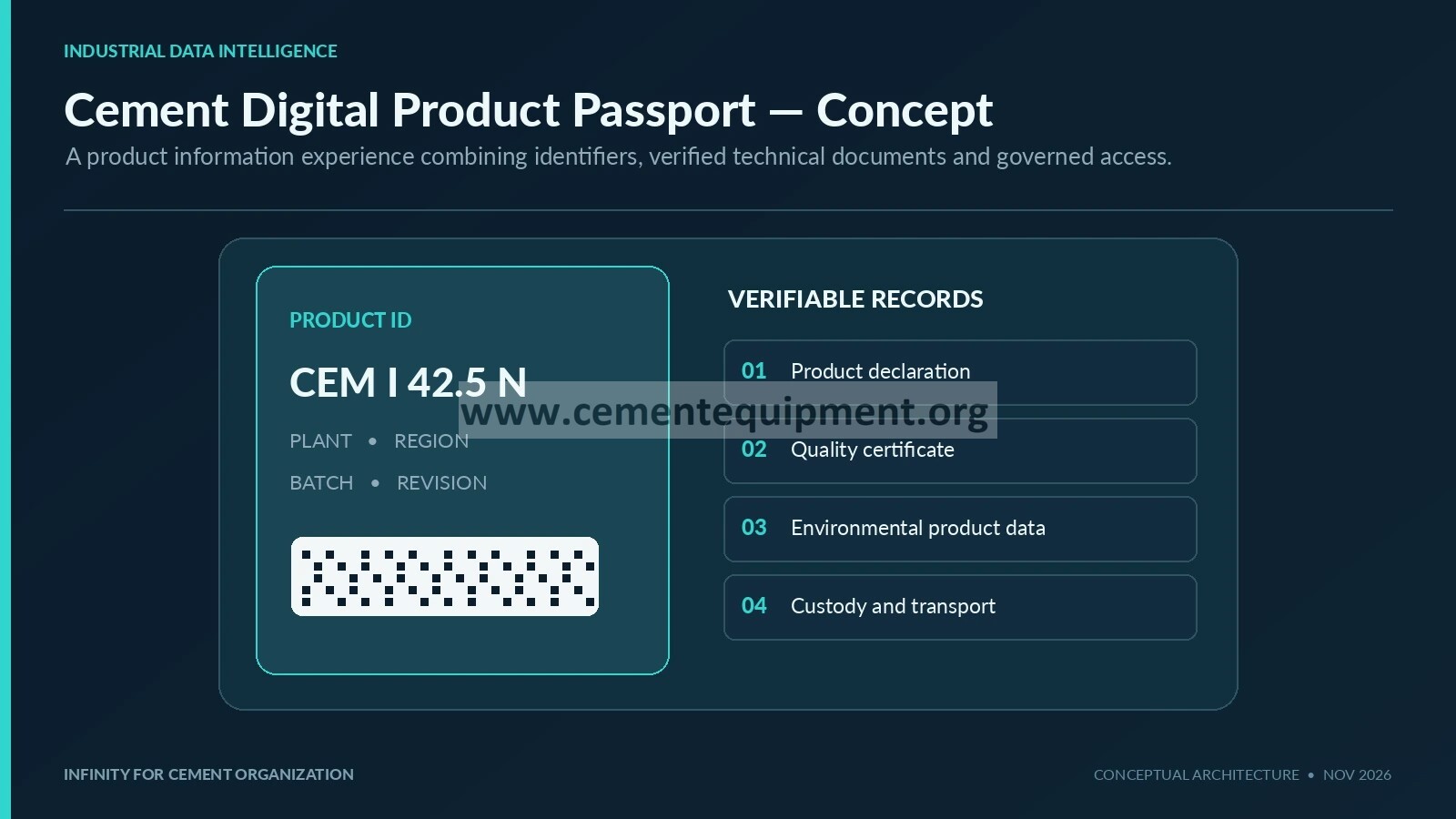
Prepare machine-readable product IDs, declarations, technical descriptions, EPD evidence and controlled access. The EU Construction Products Regulation creates a developing framework; mandatory duties are phased, and the law does not generally require blockchain.
10. ERP, MES, LIMS and historian integration
Use controlled APIs, middleware and event schemas to reference records from SAP, Oracle, Dynamics, Odoo, LIMS, MES and CMMS. Retain sensor-level time series in existing industrial systems. Protect the plant control network by design.
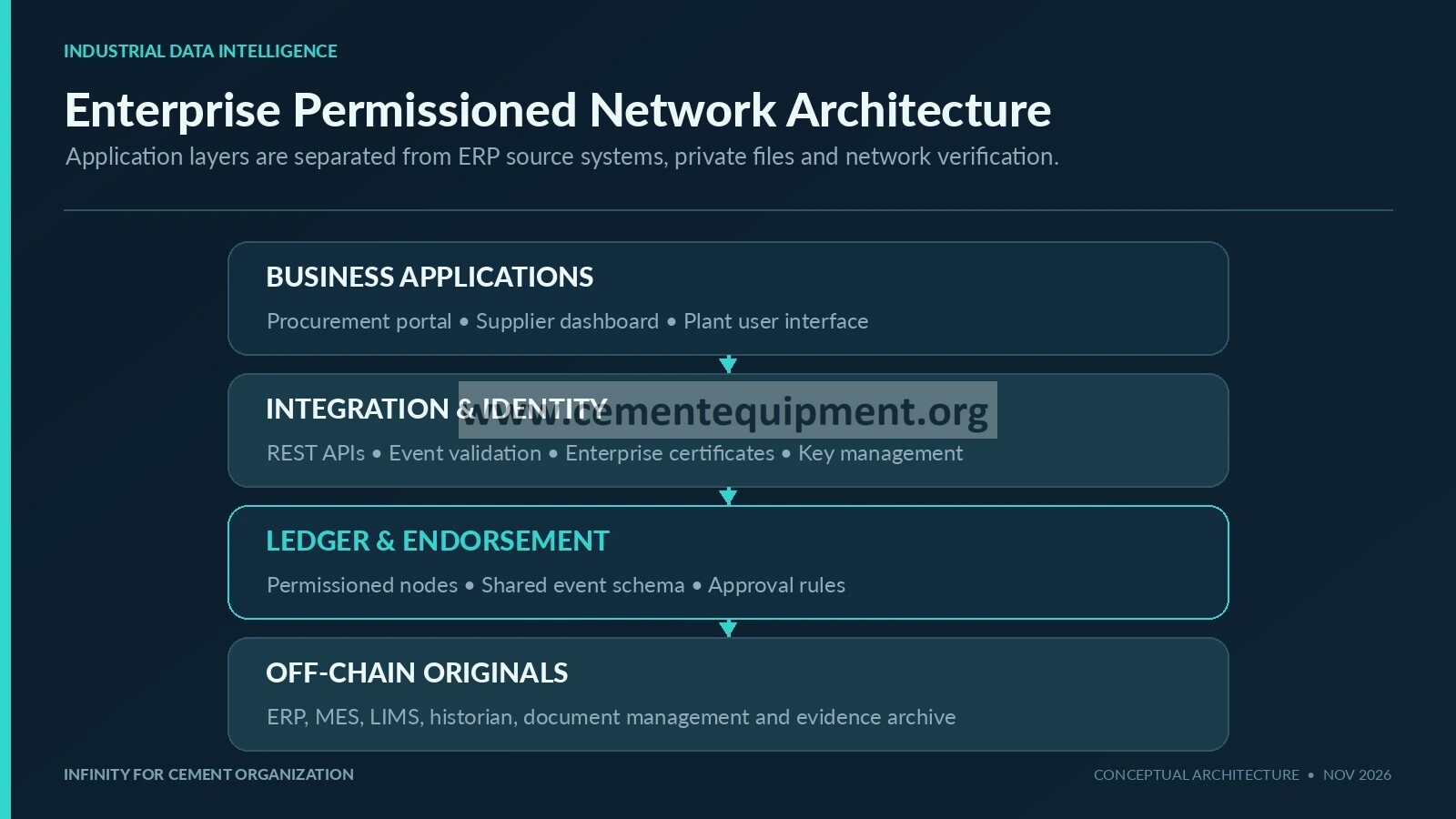
11. Permissioned network architecture
Evaluate participant identity, endorsement rules, private data, chaincode, node governance, key custody and backup before selecting Hyperledger Fabric or any alternative. For single-entity processes, a conventional database may be the more economical design.
12. Cybersecurity, privacy and recovery
Control who can submit, amend and view events. Require secure signing, least privilege, encryption, key rotation, revocation, data retention, disaster recovery and documented consortium exit rules. Never expose competitor quotations in a shared public record.
13. Pilot methodology and value measurement
Interview process owners; quantify reconciliation time, rejected receipts, dispute frequency and audit effort; select one counterparty and workflow; prototype the normal and exception paths; measure against baseline; and scale only when verified benefits justify costs.
14. Financial evaluation
For illustration, 8,000 annual purchase orders at 12 minutes of avoidable reconciliation and $25 per hour represent $40,000 annual activity cost. A measured 30% reduction would represent $12,000 gross annual modeled benefit before integration and operating expenses. These are hypothetical inputs, not measured client results.
15. Illustrative gearbox transaction
An imported gearbox could have signed OEM identity, PO version, shipping documents, incoming inspection, commissioning work order and warranty events. A blockchain layer would provide shared proof of which approved documents were exchanged, not certify the technical condition of the equipment.
16. Illustrative bulk-cement delivery
A dispatch and receipt pilot could connect loading quantities, carrier identity, departure, destination, acknowledgement and authorized quantity-dispute resolution. The measurable objective is faster reconciliation, not more ledger transactions.
17. Illustrative EPD evidence trail
The cement plant could reference approved carbon input files, clinker production summaries, fuel factors, versioned calculations and third-party assurance status. The architecture should enable an auditor to retrieve original evidence without relying on opaque blockchain statements.
18. Operational readiness and adoption
Define data dictionaries, responsible departments, supplier interfaces, exception codes, support obligations and recovery workflows. Adoption depends on fitting the existing process and minimizing additional retyping by plant employees.
19. Data ownership and contractual governance
Document who operates the infrastructure, who controls identities, what each participant may inspect, how disputes are resolved, and what happens when a member leaves. These decisions should precede production development.
20. Decarbonization evidence
A suitable data lineage design may support lower-clinker products, supplementary materials, alternative fuels and carbon capture reporting. Product-level claims require reliable calculations, allocation rules and validation independently of the ledger.
21. When blockchain is the wrong answer
Use a centralized database, signed document workflow, secure data-sharing portal or stronger ERP audit log when those options solve the control problem with lower total cost and fewer parties to coordinate.
22. Requesting the right engagement
Send a description of the factory workflow, company and country, ERP used, external stakeholders, transaction volume, recurring problems, intended outcome and preferred service. Begin with a readiness assessment if technical feasibility is unknown.
Frequently asked questions
Does this require cryptocurrency?
No. This is an enterprise industrial-data service concept.
Is a blockchain compulsory?
No. A conventional database may be a better fit.
Can our ERP remain?
Yes. Approved ERP events may be referenced through controlled integration.
Do smart contracts pay suppliers?
Not without a separately authorized financial integration and approvals.
Do cement product passports require blockchain?
No universal blockchain mandate has been established.
Can the ledger certify emissions?
No. Measurement, calculation methodology and external assurance remain essential.
Can competitors see prices?
No. Privacy and permission design must prevent that.
Can copied QR codes establish authentic spares?
No. Manufacturer-backed evidence and physical verification are needed.
Will it change the kiln control system?
A prudent pilot should avoid altering safety- or production-critical control networks.
How do we start?
Choose one disputed or time-consuming multi-party workflow and request a scoped assessment.
What does a pilot cost?
It requires a project-specific proposal based on participants and integrations.
How are mistakes corrected?
With signed amendments or reversals preserving the original version.
Is Hyperledger Fabric required?
No. It is one possible permissioned platform.
Who owns data?
Ownership, access and retention need explicit contractual rules.
Can small plants benefit?
Possibly, but a simpler shared portal may be more economical.
Can suppliers participate without ERP?
A portal or document exchange may be designed for limited-participation workflows.
Does blockchain detect dishonest sensor values?
No. A signed incorrect reading remains incorrect.
Can this support EPD evidence?
It can help trace source versions, not replace EPD program verification.
What is a viable ROI metric?
Time to reconcile documents or resolve receipt disputes, measured before and after.
What if connectivity fails?
System recovery and offline procedures must be designed and tested.
Can carbon data be corrected?
Yes, through auditable version updates with appropriate approval.
Can multiple factories participate?
Potentially, with shared data standards and governance.
Is this already an operational Infinity blockchain platform?
No completed blockchain deployment is claimed here.
Are fixed savings promised?
No. Benefits require measured pilot evidence.
How are supplier approvals handled?
With category-scoped, time-limited qualification and revocation events.
Should all historical records be uploaded?
Usually not; include only the validated evidence needed.
Where are documents stored?
Normally in permissioned off-chain storage with signed references.
Can it authenticate product certificates?
It can verify signed references if source identities and issuing processes are trusted.
Who provides enterprise hosting?
That is determined during technical scoping and partner validation.
What belongs in an initial inquiry?
Company, country, department, challenge, preferred service and existing software.
Does it replace a laboratory system?
No. LIMS remains the scientific system of record.
Is blockchain legally required for export?
Not generally; verify the applicable product and destination requirements.
What if suppliers refuse to join?
Scope may change to an internal evidence portal or non-ledger alternative.
How are data disclosures restricted?
By verified identities, permissions, encryption and architecture-specific controls.
Can it aid warranty disputes?
Potentially, by linking OEM identity, installation, service and inspection evidence.
What does an assessment deliver?
A workflow map, technology comparison, candidate use cases and pilot recommendation.
Primary technical references
Guidance from Hyperledger Fabric, EU Construction Products Regulation 2024/3110, European Commission Digital Product Passport and the GCCA EPD Tool. Regulatory status, technical choices and project outcomes must be confirmed for each client.
Request Your Cement Blockchain Consultation
Use the established commercial-contact route. Include your full name, company or plant, country, role, preferred service, operational challenge, current ERP, proposed participants and brief project description. No new form-delivery workflow is represented as tested.
Opens your email application with a structured request template. Email delivery depends on the visitor’s email client; this is not a website-hosted form.
Need a business conversation, not just content?
Use the quote path if you want to discuss a supplier search, commercial opportunity, or service idea. If your main need is technical reference access, go directly to the premium package.