Explore nine specialized industrial problem-solving services and request a confidential RFQ.
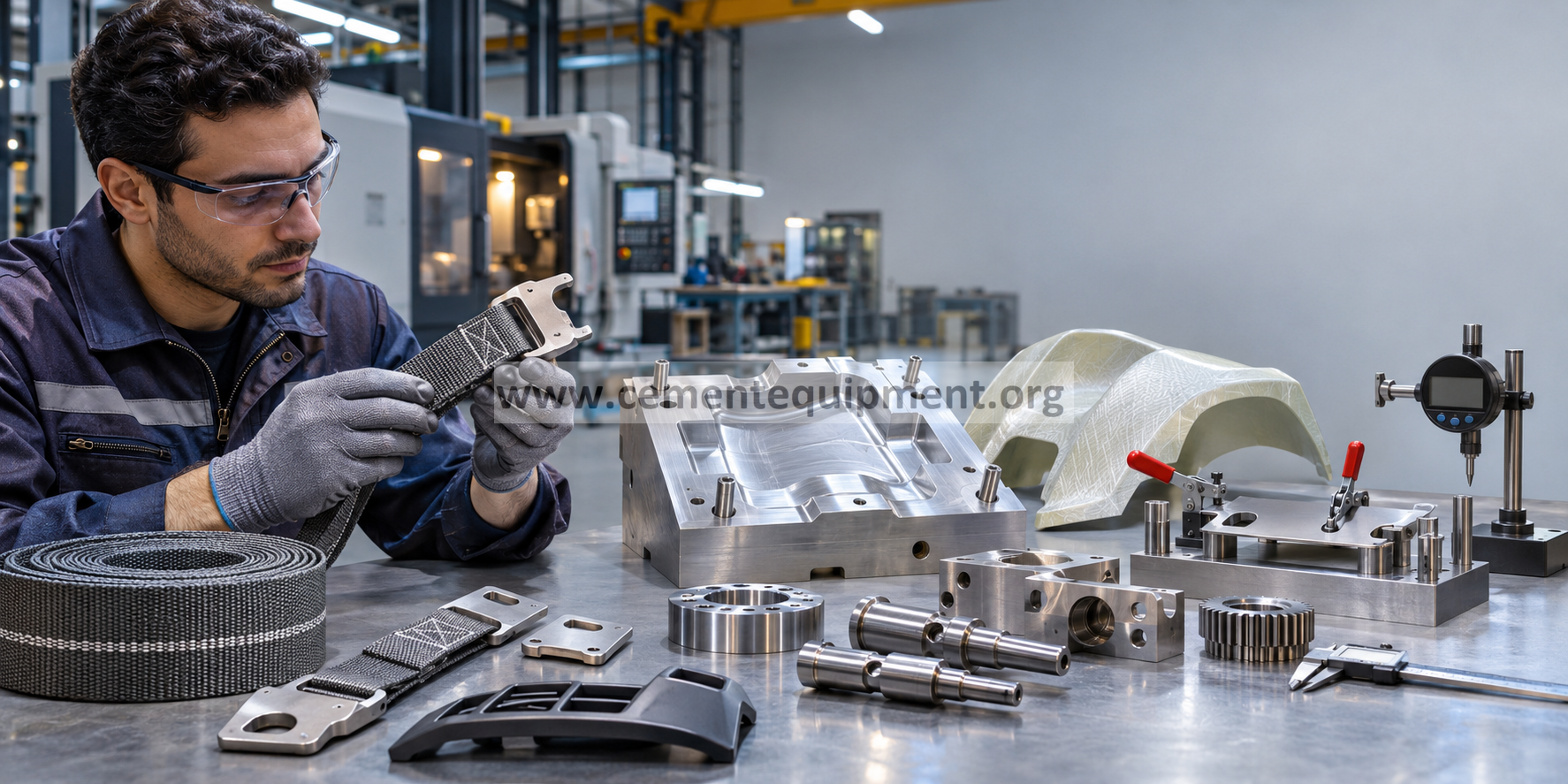
Our positioning: We coordinate independent Egyptian engineering and manufacturing capabilities for difficult, low-volume and reverse-engineered parts. There is no fixed minimum quantity for initial feasibility review; prototypes, molds and one-off production are priced to the actual work. Every commercial offer depends on technical acceptance, drawings, availability and export compliance.
Engineering scope
- Machined or profile-cut metal fittings for textile straps and woven webbing, with geometry matched to the application.
- Crimp, rivet, clamp, sewing-interface or mechanical-attachment concepts subject to testing.
- Small-batch fixtures and gauge development for repeatable assembly.
- Design-for-manufacture review when full progressive stamping tools are uneconomic for first production.
- Inspection plans and verification of pull-out strength / fatigue where required.
How your project moves from a problem to a quote
- Share a drawing or physical sample, strap material/width, thickness, required load and environment.
- Clarify whether the fitting is decorative, load-bearing, safety-critical or a regulated product.
- Compare prototype machining, laser cutting and eventual stamping economics.
- Agree verified attachment tests and the documented acceptance specification before shipment.
CONFIDENTIAL ENGINEERING RFQ
Send one difficult component. We will evaluate the solution.
Email: [email protected]
Include the drawing or three photos, part/model or application, material, critical tolerances or test standard, quantities, delivery country, deadline and a target landed-price ceiling when available.
Frequently asked questions
Can we avoid a stamping mold for only a few hundred pieces?
Often an initial machined or cut-part route is viable, depending on geometry and repeat quantity.
Can you guarantee joint strength?
Only through an approved test plan with an established acceptance threshold.
Technical disclosure: Load-bearing and safety-critical assemblies require appropriate design validation, material certification and testing.