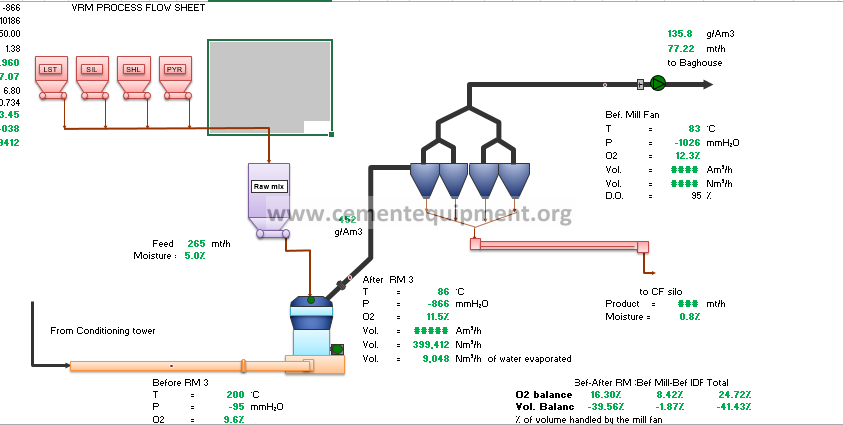
| HEAT AND MASS BALANCE of VRM (mill to cyclone) |
|
|
|
|
|
|
|
Date: |
|
|
|
|
|
|
|
|
Raw feed condition: Rate |
|
|
265 |
mt/h |
|
|
|
|
Temperature |
|
|
35 |
°C |
|
|
|
|
Moisture |
|
|
5.0% |
|
|
|
|
Raw meal collected at cyclone: Rate |
|
|
176.56 |
mt/h |
|
|
|
|
Temperature (after cyclone) |
|
|
83 |
°C |
|
|
|
|
Moisture of mill product |
|
|
0.8% |
|
|
|
|
Weight of H2O vapor from raw matls. |
|
|
11,220 |
kg/h |
|
|
|
Dust going to bag house at cyclone efficiency of |
|
70% |
77218.90 |
kg/h |
196.9 |
g/nm3 |
|
Hot gas condition before mill |
|
|
|
|
|
|
|
|
Temperature |
|
|
200 |
°C |
|
|
|
|
Pressure |
|
|
-95 |
mmH2O |
|
|
|
|
Oxygen content |
|
|
9.6% |
|
|
|
|
|
Volume at actual condition |
|
|
953,983 |
Am3/h |
|
|
|
|
Volume at standard condition |
|
|
545,472 |
Nm3/h |
|
|
|
Gas condition after the mill |
|
|
|
|
|
|
|
|
Temperature |
|
|
86 |
°C |
|
|
|
|
Pressure |
|
|
-866 |
mmH2O |
|
|
|
|
Oxygen content |
|
|
11.5% |
|
|
|
|
|
Volume at actual condition |
|
|
574,038 |
Am3/h |
|
|
|
|
Volume at standard condition |
|
|
399,412 |
Nm3/h |
|
|
|
|
Volume of H2O vapor from raw mat’l |
|
|
9,048 |
Nm3/h |
|
|
|
Gas condition at the mill fan inlet |
|
|
|
|
|
|
|
|
Temperature |
|
|
83 |
°C |
|
|
|
|
Pressure |
|
|
-1026 |
mmH2O |
|
|
|
|
Oxygen content |
|
|
12.3% |
|
|
|
|
|
Volume at actual condition |
|
|
568,543 |
Am3/h |
|
|
|
|
Volume at standard condition |
|
|
392,074 |
Nm3/h |
|
|
|
|
|
|
|
|
|
|
|
|
HEAT AND MASS BALANCE of VRM |
|
|
|
|
|
|
|
|
|
|
|
|
|
|
|
|
Reference temp. |
20 |
deg C |
|
|
|
|
|
|
|
|
|
|
|
Temp |
Cp |
|
Input |
|
Nm3/h |
Mass, kg/h |
Heat, kcal/h |
|
°C |
kcal/kg |
|
Raw material ( dry) |
|
251,750.00 |
1,691,760.00 |
|
35 |
0.192 |
|
Raw material moisture |
|
13,250.00 |
463,750.00 |
|
35 |
1.000 |
|
Dust suspended at gas from CT |
|
5,646.33 |
216,819.23 |
|
200 |
0.192 |
|
Hot gas from CT |
545,472.11 |
758,206.23 |
36,546,631.22 |
|
200 |
0.241 |
|
False air at mill |
120,047.50 |
154,861.27 |
1,306,716.99 |
|
35 |
0.241 |
|
False air after mill to fan inlet |
62,029.22 |
80,017.70 |
675,188.09 |
|
35 |
0.241 |
|
Grinding heat |
|
|
|
2,067,526.03 |
|
|
|
|
|
|
727,548.83 |
1,263,731.53 |
42,968,391.56 |
|
|
|
|
Output |
|
|
|
|
|
|
|
|
New raw meal + kiln dust collected at cyclone, dry |
|
180,177.43 |
2,990,945.40 |
|
83 |
0.200 |
|
New raw meal + kiln dust going to baghouse,dry |
|
77,218.90 |
1,281,833.74 |
|
83 |
0.200 |
|
Raw meal moisture |
|
1,453.04 |
120,602.64 |
|
83 |
1.000 |
|
Exit gases: gas from preheater |
545,472.11 |
758,206.23 |
14,985,755.22 |
|
83 |
0.238 |
|
|
false air from raw mill |
182,076.72 |
234,878.97 |
4,707,502.52 |
|
83 |
0.241 |
|
|
H2O vapor from raw mat’l |
9,513.67 |
11,796.96 |
7,491,631.08 |
|
83 |
0.288 |
|
Heat loss by radiation & convection |
|
|
1,024,813.39 |
|
|
|
|
|
|
737,062.50 |
1,263,731.53 |
32,603,083.99 |
|
|
|
|
|
|
|
|
-24.12% |
|
|
|
|
|
|
|
|
|
|
|
|
|
Grinding heat computation |
|
|
Radiation & convection losses |
|
|
|
|
mill motor |
2496.83 |
kw |
Water evaporated |
|
11,796.96 |
kg/h |
|
|
classifier motor |
86.96 |
kw |
R/C factor |
|
11.95 |
kcal/kg H2O |
|
|
mill fan* |
0 |
kw |
Heat loss at the mill |
|
140,977.01 |
kcal/h |
|
|
total |
2583.79 |
kw |
Heat loss at the cyclone |
883,836.38 |
|
|
|
assumed % efficiency |
0.93 |
|
Total heat loss |
|
1,024,813.39 |
kcal/h |
|
|
|
|
|
|
|
|
|
|
|
|
|
|
|
|
|
|
|
|
|
|
|
|
|
|
|
|
|
|
|
|
|
|
|
|
|
Heat Balance at Cyclone |
|
|
|
|
|
|
|
|
|
|
|
|
|
Temp |
Cp |
|
Input |
|
Nm3/h |
Mass, kg/h |
Heat, kcal/h |
|
°C |
kcal/kg |
|
|
|
|
|
|
|
|
|
|
Gases: |
hot gas from preheater |
545,472.11 |
758,206.23 |
15,527,409.02 |
|
86 |
0.238 |
|
|
water vapor from raw matl |
9,513.67 |
11,796.96 |
7,507,533.29 |
|
86 |
0.288 |
|
|
false from at mill |
120,047.50 |
154,861.27 |
3,215,952.37 |
|
86 |
0.241 |
|
|
false air at cyclone |
62,029.22 |
80,017.70 |
1,659,033.59 |
|
86 |
0.241 |
|
R.meal |
raw meal, dry |
|
251,750.00 |
4,330,100.00 |
|
86 |
0.200 |
|
|
dust suspended at gas from CT |
|
5,646.33 |
97,116.95 |
|
86 |
0.200 |
|
|
raw meal moisture |
|
1,453.04 |
124,961.77 |
|
86 |
1.000 |
|
|
|
|
1,263,731.53 |
32,462,106.98 |
|
|
|
|
Output |
|
|
|
|
|
|
|
|
Gases: |
hot gas from preheater |
|
758,206.23 |
14,985,755.22 |
|
83 |
0.238 |
|
|
water vapor from raw matl |
|
11,796.96 |
7,491,631.08 |
|
83 |
0.288 |
|
|
false air fr. mill to dust col. |
|
234,878.97 |
4,707,502.52 |
|
83 |
0.241 |
|
R.meal |
new raw meal + dust collected at cyclone, dry |
180,177.43 |
2,990,945.40 |
|
83 |
0.200 |
|
|
new raw meal + kiln dust going to baghouse,dry |
77,218.90 |
1,281,833.74 |
|
83 |
0.200 |
|
|
raw meal moisture after cyclone |
|
1,453.04 |
120,602.64 |
|
83 |
1.000 |
|
|
|
|
1,263,731.53 |
31,578,270.60 |
|
|
|
|
|
Radiation & convection loss (by bal.) |
|
|
883,836.38 |
|
|
|
|
|
|
|
|
|
|
|
|
|
|
|
|
|
|
|
|
|
|
Stoichiometric calculation fot verifying measured data: |
|
|
|
|
|
|
|
|
|
|
|
|
|
|
|
Volume of hot gas before the mill |
|
|
545,472 |
Nm3/h |
|
|
|
Volume of H2O vaporized from raw materials |
|
|
9,048 |
Nm3/h |
|
|
|
Volume of false air entering the mill (by O2 bal) |
|
|
120,047 |
Nm3/h |
16.3% |
|
|
Volume of gas leaving the mill |
|
|
674,568 |
Nm3/h |
|
|
|
Volume of false air after mill to mill fan inlet (by O2 bal.) |
|
62,029 |
Nm3/h |
8.4% |
|
|
Volume of gas at the mill fan inlet (calculated) |
|
|
736,597 |
Nm3/h |
|
|
|
Volume of gas at mill fan inlet (measured) |
|
|
392,074 |
Nm3/h |
|
|
|
Difference of computed and measured volume |
|
|
-87.9% |
ok |
|
|
|
Note: Minimal difference validates computed and measured values |
|
|
|
|
|
|
|
|
|
|
|
|
|
|
|
Estimate of kiln dust: |
|
|
|
|
|
|
|
|
|
|
|
|
|
|
|
|
O2 at Ph exit |
|
|
|
6.00% |
|
|
|
|
O2 at rm3 inlet |
|
kg/h |
9.60% |
|
|
|
|
Water vapor at cond. Tower |
|
9963.6 |
8035.16 |
nm3/h |
|
|
|
False air |
|
|
24.96% |
134127.37 |
nm3/h |
|
|
|
Preheater gas volume |
|
|
403309.58 |
nm3/h |
|
|
|
Kiln dust at assumed |
30.00% |
collection at CT |
5646.33 |
kg/h |
suspended in gas |
|
|
|
20 |
g/nm3 |
1882.11 |
kg/h |
collected |
|
|
|
|
|
|
|
|
|
|
|
Specific volumes used |
|
|
|
|
|
|
|
|
|
|
|
|
|
|
|
|
|
Air |
1.24 |
kg/nm3 |
|
|
|
|
|
|
Combustion gas |
1.29 |
kg/nm3 |
|
|
|
|
|
|
Water vapor |
1.39 |
kg/nm3 |
|
|
|
|