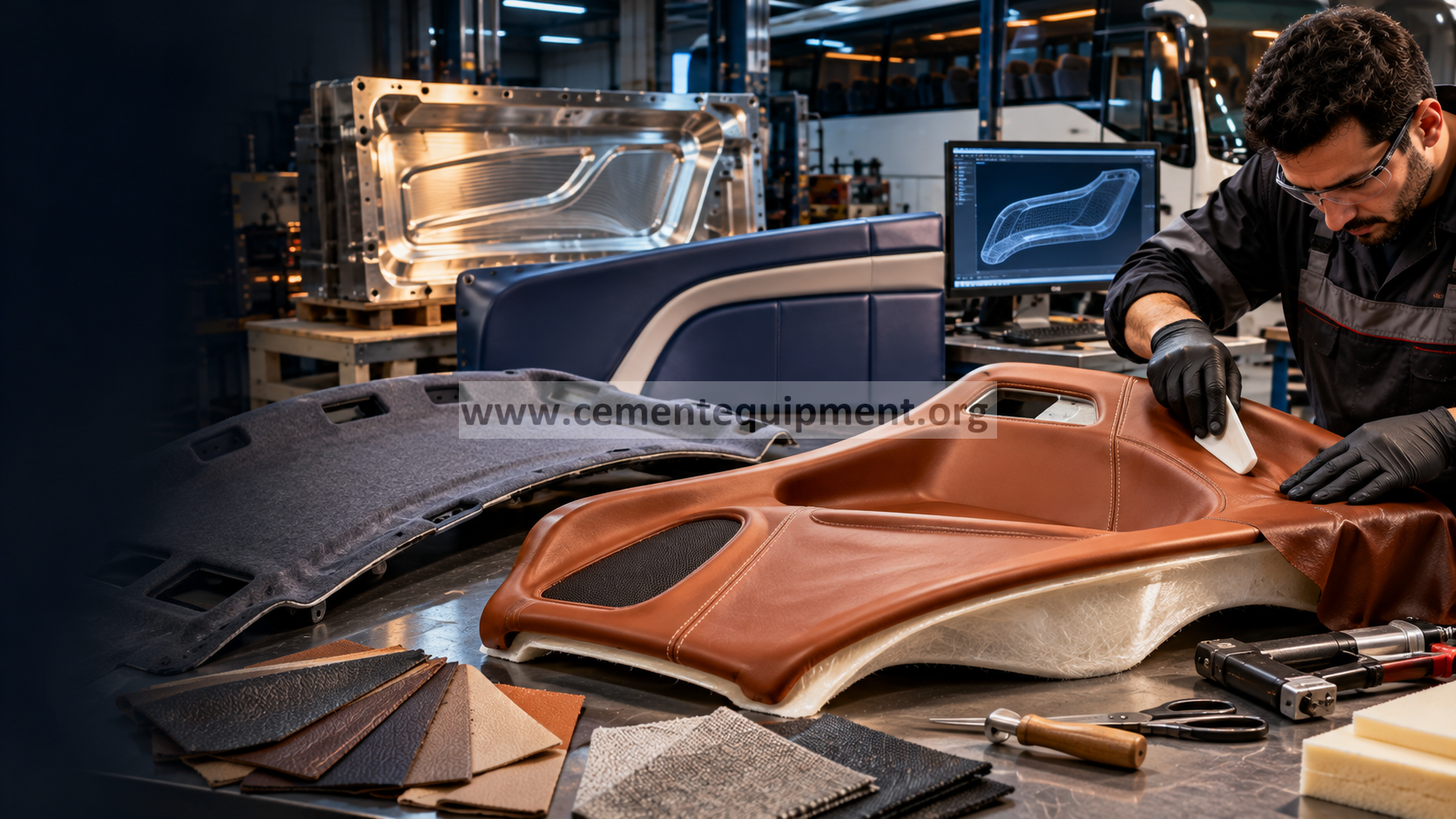
Have a panel that an upholsterer can trim but cannot reproduce economically? We investigate small-batch manufacture of molded fiberglass-reinforced (GRP/FRP), thermoformed or otherwise engineered hard-panel carriers with an optional textile, vinyl or natural-leather finish. Our role is the geometry of the component, its fitment and its finished surface—not simply supplying fabric by the roll. For approved vehicle-restoration projects, one sample can be the starting point.
Request a prototype or commercial quotation
Start with a vehicle make/model and year, part photograph or STEP file, panel quantity and preferred finish. We can compare supply as a bare GRP carrier with a fully fabric-, vinyl- or leather-wrapped panel, subject to technical validation.
Where this engineering service is most useful
Material and build options
- Bare molded carrier: GRP/fiberglass (or an alternative backing substrate following a DFM review), clipped/trimmed to defined mounting interfaces. Ideal for regional upholsterers who need to retain local craft finishing.
- Foam-backed textile: approved cloth or automotive trim fabric with a specified foam interlayer and compatible high-temperature bond.
- Vinyl or leatherette wrapping: defined grain, color, stitch line and edge return, with planned stretch, seam and adhesive layout.
- Genuine leather finishing: bespoke cover panels with agreed hide, grain, allowable seams and temperature/UV expectations.
- First-article and repeat batch: assess prototype fit, adhesion, visual consistency and packaging before planned manufacture.
Why the composite backing is usually the difficult component
Complex interior trim tends to fail commercially when dimensional datums, undercuts, mounting clip locations, speaker/vent pockets, seat-belt clearance, upholstery edge-return thickness or repeat fitment are not defined. A seemingly attractive low price can become costly after fitting corrections or adhesive failure. We therefore agree the master sample, allowable tolerances, covering build-up and first-article inspection route before a recurring supply.
Technical RFQ checklist
- Vehicle or coach model/year, interior panel location, LH/RH orientation and any approved component number.
- STEP/IGES/DXF or original physical panel, with critical attachment and installation dimensions.
- Backing-material requirements, dimensional stability, expected operating temperature, UV and humidity conditions.
- Fabric/leather/vinyl specification, color/grain reference, foam thickness and upholstery pattern.
- Fire/flammability requirements such as FMVSS 302 or UN ECE R118 where applicable, and independent test evidence for the full material stack where required.
- Peel/adhesion, abrasion, cleanability, visual defects and fixture/fitment acceptance criteria.
- Quantity for prototype and repeat demand (1, 5, 20, 100 or a programme), target price and delivery country/incoterm.
Frequently asked questions
Can you manufacture just one vinyl-wrapped composite panel?
We can review a single-part project without a fixed minimum order to request an engineering study. Tooling, prototype, labor, finishing and shipment costs must still be calculated; some one-off applications are uneconomic.
Can you ship the bare fiberglass panel for my own upholstery team?
Yes, that is often the best commercial approach for specialist upholstery shops. Critical clip mounts, edge thickness and fit are reviewed before shipment.
Are the panels automatically fire-approved or suitable for airbag areas?
No. Applicable vehicle interior rules and tested materials must be specified by the buyer. We do not claim compliance with FMVSS 302, UN ECE R118 or other standards without verified evidence. Panels affecting airbags, occupant protection or certified structure require OEM/design authority validation and may not be accepted.
Do you guarantee a lower price than an existing manufacturer?
No blanket discount is promised. We compare engineering/tooling costs and the complete landed price against a specific approved drawing and volume. We can evaluate aggressive target-cost challenges after the materials and delivery terms are defined.