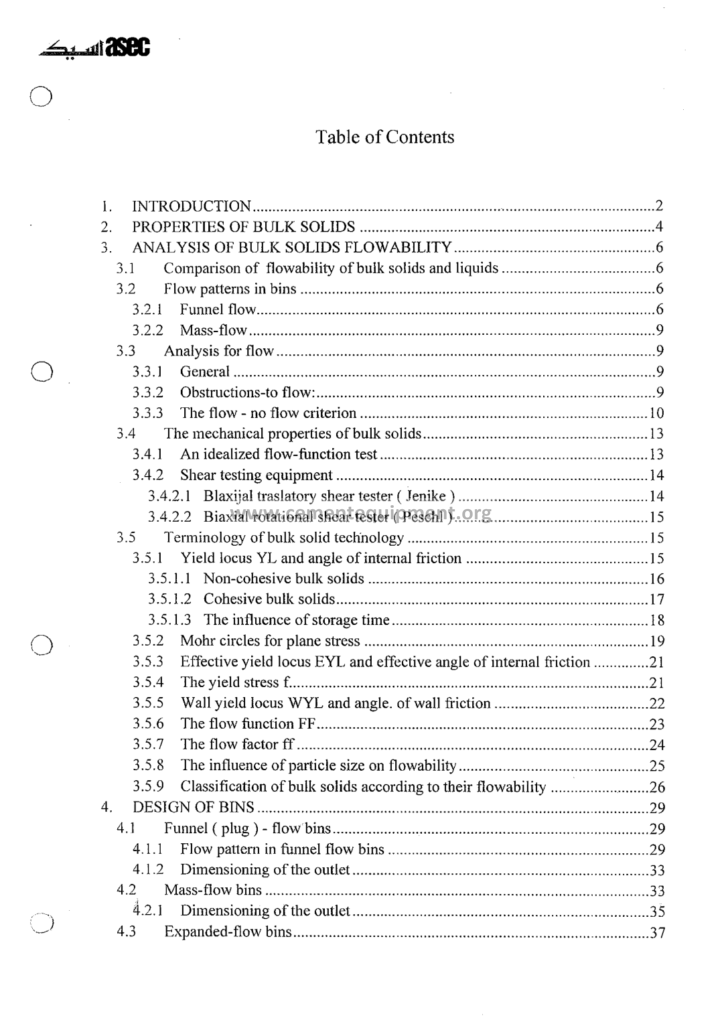
Feed Storage and Dispatch: Complete Guide
Feed storage and dispatch is the logistics skeleton of the cement plant: the silos that hold the raw meal and the cement, the extraction feeders that meter the material out, the conveyors that move it, the packing machines that fill the bags and the loading systems that ship the product by the truck, the rail and the ship: the dispatch department is the cash register of the plant: everything the kiln and the mills achieve is measured at the loading dock, and the reliability of the storage and the dispatch decides the reputation of the plant with its customers.
The Complete Cement Technical Package (931 files including the books, the courses, the Excel tools and the presentations: $249.99 one-time: instant download via the PayPal payment) includes this storage and dispatch guide with its silo dimensioning tables, the equipment selection guides and the operating procedures: this article walks the file: the storage design, the flow behavior, the extraction and the conveying, the packing and the loading: the reader finishes with the full map of the cement plant’s last department.
The storage and the dispatch of the cement plant are often the least glamorous and the most commercially exposed: the blocked silo stops the trucks, and the stopped trucks test the patience of the market: the technical content of this guide covers the material behavior of the bulk solids, the silo geometries, the flow aids and the machine ranges of the packing hall: the numbers reflect the industry practice of the modern plants.
1. The Storage Tasks of the Plant: What the Silos Must Do
The storage system of the plant fulfills the four functions that shape its design:
- The buffer between the processes: the raw meal silos buffer the raw mill and the kiln, the cement silos buffer the finish mills and the dispatch: the buffer smooths the production fluctuations: the typical capacities hold the production of 12 to 48 hours:
- The homogenization of the raw meal: the raw meal silos, especially the continuous homogenizing silos, blend the composition of the meal: the standard deviation of the kiln feed lime saturation is reduced from the mill output values to the kiln feed targets: the homogenization factor of 2 to 10 is the design criterion:
- The cement quality conditioning: the cement silos hold the product until the quality control releases it: the silo stay also completes the cooling and the conditioning of the gypsum and the cement temperature: the quarantine and the release procedures run against the quality certificates:
- The seasonal stock: the cement stockpiled during the low season serves the high season: the covered storage of the bulk and the bagged cement carries the seasonal buffer that the dispatch planning uses:
The storage functions set the capacity and the design of the silo park: the file presents the capacity calculation of the raw meal and the cement silos with the production rates and the safe buffer rules: the plant that under-stores the cement bargains its dispatch reliability against the mill stoppages.
2. The Silo Types and the Geometry: The Vertical Storage Machines
The silos of the cement plant are the vertical concrete towers with the variety of the internal designs:
| Silo type | Typical capacity | Main duty |
|---|---|---|
| Raw meal homogenizing silo | 1,000 – 12,000 tons | Homogenization + buffer |
| Raw meal buffer silo | 500 – 4,000 tons | Kiln feed buffer |
| Cement silo | 2,000 – 20,000 tons | Cement storage + dispatch |
| Blending silos (cement) | 2,000 – 8,000 tons | Quality blending before dispatch |
- The cement silo geometry: the modern cement silos of the 2,000 to 20,000 ton range with the diameter of 12 to 30 meters and the height of 30 to 60 meters: the flat-bottom silos with the fluidized extraction aerate the material for the flow: the funnel-flow patterns of the hopper silos serve the smaller duties:
- The homogenizing silo internals: the continuous homogenizing silos aerate the material in the sections at the base, creating the mixing currents that equalize the composition: the air rates of 1 to 2 cubic meters per minute per square meter of the aeration area at the pressures of 100 to 200 millibars:
- The silo discharge design: the extraction cones, the fluidizing pads and the aeration rings at the base: the discharge rate and the flow pattern of the silo are designed together, and the file documents the geometry of the flow designs:
The silo geometry is the physics of the bulk solids: the flow patterns (the funnel flow versus the mass flow) decide whether the material moves as the first-in-first-out column or the mixed internal channels: the cement silos run the funnel-flow extraction with the aeration, and the design trade-offs of the file explain the choice of each plant.
3. The Flow Behavior of the Bulk Material: The Physics of the Powder
The stored cement and the raw meal are the powders with the personalities, and the flow behavior decides the reliability of the whole storage:
- The flow properties: the cohesion, the friction angles and the flowability of the powder are measured with the shear testers: the cement is a cohesive powder whose flow depends on the temperature, the moisture and the aeration: the file lists the flow function measurements and their interpretation:
- The aeration effect: the aerated cement fluidizes and flows readily: the air injection of the extraction zones converts the cohesive powder into the fluid that the extraction feeders can control: the aeration is the master remedy of the cement flow:
- The temperature effect: the warm cement from the mill flows worse and the temperature accelerates the reactions with the moisture: the cement stored above 70 to 80 degrees tends to the caking and the lumps: the cooling at the mill is the flow insurance of the silo:
- The moisture and the hydration: the moisture entering the silo with the conveying air or the leaky roofs hydrates the surface of the cement: the hydration products bridge the particles and the silo forms the ratholes: the dry conveying air and the tight silo roofs are the first flow measures:
The flow physics is the foundation of the storage knowledge: the silo that fails usually fails on the flow properties, not on the strength of the concrete: the file brings the shear test data, the flow function diagrams and the practical flowability tables of the cement products, so the engineer designs the silo from the material behavior, not from the picture.
4. The Flow Problems and the Remedies: The Ratholes, the Bridges and the Lumps
The flow problems of the powder silos are the classical troubles of the dispatch department, and each has its signature and its cure:
- The ratholes: the stable central channel with the dead material around it: the silo discharges the central core and the surrounding cement ages and cakes: the ratholes form in the warm, freshly stored cement: the aeration and the extraction discipline prevent them:
- The bridging: the arch of the material over the extraction zone stops the discharge completely: the bridge forms with the cohesive powders and the poor extraction geometry: the air lances, the vibrators and the mechanical dislodgers break the arch:
- The lump formation: the hydration lumps from the moisture and the temperature: the lumps damage the feeders, the conveyors and the packer valves: the lump screens at the silo discharge remove the debris and the prevention is the cooling and the dry air discipline:
- The segregation: the particle size and the density segregation during the filling create the non-uniform discharge: the cement silos show the fineness variation between the start and the end of the discharge: the blending silos and the filling management counteract the effect:
The remedy catalogue of the file covers the flow aids (the aeration, the air cannons, the vibrators), the extraction geometry changes and the operating discipline: the dispatch problems are solved at the design and the operation, and the file teaches both: the plant that runs its silos on the flow principles dispatches without the emergency crews.
5. The Extraction Equipment: The Metered Discharge of the Silos
The extraction equipment meters the material from the silo to the process or the dispatch line:
- The rotary discharge gates and the screw extractors: the mechanical extraction of the smaller silos and the bins: the screw conveyors pull the material from the silo base with the controlled rates: the bridge breakers and the agitators keep the material moving toward the screw:
- The fluidized extraction systems: the aeration pads and the air slides below the flat silo bases: the material fluidizes and flows to the central extraction: the discharge rate is controlled by the aeration and the rotary valve: the fluidized extraction is the standard of the large cement silos:
- The weigh feeders: the belt weighers and the loss-in-weight feeders at the extraction deliver the measured feed to the process: the kiln feed rate and the cement addition rates depend on the extraction accuracy: the weigh feeder accuracy of 0.5% to 1% is the normal specification:
- The flow control: the discharge regulation from the silo level signals and the downstream demand: the automatic extraction control balances the silo levels across the silo park: the level measurement of the silos (the guided radar, the weight cells, the mechanical probes) feeds the control:
The extraction equipment is the interface between the stored mass and the process: the metered, reliable extraction is the precondition of the steady kiln feed and the steady dispatch: the file presents the equipment selection matrix with the capacities, the accuracies and the maintenance profiles of each type.
6. The Conveying Systems of the Dispatch: From the Silo to the Packer and the Loader
The conveying between the storage and the loading is the transport network of the dispatch department:
- The air slides: the fluidized conveying over the short distances: the cement flows on the air-permeable fabric at the slopes of 3% to 8%: the air slide is the cheapest and the gentlest conveyor of the cement: the air requirements of 1.5 to 2.5 m3/min per square meter of the slide:
- Bucket elevators: the vertical lifts of the cement in the closed buckets: the modern central-chain elevators reach the 100 to 150 meter heights and the conveying rates of 400 tons per hour: the bucket elevator is the backbone of the cement silo filling:
- The screw conveyors: the short, enclosed paths and the metering duties: 20 to 200 tons per hour ranges and the wear concerns with the abrasive cement: the screws serve the packer feeding and the small plant lines:
- The pneumatic conveying: the dense phase and the dilute phase systems for the long distances and the silo filling: the compressed air consumption of 10 to 30 kilowatt-hours per ton makes the pneumatic conveying the expensive option that the vertical paths prefer:
- The belt conveyors: the clinker, the additives and the bagged cement move on the belts: the covered belts and the transfer chutes control the dust:
The conveyor selection of the file follows the distance, the rate, the dust and the energy: the dispatch architecture of the modern plant combines the air slides and the bucket elevators for the cement and reserves the pneumatic conveying for the unavoidable paths: the conveying plan is the network plan of the dispatch department.
7. The Packing Machines: The Rotary and the Valve Bag Packers
The packing machines fill the bags at the rates the market demands, and the packer is the machine of the dispatch hall:
- The rotary packers: the carousel machines with the 8 to 12 spouts rotating continuously: the filling rates of 1,800 to 3,600 bags per hour: the bag is clamped on the spout, the cement flows in, and the weight closes the valve: the rotary packer is the standard of the big plants:
- The stationary packers: the 1 to 4 spout machines for the smaller rates and the special products: the filling of the big bags (the 1,000 kilogram FIBC bags) for the export and the specialty markets:
- The weighing system: the load cells at each spout control the filling: the cut-off accuracy of the 50 kilogram bag falls within the plus or minus 0.2 to 0.4 kilogram: the automated weight checks and the reject gates hold the legal metrology standards:
- The bag types: the paper valve bags, the laminated plastic bags and the FIBC containers: the valve types (the pasted, the sewn) and the materials follow the market and the climate: the bag quality is the last impression of the plant on its customer:
The packing hall is the fast-moving end of the plant: the packer reliability, the bag supply logistics and the weight accuracy form the daily performance of the dispatch: the file covers the packer selection, the filling accuracy standards and the maintenance program of the packing machines: the spout liners and the seals are the wear items that decide the dust leaks and the weight drift.
8. The Bulk Loading: The Trucks, the Rail Cars and the Ships
The bulk loading connects the plant to the transport modes, and each mode has its equipment:
- The truck loading: the bulk cement loading with the closed loading spouts into the tankers: the loading rates of 100 to 200 tons per hour with the dust-tight spouts and the level sensors: the weighbridge at the gate records the loaded weight against the truck tare: the loading station design serves the truck queue of the morning peak:
- The ship loading: the cement terminal loading systems with the screw conveyors and the loading arms reaching the vessel holds: the loading rates of 500 to 2,000 tons per hour at the export terminals: the moisture and the dust control at the ship loader are the environmental standards of the harbor:
- The rail loading: the rail car loading with the telescopic spouts and the bottom discharge rail wagons: the rail logistics of the long-distance markets: the turnaround times of the cars are the scheduling discipline of the dispatch office:
- The bag loading: the bagged product loading into the trucks with the conveyors and the truck loaders: the palletized and the loose bag handling: the shipping hall layout serves the simultaneous loading of the multiple trucks:
The loading equipment is where the plant meets the market physically: the file presents the loading system designs of the truck, the rail and the ship, with the rates, the environmental controls and the turnaround management: the dispatch office that schedules the loading against the queues dispatches the highest volumes at the least confusion.
9. The Dispatch Management: The Weighing, the Documents and the Data
The dispatch department is the commercial control point of the plant, and its management runs on the data:
- The weighing integrity: the weighbridges (truck scales) at the gate and the in-line belt scales: the calibration and the legal verification of the scales against the metrology standards: the weighing records are the commercial documents of the sale:
- The dispatch data system: the weighbridge data, the order numbers, the product codes and the customer information flow into the dispatch system: the automated gate control, the loading sequence and the dispatch tickets: the seamless data flow is the difference between the organized and the chaotic shipping halls:
- The orders and the planning: the order book, the truck scheduling and the production allocation: the dispatch planning balances the products in the silos against the orders of the day: the file includes the dispatch planning templates of the typical plants:
- The quality release: the product release against the quality certificates: the quarantine silos, the release status and the certificate printing: the dispatch is the final gate of the quality system, and the released products carry the certificate with them:
The dispatch management of the file ties the hardware to the data: the weighbridge, the reports and the orders form the information loop of the commercial department: the plants that automate the dispatch data reduce the errors, the losses and the disputes, and the file documents the dispatch data architecture of the modern plants.
10. The Storage and Dispatch Problems: The Operating Troubleshooter
The storage and the dispatch departments have their classical problem list, and the file treats each with the diagnosis and the remedy:
| Problem | Typical cause | Remedy |
|---|---|---|
| Silo blocked discharge | Bridge / rathole, warm cement | Aeration, air lances, cool cement |
| Lumps in the cement | Moisture ingress, hydration | Dry conveying air, tight roofs, screens |
| Weight drift at packer | Spout liner wear, scale drift | Liner change, calibration |
| Dust leaks at loading | Worn spout seals | Seal replacement, maintenance |
| Bag breakage | Bag quality, filling too fast | Bag control, pressure adjust |
| Queue delays at gate | Peak congestion, data slowness | Schedule smoothing, automation |
- The silo level misinformation: the level devices fail with the dust and the material properties: the redundancy and the periodic verification of the level systems prevent the empty or the overflowing silos:
- The aeration system faults: the blocked air pads and the failed blowers degrade the extraction: the differential pressure monitoring of the aeration zones detects the blockages:
- The packed hall congestion: the shift peaks concentrate the trucks: the appointment scheduling and the extended hours flatten the peaks: the file documents the queue management of the busy plants:
The troubleshooter chapter is the practical summary of the department’s experience: the symptoms and the remedies listed allow the dispatch supervisor to act in the minutes, and the prevention lists keep the recurring problems from returning: the dispatch is the department of the many small failures, and the file catalogues them all.
11. The Safety of the Storage and the Dispatch: The Confined Spaces and the Dust
The storage and the dispatch environment carries the specific safety risks that the file treats with the seriousness of the industry:
- The confined spaces: the silos, the mill internals and the reclaim tunnels are the confined spaces: the entry permits, the gas testing (the oxygen, the CO) and the rescue plans are mandatory: the engulfment risk of the bulk material makes every silo entry a controlled operation:
- The dust explosions: the cement dust is not explosible in the ordinary concentrations, but the collected dust and the fuel handling areas carry the risks: the housekeeping, the filter management and the ignition control of the process areas follow the ATEX and the national codes:
- The working at height: the silo tops, the loading gantries and the packer platforms demand the fall protection: the access systems and the work permits of the height work are the standing discipline:
- The traffic safety: the trucks and the loaders share the yards: the traffic plan, the pedestrian routes and the driver guidance systems: the dispatch yard is one of the highest-traffic areas of the plant:
The safety chapter closes the technical content of the file with the procedures that protect the people: the storage and the dispatch departments run the machines and the vehicles that the safety statistics of the industry watch most closely, and the disciplined operation of the file keeps the incidents away.
12. The Homogenization of the Raw Meal in the Storage: The Quality Mixing
The raw meal storage is not only the buffer but also the quality instrument of the kiln feed, and the homogenization is the science of the blending:
- The homogenizing silos: the continuous homogenizing silos blend the raw meal by the aeration currents: the air injection at the silo base in the sections creates the mixing circulation that equalizes the composition: the homogenization factors of the modern silos reach 5 to 10, reducing the lime saturation standard deviation from the raw mill output to the kiln feed target:
- The blending modes: the continuous and the batch homogenization: the continuous silo serves the steady kiln operation, the batch mode the controlled blending of the corrective additions: the blending plant of the file combines the storage and the correction silos:
- The sampling and the control: the automatic samplers of the silo feed and the discharge, the X-ray fluorescence analysis and the feedback to the raw mill: the closed loop of the raw mix control: the homogenization effectiveness is verified by the statistical analysis of the feed composition:
- The failure modes: the blocked air pads, the failed blowers and the silo segregation reduce the homogenization: the air pad maintenance and the silo level management protect the blending function: the file covers the homogenizing silo operation and its trouble list:
The homogenization is the first quality gate of the process: the kiln burns the feed it receives, and the feed quality is made in the storage: the file’s homogenization chapter is the link between the raw mill and the kiln: the engineers who master the silo blending hold the kiln stability in their hands, and the file delivers the complete practice of the raw meal homogenization.
13. The Bag Storage and the Dispatch Hall Logistics: The Finished Product Warehouse
The bagged cement storage and the dispatch hall logistics complete the product chain, and their design follows the market patterns:
- The bag storage: the covered warehouses of the bagged cement: the stacking heights, the palletized storage and the first-in-first-out rotation: the bagged cement in the warehouse ages and must rotate: the warehouse capacity of the seasonal markets covers the weeks of the production:
- The palletizing and the shrink wrapping: the automatic palletizers stack the bags at 1,800 to 3,600 per hour, and the wrapping machines protect the pallets: the pallet patterns and the strap materials follow the logistics requirements of the customers: the palletizing line of the file matches the packer output:
- The loading hall layout: the loading bays, the ramps and the truck maneuvering areas: the simultaneous loading of the multiple trucks: the hall layout and the traffic plan of the file serve the morning dispatch peak: the dust collection and the lighting of the hall complete the environment:
- The order picking and the special products: the small order picking, the special packaging (the big bags, the waterproof wrappings) and the export containers: the flexibility of the dispatch hall follows the market mix: the file covers the special dispatch services of the plants:
The bag storage and the hall logistics are the visible face of the plant: the clean, organized warehouse and the efficient loading hall sell the plant to every visitor, and the logistics design of the file delivers the smooth operation behind the face: the dispatch hall is the last building of the process chain, and the file equips it completely.
14. The Automation of the Dispatch: The Digital Shipping Yard
The modern dispatch departments automate the flow of the trucks and the data, and the automation is the productivity frontier of the logistics:
- The gate automation: the automatic number plate recognition, the weighing bridges connected to the dispatch system and the automated barriers: the truck cycle from the gate to the loading point runs on the automated sequence: the gate automation cuts the waiting times and the staff costs:
- The automated loading: the automatic bulk loading spouts with the positioning systems and the level-sensing: the driver-operated or the system-operated loading: the loading errors of the manual operations are eliminated: the automated loading documentation of the file covers the bulk and the bag lines:
- The dispatch data integration: the order management, the weighbridge data, the quality release and the invoicing in the one system: the real-time dispatch dashboard of the plant: the data integration is the commercial brain of the shipping yard:
- The truck scheduling: the appointment systems of the dispatch peaks: the truck arrival slots flatten the congestion and raise the loading efficiency: the scheduling optimization of the file reduces the fleet waiting and the plant’s yard load:
The dispatch automation is the final efficiency of the plant: the automated gates, the loading and the data run the shipping yard with the fewer staff, the fewer errors and the faster cycles: the file’s automation chapter is the forward view of the dispatch department: from the weighbridge to the invoice, the digital chain of the modern cement plant.
15. The Export Dispatch and the Port Logistics: The Plant Beyond the Border
The plants serving the export markets extend the dispatch into the port logistics, and the file covers the maritime chain of the cement:
- The port storage: the export silos at the harbor terminals and the covered warehouses of the bagged cargo: the port storage capacity of 20,000 to 100,000 tons serves the vessel scheduling: the silo-to-ship chain of the export terminal: the file documents the terminal design of the cement ports:
- The loading equipment at the port: the ship loaders with the telescopic chutes and the dust extraction, the pneumatic unloaders of the receiving terminals and the conveyor galleries: the loading rates of the export terminals reach 500 to 2,000 tons per hour: the environmental controls of the port loading follow the harbor standards: the file covers the port equipment selection:
- The vessel operations: the chartering, the berth scheduling and the demurrage management: the loading plan against the vessel stability and the capacity: the cargo documentation and the customs: the vessel operations are the commercial logistics of the export dispatch: the file provides the shipping documentation templates:
- The receiving terminals abroad: the destination silos, the packers and the distribution networks of the import markets: the joint ventures and the terminal investments of the exporters: the receiving terminal is the market presence of the plant abroad: the file reviews the terminal economics of the export trade:
The export dispatch is the international extension of the storage and the dispatch knowledge: the silos at the two ends of the sea route and the vessels between them form the continuous logistics chain: the plant that masters the port operations sells beyond its borders with the same reliability as at home: the file’s export chapter completes the logistics scope of the storage and the dispatch guide: from the local truck to the ocean vessel, the cement travels on the engineering.
16. The Frequently Asked Questions
How many tons should the cement silos hold?
The cement silo capacity covers the production of 12 to 48 hours as the practical rule, with the larger parks in the seasonal markets: the dispatch reliability, the quality quarantine and the product range of the plant set the final capacity, and the file’s capacity calculation follows the production and the market plan.
Why does the cement block in the silo?
The cement blocks through the bridging and the rathole formation: the warm cement, the moisture ingress and the long storage times increase the cohesion and the hydration: the remedies are the cooling at the mill, the dry conveying air and the aeration of the extraction zones.
What packing rate does a cement plant need?
The rotary packers of 8 to 12 spouts fill 1,800 to 3,600 bags per hour: the packing capacity matches the dispatch peaks: the plant shipping 6,000 tons per day of bagged cement runs the packing halls of the multiple rotaries with the bag supply logistics to match.
Does the file include the silo dimensioning calculations?
The Complete Cement Technical Package includes this storage and dispatch guide with the silo capacity and the aeration calculations, the equipment selection tables and the dispatch documentation templates: the 931 files of the package include the design tools across the plant scope.
What is the accuracy of the cement packing scales?
The modern packers hold the 50 kilogram bag within plus or minus 0.2 to 0.4 kilograms under the routine operation: the legal metrology requirements of the regions specify the tolerances, and the automated check-weighing and the calibration program keep the packers in the band.
Are the air slides cheaper than the belt conveyors?
The air slides are cheaper in the capital and the maintenance for the cement over the short distances, but they consume the compressed air continuously: the selection depends on the distance, the rate and the energy costs: the file compares the conveyor economics of the dispatch options.
17. Conclusion
The feed storage and the dispatch of the cement plant are the physical and the commercial endpoints of the process: the silos with the flow physics, the extraction with the metering, the conveying with the energy and the packing and the loading with the rates: the dispatch department is where the plant earns its money, and its reliability is the commercial promise of the whole facility: the engineer who masters the storage and the dispatch designs the smooth, dust-tight and data-clean last department, and the file of the package delivers the complete knowledge of it: from the raw meal columns to the loaded truck, the chain of the cement logistics runs on the engineering.
The Complete Cement Technical Package includes this feed storage and dispatch guide with the dimensioning tables, the equipment selections and the operating procedures: one-time 249.99: instant download: the library of the cement professional: the 931 files of the package carry the complete plant knowledge, and the dispatch is its commercial front line.
Get this feed storage and dispatch file + the full 931-file package
$249.99 — one-time purchase, instant download, lifetime access
This file is part of the Complete Cement Technical Package (931 files) available from cementequipment.org. Respective rights holders; library copy for the licensed single user.