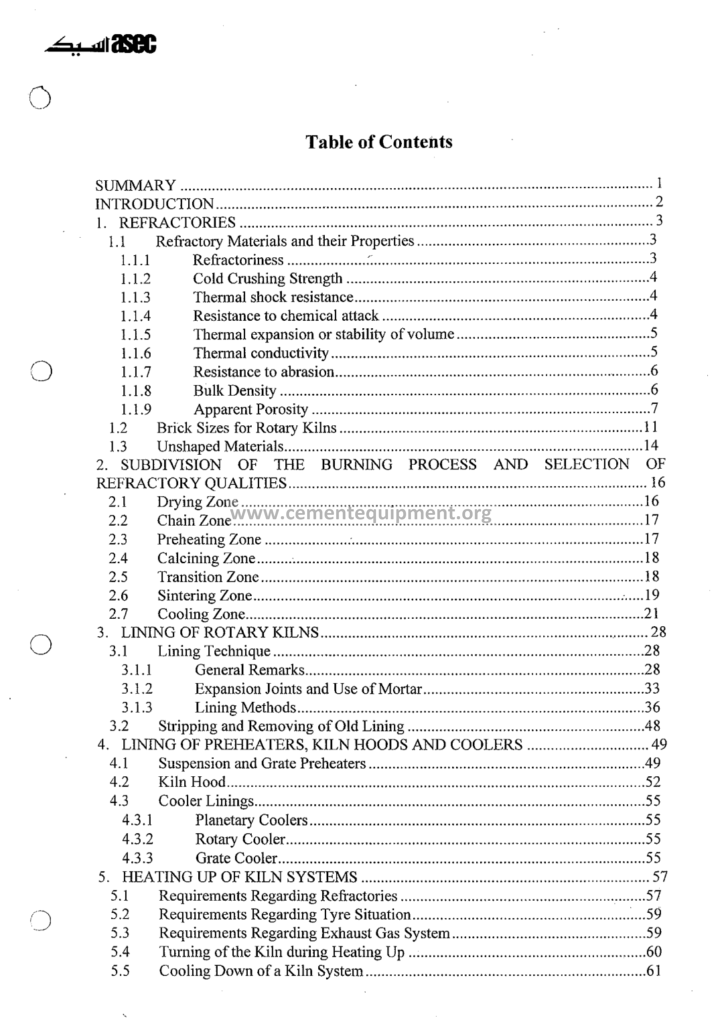
Refractories: Complete Technical Guide
The refractories guide is the armor manual of the cement plant: the file that explains the materials that separate the 1450°C clinker from the steel shells of the industry: the magnesia-spinel bricks of the burning zone, the high-alumina bricks of the transitions, the castables of the preheater and the cooler, and the installation, the drying, the monitoring and the replacement practice that converts those materials into the campaigns of 8-36 months: the refractory is the sacrificial protection of the plant, and the guide is the complete course of its selection, its installation and its life.
The Complete Cement Technical Package (931 files including the books, the courses, the Excel tools and the presentations: $249.99 one-time: instant download via the PayPal payment) includes the refractories guide with the brick selection tables, the installation standards, the wear analysis chapters and the campaign planning tools: this article walks the file: the refractory materials and their properties, the zoning of the kiln, the installation and the drying, the wear mechanisms, the monitoring and the relining campaigns: the reader finishes with the complete picture of the lining life, from the brick selection to the shell inspection after the campaign.
Refractories are the biggest single maintenance cost of the pyroprocessing line: the brick sets of a large kiln represent a budget measured in the plant’s annual maintenance plan, and the campaign length divides that budget into the cost per ton of clinker: the plants that master the refractories achieve the campaigns of 8-15 months in the burning zone and the multi-year lives in the preheater, while the neglected linings fail in weeks: the difference is the technical discipline this guide teaches: materials, installation, process and monitoring, one connected practice.
1. The Refractory Materials: The Families and Their Properties
The guide opens with the material science of the linings, because every later decision follows the material properties:
- The basic bricks: the magnesia-based products of the burning and the transition zones: the magnesia-spinel bricks with 90-97% MgO and the added magnesia-aluminate spinel: the refractoriness above 1700°C, the thermal conductivity of 3-6 W/mK, the strength at the operating temperature and the chemical compatibility with the basic clinker: the standard armor of the hottest zones;
- The magnesia-chrome bricks: the historical burning zone brick with the chrome spinel: the excellent thermal behavior and the health restrictions of the chromium: the modern plants replace the chrome-containing grades with the chrome-free spinel bricks, and the guide documents the transition logic and the performance comparisons;
- The dolomite bricks: the calcium-magnesium bricks that bond with the clinker coating and give the excellent coating adherence: the sensitivity to the moisture (the hydration of the lime) limits the storage and the use: the guide compares the dolomite versus the magnesia-spinel for the coating retention and the campaigns;
- The high-alumina bricks: the 50-70% Al2O3 products of the transition and the calcination zones: the refractoriness of 1600-1750°C, the moderate thermal conductivity and the resistance to the abrasion: the workhorses of the medium-temperature zones;
- The alumino-silicate products: the fireclay and the mullite bricks of the upper zones, the kiln inlet and the preheater parts: the cost-effective materials where the temperatures stay below the 1200-1300°C;
- The monolithic materials: the castables, the gunites, the plastics and the ramming mixes: the flexible systems of the complex geometries: the preheater cyclones, the riser ducts, the cooler walls and the kiln nose ring: the low-cement castables with the 40-90% Al2O3 and the carbon or the silicon carbide additions for the special zones;
The typical properties of the main brick families are compared below:
| Brick family | Typical composition | Refractoriness | Thermal conductivity | Main zones of the kiln |
|---|---|---|---|---|
| Magnesia-spinel | 90-97% MgO + spinel | Above 1700°C | 3-6 W/mK | Burning zone, transition |
| Magnesia-chrome | MgO + Cr2O3 spinel | Above 1700°C | 3-5 W/mK | Burning zone (legacy lines) |
| Dolomite | CaO + MgO | Above 1650°C | 2-5 W/mK | Burning zone with strong coating |
| High-alumina | 50-70% Al2O3 | 1600-1750°C | 1.5-3 W/mK | Transition, calcination zones |
| Fireclay / mullite | 30-50% Al2O3 | 1300-1600°C | 1-2 W/mK | Kiln inlet, upper preheater parts |
The material chapter’s tables give the density, the porosity, the cold crushing strength, the thermal conductivity, the thermal expansion and the refractoriness of each family: the reader learns to read the material datasheets with the critical eye, because the datasheet is the language between the plant and the brick supplier: the guide’s property tables are the translation of that language.
2. The Kiln Zoning: The Right Brick for Every Zone
The rotary kiln is lined zone by zone, and the zoning is the first design decision of the lining engineer:
| Zone | Process temperature | Main stresses | Recommended lining |
|---|---|---|---|
| Kiln inlet / calcination zone | 850-1050°C | Abrasion, alkalis, thermal shocks | High-alumina bricks 60-70% Al2O3, insulation composite |
| Upper transition zone | 1000-1250°C | Alkalis, sulfates, moderate coating, ovality | High-alumina and magnesia-spinel bricks |
| Lower transition zone | 1250-1350°C | Coating fluctuations, mechanical load | Magnesia-spinel bricks, chrome-free basic |
| Burning zone | 1350-1450°C | Maximum temperature, coating loss, chemical attack | Magnesia-spinel 90-97% MgO, dolomite where coating is strong |
| Discharge zone / nose | 1300-1400°C (gas), 1100-1300°C (material) | Thermal shocks, abrasion, mechanical wear | High-alumina and steel-fiber castables, SiC castables |
- The burning zone lining: the magnesia-spinel bricks are the foundation of the campaigns: their microporous structures resist the alkali penetration, their bonding systems tolerate the coating cycles: the brick selection by the clinker chemistry: the high alkali and the high sulfate fuels demand the highest porosity resistance grades;
- The transition zone linings: the zone where the coating comes and goes: the bricks must survive the bare periods: the magnesia-spinel and the high-alumina grades with the good thermal shock resistance: the coating loss events here are the leading cause of the mid-campaign repairs;
- The calcination zone lining: the combination of the insulation value and the mechanical strength: the composite linings with the insulating layer behind the working brick: the zone contributes the heat loss savings of 1-2% of the fuel, and the guide’s composite designs balance the shell temperature against the brick life;
- The nose ring lining: the most maintenance-intensive spot of the kiln: the steel-fiber-reinforced castables with the anchors, replaced during every major stop: the nose ring failure stops the kiln quickly, and the guide’s nose ring section is among the most practical of the file;
The zoning chapter closes with the full lining table of a modern kiln: the zone boundaries, the brick grades, the thicknesses (typically 180-250 millimeters of the working lining in the burning zone) and the expected campaign lives: the reader can draft the lining schedule of any kiln from the table and adjust it to his own process conditions: the zoning is the map on which the installation and the wear chapters draw.
3. The Preheater and the Cooler Linings: The Monolithic Domain
Outside the kiln shell, the tower and the cooler are the kingdom of the monolithic materials, and the guide covers their applications completely:
- The preheater cyclones: the lining of the cyclone walls, the roofs and the dip tubes: the low-cement castables with the 40-70% Al2O3, installed on the anchors: the cyclone linings face the abrasion of the swirling meal and the alkali attack, and the wear maps of the guide show the erosion zones at the inlet vortices;
- The riser ducts and the kiln inlet chambers: the 850-1100°C regions with the dust-laden high-velocity gas: the dense castables and the gunite repairs: the alkali-sulfate condensation attacks of the cooler zones of the tower, countered by the dense, low-porosity materials;
- The calciner linings: the combustion chamber walls with the 900-1000°C abrasive meal flow: the SiC-reinforced castables for the impact zones: the calciner lining life of 3-6 years in the good operation;
- The coolers: the grate cooler walls, the bull nose and the drop-out areas: the steel-fiber and the SiC castables face the 1000-1300°C clinker and the abrasion of the grate ploughs: the cooler front walls are rebuilt in the shorter cycles, and the guide’s cooler lining plans match the maintenance windows;
- The kiln sealing and the transition pieces: the front and the rear sealing rings with the fiber blankets and the ceramic modules: the expansion joints everywhere the steel moves: the guide’s seal designs keep the false air out and the men safe;
The monolithics chapter teaches the installation of the castables through the anchors: the anchor spacing, the vibration, the curing and the drying: the monolithic failure analysis of the guide (the anchor pull-out, the thermal spalling, the mechanical impact damage) closes the chapter with the field evidence of the failure modes, and the reader learns to read the cracks of the tower linings like the pavement of a diagnosis.
4. The Refractory Properties in the Datasheet: Reading the Numbers
The guide devotes a chapter to the datasheet literacy, the skill the plant engineers use at every brick purchase:
- The refractoriness: the pyrometric cone equivalent (PCE) and the refractoriness under load (RUL): the temperature at which the brick deforms under the standard load: the burning zone bricks show the RUL above 1550-1650°C: the number that guards against the soft bricks in the hot zones;
- The porosity and the density: the apparent porosity of the modern kiln bricks of 14-18% and the bulk density of 2.9-3.1 g/cm3 for the dense basic bricks: the permeability matters more than the porosity for the alkali resistance: the guide links the microfabric to the alkali penetration resistance;
- The thermal conductivity: the k-value of 3-6 W/mK for the basic bricks at 1000°C, lower for the insulating bricks at 0.3-1.0 W/mK: the conductivity decides the shell temperature and the heat loss: the guide’s shell temperature calculator connects the brick conductivity to the measured shell profiles;
- The thermal expansion: the expansion of 1.0-1.5% for the basic bricks up to 1000°C, accommodated by the expansion joints of 8-12 mm per meter: the thermal expansion mismatch between the lining rings is a leading installation defect, and the guide’s joint practice prevents it;
- The strength and the abrasion resistance: the cold crushing strength of 40-100 MPa for the dense bricks, and the abrasion resistance at the temperature: the transition and the nose zones select the bricks by the wear resistance as much as by the refractoriness;
The datasheet chapter closes with the comparison tables of the suppliers’ grades: the reader learns to compare the offers on the measured properties rather than the names, and the guide’s evaluation checklist is the purchasing instrument of the lining budget: the cheapest brick is rarely the cheapest wall, a phrase the file demonstrates with the campaign arithmetic.
5. The Installation of the Kiln Linings: The Ring and the Brick Practice
The best brick fails when it is badly installed, and the installation chapter of the guide is the field manual of the lining teams:
- The ring installation: the kiln lining is built in the rings laid from the bottom: the brick ring is erected inside the rotating vessel, starting after the lowest point and closing at the top: the ring closure with the key bricks and the allowance for the expansion: the ring practice of the guide covers the radial and the axial joints, the stagger of the joints and the mortar application;
- The expansion allowances: the longitudinal and the circumferential expansion joints: the cork paper or the cardboard strips of 8-12 mm per meter of the ring length: the expansion design prevents the ring compression at the operating temperature: the guide’s expansion calculation is the most error-prone arithmetic of the installation, and the file walks it with the worked examples;
- The brick shapes and the keying: the standard and the arch bricks, the keying at the ring top: the certification of the ring closure: the tight ring is the ring that survives, and the guide’s quality control chapter specifies the hammer tests and the joint inspections;
- The temperature limits during the installation: the kiln is lined cold, between the campaigns: the installation standard requires the shell check and the repair before the bricking: the shell deformation of more than the tolerances is corrected or compensated before the mortar goes in;
- The tools and the scaffolds: the lining platforms, the brick cutting machines and the mortar mixers: the safety practice of working inside the rotating vessel: the guide’s installation safety section is the occupational chapter of the file, covering the confined space, the lifting and the dust exposures;
The installation chapter is the largest of the file, and the guide’s message is blunt: the refractory budget is spent twice if the installation is rushed, once on the bricks and once on the repair: the plants that control the installation quality extend their campaigns by months: the guide’s installation checklists convert that control into the daily practice of the lining crew.
6. The Drying and the Preheating of the New Linings: The Cure of the Monolithics
The drying and the heating-up of the new lining is the critical transition between the installation and the operation, and the guide treats it with the discipline of the safety matter:
- The castable curing: the monolithic materials are mixed with the water, and the water must leave the structure before the kiln loads it: the curing of 24-48 hours with the moisture retention, the forms kept in place: the guide’s curing schedules for the low-cement and the conventional castables differ, and the difference is the explosion risk;
- The drying rate: the water vapor must escape the monolithic structure without the steam explosions: the ramp rates of 10-30°C per hour during the critical 100-200°C window, with the holds to the vapor release: the drying curves for the common castable classes fill the guide’s tables;
- The kiln warm-up: the heating-up of the complete lining after the relining: the warm-up curve of the kiln kiln from the ambient to the operating temperature over 8-24 hours: the fuel ramp, the kiln rotation at the slow speeds and the shell temperature monitoring: the warm-up curve of the guide balances the thermal shock of the bricks against the drying of the castables;
- The staggered warm-up: the two-stage warm-ups where the kiln is heated, held at 600-800°C for the coating formation, and then brought to the process temperature: the coating formation during the warm-up protects the new burning zone lining in the first week of the campaign: the guide’s campaign-start protocol is the closest the file comes to a scripted ceremony, and the script saves the campaign:
- The first-hours monitoring: the shell temperatures along the hot zones during the first days: the irregularities mapped against the design: the high shell zones indicate the thin or the missing lining sections, and the corrective actions of the first week: the guide’s first-week checklist closes the chapter.
The drying chapter is where the campaign is really decided: the plants that respect the warm-up curves see the campaigns start clean, and the plants that rush the warm-up pay the price in the spalled brick and the steam-damaged castable: the guide teaches the patience that the refractories demand, quantified in the ramps, the holds and the monitoring.
7. The Wear Mechanisms: The Chemistry, the Mechanics and the Heat
The refractory die in the field through the recognizably finite mechanisms, and the guide’s wear chapter is the pathology of the lining:
- The chemical attack: the alkalis, the sulfates and the chlorides penetrate the brick at the operating temperatures and react with the binder phases: the alkali penetration of the magnesia bricks forms the low-melting phases and destroys the brick structure from the hot face inward: the microporous bricks resist by the capillary exclusion: the guide’s chemistry chapter maps the attack of each species to each brick family;
- The thermal spalling: the differential expansion between the hot face and the cold face during the rapid temperature changes: the surface layers detach: the spalling dominates the transition zones where the coating comes and goes: the thermal shock resistance of the brick grades and the coating management of the operator are the two sides of the spalling fight;
- The mechanical wear: the abrasion of the moving clinker bed, the kiln ovality flexing the rings, the shell deformation: the mechanical damage concentrates at the tyre positions and the nose: the ovality of more than 0.3-0.5% of the diameter breaks the rings regardless of the brick grade, and the guide’s mechanical chapter ties the lining life to the shell condition;
- The coating interaction: the coating protects and destroys in turn: the stable coating shields the brick, the coated brick faces the clinker chemistry through the coating layer, and the coating loss exposes the brick to the flame: the coating chemistry (the liquid phase of the clinker, the alkali enrichment) can react with the brick: the guide’s coating chapter details the good and the bad faces of the interface;
- The thermal cycling: the startups and the shutdowns fatigue the brick structure: each cycle shortens the life measurably: the plants with the 300+ annual starts wear their linings faster, and the guide’s campaign planning accounts for the start frequency: the cycle counting is the modern practice the file recommends;
The wear chapter closes with the failure analysis method: the bricks from the failed zones are sawn, photographed and analyzed in the laboratory: the penetration profiles and the phase changes tell the death story: the guide’s analysis protocol produces the evidence the plant uses to change the brick grade, the process parameters or the installation practice: the autopsy of the lining is the discipline of the improvement.
8. The Shell Monitoring: The Infrared Eyes on the Kiln
The health of the lining is watched from the outside, and the shell temperature monitoring is the primary instrument of the watch:
- The shell scanners: the fixed infrared scanners along the kiln giving the live shell temperature map: the scans of 1000+ points along the shell, repeated every rotation: the scanner records become the temperature archive of the campaign: the modern scanners with the wireless transmission to the control room and the alarming:
- The temperature interpretation: the normal shell temperatures of 200-320°C along the lined zones, depending on the brick conductivity and the insulation: the hot spots of 380-450°C indicate the lining thinning: the single-point hot spots from the missing bricks and the broad warm bands from the coating loss: the guide’s interpretation tables map the patterns to the causes;
- The tripod and the portable pyrometers: the handheld instruments for the daily checks at the critical zones: the scanner calibration checks against the portable measurements: the maintenance of the scanner windows and the compressed air cooling:
- The action routines: the hot spot responses: the flame shortening, the feed rate adjustment, the kiln speed change, the cooling air jets: the thresholds of the actions and the escalation to the scheduled repair: the guide’s action matrix is the operating instrument of the shell protection;
- The data for the campaign planning: the temperature trends of the months identify the wear rates of the zones: the extrapolation forecasts the brick end-of-life with the weeks of lead time: the campaign planning of the guide uses the temperature archives as the primary input, converting the monitoring into the maintenance economy;
The monitoring chapter is the guide’s evidence-based heart: the shell scanner number is the most honest number of the lining world, and the plants that archive and analyze their shell temperatures make the right relining decisions at the right times: the guide’s monitoring schedules and the report formats are ready for the adoption in any plant with the scanner installed.
9. The Relining Campaigns: The Planning and the Execution
The relining is the largest scheduled maintenance event of the plant, and the campaign planning chapter of the guide is the project management of the refinery scale:
- The campaign types: the full relining (the kiln emptied of the brick, the complete new set), the zone relining (the burning zone only, the transitions kept) and the repair stops (the spot repairs at the hot spots and the nose): the guide’s decision logic selects the campaign scope from the temperature histories and the remaining lives;
- The campaign windows: the relining is planned into the annual stoppage calendar: the duration of the full kiln relining of 10-20 days with the night shifts: the brick delivery schedules, the scaffolding and the crane capacities: the guide’s campaign Gantt charts and the resource tables are the planning tools of the file;
- The brick stock: the stores of the brick types per the zoning table with the 5-10% contingency for the breakage and the field decisions: the stock aging rules of the magnesia bricks (the hydration protection from the moisture) and the shelf-life checks: the inventory management of the guide keeps the bricks ready and fresh;
- The execution control: the installation quality checks during the campaign: the ring closures, the expansion joints, the mortar batches: the inspector’s checklist of the guide and the sign-off procedures: the plants that inspect during the campaign rarely pay the rework after it;
- The handover and the start-up: the cold inspection, the warm-up curve execution and the first-week monitoring: the campaign close-out report with the measured lives and the lessons: the close-out is the seed of the next campaign’s improvements, and the guide’s report format institutionalizes the learning;
The campaign chapter closes with the cost model: the brick cost, the installation labor, the crew and the lost production: the guide’s campaign cost worksheet totals the relining cost per campaign and the cost per ton of clinker with the campaign life as the denominator: the table that the plant managers read: the campaign life is the master variable of the refractory economy, and every chapter of the file serves that number.
10. The Refractory of the Alternative Fuel Era: The New Attacks
The alternative fuels changed the refractory environment, and the guide includes the modern chemistry chapter that the old handbooks lack:
- The chlorine and the alkali surplus: the alternative fuels (the plastics, the waste solvents, the tires) bring the chlorine, the potassium and the sodium in the quantities the traditional coals rarely delivered: the chlorides evaporate at the low temperatures and condense in the preheater, attacking the castables and forming the build-ups: the guide’s chloride cycle chapter quantifies the attack and the protection strategies;
- The sulfur-alkali ratio shifts: the high-sulfur petcoke and the alternative fuels raise the sulfate load and the circulating SO3: the sulfates condense in the cooler regions of the kiln and the tower, reacting with the brick binders: the guide’s sulfur chemistry tables match the fuel slate to the brick chemistry requirements;
- The reducing pockets and the brick degradation: the local reducing conditions during the alternative fuel firing attack the magnesia bricks: the iron oxide of the bricks reduces, the brick reddens and spalls: the redox reactions of the brick chemistry are documented with the recognizable color signatures: the guide teaches the identification from the fired brick appearance;
- The coating chemistry changes: the alternative fuels change the clinker and the coating compositions: the coating becomes more liquid and more reactive with the brick: the burning zone brick selection for the alternative fuel lines favors the microporous magnesia-spinel grades: the guide’s selection matrix combines the fuel slate, the clinker chemistry and the brick families;
- The monitoring of the volatile cycles: the bypass operation at 3-10% of the kiln gas when the chlorides and the alkalis exceed the tolerance: the bypass cools and cleans the gas, protecting the tower and the filter: the guide’s bypass and the volatile control chapters close the alternative era section with the process-side protections of the lining;
The alternative fuel chapter is the guide’s look at the future: the plants burning the substitution rates of 30-80% live with the new chemistry, and their refractory practice must evolve with the same speed: the file’s message: the brick of the 1990s is not automatically the brick of the alternative fuel era, and the guide helps the plant keep pace with the fuels it chooses.
11. The Refractory Trouble Cases: The Field Library
The guide closes its technical body with the case library, the compiled field stories that make the failure modes memorable:
- The collapse of the burning zone in the summer campaign: the shell temperature rose 60°C in a month after the coating loss events of the feed interruptions: the autopsy found the alkali penetration fronts meeting the thermal spalling bands: the corrective change: the microporous brick grade and the coating management protocol: the case teaches the combined attack diagnosis;
- The nose ring consumption every four weeks: the steel-fiber castable failures from the anchor corrosion and the thermal cycling: the corrective: the SiC-reinforced castable with the denser anchor grid: the campaign extended from 4 weeks to 5 months: the case teaches the nose ring as its own engineering world;
- The preheater cyclone erosion at the inlet spiral: the abrasion holes in the vortex region from the meal swirl: the corrective: the SiC castable panels and the redirecting of the inlet: the case shows the differential wear of the tower and the reading of the wear maps;
- The transition zone ring damage after the kiln alignment: the mechanical stress pattern changed with the shell alignment and the ring-crush appeared at the pier positions: the corrective: the alignment adjustment and the expansion joint revisions: the case is the classic link between the mechanical health and the lining life;
- The cold start after the long shutdown: the spalling of the upper transition bricks during the heating after the six-week stop: the corrective: the revised warm-up curve with the extended holds: the case closes the file’s teaching loop: every stage of the lining life, from the purchase to the warm-up, is documented in the cases;
The case library is the guide’s memory: the filed experience that the reader does not have to live through himself: each case follows the same structure: the scenario, the symptoms, the measurements, the autopsy and the corrective: the structure teaches the rigor of the failure analysis while the stories teach the reality: the refractories are known finally through their failures, and this file collects the knowledge before the failures happen.
12. The Refractory Stock and the Storage: The Care of the Bricks Between the Campaigns
The refractory practice of the plant begins before the kiln stops: in the store, where the bricks wait for the relining, and the guide devotes a full section to the storage discipline that the plant budgets ignore at their peril:
- The moisture protection: the magnesia and the dolomite bricks hydrate when they meet the water: the hydration swells the brick, cracks the structure and destroys the strength: the storage rules of the guide are absolute: the basic bricks under the roof, on the pallets off the floor, wrapped in the vapor barrier with the desiccant where the climate demands it: the stock age above six months is verified by the sampling and the strength tests before the installation;
- The stock rotation: the first-in-first-out discipline of the brick store: the batch coding and the storage records: the old bricks are tested or discarded, never mixed blindly into the new campaign: the guide’s stock ledger template gives the plant the visibility of its refractory assets and their ages;
- The cutting and the grinding stocks: the sawing and the cutting of the bricks at the installation creates the dust and the heat: the cutting machines, the blades and the ventilation of the cutting stations: the pre-cut brick sets for the complicated zones, prepared at the factory with the drawings: the guide’s logistics chapter coordinates the brick arrival with the campaign schedule, so the storage time is minimized;
- The anchors and the accessories: the castable anchors, the studs, the mesh and the expansion materials: the stainless grades of the anchors by the zone chemistry: the anchor corrosion in the chloride environments is a documented failure mode, and the guide’s anchor selection tables match the steel grade to the chemical environment of each zone;
- The shelf life of the monolithics: the castable binders age in the humidity: the shelf life of 6-12 months for the standard low-cement castables, shorter for the special grades: the stock verification by the ball-in-hand consistency tests and the strength samples: the expired materials are returned or discarded: the guide’s date-coding practice closes the storage discipline;
The storage section is the quiet lesson of the file: the campaign can be lost in the store as surely as in the flame, and the plants that protect their bricks on the pallet protect their budgets on the kiln: the guide’s storage audit checklist is the instrument of that protection, and the reader leaves the chapter with the certainty that the refractory knowledge includes the warehouse.
The inventory of the refractory store speaks the language of the campaign planning: the stocked m2 of the brick per zone, the kilograms of the castable per application and the anchor quantities per square meter: the guide’s stock planning chapter reconciles the physical warehouse with the projected maintenance calendar, so the material arrives when the kiln stops and not after it: the plants that couple the stock model to the shell temperature forecasts of the monitoring chapter run their relining logistics like the scheduled events they are: the warehouse is the visible face of the campaign discipline, and the guide makes that face as professional as the kiln itself: the stock table of the file is the bridge between the monitoring data of this year and the bricks of next year’s relining.
13. The Frequently Asked Questions
What is the typical life of the burning zone lining?
The burning zone campaign typically runs 8-15 months in the modern precalciner kilns, up to 18-24 months in the stable operation with the strong coating and the good brick grades: the life is decided by the coating stability, the chemistry of the fuel and the feed, the number of the startups and the shell condition: the plants measure their own average and the guide’s benchmark tables show where the individual plant stands in the industry range.
Why is the magnesia-spinel brick preferred over the magnesia-chrome in the modern plants?
The chrome-free spinel bricks avoid the chromium toxicity and the related disposal and health restrictions entirely, and the modern microporous magnesia-spinel grades match or exceed the magnesia-chrome performance in the alkali resistance and the coating adherence: the transition to the chrome-free lining is the standard of the new installations and the relinings, driven by the environmental and the occupational legacy of the chromium.
How is the kiln warm-up done after the relining?
The kiln is heated gradually on the planned curve: the first hours ramp the temperature slowly (10-30°C per hour through the critical drying window of the castables), the kiln holds at the intermediate temperatures to release the moisture, then the burning zone is brought to the operating range: the total warm-up lasts 8-24 hours with the continuous shell temperature monitoring: the coating-forming period of the first days completes the preparation of the new lining.
What does the shell temperature of 400°C mean for the refractory and the shell?
A sustained shell temperature of 400°C indicates the serious lining thinning: the brick work is near its end at the hot spot: the shell steel itself suffers the accelerated creep above 350-400°C, so the prolonged exposure risks the permanent shell deformation: the operator’s response is the immediate flame and feed adjustment, the cooling air and the scheduling of the repair: the shell is never left to burn.
Can the refractory be repaired during the kiln operation?
Only the minor interventions are possible on the running kiln, and even those carefully: the gunning of the nose ring and the shell cooling at the hot spots are the traditional stopgaps: the true repairs require the kiln stop and the access inside: the question is answered by the risk table of the guide: the product quality and the safety of the crew come before the production hours, and the planned short stop is cheaper than the unplanned emergency.
14. Conclusion
The refractories guide is the complete course of the plant’s armor: the material families and their properties, the kiln zoning, the monolithic practice of the tower and the cooler, the installation and the drying disciplines, the wear mechanisms, the shell monitoring, the relining campaigns and the modern chemistry of the alternative fuels: the engineer who studies the file can select the bricks, control the installation, read the shell temperatures, plan the campaigns and analyze the failures: the refractory practice of the plant is a managed discipline rather than a cycle of surprises.
The lining is the plant’s largest maintenance asset after the machines themselves, and its life is written by the decisions of the specification, the installation and the operation: the guide of the package puts those decisions into the hands of the plant’s own engineers: the Complete Cement Technical Package includes this file with the selection tables, the installation standards and the campaign tools among its 931 files, one-time $249.99, the instant download via the PayPal payment: the armor of the kiln, understood and mastered: the campaigns of the plant, lengthened by the knowledge.
Get this Refractories guide + the full 931-file package
$249.99 — one-time purchase, instant download, lifetime access
This file is part of the Complete Cement Technical Package (931 files) available from cementequipment.org. Respective rights holders; library copy for the licensed single user.