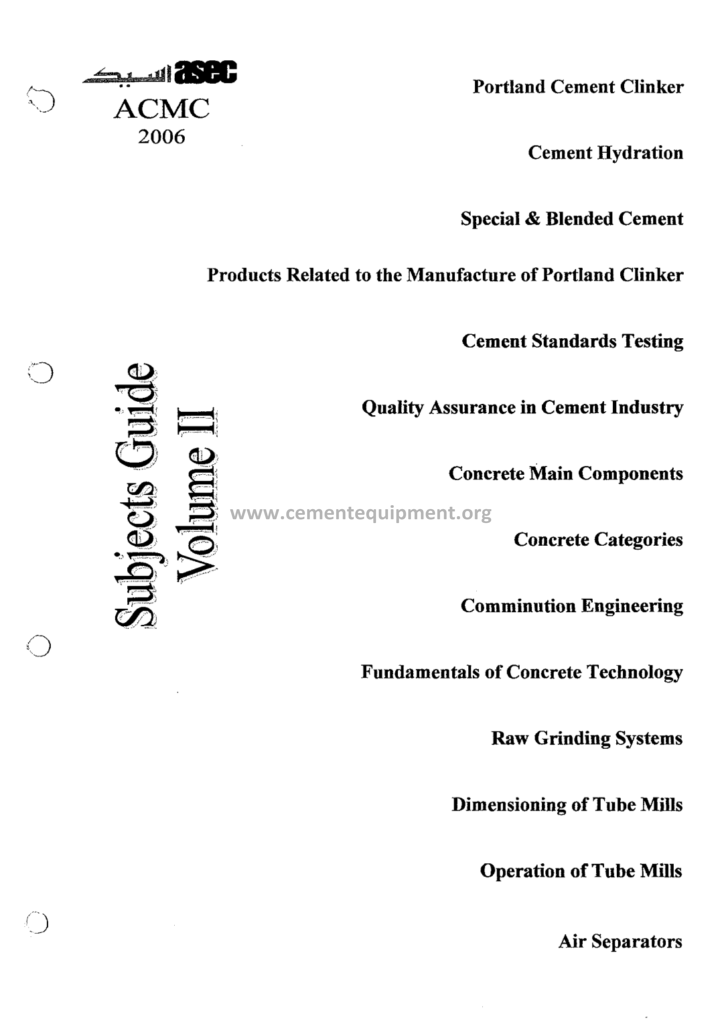
Cement Course Volume 2: Subjects Guide
The Volume 2 Subjects Guide is the index document of the second volume of the technical course series: the guide that shows the student and the plant engineer exactly which subjects the volume covers, in which order they are taught and how they connect to the rest of the curriculum: a course volume without its subjects guide is a library without a catalog: the guide is the map, the volume is the territory and the examinations are the destination: this guide-file is the honest companion of the volume collection.
The Complete Cement Technical Package (931 files including the books, the courses, the Excel tools and the presentations: $249.99 one-time: instant download via the PayPal payment) includes this subjects guide along with the full text of the volume it indexes: this article walks the file: the structure of the guide, the subject map of the volume and the reading paths that the professional follows: the reader closes the page knowing exactly what the volume teaches and where to start.
The subjects of the volume follow the process line of the cement plant: the raw materials enter, the crusher and the mill prepare them, the kiln burns them and the finish department delivers the cement to the silos: this page is organized in the same flow so the reader can use it as the index of both the guide and the volume: the engineer returns to this map whenever a subject needs refreshment: the file itself is the permanent index of the series.
1. What the Subjects Guide Contains: The Anatomy of the Index Document
The subjects guide of Volume 2 is organized as a self-contained navigation document with the fixed sections:
- The subject list: the numbered index of every subject of the volume with the page references of the original text: the list is the backbone of the guide: each entry names the subject, states the scope and points to the corresponding chapters;
- The learning objectives: the statement of what the reader should master at the end of each subject: the objectives transform the text into the study targets: the reader checks the comprehension against the listed objectives after every chapter;
- The prerequisites: the subjects that must be studied before the current one: the recommended order of the volume: the graph of the dependencies that the self-studying engineer follows without a teacher;
- The exercise and the examination references: the numbers of the questions and the exercises that test each subject: the guide connects the theory to the examination practice: the students of the series use the guide as the examination map of the volume;
The guide is not a summary of the content but the metadata of the content: the subjects, the objectives, the dependencies and the tests: the reader who opens the volume with the guide in hand studies twice as fast, because the map shows what matters and the order that works: the file of the package is the reference for the planners of the training courses as well as the individual students.
2. The Subject Map: The Volume in One Table
The complete subject structure of Volume 2 is summarized in the overview table that the guide presents on its opening pages:
| Section of the volume | Typical subjects | Main objective |
|---|---|---|
| The raw material preparation | The quarry sampling, the crushing, the drying, the homogenization | The stable chemically blended feed |
| The grinding technologies | The ball mills, the vertical mills, the classifiers, the circuits | The efficient size reduction |
| The pyroprocessing | The kiln systems, the burners, the fuels, the coolers | The quality clinker at the minimum heat |
| The cement finishing | The finish grinding, the cement handling, the packing | The certified product of the market |
| The cross-cutting disciplines | The quality control, the environment, the maintenance | The sustainable and the reliable operation |
The map shows the place of every subject in the process: the volume of the course series follows the flow of the plant rather than the alphabetical order: the reader who studies in the flow builds the mental model of the whole process step by step: the guide’s overview table is the first page that the experienced engineer photocopies to the office wall.
3. The Raw Material Subjects: From the Quarry Face to the Stockpile
The first family of the subjects prepares the raw materials of the process:
- The quarry operations: the drilling, the blasting and the loading of the limestone face: the bench geometry, the explosive charging and the fragment size control: the quarry subject teaches the first comminution stage and the management of the raw material variability;
- The sampling and the testing of the materials: the representative sampling of the quarry face, the crusher feed and the stockpiles: the laboratory tests of the chemistry and the physical properties: the sampling theory with the minimum masses and the division procedures: the subject is the foundation of the quality control of the volume;
- The crushing systems: the jaw, the gyratory, the impact and the hammer crushers: the selection criteria, the capacities, the settings and the wear management: the crushed product grading and the feed control of the milling stage;
- The material storage and the pre-homogenization: the stockpiles, the covered halls and the blending beds: the layering and the cross-reclaiming that reduce the chemical variation: the pre-blending subject explains the mechanics of the stockpile homogenization and its effect on the kiln feed stability;
The raw material subjects are the first links of the quality chain: the chemistry of the kiln feed can never be better than the blending of the storage: the volume devotes these chapters to the practical methods of the quarry and the stockpile management: the guide of the package marks these subjects as the prerequisites of the kiln subjects that follow.
4. The Grinding Subjects: The Technology of the Size Reduction
The grinding family of the volume is the largest group of the subjects, mirroring the importance of the milling in the plant:
- The principles of the comminution: the laws of Rittinger, Kick and Bond and the mechanisms of the breakage: the energy basis of the size reduction and the work index testing: the theory that the grinding subjects of the volume all build upon;
- The ball and the tube mills: the construction, the media grading, the liner design, the diaphragms and the drives: the mill kinematics and the critical speed: the detailed subject of the classical grinding machine: the material of the chapters is the complete mechanical engineering of the mill;
- The vertical roller mills and the roller presses: the bed-grinding machines of the modern plants: the grinding table and the rollers, the hydraulic systems, the integrated drying and the classification: the energy comparison against the ball mill circuits: the subject of the modern installations;
- The classifiers and the circuits: the static and the dynamic separators, the closed and the open circuits, the circulating loads and the efficiency calculations: the subject that shapes the product quality: the separator tuning is the daily art of the grinding department;
- The mill ventilation and the temperature control: the air sweeping, the drying capacities and the cooling of the material: the ventilation subject guards the mill performance and the gypsum chemistry of the cement;
The grinding subjects of the volume cover the machinery completely: the mechanical elements, the process parameters and the circuit design: the engineer who studies these chapters masters the department that consumes the majority of the plant’s electricity: the guide of the package lists the grinding subjects with their prerequisites and the examination references.
5. The Pyroprocessing Subjects: The Kiln System at the Heart of the Volume
The kiln subjects form the heart of the volume and the center of the whole cement process:
- The preheater and the calciners: the suspension preheater towers, the cyclone stages, the gases and the material flow: the calcination reaction in the precalciner and the fuel share of the calciner firing: the thermal subjects of the modern kiln systems;
- The rotary kiln: the shell, the tyres, the rollers, the drive and the slope of the kiln: the material transport inside the rotating tube, the retention time and the load profile: the burning zone and the clinker formation reactions: the central subject of the whole volume;
- The combustion and the burners: the burner design, the primary air, the flame shapes and the combustion air flows: the fuels and their handling: the flame impingement and the coating formation: the subject that connects the fuel quality to the clinker quality;
- The alternative fuels: the tires, the plastics, the prepared refuse-derived fuels and the liquid wastes: the co-processing in the kiln: the feeding systems, the combustion behavior and the emission constraints: the modern subject of the circular economy of the industry;
- The heat exchange and the cooling: the recuperation, the cooler design and the heat balance: the cooling curves affect the grindability and the reactivity of the clinker: the thermal audit methods close the pyroprocessing subjects;
The pyroprocessing section of the volume teaches the transformation at the heart of the cement chemistry: the raw meal becomes the clinker, and every subject from the preheater to the cooler explains one step of that transformation: the guide of the package marks these subjects as the core of the curriculum: the kiln operator, the process engineer and the maintenance manager all study them.
6. The Fuel and the Combustion Subjects: The Energy of the Process
The fuels subjects follow the energy of the pyroprocessing, because the heat of the kiln is the largest input cost of the cement:
- The fuel types: the coal, the petcoke, the fuel oils, the natural gas and the alternative fuels: the proximate and the ultimate analyses: the volatile content, the calorific values and the ash behavior: the fuel selection subject that the cement plants live by;
- The coal preparation: the coal drying, the grinding and the conveying: the explosion protection, the inert atmospheres and the safety systems of the coal mills: the subject of the fuel handling from the coal yard to the burner;
- The combustion engineering: the flame stability, the ignition temperatures and the combustion air calculations: the excess air control and the heat recovery: the complete combustion that the process demands: the subject of the burner tuning and the flame supervision;
- The heat balance: the energy inputs and the outputs of the kiln system: the exhaust losses, the radiation losses and the clinker formation heat: the heat balance exercise that quantifies the efficiency of the plant: the classic examination subject of the volume;
The fuel subjects of the volume are heavily quantitative: the calculations of the air, the heat and the efficiency dominate the exercises of these chapters: the engineer who completes the fuel subjects can audit the thermal efficiency of any kiln system: the guide of the package links these subjects to the practical exercises of the examination series.
7. The Clinker Cooling and the Handling Subjects
After the kiln, the clinker is cooled, stored and fed to the finish mill, and the volume covers each step:
- The clinker coolers: the grate coolers, the rotary coolers and the planetary coolers: the cooling air distribution, the recuperation of the heat and the clinker outlet temperature: the grate cooler subject covers the hydraulic drive, the grate plates and the airflow control: the cooling curve of the clinker affects the phase composition and the grindability;
- The clinker handling and the storage: the conveyors, the bucket elevators and the clinker silos: the storage management and the quality segregation: the clinker subject closes the pyroprocessing chain and prepares the finish grinding chapters;
- The secondary firing and the dust return: the dust collection of the cooler, the return of the fine dust and the ash effects of the fuels: the loops of the clinker circuit that the operator must understand for the stable quality;
The cooling subjects are the bridge between the burning and the grinding: the clinker leaves the kiln hot and must arrive at the mill cool, and the cooling process itself decides the reactivity of the product: the quick-cooled clinker grinds easier and hydrates faster: the volume explains the cooling physics, the equipment and the quality effects of the cooling curve.
8. The Finish Grinding and the Cement Handling Subjects
The final production subjects of the volume cover the transformation of the clinker into the certified cement:
- The finish grinding circuits: the ball mill circuits with the separators, the roller press pre-grinding and the vertical mill finishing: the target fineness, the Blaine and the residues: the optimization of the specific energy and the product quality: the most profit-sensitive subject of the volume;
- The cement additives: the gypsum addition and its regulation of the setting: the limestone, the slag and the fly ash proportions of the blended cements: the grinding aids and their effects on the mill and the cement: the subject of the product formulation;
- The cement storage and the packing: the silos, the retrievers and the loading systems: the quality segregation of the silos and the moisture protection: the packing plants, the bagging and the palletizing: the final mechanical subjects of the production chain;
- The cement quality testing: the strength, the setting, the fineness and the soundness tests of the finished product: the conformity assessment against the standards: the subject that closes the loop of the production quality;
The finish grinding and the cement handling subjects teach the department that touches the market: the strength of the delivered cement, the costs of the grinding and the logistics of the dispatch are the daily realities of these chapters: the guide of the package pairs these subjects with the quality control chapters of the volume.
9. The Quality Control and the Laboratory Subjects
The quality family of the volume runs across the whole process, and its subjects are the discipline of the measurements:
- The analytical chemistry methods: the gravimetry, the titrimetry and the instrumental analyses: the X-ray fluorescence, the atomic absorption and the wet chemistry references: the subject of the analytical laboratory and its calibration;
- The sample preparation: the drying, the grinding, the pressing and the fusion of the analytical samples: the sample quality rules of the laboratory: the errors of the preparation and the matrix effects that the analyst avoids;
- The physical testing of the cement and the concrete: the Blaine, the setting, the soundness and the strength: the concrete trial mixes and the aggregate tests: the standardization of the test conditions and the interpretation of the results: the subject of the testing laboratory of the plant;
- The process control methods: the control charts, the moving averages and the capabilities: the statistical methods that the process engineers apply to the raw mix and the kiln parameters: the volume closes the quality family with the statistical process control;
The quality subjects of the volume are the guarantee subjects: the chemistry and the physics of every product decision are taught in these chapters: the guide of the package documents the location of each quality subject in the volume and its prerequisites, so the laboratory technician can build the study path from the sampling to the statistics.
10. The Environmental and the Plant Utility Subjects
The volume also covers the side systems that keep the plant running and compliant:
- The dust collection: the fabric filters, the electrostatic precipitators and the cyclones: the collection efficiencies and the maintenance of the filter systems: the environmental subject of the process gases: the filter performance is measured, maintained and reported;
- The emissions monitoring: the stack sampling, the continuous emission monitoring systems and the limits of the regulations: the NOx, the SO2, the dust and the organic emissions: the reporting and the compliance subjects of the volume;
- The water and the compressed air: the plant water systems, the cooling circuits and the treatment: the compressed air network of the instruments and the machinery: the utility subjects that the plant staff operate daily;
- The waste management and the byproducts: the bypass dust, the kiln dust and the waste streams of the process: the recycling and the disposal practices: the environmental subjects of the modern cement industry;
The utility and the environmental subjects complete the plant picture: the cement plant is not only the kiln and the mills but the whole complex of the energy, the water, the air and the emissions: the volume includes these subjects so the graduating engineer knows the complete plant: the guide of the package maps the utilities into the study path between the production subjects.
11. The Maintenance and the Mechanical Subjects
The mechanical family of the volume supports the availability of the equipment:
- The maintenance strategies: the preventive, the predictive and the condition-based maintenance: the planning, the scheduling and the spare parts management: the maintenance planning subject of the plant management;
- The wear and the lubrication: the tribology of the plant equipment: the lubricants, the lubrication schedules and the oil analysis: the wear mechanisms of the crushers, the mills and the kiln: the mechanical subject that protects the capital equipment;
- The alignment and the balancing: the kiln alignment, the shaft alignment and the rotor balancing: the measurement, the correction and the tolerances: the precision mechanics of the rotating equipment: the subject of the mechanical specialists;
- The repairs and the welding: the shell repairs, the refractory installations and the structural maintenance: the inspection methods and the repair documentation: the practical mechanical subjects at the end of the volume;
The maintenance subjects teach the engineering of the equipment lifetime: the well-maintained plant runs with the availability above 90 percent while the neglected plant pays with the breakdowns: the volume’s mechanical chapters supply the knowledge of the maintenance department: the guide of the package lists the mechanical subjects with the inspection checklists and the acceptance criteria.
12. The Electrical, the Automation and the Process Control Subjects
The final subject family of the volume covers the electrical and the control systems of the plant:
- The electrical equipment: the motors, the drives, the transformers and the switchgear: the motor sizing, the speed control and the power factor: the electrical subject of the plant equipment: the variable speed drives of the modern plants dominate this chapter;
- The instrumentation: the temperature, the pressure, the flow and the level measurements: the gas analyzers of the process: the calibration and the accuracy of the instruments: the subject of the instrument engineers;
- The automation systems: the DCS and the PLC systems, the control loops and the interlocks: the process automation of the kiln, the mill and the packers: the control strategy and the tuning of the loops: the modern control subject of the volume;
- The process optimization: the advanced process control, the expert systems and the simulation: the optimization of the fuel, the power and the product quality: the closing subject that ties all the volume knowledge to the bottom line of the plant;
The electrical and the control subjects are the nerve system of the plant: the kiln runs on the measurements and the control loops, the mills on the drives and the automation, and the optimization on the data: the volume closes these subjects so the complete engineer understands the plant from the switchgear to the expert control room: the guide of the package is the index of the whole curriculum.
13. How to Study with the Subjects Guide: The Learning Paths
The guide supports the different readers with the recommended paths through the volume:
- The process engineers: start with the raw material subjects, follow the grinding, the pyroprocessing and the finish grinding, and add the quality subjects along the way: the production path of the volume, marked with the priority numbers in the guide;
- The mechanical engineers: study the grinding machinery subjects, the kiln mechanical chapters and the maintenance family, with the wear and the alignment subjects as the specialization: the mechanical path of the guide skips the deep chemistry but keeps the process context;
- The students and the trainees: follow the full sequence of the volume in the printed order: the guide’s prerequisites ensure the logical build of the knowledge: the examination references at the end of each chapter test the mastery before the next step;
- The refreshers: use the subject map as the quick index: open the volume directly at the subject chapter, review the learning objectives and the exercises: the experienced engineer refreshes a subject in an evening with the guide in hand;
The study paths of the guide are the practical value of the index document: the volume is a comprehensive library, and the guide turns the library into the courses: the file of the package documents the paths, the prerequisites and the examination maps that the training departments of the industry reuse for their own programs.
14. The Often Asked Questions
Is the subjects guide a summary of the volume contents?
Not a summary: the guide is the structured index of the volume: it lists the subjects, the learning objectives, the prerequisites and the examination references: the content itself remains in the volume chapters: the guide shows the reader what to study and in which order, and the volume provides the full text.
Which subjects of the volume are the most important for the kiln operator?
The pyroprocessing family: the preheater and the calciner subjects, the rotary kiln principles, the burners and the fuels, the cooler operation and the heat balance: these subjects describe the exact process that the operator controls: the guide marks them as the core of the volume.
Can the guide be used without the full volume text?
The guide works best together with the volume, because the objectives and the references point into the chapters: an experienced engineer can use the subject map alone as the checklist of the professional knowledge, but the complete study requires the volume: the package includes both.
Does the volume cover the alternative fuels?
Yes: the fuel subjects of the volume include the alternative fuels with their preparation, their combustion behavior and their emission constraints: the modern chapters of the volume reflect the co-processing practice of the industry and the circular economy of the cement plants.
Are the exercises of the examination series answered in the volume?
The volume and its companion examination documents provide the questions and, in the commented editions, the worked answers with the solving methods: the guide references each exercise against its subject: the engineer who studies the subjects and solves the exercises engages the complete learning loop of the series.
How is the volume organized relative to Volume 1 of the series?
Volume 1 typically establishes the fundamentals of the cement chemistry, the process overview and the basic engineering, while Volume 2 deepens the machinery and the operational subjects along the production line: the subjects guide of Volume 2 marks the Volume 1 prerequisites so the reader moves between the volumes with the clear dependencies.
15. Conclusion
The Volume 2 Subjects Guide is the navigation instrument of the technical curriculum: the map of the subjects from the quarry to the packing plant, the objectives of every chapter and the paths that the different engineers follow: the guide turns the voluminous textbook into the study program: for the student it is the exam map, for the engineer the reference index and for the trainer the course planner: the guide and the volume of the package belong together, and this article has walked both as the index of the index.
The Complete Cement Technical Package includes the Volume 2 Subjects Guide with the full subject map, the objectives and the examination references of the volume: the one-time 249.99: the instant download: the 931 files of the library of cement: the navigation of the technical knowledge, documented chapter by chapter: the knowledge of the package, the path of the professional.
The volume two subjects guide of the cement course presents the detailed program of the training material: the list of the chapters, the topics and the technical contents of the second volume is provided together with the references, so the reader locates the needed subject and follows the complete training sequence of the cement package.
Get this Volume 2 Subjects Guide file + the full 931-file package
$249.99 — one-time purchase, instant download, lifetime access
This file is part of the Complete Cement Technical Package (931 files) available from cementequipment.org. Respective rights holders; library copy for the licensed single user.