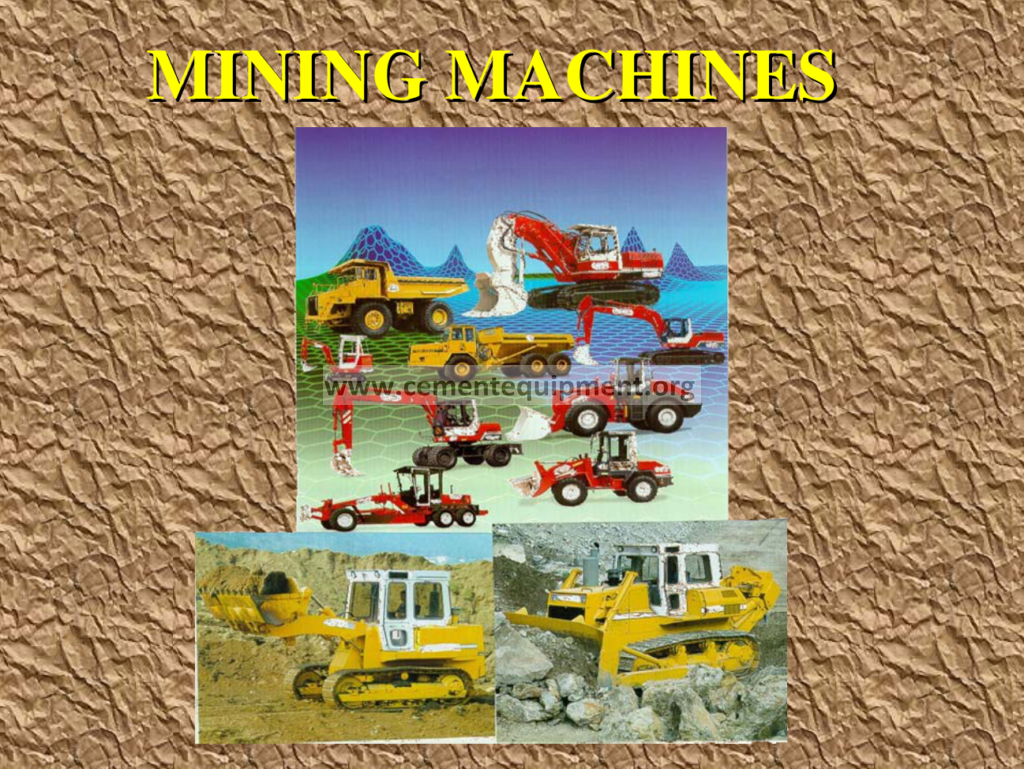
Quarry Equipment: Complete Technical Guide
The quarry equipment is the heavy armada that feeds the cement plant: the drill rigs that place the holes, the explosives that fracture the rock, the hydraulic shovels and the wheel loaders that scoop the broken stone, and the haul trucks that carry it to the crusher: the quarry fleet is the largest machinery park of the plant, measured in the millions of dollars of capital and the tens of thousands of hours of the annual operation: the cost of the quarry material delivered to the crusher gate typically runs between 1.0 and 2.5 US dollars per ton, and every improvement of the cycle, the fragmentation and the availability lands directly in the cost of the cement.
The Complete Cement Technical Package (931 files including the books, the courses, the Excel tools and the presentations: $249.99 one-time: instant download via the PayPal payment) includes this quarry equipment guide with the fleet calculation spreadsheets, the machine selection tables, the cycle-time forms and the maintenance schedules: this article walks the file: the machines of each step, their parameters, the matching of the fleet, the worked example of the tonnage planning and the daily practice of the pit: the quarry becomes the ordered department the plant managers expect.
The quarry is the beginning of the whole value chain: the kiln cannot wait for the rock, so the fleet must deliver its thousands of tons every day, through the rain, the frost and the breakdowns: the planning of the pit, the sequencing of the machines and the discipline of the maintenance are the three pillars the file builds on: the reader who works through this guide will read the quarry with the eyes of the fleet engineer, the ton per hour and the dollar per ton always in view.
1. The Role and the Scope of the Quarry Operation
The quarry of the cement plant is the raw material mine of the production: the limestone, the marl, the clay and the correction materials are won, sized and delivered in the continuous stream of 300 to 3,000 tons per hour, day after day:
- The production chain: the drilling, the blasting, the loading, the haulage and the crushing form the five steps of the pit: each step has its machines, its productivity and its failure modes, and the chain is only as strong as its weakest link;
- The daily tonnage: a 3,000 tpd clinker plant consumes about 4,500-5,000 tons of the raw material per day with the quarry losses: the fleet moves that tonnage over the 10-16 hours of the effective working day at the rates of 300-500 t/h;
- The capital intensity: the drilling rigs cost 0.3-1.5 million dollars each, the shovels 1-6 million, the haul trucks 0.8-2.5 million: the quarry fleet of the large plant represents 15-25 million dollars of the capital: the utilization of this capital is the quarry engineer’s first duty;
- The process boundary: the quarry hands over the crushed material to the preblending stage: the fragmentation of the blast and the crusher setting decide the feed size: the quarry quality targets serve the crusher and the mill: the handover document of the file defines the acceptance criteria of the feed;
The scope of the quarry management covers the geology (the mapping of the seams), the planning (the sequence of the faces), the machines (the fleet), and the environment (the dust, the noise and the rehabilitation): the file organizes all four in its chapters, and this article presents the machine-centered heart of the discipline: the equipment that makes the tonnage.
2. The Drilling Rigs: The Placement of the Energy
Drilling is the precision work of the quarry: the holes are the containers of the explosive, and their pattern, depth and diameter decide the quality of the blast: the file presents the two standard rig families and their parameters:
- The rotary blast-hole rigs: the rotating tricone bit crushes the rock with the weight of the mast: the hole diameters of 150-270 millimeters, the depths of 10-30 meters: the air flushing removes the cuttings: the rigs of the large limestone quarries;
- The down-the-hole (DTH) rigs: the percussion hammer at the bottom of the hole breaks the rock with the blows: the diameters of 89-165 millimeters: the better accuracy in the stratified and the broken formations: the popular choice of the medium quarries;
- The drilling parameters: the penetration rates of 15-40 meters per hour in the limestone, the air pressure of 15-30 bar, the rotational speed of 40-100 rpm: the bit life of 500-2,000 meters depending on the rock abrasion;
- The blast pattern: the burden of 3-6 meters and the spacing of 4-8 meters in the cement limestone: the sub-drill of 0.5-1.5 meters below the bench floor: the stemming of 3-5 meters of the crushed stone on top of the charge: the geometry of the energy;
- The surveying: the GPS-guided rigs position the holes within the decimeters: the drill log records the penetration rate per meter and the geology of each hole: the data feeds the blast design and the seam mapping: the digital quarry;
The drilling is the cheapest step per ton (0.05-0.15 dollars per ton) but the most informative: the penetration log reads the hardness of the seams, the dust and the cuttings identify the mineralogy, and the GPS pattern ensures the uniformity of the blast: the file’s blast hole log sheet is the data source of the quarry’s geological model: the drill is the geologist’s machine.
3. The Blasting: The Fragmentation and the Powder Factor
The blast is the first comminution of the process, performed with the explosives instead of the crusher, and its quality sets the productivity of every following machine:
- The explosives: the ammonium nitrate fuel oil (ANFO) is the standard of the dry holes at 0.80-0.85 g/cm³ density; the emulsion explosives fill the wet holes and the small diameters; the initiation with the electronic detonators achieves the millisecond sequencing of the rows;
- The powder factor: the explosive consumption of 0.15-0.35 kilograms per ton of the blasted rock in the limestone: the factor is the lever of the fragmentation: the more the explosive, the finer the muck, but the higher the cost, the vibration and the flyrock;
- The fragmentation target: the 80% of the muck below 600-800 millimeters for the jaw primary, or below 400-500 for the hammer crusher: the oversize boulders above 1.2 meters need the secondary breaking: the rock hammer of the excavator or the small secondary blast;
- The measurement: the drone photography of the muck and the image analysis software estimate the fragmentation curve of every blast: the feedback closes the loop of the pattern and the powder factor design;
- The environmental control: the vibration limit for the nearby structures (typically 5-10 mm/s at the houses), the air blast and the flyrock distances: the electronic delay detonators limit the instantaneous charge and the vibration: the blast management plan of the file;
The blast economics are the sum of the whole chain: a slightly higher powder factor that halves the boulders saves the crusher jams and the hammer life, while the lower fragmentation slows the crusher and the loader: the file’s optimization chart crosses the powder factor against the total cost of the drilling, the explosives, the loading, the crushing and the mill energy, and the optimum is found where the sum is minimal: the quarry engineer’s daily target.
4. The Hydraulic Shovels and the Excavators: The Loading Step
The loading of the blasted muck into the trucks is the step where the tonnage is physically moved, and the shovel is the heart of the loading floor:
- The hydraulic face shovels: the front shovel with the buckets of 6-25 cubic meters: the working ranges of 8-12 meters: the production rates of 600-3,000 t/h against the trucks: the queen of the large limestone faces;
- The backhoe excavators: the bucket sizes of 2-7 cubic meters: the digging below the grade and the bench cleanup: the versatile machine of the quarry: also the breaker carrier of the oversized boulders;
- The loading parameters: the bucket fill factor of 0.85-1.0, the cycle time of 25-40 seconds per bucket, the passes per truck of 3-5: the match of the shovel to the truck: the truck waits the shovel or the shovel waits the truck: the fleet balance;
- The swing and the positioning: the swing angle between the face and the truck of 60-110 degrees: the trucks position on the haul road side: the 90-degree swing is the design reference of the productivity calculations;
- The diggability: the blasted muck of the good fragmentation digs easily: the poor blasts force the shovel to pry the toe and the tight material, wearing the buckets and the hydraulics: the fragmentation quality shows first in the shovel productivity;
The shovel-truck matching is the classical discipline of the open-pit engineering: the rule of the thumb: the truck capacity of 4-6 shovel buckets, the shovel cycle of 0.5 minutes and the truck cycle of 8-15 minutes: the file’s matching charts and the Excel cycle calculator size the fleet, and the pit engineer’s daily duty is the balance of the queues: the loaded truck never waits, the shovel never starves.
5. The Wheel Loaders: The Flexible Workers of the Yard
The wheel loader is the utility star of the quarry: it loads the crusher from the surge pile, feeds the hopper, cleans the face and the floor, and steps in when the shovel is down:
- The classes: the loaders of the 5-15 cubic meter buckets (the 50-100 ton machines): the operating weights of 30-60 tons, the bucket payloads of 8-25 tons: the big wheel loaders of the cement quarries load the 100-ton trucks in 4-5 passes;
- The cycles: the 30-40 second loading cycle with the 90-degree turn: the 800-1,500 t/h production in the free loading conditions: the loader is the fastest loading machine of the yard when the face is ready;
- The roles: the crusher hopper feeding from the pile (the surge absorbs the shovel’s absence), the blending of the stockpiles, the material movement of the correction materials and the clay: the one machine, the many duties;
- The operation: the Z-pattern loading, the straight-in approach, the full bucket lift with the low center of gravity: the tyre protection chains of the loading floor, the operator training of the bucket technique: the productivity difference between the trained and the untrained operators reaches 20%: the file’s operator manual;
The wheel loader is the buffer of the fleet: the plant with the loader at the crusher maintains the crushing during the shovel changeovers and the face moves: the file prices the loader fleet as the insurance of the pit, and its maintenance follows the same books as the trucks: the loader’s tyres, the transmissions and the buckets are the third largest consumable of the quarry after the fuel and the explosives.
6. The Haul Trucks: The Arteries of the Pit
The haulage is the largest single cost of the quarry, and the haul truck is its engine: the file covers the truck families, the cycles and the physics of the ramp:
- The rigid dump trucks: the payloads of 40-330 tons: the standard of the large limestone quarries: the 100-150 ton trucks with the diesel engines of 800-1,500 kilowatts: the speeds of 50-60 km/h on the level and 10-15 km/h on the 8-10% ramps;
- The articulated dump trucks: the 25-45 tons: the off-road agility of the wet and the steep terrain: the machines of the small quarries and the clay pits: the articulated joint of the frame steers between the obstacles;
- The cycle time: the loading 3-5 minutes (4-5 passes of the shovel), the hauling at the average speed of 25-35 km/h, the dumping 1-2 minutes, the return and the queuing: the total cycle of 10-20 minutes: the round trip defines the number of the trucks;
- The rolling resistance: the haul roads of the 2-4% gradients in the direction of the load and the 8-12% ramps to the crusher: the rolling resistance of 2-3% on the good roads: the road maintenance is the fuel economy of the fleet: the graders work daily;
- The fleet calculation: the trucks needed = the hourly tonnage × the cycle time / (the payload × the availability × the utilization): the file’s Excel template performs the calculation with the pit geometry and the availability inputs;
The physics of the truck: the engine power moves the weight against the grade and the rolling resistance, and the fuel follows the physics: the 100-ton truck burns 40-60 liters per hour on the cycle, and the fuel bill of the quarry equals the explosives and the tyres combined: the cycle discipline (the speeds, the routes, the spot times) is the daily fuel saving, and the file’s operator guides and the dispatch systems target exactly these minutes.
7. The In-Pit Crushing and the Conveying (IPCC): The Modern Alternative
Where the haulage distance grows and the fuel prices bite, the industry moves the crusher into the pit and replaces the trucks with the conveyors: the IPCC systems are the fastest-growing technology of the cement quarries:
- The principle: the semi-mobile or the fully mobile crusher follows the face, the conveyor belt carries the crushed rock out of the pit at the 2-4 m/s speeds: the trucks of the system shuttle only from the shovel to the crusher, a distance of 300-800 meters;
- The variants: the fully mobile units crawl with the face (the crusher moves monthly), the semi-mobile units relocate in the weekend with the modular supports, and the fixed-pit stations serve the stable long faces;
- The economics: the conveyor transport costs 0.3-0.8 dollars per ton against the 0.8-2.0 dollars per ton of the truck haulage at the 2-5 km distances: the capital of the conveyors is recovered in the 3-6 years, and the energy is electric instead of the diesel;
- The challenges: the conveyor availability must reach 90-95% because there is no truck fallback at the peak: the belts, the drives and the transfer points demand the maintenance discipline: the mobile crusher foundation moves with the face, the geology must be known in advance;
- The hybrid layouts: the truck-assisted systems keep a small truck fleet for the flexibility and the face moves: the hybrid is the common compromise of the cement industry, and the file’s comparison tables price the full options;
The IPCC decision is the strategic one of the quarry planning: the pit depth, the annual tonnage and the fuel price decide the payback: the file’s economic model compares the conventional truck fleet against the mobile crusher options over the 15-year life of the pit, with the sensitivity of the fuel and the availability: the engineer of the modern plant reads the model before the fleet purchase, not after.
8. The Auxiliary Fleet: The Dozers, the Graders and the Support
Behind the stars of the loading and the haulage, the support fleet keeps the pit alive, and the file devotes its chapter to the quiet machines:
- The track dozers: the 150-350 kW machines push the overburden, build the roads, spread the muck and maintain the benches: the dozer hours follow the blasting: the dozer of the face cleanup before the shovel returns;
- The motor graders: the 2-4 m blades maintain the haul roads: the road crown, the drainage and the rolling resistance: the graders are the cheapest insurance of the fleet: a good road saves 10-15% of the truck fuel and extends the tyre life;
- The water trucks: the 20-50 m³ tanks damp the haul roads against the dust: the dust suppression is the visibility, the community relations and the filter life of the machines: the water trucks run continuously in the dry season;
- The utility tractors: the lube trucks, the fuel trucks, the service trucks and the personnel carriers: the mobile workshop follows the shifts: the field services keep the fleet availability above the 85-90%;
- The mobile cranes: the 100-300 ton cranes change the shovel dippers, the rig masts and the crusher mantles: the crane of the pit is shared with the plant: the heavy-lift planning of the file;
The support fleet is the invisible 20% of the quarry cost that decides the visible 80%: the pit with the good roads, the quick services and the ready cranes runs the trucks at their design speeds and the shovels at their design rates, and the pit without them crawls: the file’s ratios of the support fleet per 100,000 annual tons guide the new plant design.
9. The Fleet Selection and the Matching: The Numbers of the Design
The fleet of the quarry is not a list of machines but a system of the matched numbers, and the file presents the complete design procedure:
- The demand: the annual tonnage of the plant divided by the operating days (300-330) and the hours per day (10-20) gives the hourly demand: the 3,000 tpd plant with the 16-hour quarry day needs about 280 t/h of the delivered material;
- The loading match: the shovel bucket of 6-8 m³ for the 100-ton trucks: the 4-5 passes fill the truck in 2-3 minutes: the shovel production of 800-1,200 t/h matches 2-3 trucks of the 100-ton class on the 2-3 km cycle;
- The truck count: the cycle of 12 minutes with the 4 trucks gives the 2,000 t/h potential, the availability of 85% and the utilization of 75% reduce the fleet to the 4-5 trucks for the 280 t/h demand with the 20-30% reserve;
- The backup philosophy: the quarry runs the fleet with the one spare of each class: the reserve of 10-20% of the capacity: the reserve is the difference between the plan and the rain, the breakdown and the face change;
- The life-cycle cost: the file’s fleet cost model totals the capital, the fuel, the tyres, the maintenance and the operator wages per ton over the machine life of 20,000-40,000 hours: the lease-versus-own comparison and the OEM service contracts are the tables of the file;
The fleet design is the arithmetic of the uncertainty: the weather, the breakdowns and the geology swing the daily production, and the fleet must absorb the swings without the kiln noticing: the file’s simulation sheet runs the demand and the availability scenarios and sizes the reserve: the quarry of the cement plant is designed for the worst week, not the best day.
10. The Tyres and the Fuel: The Two Biggest Consumables
The quarry cost structure is dominated by two consumables that the file treats with the full discipline of the modern fleet management:
- The tyres: the 40-60R57 tyres of the 150-ton trucks cost 50,000-90,000 dollars each, and a truck wears 6 tyres per set: the tyre life of 4,000-8,000 hours depends on the road condition, the speeds and the loads: the tyre management program of the file: the pressures checked daily, the heat monitored, the roads graded;
- The fuel: the fleet burns 0.25-0.50 liters of diesel per ton of the hauled material: at the 1.5 million annual tons, the quarry consumes 0.4-0.8 million liters per year: the fuel management: the dispatch optimization, the road grades, the idle control and the driver behavior: the 10% saving is a six-figure annual amount;
- The tire-fill alternatives: the foam-filled tyres for the loaders and the underground service, the retreading of the haul tyres in the dedicated plants, the tyre chains of the loader floors: the cost-per-hour comparisons of the file;
- The driver discipline: the GPS dispatch reports the speed, the idle time and the route: the training programs reduce the brake wear, the tyre wear and the fuel: the incentive schemes of the file tie the bonus to the cost per ton;
The two consumables decide the quarry economics: the plant with the excellent roads and the disciplined drivers runs its fleet at the 1.2-1.6 dollars per ton, while the neglected pit drifts to the 2.0-2.5: the difference is not in the machines but in the management: the file’s consumable trackers make the difference visible weekly, and the visible numbers are the manageable numbers.
11. The Maintenance of the Quarry Fleet
The quarry machines work the hardest hours of the plant, and their maintenance is the classic battle between the availability and the cost: the file’s maintenance chapter is the complete program:
- The preventive schedules: the engine oil of the trucks at 250-500 hours, the hydraulic oil at 2,000 hours, the greasing of the pins daily: the OEM intervals adapted to the quarry duty: the work orders of the CMMS issue the tasks automatically;
- The condition monitoring: the oil analysis of the engines and the transmissions every 500 hours: the vibration of the shovels and the crushers: the thermography of the electrical systems: the predictive catches the failures before the breakdowns;
- The component rebuilds: the engines at 10,000-15,000 hours, the transmissions at 12,000-20,000, the hydraulic pumps at 8,000-12,000: the exchange programs of the OEMs shorten the downtime: the planning of the rebuild calendar protects the production season;
- The workshop and the parts: the pit workshop with the cranes, the presses and the tooling: the critical spares (the engines, the torque converters, the pumps) on the consignment: the lead times of 3-9 months for the major components force the planning;
- The availability measurement: the mechanical availability of 85-92% for the trucks and 90-95% for the shovels: the utilization of 70-85% of the available hours: the two numbers are the dashboard of the fleet: the file’s availability spreadsheet computes them from the daily reports;
The maintenance is where the fleet cost is decided: the correct balance between the preventive and the corrective work, the rebuilds timed to the seasons and the spares stocked against the lead times: the file’s program converts the OEM recommendations and the plant’s own history into the living maintenance plan, and the plan is the difference between the fleet that serves the kiln and the fleet that serves the workshop.
12. The Safety of the Quarry: The Rules of the Heavy Traffic
The quarry is the highest-risk department of the cement plant: the moving giants, the blasts and the grades demand the strictest discipline, and the file’s safety chapter is the quarry’s rule book:
- The traffic management: the one-way haul roads, the passing bays, the speed limits (40 km/h loaded, 25 at the blind corners), the signage and the mirrors: the truck-blind-zone elimination: the cameras and the proximity detection of the modern fleets;
- The blasting safety: the blast area of 300-500 meters, the sirens, the guards at the access points, the permission of the shift leader, the inspection of the misfires: the blast procedures of the file comply with the regulations of the mining authorities;
- The edge and the grade: the berms of the 1-1.5 meters on the bench edges, the tyre stops at the dumping points, the ramp gradients under the design limits: the slippery winter grades and the sanding;
- The personnel protection: the high-visibility clothing, the hard hats and the safety glasses as the non-negotiables: the operator training and the certification: the fatigue management of the shifts and the rest hours;
- The emergency plan: the fire suppression on the machines, the first-aid points, the rescue of the overturned vehicles: the drills quarterly: the incident investigation without the blame: the lessons of the file’s case studies;
The safety culture of the quarry is the productivity culture: the plant that stops its traffic accidents keeps its tonnage, its people and its reputation: the file’s safety audit checklist is used by the plants as the weekly walk-round document, and the managers who run it religiously report the years without the lost-time injuries: the heavy industry’s proof that the discipline works.
13. The Worked Example: The Fleet of the 3,000 tpd Plant Quarry
The file’s worked example sizes the complete fleet, and the abbreviated version shows the arithmetic:
- The demand: the kiln of 3,000 tpd needs 4,800 tons of the raw per day (the 1.6 factor including the losses and the clay): the quarry works 16 hours per day, 300 days per year: the hourly demand of 300 t/h;
- The loading: one hydraulic face shovel of 7 m³ bucket (production 900 t/h) and one wheel loader of 5 m³ (production 700 t/h) as the reserve and the crusher feeder: the 20% spare of the loading capacity;
- The haulage: the haul distance of 2.5 kilometers with the 150-meter lift: the cycle of 16 minutes: the 100-ton trucks at the 85% availability: the 4 trucks deliver 300 t/h at the 90% utilization: the 5th truck as the standby: the fleet of five;
- The support: one track dozer, one grader, one water truck and the mobile service unit: the annual operating costs of the fleet estimated by the file’s model at 3.5-4.5 million dollars including the fuel, the tyres and the maintenance;
- The drilling and the blasting: one rotary rig of 200 mm holes, the blasts of 20,000-40,000 tons every 2-3 days: the powder factor of 0.25 kg/t: the annual explosive consumption of about 360,000 kilograms;
The example closes with the monthly check: the plant tracks the delivered tons, the fuel liters and the maintenance hours against the model, and the quarterly review adjusts the fleet: the file’s fleet model is the living document of the quarry: the numbers of the example are the numbers the engineer re-runs for his own pit with the click of the spreadsheet.
14. The Environment of the Quarry: Dust, Noise and the Rehabilitation
The quarry of the 2020s must answer the community as well as the kiln, and the file’s environment chapter covers the practice of the modern operator:
- The dust control: the water sprays at the crushers and the transfer points, the damp roads, the enclosure of the screens and the bag filters of the plant-side systems: the dust monitoring stations at the boundary: the ambient limits of the PM10 and the PM2.5 compliance;
- The noise control: the blasting windows of the daytime, the muffled equipment, the noise barriers along the boundary: the vibration limits of the blast monitoring at the neighboring structures: the community liaison of the blast schedule;
- The water management: the pit drainage and the settling ponds: the sediment control of the runoff: the water reuse of the quarry for the dust suppression: the groundwater monitoring of the deep pits;
- The rehabilitation: the progressive backfilling of the exhausted faces, the topsoil conservation, the re-vegetation and the final land use (the agriculture, the lakes, the industrial parks): the closure plan of the file accompanies the quarry from the first blast;
- The energy and the emissions: the electric drive alternatives of the IPCC and the electric excavators, the fuel efficiency programs, the CO2 accounting of the fleet: the quarry contributes to the plant’s decarbonization roadmap;
The environmental performance of the quarry is the license to operate: the modern permitting process demands the full impact assessment, the monitoring plan and the community engagement: the file’s templates of the environmental management plan give the operator the structure of the compliance, and the discipline of the dust and the noise is the discipline of the neighbors’ patience: the quarry that is a good neighbor is a quarry that operates.
15. The Frequently Asked Questions
How is the number of the haul trucks determined?
By the cycle calculation: the hourly demand divided by the truck payload, multiplied by the cycle time in hours, divided by the availability and the utilization: the typical plant of the 3,000 tpd runs 4-6 trucks of the 100-ton class: the file’s Excel template performs the calculation from the pit geometry, and the 20-30% reserve covers the breakdowns and the peak days.
What is the ideal powder factor for the cement limestone?
The range of 0.15-0.35 kilograms of the explosive per ton of the rock, tuned by the rock hardness and the fragmentation target: the limestone of the medium hardness with the hammer crusher runs at 0.20-0.28: the optimum is found by the total cost analysis: the file’s chart crosses the powder factor against the costs of the drilling, the loading and the crushing.
When does the in-pit crushing (IPCC) beat the truck fleet?
When the haul distance exceeds about 1.5-2 kilometers one way and the annual tonnage justifies the conveyor capital: the truck transport of 0.8-2.0 dollars per ton against the conveyor of 0.3-0.8: the paybacks of 3-6 years with the rising fuel prices: the file’s economic model runs the comparison for the specific pit geometry and the fuel price scenarios.
What availability should the quarry fleet achieve?
The mechanical availability of 85-92% for the haul trucks and 90-95% for the shovels is the industry standard of the well-run quarries: the utilization (the available hours actually worked) of 70-85%: the two numbers together decide the fleet size, and the file’s availability tracker computes them from the daily shift reports.
Are the electric trucks the future of the quarry?
The battery-electric haul trucks are entering the industry with the first commercial fleets in the mines: the cement quarry at the short distances and the fixed routes is a good candidate, and the file’s roadmap chapter compares the total cost of the diesel, the hybrid and the electric options with the charging infrastructure: the decision tables of the file stay current with the technology.
Does the package include the quarry fleet Excel calculators?
Yes: the fleet sizing calculator, the cycle time template, the availability tracker and the cost per ton model are part of the 931 files: the engineer enters the pit data and receives the fleet numbers, the fuel and the cost forecasts: the same tools the consultants use in the quarry audits.
16. Conclusion
The quarry equipment is the heavy metal of the cement process: the drills and the explosives shape the rock, the shovels and the loaders move it, and the trucks and the conveyors carry it to the plant: the fleet is the largest capital and the largest consumable consumer of the factory, and the discipline of its cycles, its maintenance and its safety is the discipline of the tonnage itself: the quarry engineer runs the numbers of the pit, and the numbers of the pit run the kiln.
The Complete Cement Technical Package includes this quarry equipment guide with the fleet models, the machine tables, the maintenance schedules and the safety programs: the one-time 249.99: the instant download of the 931 files: the complete quarry knowledge, from the first drill hole to the last truck at the crusher: order the package, and put the pit under the control of the numbers.
Get this Quarry Equipment file + the full 931-file package
$249.99 — one-time purchase, instant download, lifetime access
This file is part of the Complete Cement Technical Package (931 files) available from cementequipment.org. Respective rights holders; library copy for the licensed single user.