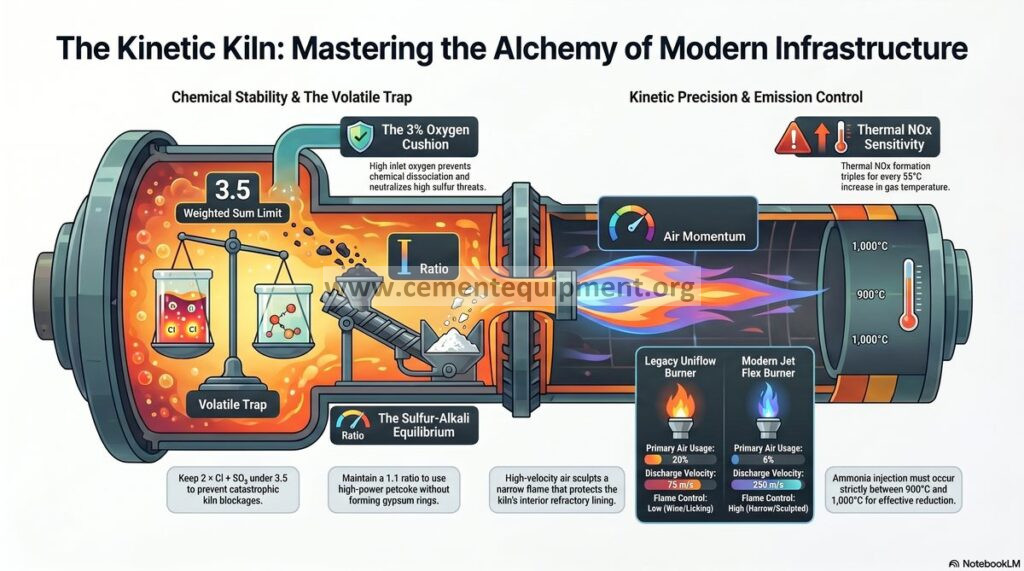
Reducing Heat Consumption in Preheater and Calciner: The Right Technology-Process Combination
Optimizing preheater and calciner operations can reduce specific heat consumption by 5-10% in cement production, depending on the plant’s configuration and raw materials.
A critical aspect of cement production is the preheater and calciner system, where the majority of the heat consumption occurs. The preheater is responsible for heating the raw meal to a temperature of around 900°C, while the calciner further heats the meal to a temperature of around 950°C, where the calcination reaction takes place. To reduce heat consumption in these systems, it is essential to understand the mechanisms and root causes of heat loss.
One of the primary mechanisms of heat loss in preheaters and calciners is the formation of NOx and CO emissions, which can lead to a significant increase in heat consumption. Additionally, the buildup of coating and ring formation in the preheater and calciner can also lead to increased heat consumption. To mitigate these issues, it is crucial to optimize the combustion process, ensure proper kiln alignment, and maintain a stable and consistent raw meal feed.
The following table illustrates the typical operating parameters for a preheater and calciner system:
| Parameter | Typical Value |
| Preheater inlet temperature | 150-200°C |
| Preheater outlet temperature | 900-950°C |
| Calciner inlet temperature | 900-950°C |
| Calciner outlet temperature | 1000-1050°C |
| Raw meal feed rate | 100-200 t/h |
To reduce heat consumption in preheaters and calciners, the following step-by-step practical guidance can be followed:
- Optimize the combustion process by ensuring proper air-fuel ratio and minimizing NOx and CO emissions.
- Ensure proper kiln alignment and maintain a stable and consistent raw meal feed.
- Monitor and control the buildup of coating and ring formation in the preheater and calciner.
- Implement a regular maintenance schedule to ensure that the preheater and calciner systems are operating efficiently.
What are the benefits of reducing heat consumption in preheaters and calciners?
Reducing heat consumption in preheaters and calciners can lead to significant cost savings, as well as a reduction in greenhouse gas emissions. Additionally, optimizing these systems can also lead to improved product quality and increased plant efficiency.
How can I determine the optimal operating parameters for my preheater and calciner system?
The optimal operating parameters for a preheater and calciner system will depend on the specific plant configuration and raw materials being used. It is recommended to conduct a thorough analysis of the system, including heat balance and mass balance calculations, to determine the optimal operating parameters.
What are the common challenges faced when reducing heat consumption in preheaters and calciners?
Common challenges faced when reducing heat consumption in preheaters and calciners include the buildup of coating and ring formation, NOx and CO emissions, and ensuring proper kiln alignment. Additionally, maintaining a stable and consistent raw meal feed can also be a challenge.
How can I implement a regular maintenance schedule for my preheater and calciner system?
Implementing a regular maintenance schedule for a preheater and calciner system can be done by developing a comprehensive maintenance plan that includes regular inspections, cleaning, and replacement of worn-out parts. It is also essential to ensure that the system is operated within the recommended operating parameters to minimize wear and tear.