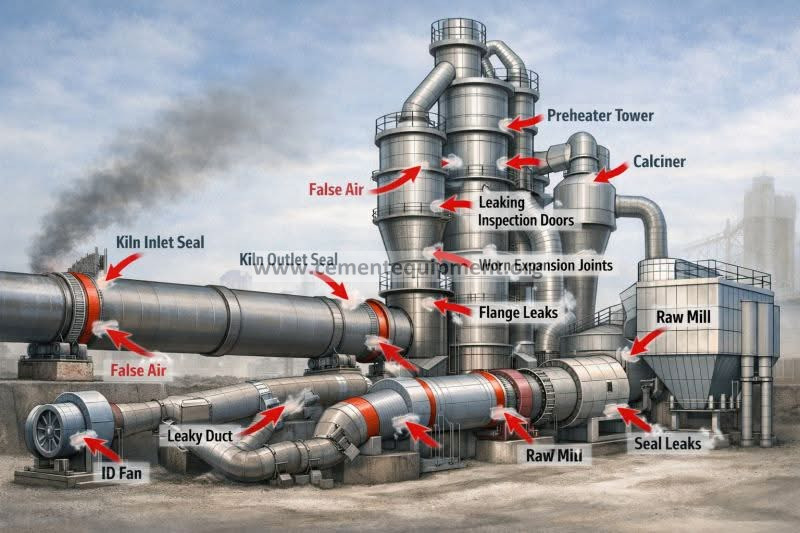
Calciner in Cement Plant: Function, Design, and Diagnostic Guide
A calciner is a critical component in a cement plant that facilitates the calcination process, where limestone is decomposed into calcium oxide and carbon dioxide at high temperatures, typically between 800-900°C, to produce a partially calcined material that is then fed into the kiln for further processing.
Introduction to Calciner Design
The design of a calciner is crucial for efficient and effective calcination. There are two main types of calciners: in-line and separate-line. In-line calciners are integrated into the preheater system, while separate-line calciners are standalone units. In-line calciners can be further categorized into two types: Inline Calciner (ILC) and Separate-Line Calciner (SLC) or Separate-Line Calciner with a Smoke Chamber (SLC-S). Each design has its advantages and disadvantages, and the choice of calciner type depends on various factors, including plant capacity, fuel type, and environmental regulations.
Calciner Types and NOx Formation
NOx formation is a significant concern in calciner design, as it can lead to environmental and health issues. Staged combustion is a technique used to reduce NOx emissions by controlling the combustion process. Low-NOx burners are also used to minimize NOx formation. The type of calciner used can affect NOx emissions, with in-line calciners generally producing lower NOx emissions than separate-line calciners. The following table summarizes the typical NOx emission ranges for different calciner types:
| Calciner Type | NOx Emission Range (ppm) |
| In-Line Calciner (ILC) | 200-400 |
| Separate-Line Calciner (SLC) | 400-600 |
| Separate-Line Calciner with Smoke Chamber (SLC-S) | 600-800 |
Tertiary Air Duct Sizing and Degree of Calcination
The tertiary air duct is a critical component in calciner design, as it provides the necessary air for combustion and calcination. The sizing of the tertiary air duct is crucial, as it affects the degree of calcination and NOx emissions. The degree of calcination — the fraction of CaCO3 already converted to CaO before the meal reaches the kiln — is the real target metric, commonly cited in the 90-95% range at the calciner outlet for a well-run system. This is tracked via the residual loss on ignition (LOI) of the calcined meal: raw meal entering the preheater typically carries an LOI in the mid-30s percent (driven almost entirely by CO2 bound in the limestone), and a calciner hitting a 90%+ degree of calcination should knock that down to a low single-digit LOI by the calciner exit, before final clinkering finishes the job in the kiln. The retention time of the material in the calciner is one of the main levers on that number — too short, and calcination degree falls short, pushing more of the decomposition burden (and fuel demand) onto the kiln itself.
Refractory Considerations and Common Operational Upsets
Refractory materials are used to line the calciner and protect it from the high temperatures and corrosive environment. The choice of refractory material depends on the type of calciner and the operating conditions. Common operational upsets in calciners include temperature fluctuations, uneven fuel distribution, and blockages in the tertiary air duct. These upsets can lead to reduced calcination efficiency, increased NOx emissions, and decreased refractory life. The root causes of these upsets can be complex and multifaceted, requiring a thorough analysis of the calciner design, operating conditions, and maintenance practices.
Diagnostic Guide for Calciner Performance
To diagnose calciner performance, the following steps can be taken:
- Monitor temperature profiles and adjust fuel distribution as needed
- Check for blockages in the tertiary air duct and clean or replace as necessary
- Measure LOI values and adjust retention time or fuel distribution to achieve target values
- Inspect refractory lining for signs of wear or damage and replace as necessary
- Analyze NOx emissions and adjust staged combustion or low-NOx burner settings as needed
Calciner Performance and Kiln Free Lime Interaction
The performance of the calciner has a significant impact on the kiln free lime and Lime Saturation Factor (LSF). The calciner produces a partially calcined material that is fed into the kiln, where it is further calcined to produce a clinker. The kiln free lime is affected by the degree of calcination in the calciner, with higher LOI values resulting in lower kiln free lime. The LSF is also affected by the calciner performance, as it is a measure of the lime saturation of the clinker. A well-designed and operated calciner can help to optimize kiln free lime and LSF, resulting in improved clinker quality and reduced energy consumption.
Frequently Asked Questions
What is the typical temperature range for calcination in a cement plant?
The typical temperature range for calcination in a cement plant is between 800-900°C. This temperature range is necessary to achieve the desired degree of calcination and to produce a partially calcined material that can be further processed in the kiln.
How does the type of fuel used affect calciner performance?
The type of fuel used can significantly affect calciner performance, as different fuels have different combustion characteristics and emissions profiles. For example, coal and oil have higher NOx emissions than natural gas, while biomass fuels can have lower NOx emissions but higher particulate matter emissions.
What are the common causes of refractory failure in calciners?
Common causes of refractory failure in calciners include thermal shock, mechanical stress, and chemical attack. Thermal shock can occur when the refractory is subjected to sudden temperature changes, while mechanical stress can occur due to uneven fuel distribution or blockages in the tertiary air duct. Chemical attack can occur due to the presence of corrosive species in the fuel or raw materials.
How does the calciner design affect the kiln free lime and LSF?
The calciner design can significantly affect the kiln free lime and LSF, as it determines the degree of calcination and the quality of the partially calcined material produced. A well-designed calciner can help to optimize kiln free lime and LSF, resulting in improved clinker quality and reduced energy consumption.
What are the benefits of using staged combustion in calciners?
Staged combustion can help to reduce NOx emissions by controlling the combustion process and minimizing the formation of nitrogen oxides. This can result in improved environmental performance and reduced regulatory compliance costs. Additionally, staged combustion can help to improve calciner efficiency and reduce energy consumption.